What a Conveyor Belt Support Frame Actually Does
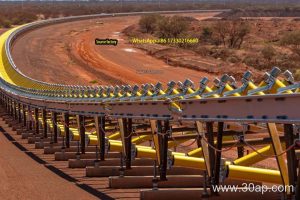
A conveyor belt support frame is the steel structure that holds the idlers in position and keeps the belt profile steady along the entire run. It sits between the stringers or the ground and the rotating parts, so the frame carries the load path from the belt down to the conveyor structure. In a quarry, a cement plant, or a power plant coal yard, the frame is usually the first thing maintenance crews inspect after a belt tracking problem appears.
Because the frame fixes the trough angle, the roll spacing, and the height of the belt line, it directly affects how a Rubber Conveyor Belt or a Steel Cord Conveyor Belt behaves under load. A weak or misaligned frame shows up quickly as edge wear, spillage, and uneven belt travel.
How the Frame Is Built
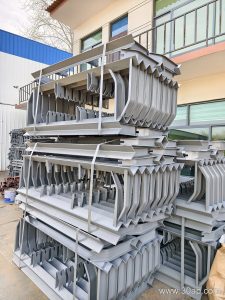
Most frames are fabricated from angle steel, channel steel, or folded steel plate. The choice depends on span, load, and whether the frame is fixed or adjustable. A typical assembly includes the cross beam, the mounting brackets for the idlers, and the connection points to the main conveyor structure.
- Angle steel frames are common on lighter lines and short spans.
- Channel steel frames handle heavier loads and wider belts.
- Folded plate frames save weight while keeping stiffness.
The conveyor bracket detail matters as much as the beam itself. Slotted holes and adjustable legs allow the trough angle to be set on site, which is useful when a line carries mixed materials and the belt needs fine tuning after installation.
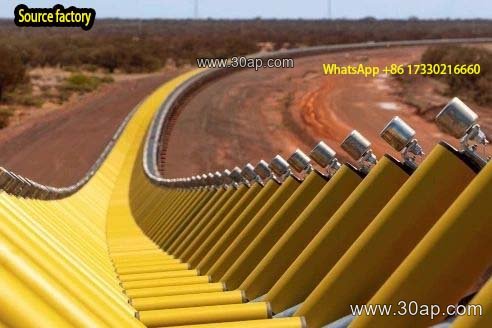
Common Frame Types and Where They Sit
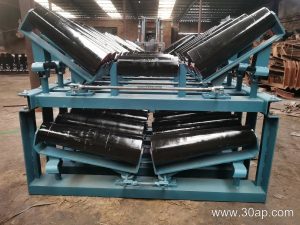
Support frames are not one product. The troughing frame carries the loaded side of the belt, the return frame supports the empty side, and transition frames ease the belt from flat to troughed. Impact frames sit under loading points where rock or ore drops onto the belt.
A few examples of the family:
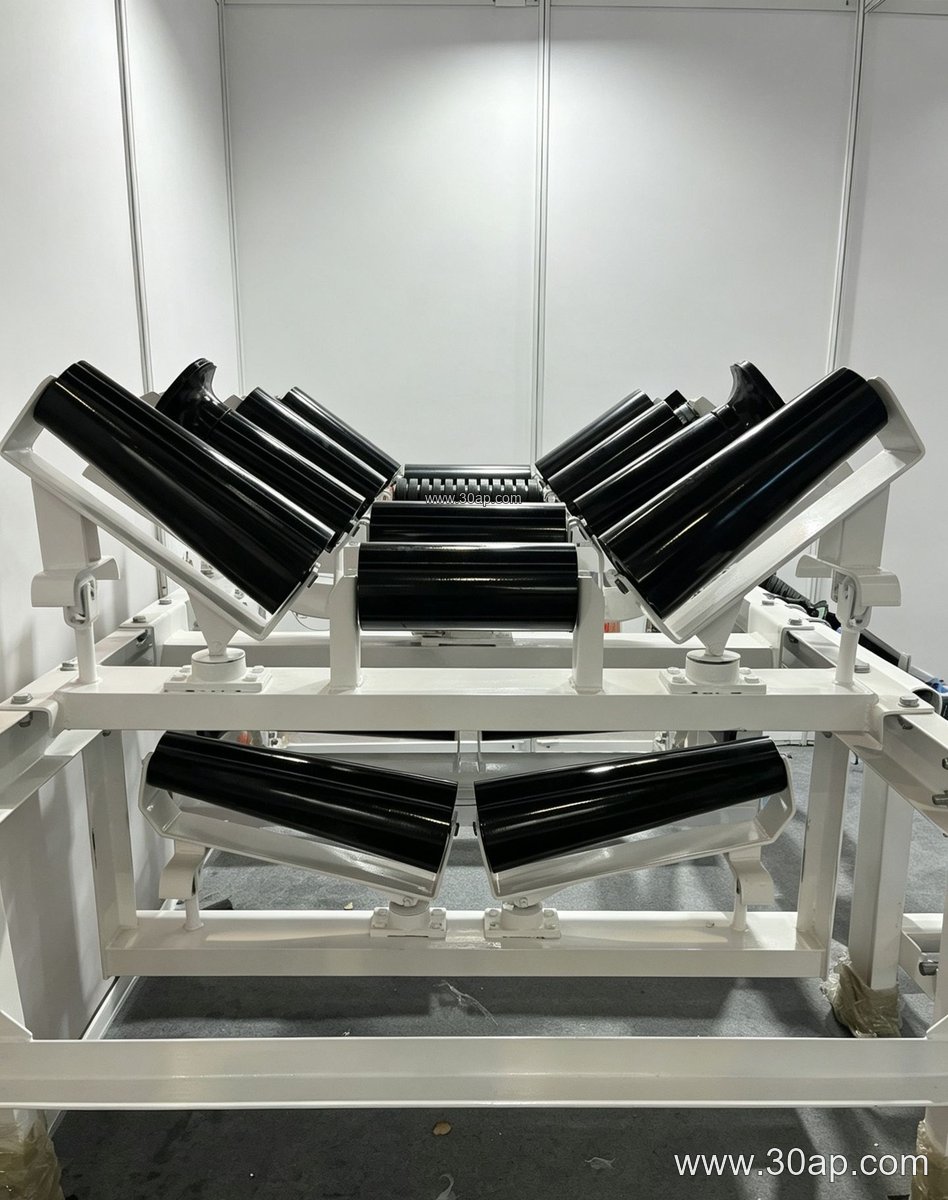
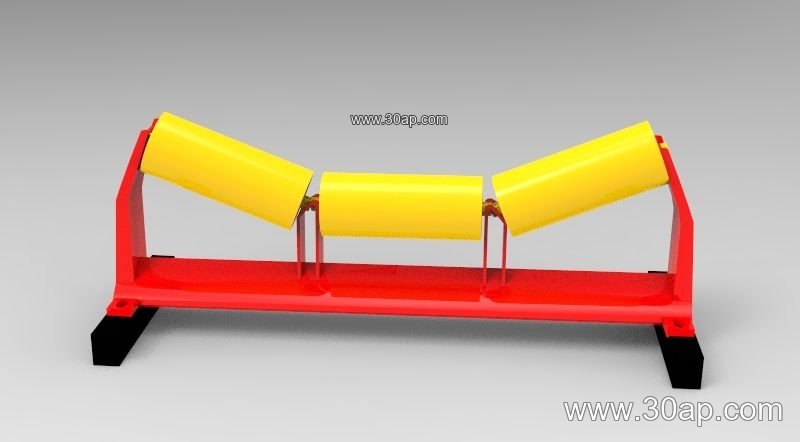
- Troughing frame — carries idler rollers at 20, 30, 35, or 45 degrees.
- Return frame — flat or V-shaped, supporting the return strand.
- Transition frame — placed near pulleys to control belt stress.
- Impact frame — reinforced for crusher discharge and transfer points.
- Self-aligning frame — allows slight rotation to correct belt tracking.
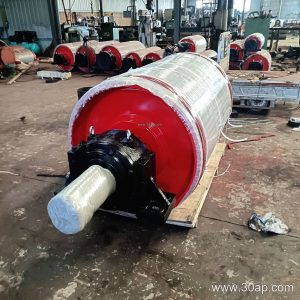
These are different components. A drive pulley, a tail pulley, and a bend pulley are not interchangeable with any of them, and each pulley type has its own role at the head, tail, or curve of the conveyor.
Matching Frame, Belt Width, and Idler Diameter
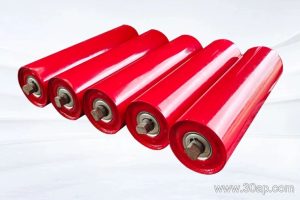
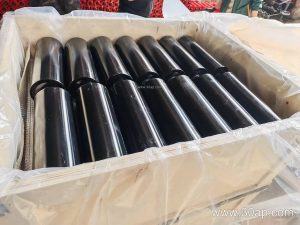
The frame is designed around the belt width, the trough angle, and the idler roller diameter. Common belt widths run from B500 through B2000 and beyond, while idler diameters are usually Ø89, Ø108, Ø133, Ø159, or Ø194. There is no fixed rule that ties one belt width to one roll size or one trough angle; the combination follows load, belt stiffness, and the material being carried.
| Parameter | Common Range | Notes |
|---|---|---|
| Belt width | B500 to B2000+ | Frame length follows width |
| Trough angle | 20°, 30°, 35°, 45° | Adjustable frames can change on site |
| Idler diameter | Ø89 to Ø194 | Selected by load and speed |
| Material | Angle, channel, folded plate | By span and duty |
Installation hole spacing and cross beam length vary with belt width and trough angle, so they should be confirmed against the conveyor layout rather than assumed.
Where These Frames Are Used
In a limestone mine, troughing frames run along the main haulage line while impact frames sit under the crusher discharge. In a coal-fired power plant, flame retardant and anti-static belt grades are common, and the frames must resist dust buildup and slight misalignment over long shifts.
Sand and gravel plants use frames with close idler spacing at transfer points to reduce belt sag. Port terminals handling iron ore or copper ore often specify heavy-duty frames with thicker channel sections. The same frame family also appears in fertilizer plants, grain silos, and tunnel muck lines.
What Buyers Should Check Before Ordering
Start with the belt width and trough angle, then confirm the idler diameter and the mounting hole pattern. Ask whether the frame is fixed or adjustable, because an adjustable unit costs more but simplifies alignment after installation. Check the steel thickness and the welding quality, since a frame that flexes will shorten idler bearing life.
Also confirm the connection detail to the conveyor structure and the space available for a conveyor pulley at the head or tail. If the line will carry an abrasive or heat-resistant belt, tell the supplier so the frame finish and clearances suit the duty.
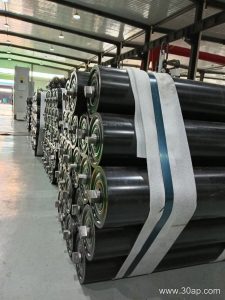
For a full line, frames, idlers, and pulleys should be reviewed together. Buyers often pair the frame package with a Fabric Core Conveyor Belt, an EP Conveyor Belt, or a Chevron Conveyor Belt depending on incline and material, and the frame must accommodate the belt’s thickness and stiffness.