What Sets the Conveyor Idler Price
When a maintenance planner in a quarry or a procurement officer at a coal washing plant asks about conveyor idler price, the answer is never a single figure. A carrying idler roller is a small assembly, but its cost is built from several decisions: tube material and wall thickness, shaft diameter, bearing size, seal design, roller diameter and length, and the surface form. Each of these choices changes both the quotation and the service life. Two rollers that look similar from the outside can differ significantly in price because one uses a heavier bearing housing or a deeper labyrinth seal.
The keyword matters most at the point of replacement. A conveyor with hundreds of idlers may need a few dozen units per year, and small unit price differences add up across a large order. That is why buyers compare not only the headline number but also the specification behind it.
How a Carrying Idler Is Built
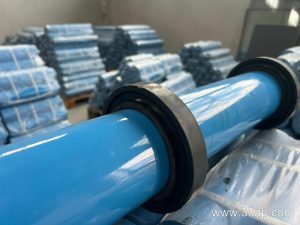
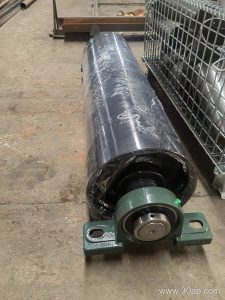
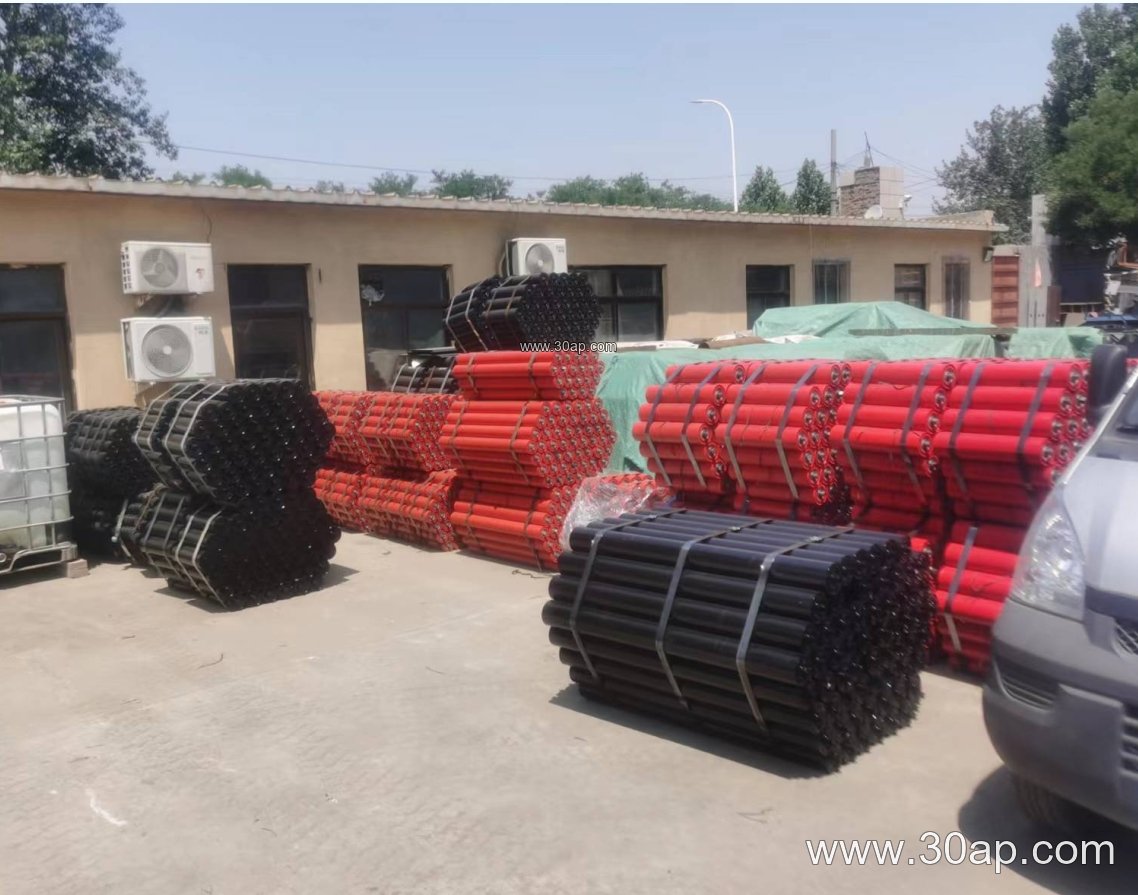
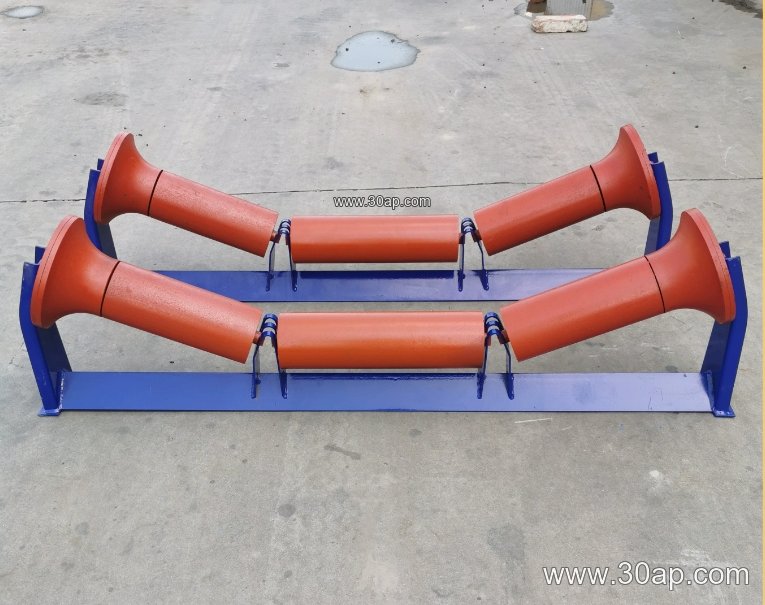
A standard troughing idler roller usually consists of a steel tube, a through shaft, bearing housings at each end, bearings, and a sealing system. The tube is often machined at the ends to seat the bearing housing squarely. Common roller diameters include Ø89, Ø108, Ø127, Ø133 and Ø159 mm, and larger sizes such as Ø178, Ø194 and Ø219 mm appear on heavy-duty installations. The bearing is typically a deep groove ball bearing such as 6204, 6205, 6305, 6306, 6308 or 6310, chosen according to load and shaft size rather than matched to one tube diameter.
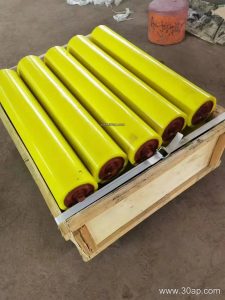
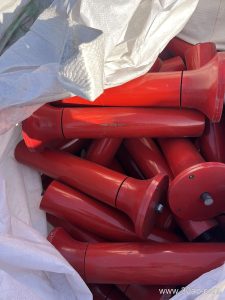
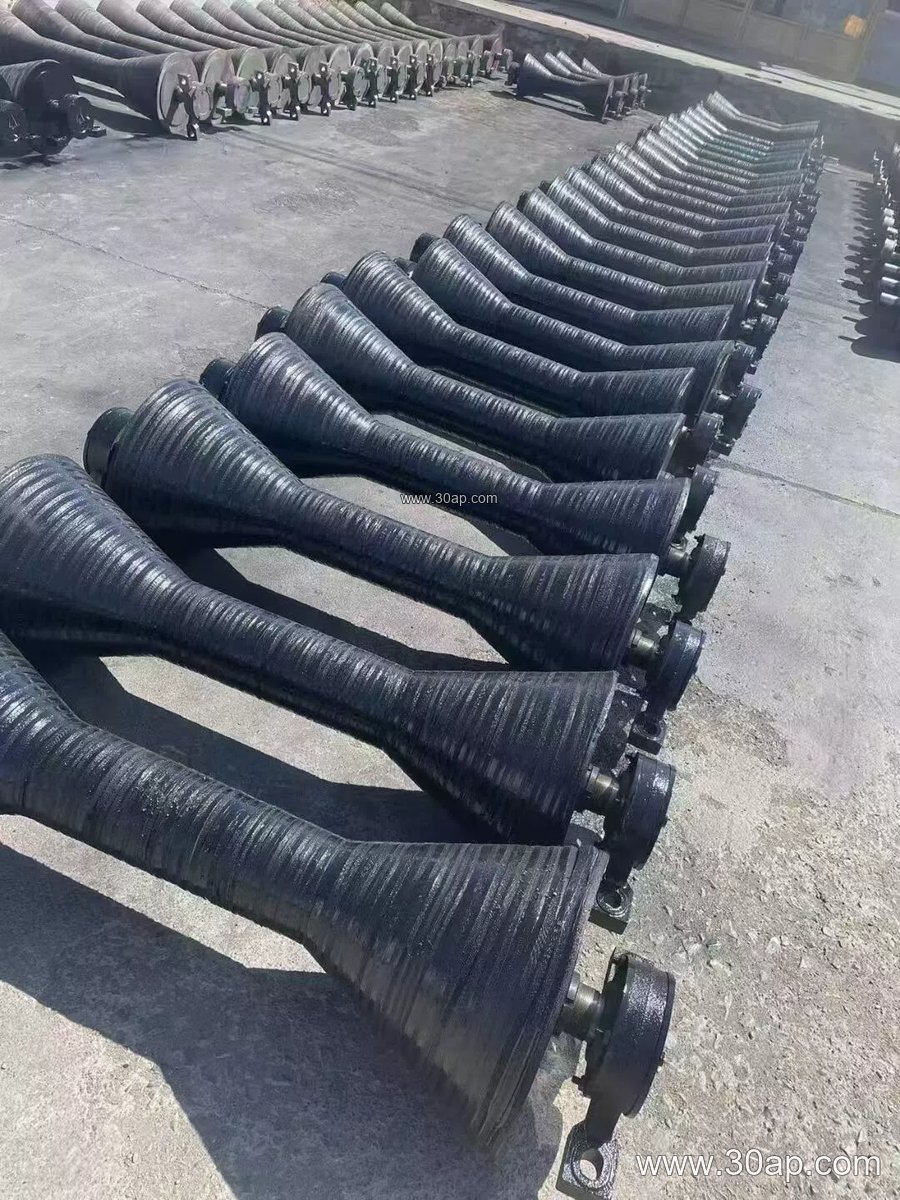
Surface form also influences cost. A plain steel tube is the baseline. Nylon, ceramic or rubber rings add wear protection or cushioning and raise the unit price. For a comparison, a rubber-disc impact idler used at a transfer point costs more than a plain carrying roller because of the extra rings and heavier build, but it protects the belt where lumps fall. The impact idler and the troughing idler are different components serving different positions, so one should not be quoted as a substitute for the other.
Where These Rollers Work
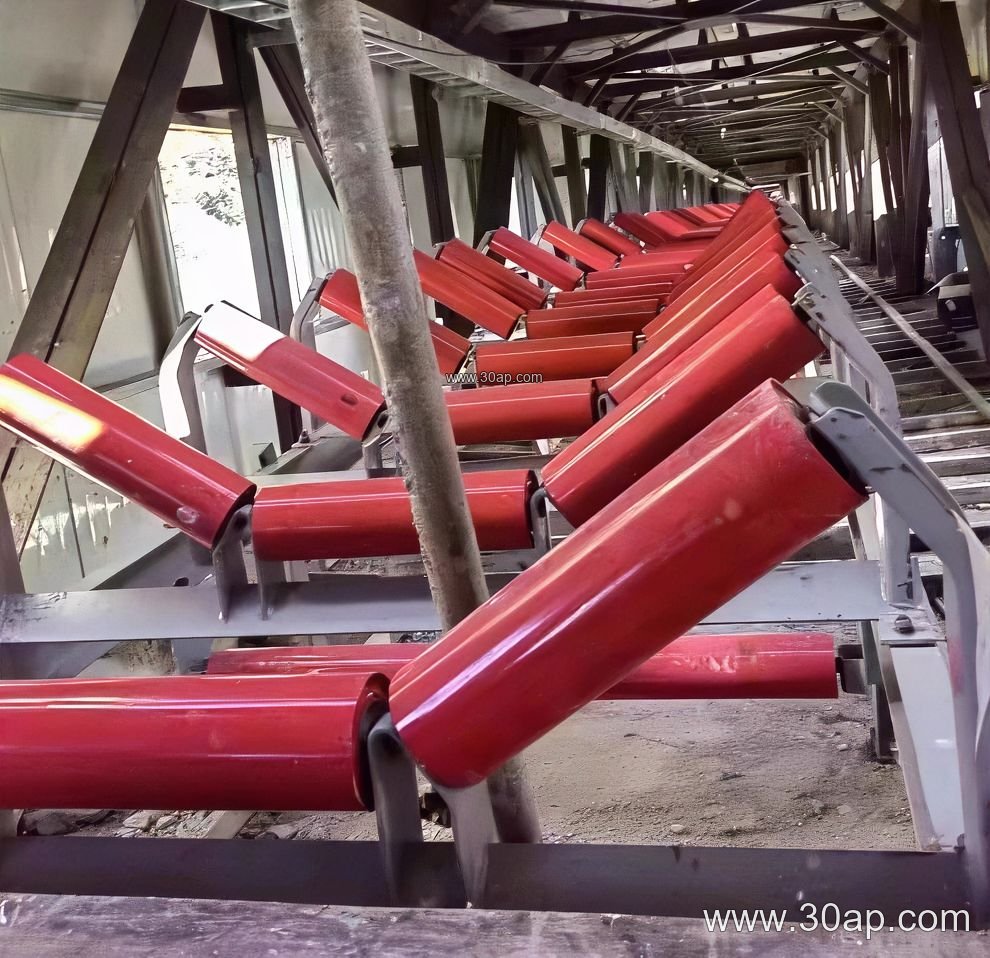
Carrying idlers support the loaded strand of a conveyor belt in sand and gravel plants, cement lines, power station coal yards and iron ore handling. Return rollers support the empty strand underneath. In a crusher discharge conveyor, impact rollers may sit below the chute, while standard troughing sets handle the rest of the run. A mining conveyor belt moving abrasive rock puts more demand on the roller surface than a clean aggregate line, and that difference is reflected in the specification and the price.
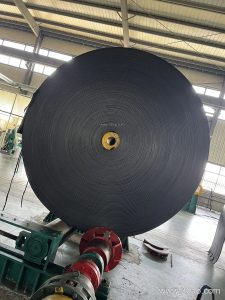
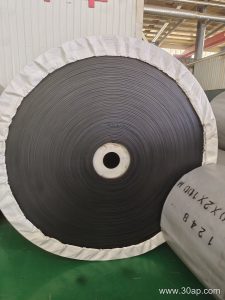
The belt itself is part of the picture. A heavy abrasion resistant conveyor belt or a steel cord conveyor belt may justify a more robust roller set, while a fabric core conveyor belt on a shorter run may be served by a lighter, lower-cost idler. Matching the roller to the belt and the load is more economical than buying either the cheapest or the most expensive option by default.
Common Sizes and Reference Data
The table below shows typical reference values. Actual roller length depends on belt width, trough angle and the idler set configuration, and should be confirmed against the conveyor drawing.
| Item | Common Reference Values |
|---|---|
| Belt width | B500, B650, B800, B1000, B1200, B1400, B1600, B1800, B2000 |
| Roller diameter | Ø63, Ø76, Ø89, Ø102, Ø108, Ø127, Ø133, Ø159, Ø178, Ø194, Ø219 |
| Trough angle | 20°, 30°, 35°, 45° |
| Idler set | single roll, two-roll, three-roll troughing |
| Bearing | 6204, 6205, 6305, 6306, 6308, 6310 |
| Roller surface | steel tube, nylon, ceramic, rubber rings |
| Typical roll length, three-roll troughing | about 200 mm at B500, 250 mm at B650, 315 mm at B800, 380 mm at B1000, 465 mm at B1200, 530 mm at B1400, 600 mm at B1600, 670 mm at B1800, 750 mm at B2000 |
These figures are examples, not fixed pairings. Side rollers and center rollers can differ, and a given belt width does not dictate one pulley diameter or one shaft size. Buyers should treat the table as a starting point for discussion with the supplier.
What to Check in a Quotation
- Tube wall thickness and material grade, since thin tubes wear through faster in abrasive service.
- Bearing brand and clearance, plus the seal type; a good labyrinth seal extends life in dusty plants.
- Shaft diameter and end machining, which affect fit in the conveyor bracket.
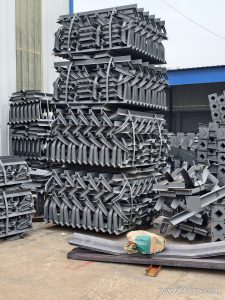
- Roller length and trough angle for each set position, not just the headline diameter.
- Surface form: plain, nylon, ceramic or rubber ring, matched to the duty.
- Whether the offer covers the idler frame and bracket or the roller alone.
A quotation that lists only a diameter and a belt width is incomplete. The conveyor idler price should be tied to a full description so that replacement orders repeat the same build. For larger projects, grouping rollers by position and duty helps compare offers fairly and keeps spare parts consistent across a plant.