What a Head Bend Pulley Does
The head bend pulley is a direction-change pulley mounted near the head of a belt conveyor, usually between the head drive pulley and the take-up or return run. Its job is to guide the conveyor belt around a curve so the belt can reach tensioning equipment, a second drive, or a return strand without crowding the head frame. It does not pull the belt the way a drive pulley does, and it is not the tail pulley that carries the belt at the loading end. It is a bend pulley in the head zone, and that position defines its duty.
In a typical arrangement, the belt leaves the head pulley, passes over the bend pulley, and turns toward a take-up pulley or down into the return idlers. This redirection keeps the head structure compact and gives the take-up room to work. The same component may be called a head redirect pulley or a head snub pulley when its main task is to increase wrap angle, but it remains a bend pulley by function.
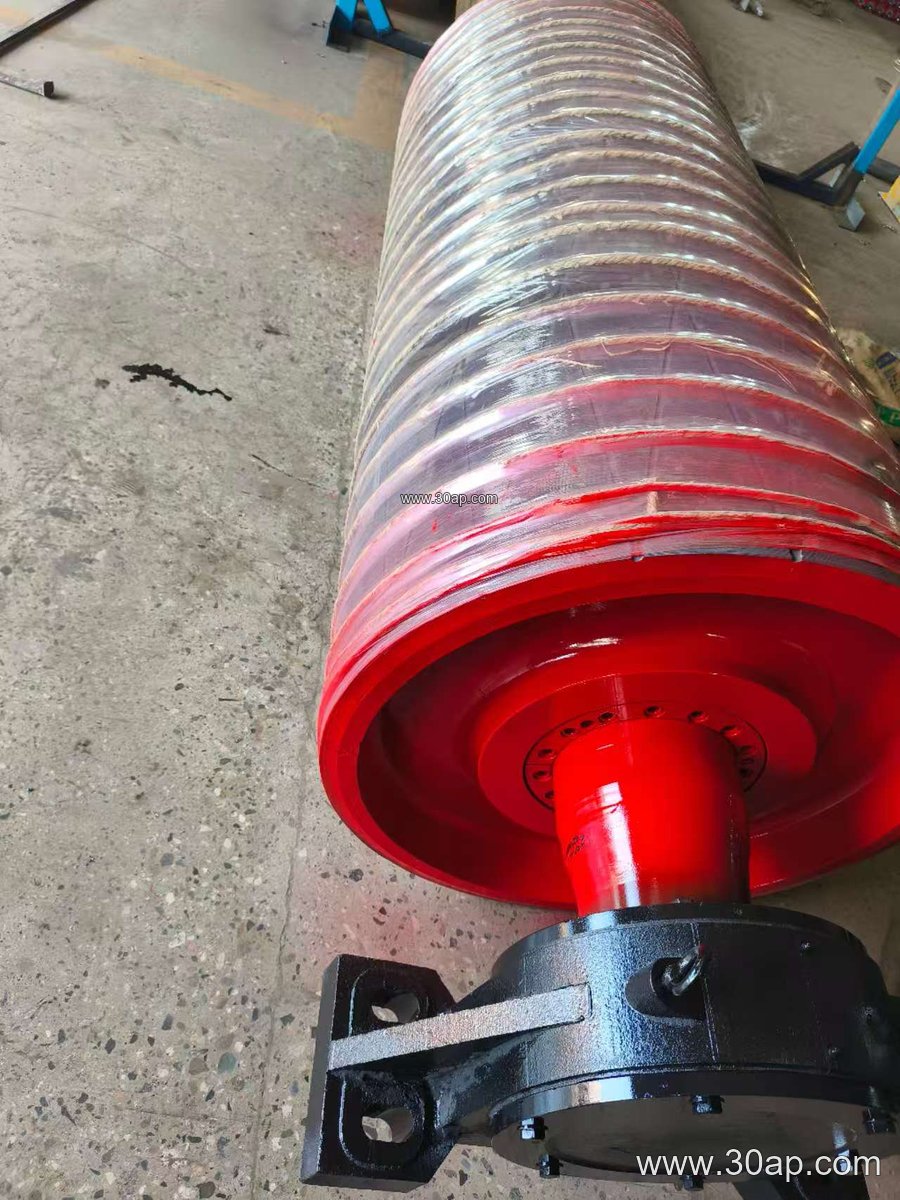
Construction and Surface Options
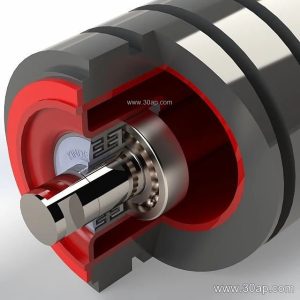
A head bend pulley is built around a steel shell with end discs, a shaft, bearing housings, and a lagging layer where grip or wear protection is needed. Shell diameter and face width follow the belt width and the belt path, while shaft diameter follows torque and bearing load rather than belt width alone. Common shell diameters include Ø400, Ø500, Ø630, Ø800, and Ø1000, with larger sizes for high-tension installations. Face width is normally a little wider than the belt, for example about 950 mm for a B800 belt or about 1150 mm for B1000.
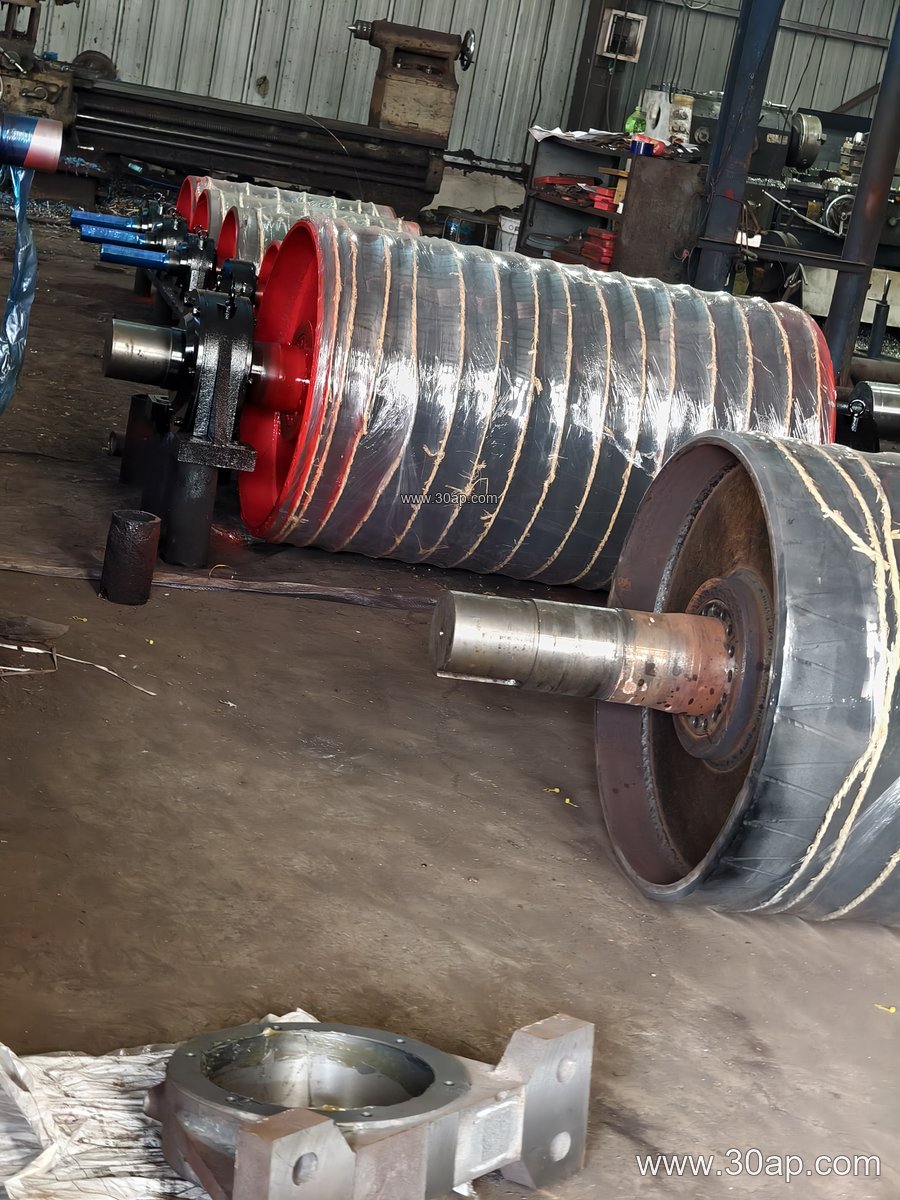
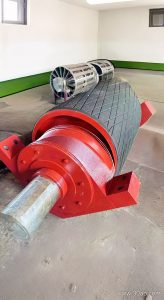
Surface treatment matters on a head bend pulley because the belt may slip slightly if the pulley rotates unevenly or collects fines. Plain shells are common where wrap angle is generous. Rubber lagging, applied cold or hot, improves friction; diamond and herringbone patterns help shed water and fines. Ceramic lagging suits abrasive service in a quarry or iron ore plant. Lagging thickness is often 8, 10, 12, or 15 mm, with 20 mm used in heavy-duty positions.
- Plain shell for clean, low-tension redirects
- Cold-bonded or hot-vulcanized rubber lagging for general grip
- Diamond or herringbone lagging for wet, dusty head zones
- Ceramic lagging for abrasive ore and aggregate duty
Where It Fits on the Conveyor
The head bend pulley is often found in a coal preparation plant, a cement clinker line, a power plant coal handling system, or a port bulk terminal where the head frame also carries the take-up. In these layouts, the belt may be a fabric core type such as an EP conveyor belt or NN conveyor belt, or a steel cord belt on long runs. The bend pulley must match the belt’s stiffness and the tension it carries, so a steel cord conveyor belt on a long overland line usually calls for a larger diameter and a heavier shaft than a short fabric belt.
Position also affects maintenance access. A bend pulley tucked behind the head pulley can be hard to inspect, so bearing greasing points and lagging wear should be checked during planned stops. Misalignment here shows up as belt edge wear, tracking drift, and uneven lagging polish. When a conveyor bracket or conveyor pulley frame is replaced, the bend pulley center height and offset should be checked against the belt line, not guessed.
Selection Points for Buyers
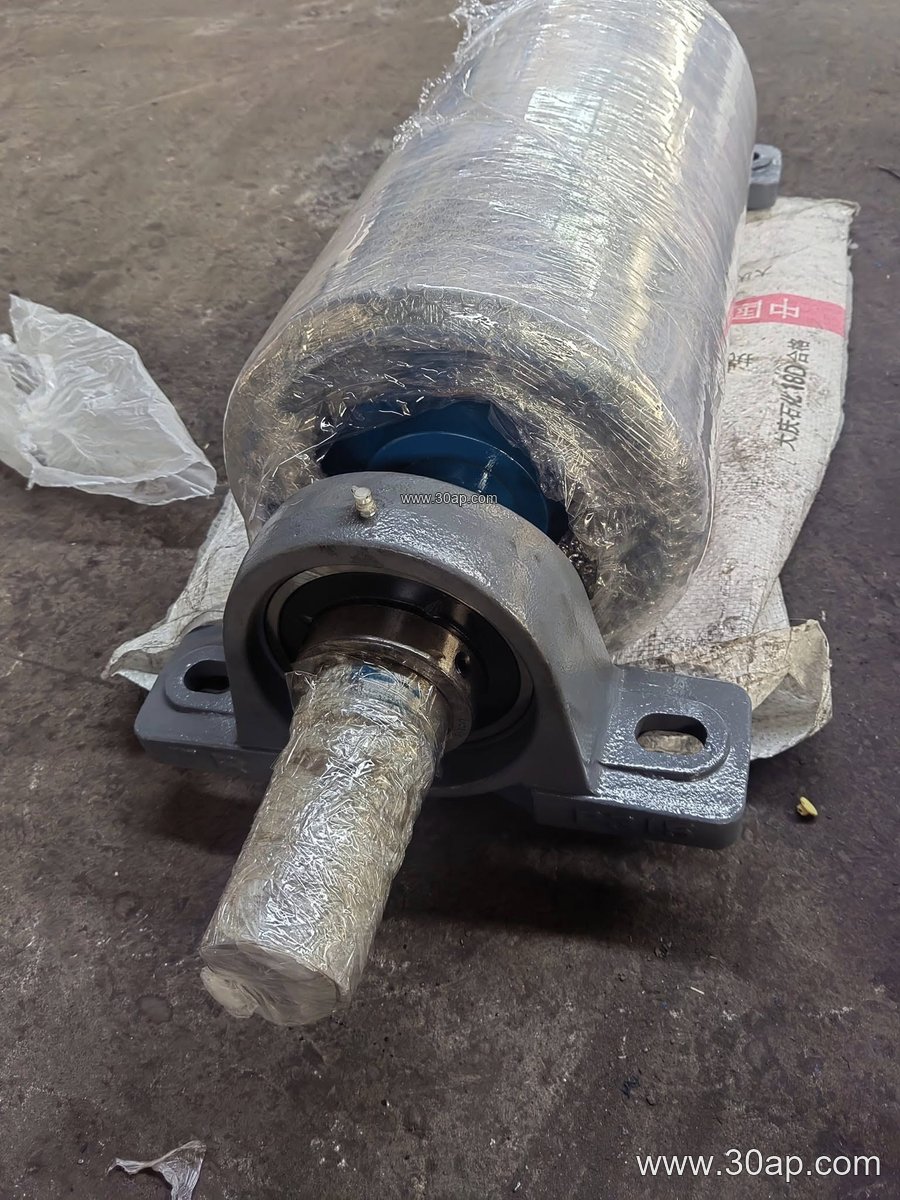
Buyers should provide belt width, belt type, belt tension, wrap angle, and the space available at the head. A B1200 × Ø1000 head bend pulley is a common combination, but it is not the only valid match for that belt width. Shaft diameter is determined by torque and load, with common sizes from Ø80 to Ø160 and larger where needed. Bearing type, housing style, and lagging pattern should be stated clearly, because a head bend pulley with the wrong lagging can wear faster than the belt it guides.
Ask for the pulley drawing, the lagging specification, and the balancing grade. For abrasive service, consider abrasion resistant conveyor belt grades and matching lagging. For hot material, heat resistant conveyor belt grades and heat-tolerant lagging may be relevant. In underground coal mining, flame retardant conveyor belt and anti-static conveyor belt requirements also influence the pulley’s surface choice and electrical grounding. A head bend pulley is a small part of the conveyor, but its alignment and surface condition affect belt life across the whole head station.