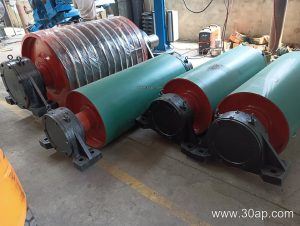
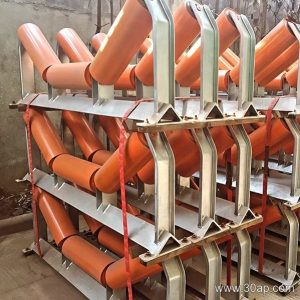
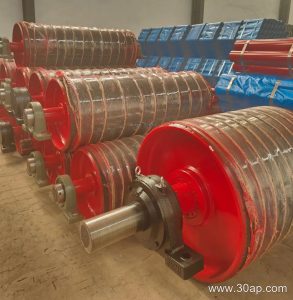
What a Conveyor Take-Up Pulley Does
A conveyor take-up pulley is the drum that holds and adjusts belt tension on a conveyor. It usually sits at the tail end or in a dedicated take-up section, mounted on a sliding or pivoting frame so the pulley can move as the belt stretches with load and wear. Without this movement, a loose belt would slip on the drive pulley, wander off the idler roller train, and spill material along the route. The take-up pulley is therefore a tensioning component first and a direction-changing component second, which distinguishes it from the tail pulley or a bend pulley in the same frame.
The same drum is often called a tension pulley or take-up drum. These are accurate equivalents, but a drive pulley, tail pulley, or bend pulley should not be treated as a substitute, because each performs a different job in the conveyor layout.
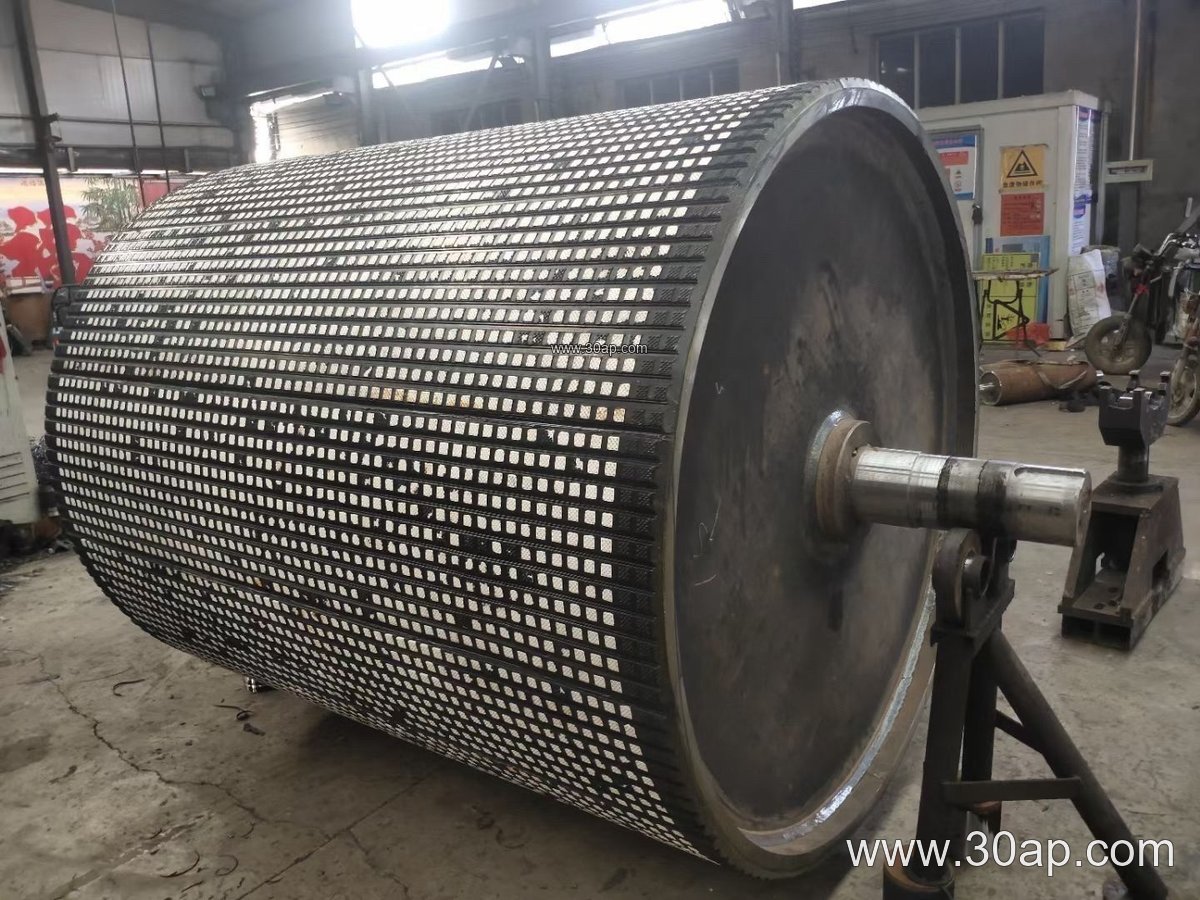
How the Drum Is Built
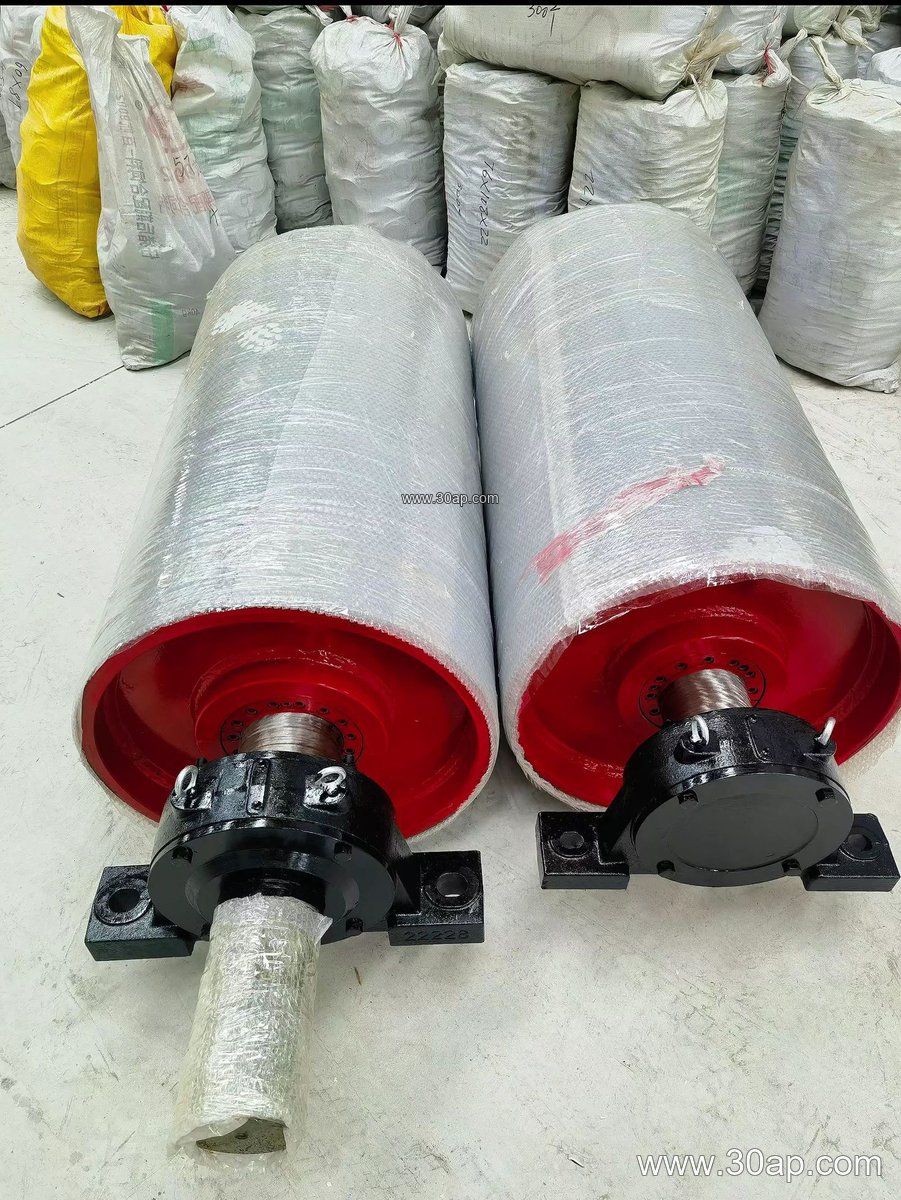
Most units combine a welded steel shell, a shaft, bearing housings, and a lagging surface. The shell diameter and face width follow the belt width and the required wrap angle. Typical face widths are slightly wider than the belt, so a B800 belt usually runs on a pulley face of about 950 mm, and a B1200 belt on roughly 1400 mm. Diameter choices commonly include Ø315, Ø400, Ø500, Ø630, and Ø800, with larger drums used where belt tension and wrap requirements are higher. Shaft diameter is set by torque and bearing load, not by belt width alone; common shaft sizes run from Ø80 to Ø200.
Surface options matter on a take-up drum because the belt must grip without slipping. Plain finish, rubber lagging applied cold or hot, diamond grooving, and ceramic tiles are all used. Lagging thickness is often 8, 10, 12, 15, or 20 mm depending on duty.
Common reference combinations
- B800 × Ø500 with 10 mm lagging
- B1200 × Ø1000 with 12 mm lagging
- B1400 × Ø800 with 15 mm lagging
These are reference examples, not fixed pairings. A B1200 belt can run on several drum diameters depending on tension, space, and belt construction.
Take-Up Styles and Mounting
Screw take-up, gravity take-up with a weighted carriage, and hydraulic or winch-driven systems are the usual arrangements. Gravity types respond automatically to belt stretch, which suits long overland routes and high-capacity lines. Screw types are compact and common on shorter conveyors in a quarry or a concrete batching plant. The pulley itself may be fixed to a sliding bearing block on a conveyor bracket, with the bracket taking the reaction load. Alignment of the slide rails and the bracket is critical, because a take-up pulley that racks sideways will misalign the whole belt path.
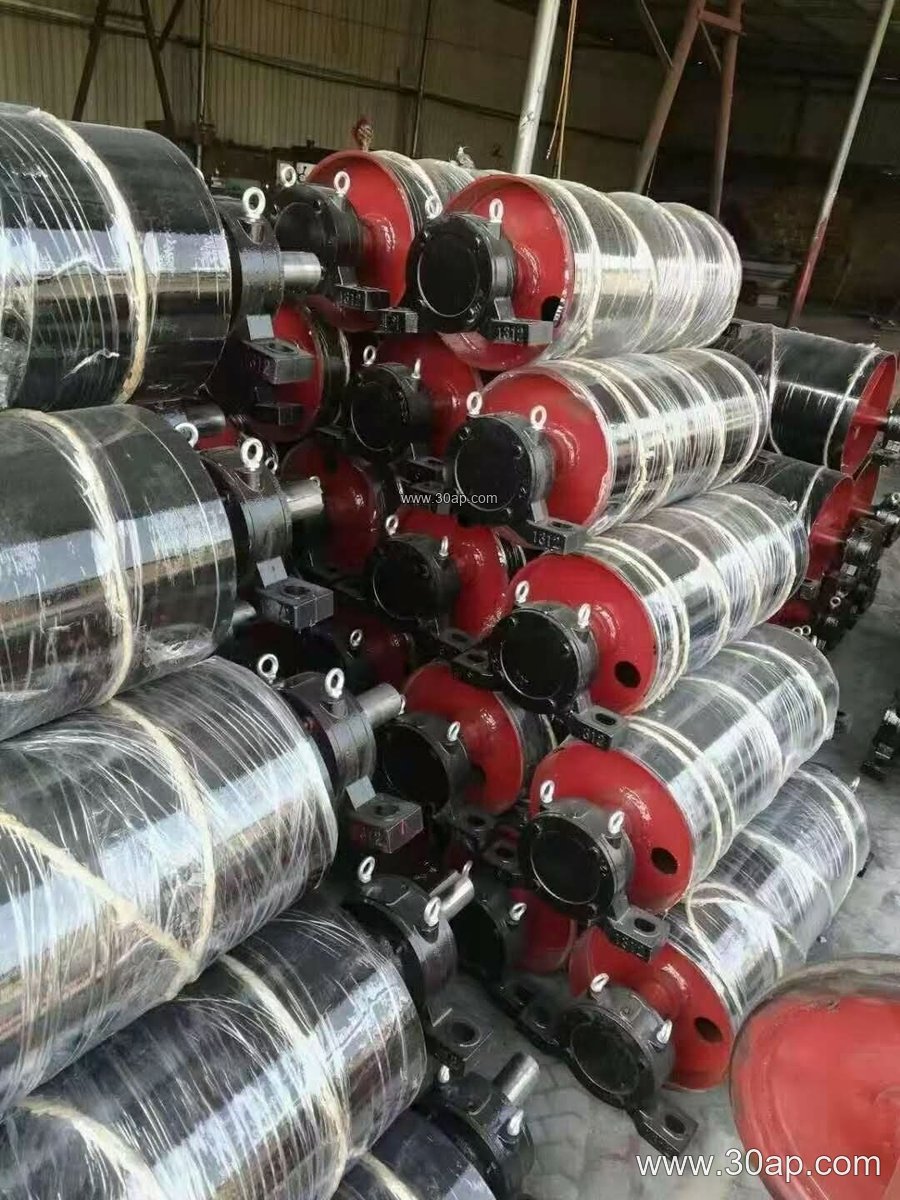
When the drum also changes belt direction, it must be treated as a bend point for wrap calculations. In such cases, a larger diameter or additional lagging may be needed to keep tension within the belt’s rated capacity.
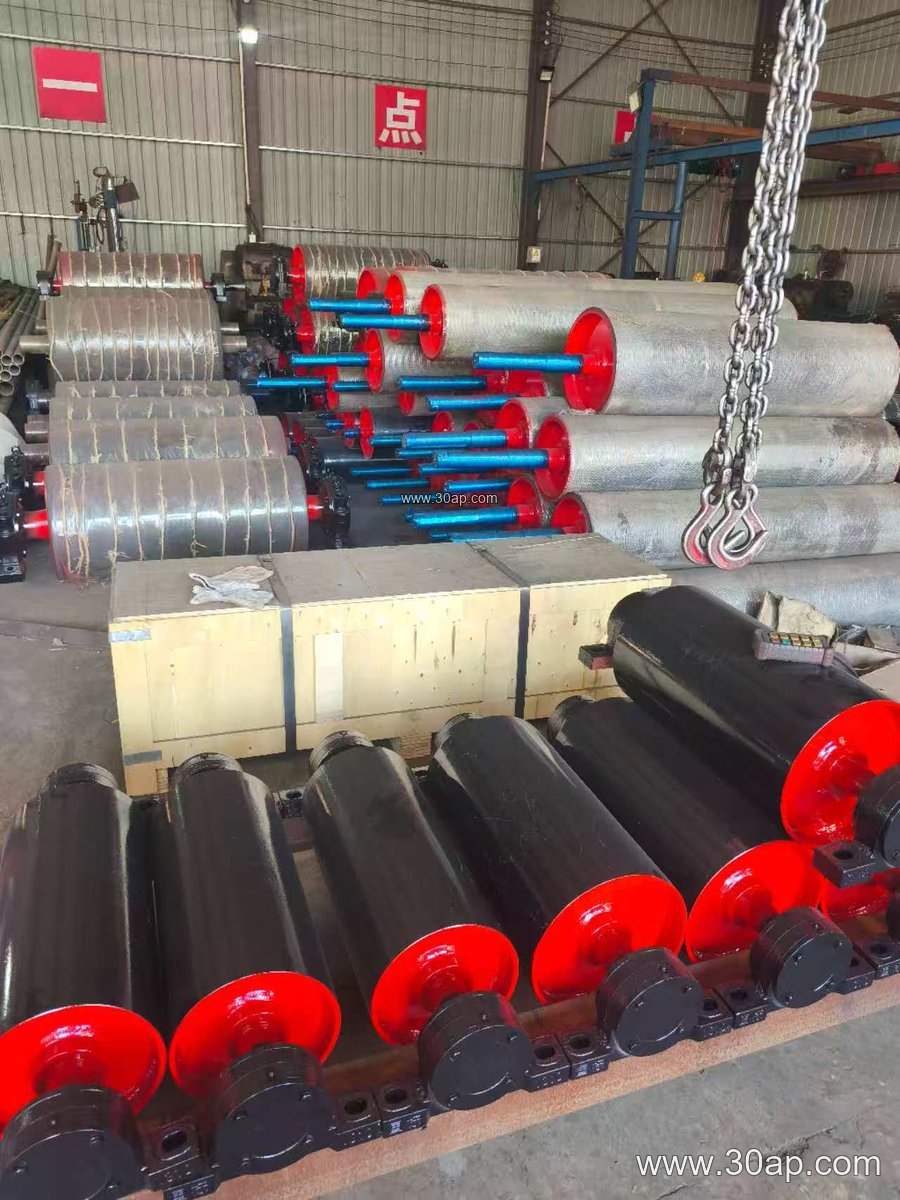
Where It Fits in Real Installations
In a limestone quarry, the take-up drum at the tail of a primary discharge conveyor keeps a heavy abrasion resistant belt tracking through the transfer point. In a coal handling system at a power plant, a flame retardant belt on a gravity take-up carriage needs a drum that can absorb frequent small tension changes without slipping. Cement plants often place take-up pulleys on clinker and raw meal lines where heat and dust shorten belt life, so the tensioning range must allow for regular re-splicing.
The drum must match the belt type it tensions. A steel cord conveyor belt has low elongation and needs a shorter take-up stroke than a multi-ply fabric core belt. An EP conveyor belt or NN conveyor belt stretches differently again, and a pipe conveyor belt has its own tracking requirements. On a chevron conveyor belt or corrugated sidewall conveyor belt, the pulley face must clear the raised profile, so a plain drum with adequate face width is often preferred over a heavily lagged one.
Selection and Maintenance Notes
Buyers should confirm the belt width, belt type and rated tension, the take-up travel required, the shaft and bearing size, and the lagging profile. Ask for the pulley drawing with face width, diameter, shaft diameter, and bearing centers, because these dimensions drive the bracket design. Check that the lagging thickness leaves enough clearance for the belt splice.
In service, inspect the lagging for wear and glazing, check bearing temperature, and confirm that the slide rails move freely. A stiff take-up pulley cannot regulate tension, and the resulting slack will show up as belt slip and edge damage. For lines handling bulk material conveyor belts in mining, ports, or steel plants, a properly sized take-up drum is a low-cost way to protect the belt and the drive train.