What a Conveyor Bracket Assembly Does
A conveyor bracket assembly is the structural frame that holds idlers in the correct position under or above the belt. It is not a single welded piece on every system, but the complete set of cross beams, mounting plates, angle or channel sections, and fastening points that keep a conveyor pulley and its supporting rollers aligned with the belt path. In a quarry, a cement plant, or a power plant coal yard, this assembly is what turns a loose row of rollers into a stable carrying line.
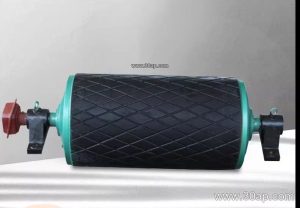
The bracket assembly is often described by its function rather than its shape. A troughing bracket assembly supports the three-roller arrangement that forms the belt into a trough. A return bracket assembly holds the lower rollers that support the empty strand. Both belong to the same product family, but they are not interchangeable, and neither should be confused with a drive pulley, tail pulley, or bend pulley, which are separate rotating components.
How the Assembly Is Built
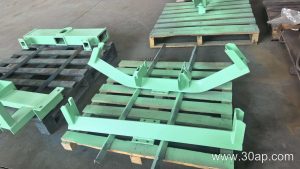
Most assemblies are fabricated from angle steel, channel steel, or folded steel plate. The cross beam carries the idler mounting points, while end plates or hooks locate the bracket on the conveyor stringer. Bolt slots allow adjustment during installation, and the bracket height is set so the belt sits at the designed profile.
Typical bracket configurations include:
- Troughing bracket for the carrying side, often with 20, 30, 35, or 45 degree trough angles
- Transition bracket near the head or tail, where the belt changes from flat to troughed
- Return bracket and V-return bracket for the lower strand
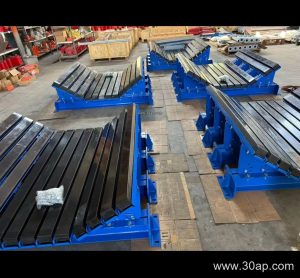
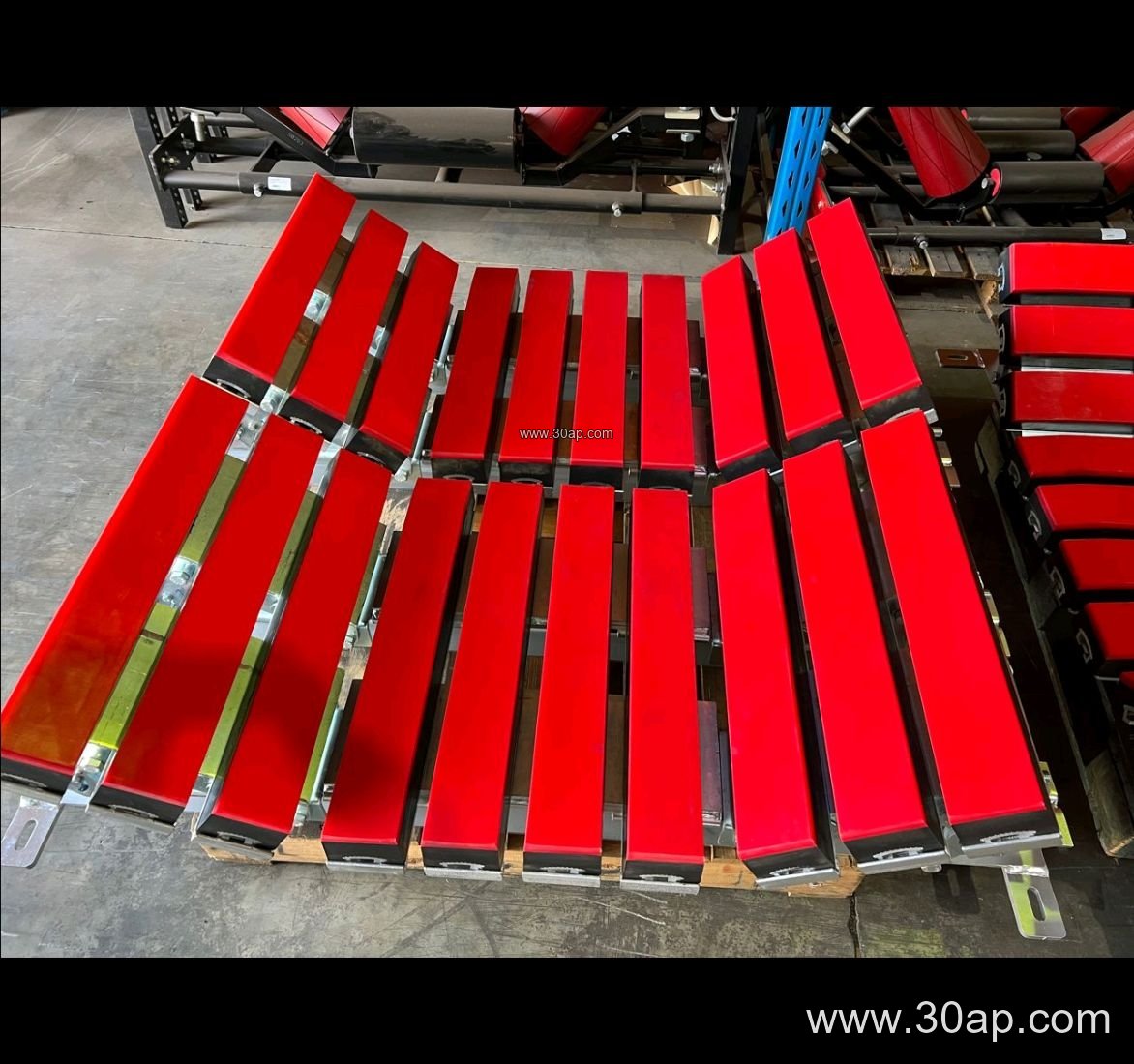
- Impact bracket under the loading point, paired with impact idlers
- Self-aligning bracket that allows slight lateral movement to correct belt tracking
- Adjustable bracket that can be set to different trough angles on site
Material thickness and weld quality matter more than appearance. A bracket that flexes under load will wear idler bearings quickly and can cause edge damage on a heavy-duty conveyor belt.
Matching Bracket, Belt, and Roller
Belt width and roller diameter are linked through the bracket design, but there is no single fixed rule that ties one belt width to one roller size. A B800 assembly may use Ø89 or Ø108 rollers depending on load and belt speed, while a B1200 line in an iron ore plant often uses Ø133 or Ø159. The bracket drawing should state the mounting hole spacing and beam length for the actual belt width and trough angle.
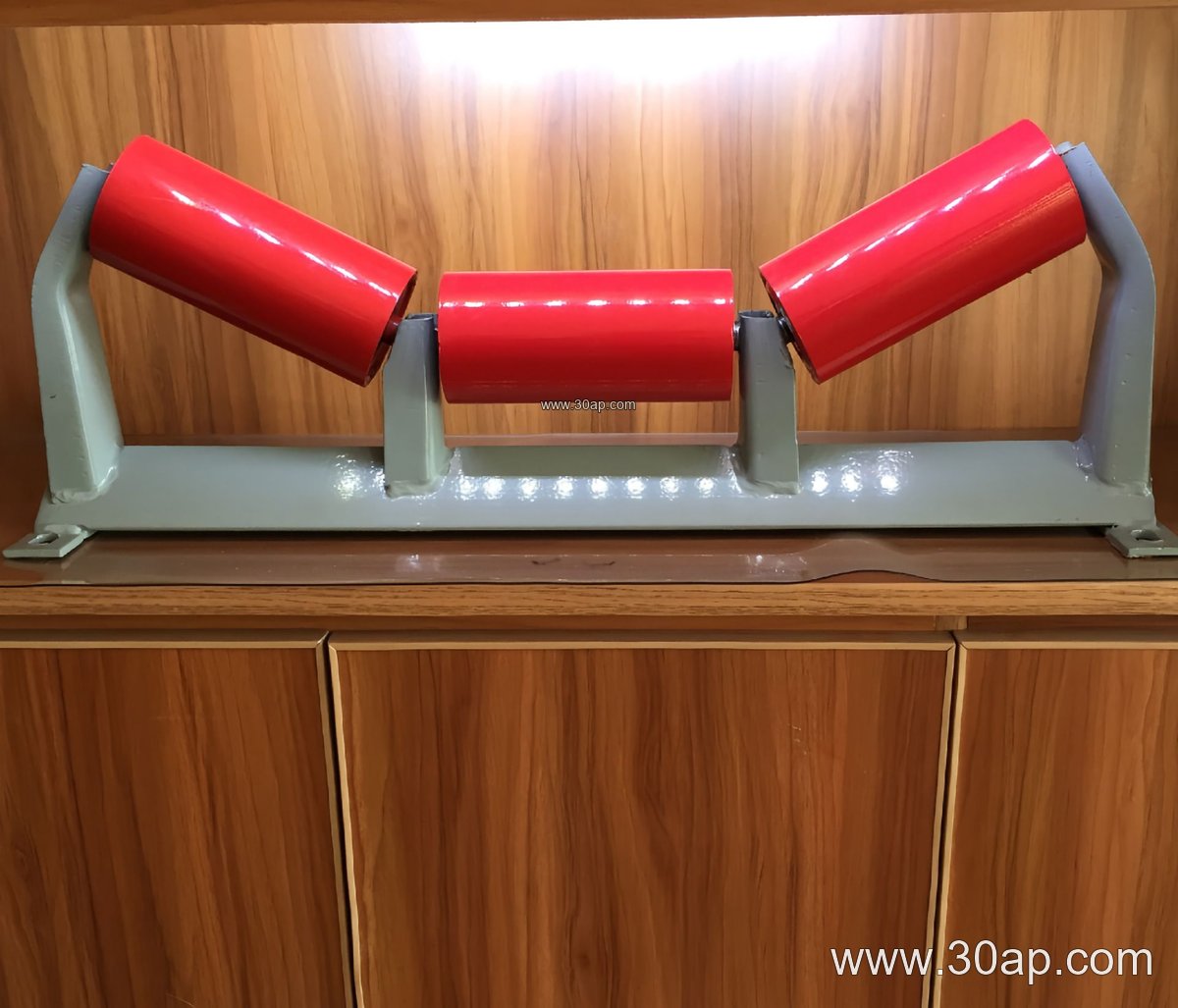
Common reference combinations include B650 with a 30 degree trough and Ø89 rollers, B800 with 35 degrees and Ø108, and B1200 with 45 degrees and Ø133. These are examples, not mandatory matches. Forward-leaning brackets are usually set at about 1.5 to 2 degrees to help center the belt.
Where These Assemblies Are Used
In a limestone quarry or a crushing and screening line, troughing bracket assemblies carry abrasive rock on an abrasion resistant conveyor belt. In a coal washing plant, flame retardant conveyor belt grades are common, and the bracket frames must tolerate wet, dusty conditions. Cement plants use them on clinker and raw meal lines, where heat resistant conveyor belt sections may appear near kiln discharge.
The same assembly logic applies to a ship loading conveyor at a port, a fertilizer handling line, or a grain silo. The belt may be an EP conveyor belt, an NN conveyor belt, or a steel cord conveyor belt, but the bracket still has to hold the idlers at the right height and angle.
Buyer Checklist
- Confirm belt width, trough angle, and roller diameter before ordering
- State whether the bracket is fixed or adjustable
- Check mounting hole spacing against the existing stringer
- Specify the environment: wet, dusty, corrosive, or high temperature
- Ask for the steel section size and surface treatment
- Keep spare brackets for transition and impact zones, where wear is fastest
A well-chosen conveyor bracket assembly keeps the belt, idler roller, and conveyor pulley working as one system. Buyers who treat it as a minor part often pay for it later in tracking problems and downtime.