What an Ore Conveyor Belt Does
An ore conveyor belt is the load-carrying element of a bulk handling system that moves crushed rock, lump ore, and mineral concentrate between the pit, stockpile, screen house, and loadout point. Unlike a general-purpose belt, it works under sharp edges, heavy lumps, and constant abrasion, so its carcass and covers are matched to the duty rather than chosen by width alone. The same product is often called a mining conveyor belt, and both names describe the same article; the difference is only the application wording.
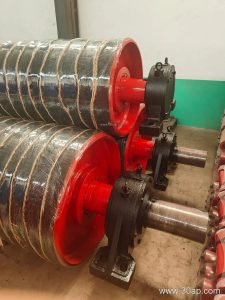
In a mine, quarry, cement works, power plant, or sand and gravel yard, the belt sits on idler rollers and is driven by a head pulley, with a tail pulley at the feed end and bend pulleys where the path changes direction. Those pulleys are separate components with their own duties, and a drive pulley cannot be swapped for a tail or bend pulley in the layout.
Construction and Carcass Options
The belt is built from a rubber cover on both faces and a load-bearing carcass inside. The carcass determines tensile strength and elongation, while the covers resist wear, heat, oil, or flame. Common constructions include:
- EP conveyor belt with polyester-nylon fabric plies, widely used for general ore haulage.
- NN conveyor belt with nylon-nylon plies, offering good flexibility and impact absorption.
- Steel cord conveyor belt for long runs and high tonnage, where a single layer of steel cords replaces multiple fabric plies.
- Multi-ply fabric core conveyor belt for medium-duty sections and transfer points.
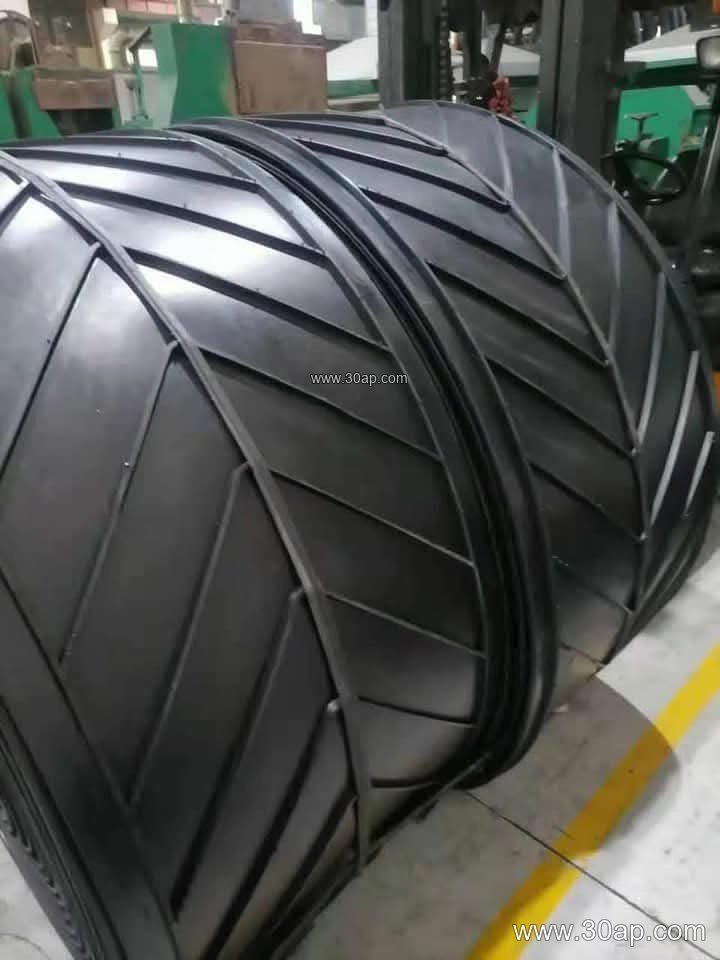
For underground coal work, PVG conveyor belt and PVC mining conveyor belt grades combine a fabric core with a fire-resistant cover. Surface mines often prefer a heavy-duty mining conveyor belt with high abrasion resistant covers. Where the route climbs steeply, a chevron conveyor belt or a corrugated sidewall belt may be used, and enclosed routes can use a pipe conveyor belt. These are alternative designs for specific conditions, not substitutes for the standard ore belt on a flat main line.
Typical Reference Data
The following values are common industry references, not fixed rules. Final selection depends on the conveyor design, lump size, drop height, and operating hours.
| Parameter | Common reference values |
|---|---|
| Fabric core types | EP200, EP315, EP400, EP500, EP630, EP800, EP1000, EP1250, EP1600 |
| Steel cord grades | ST1000, ST1250, ST1600, ST2000, ST2500 |
| Belt width | B500, B650, B800, B1000, B1200, B1400, B1600, B1800, B2000 |
| Cover thickness (top + bottom) | 3+1.5, 4+2, 5+2, 6+2, 8+3 mm |
| Fabric plies | Usually 2 to 6 layers |
An EP1000 belt at 1200 mm width is a frequent combination on medium-length ore lines, while an EP1250 or steel cord grade may suit a 1800 mm wide main trunk. Belt width and pulley diameter are matched during engineering, and no single width fixes one pulley size.
Cover Grades and Working Conditions
Cover compound is chosen for the environment. An abrasion resistant conveyor belt handles sharp, dry ore; a heat resistant conveyor belt suits sinter or clinker; an oil resistant grade is used near lubricated equipment or oily feed; a flame retardant and anti-static belt is typical for coal mining conveyor belts underground. Cold resistant belts are used in winter yards, and acid or chemical resistant covers appear in mineral processing plants handling wet reagents. In cement plants and power plants, heat and abrasion usually dominate the choice.
Buyer Checklist
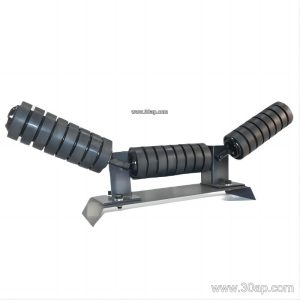
Before ordering, confirm the peak tonnage, maximum lump size, incline angle, and the number and position of pulleys, since these affect both carcass grade and cover thickness. Ask how the belt will be joined; an endless conveyor belt spliced on site behaves differently from one with mechanical fasteners. Check that the idler roller spacing, conveyor bracket layout, and conveyor pulley diameters suit the belt stiffness. For a quarry conveyor belt or crusher conveyor belt, impact at the loading point often matters more than tensile grade, so a thicker top cover and closer idler spacing may be needed. Review the datasheet against the actual duty, and keep spare splice material and a short length of belt in store.