What a Take-Up Device Pulley Does
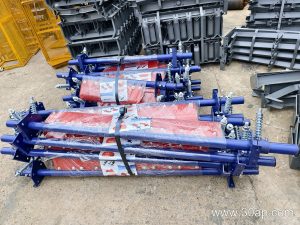
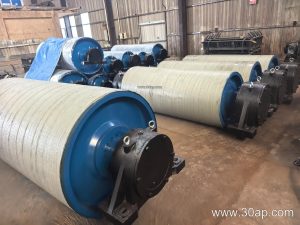
A take-up device pulley is the drum that moves with the tensioning mechanism on a conveyor, giving the belt a controlled amount of slack or pull as operating conditions change. In most layouts it sits at the tail end or in a separate tensioning station, and it is often called a take-up drum or tension pulley. It should not be confused with a drive pulley, a tail pulley or a bend pulley, because each has a different job even though all of them are conveyor pulleys.
Its role is simple to describe but important to get right. When a conveyor starts, stops, or carries a changing load, the belt stretches and contracts. The take-up device pulley follows that movement and keeps the belt seated on the drums and idler rollers without slipping. On a long overland line in a quarry or a coal handling system at a power plant, this travel can be several hundred millimetres.
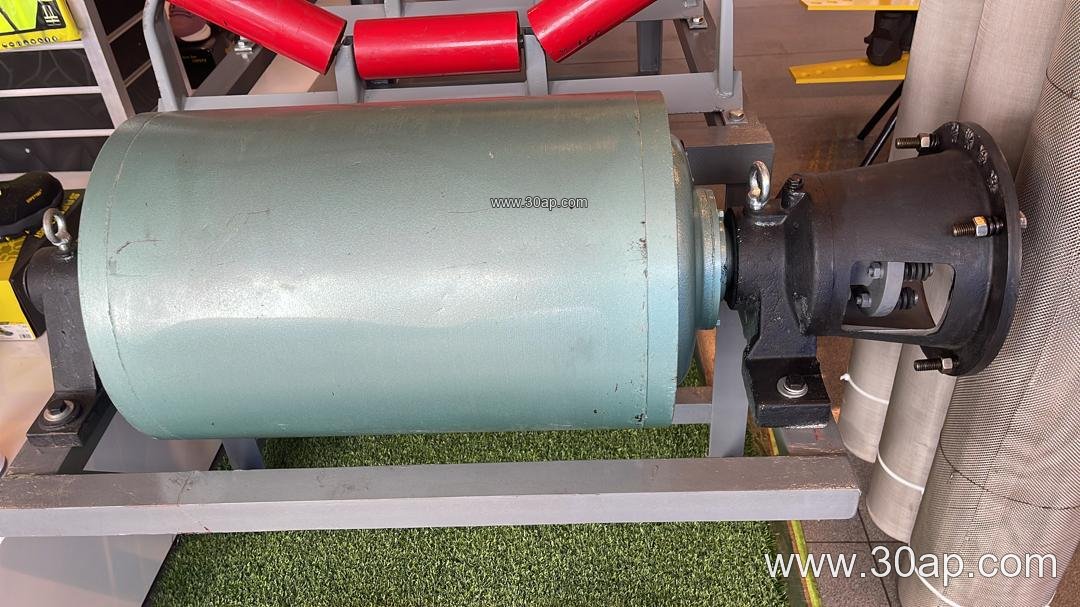
Construction and Surface Options
The drum body is usually a welded steel shell with machined end discs and a shaft sized by torque and load rather than by belt width alone. Common shaft diameters include Ø80, Ø100, Ø120, Ø140 and Ø160, but the final figure comes from the design calculation. Shell diameters are often chosen from a range such as Ø315, Ø400, Ø500, Ø630, Ø800 or Ø1000, and the face width normally runs a little wider than the belt, for example about 1400 mm for a B1200 belt.
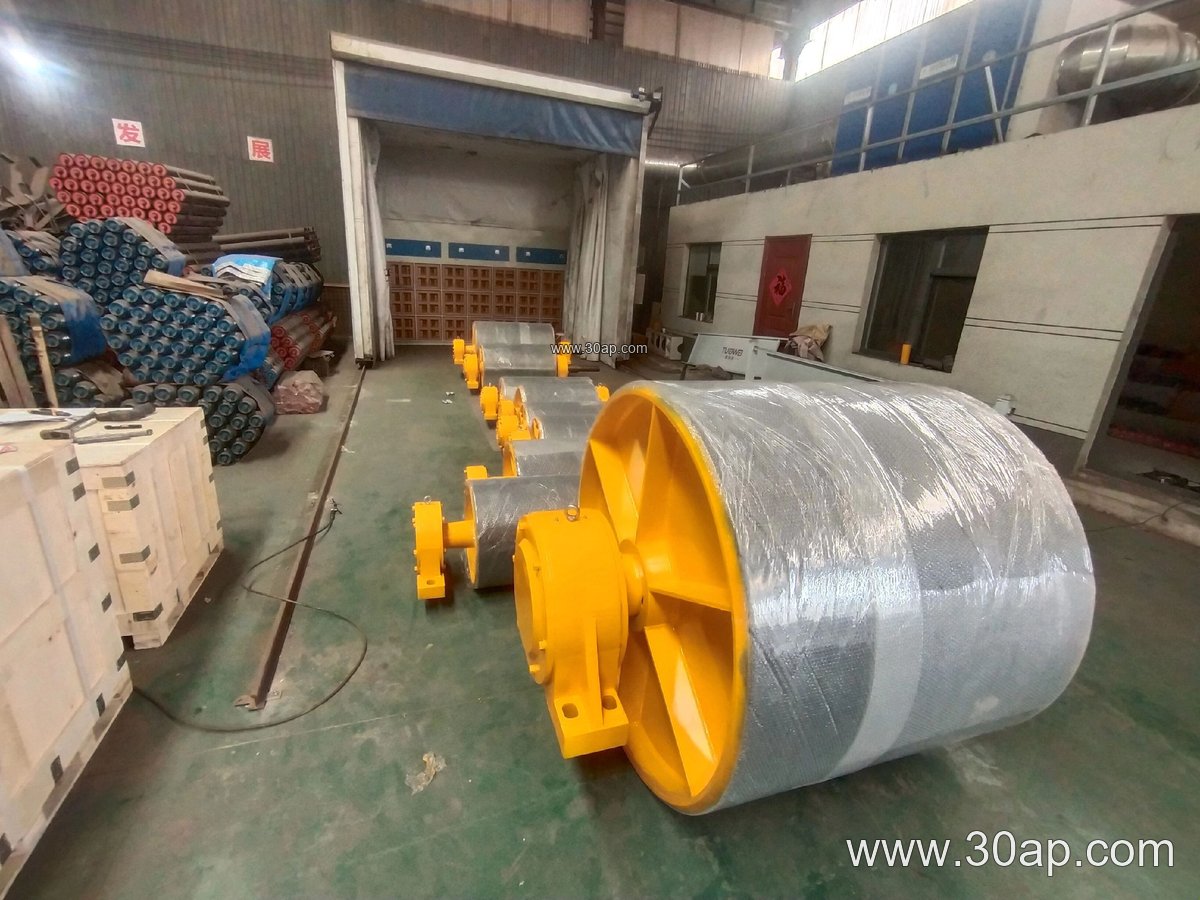
Surface finish depends on grip and environment. Plain face is common where the wrap angle is generous. Rubber lagging, applied by cold bonding or hot vulcanising, improves friction in wet or dusty service. Diamond and herringbone patterns help shed water and fines. Ceramic lagging is used where abrasion is severe, such as in iron ore or sinter handling. Lagging thickness is frequently 8, 10, 12, 15 or 20 mm.
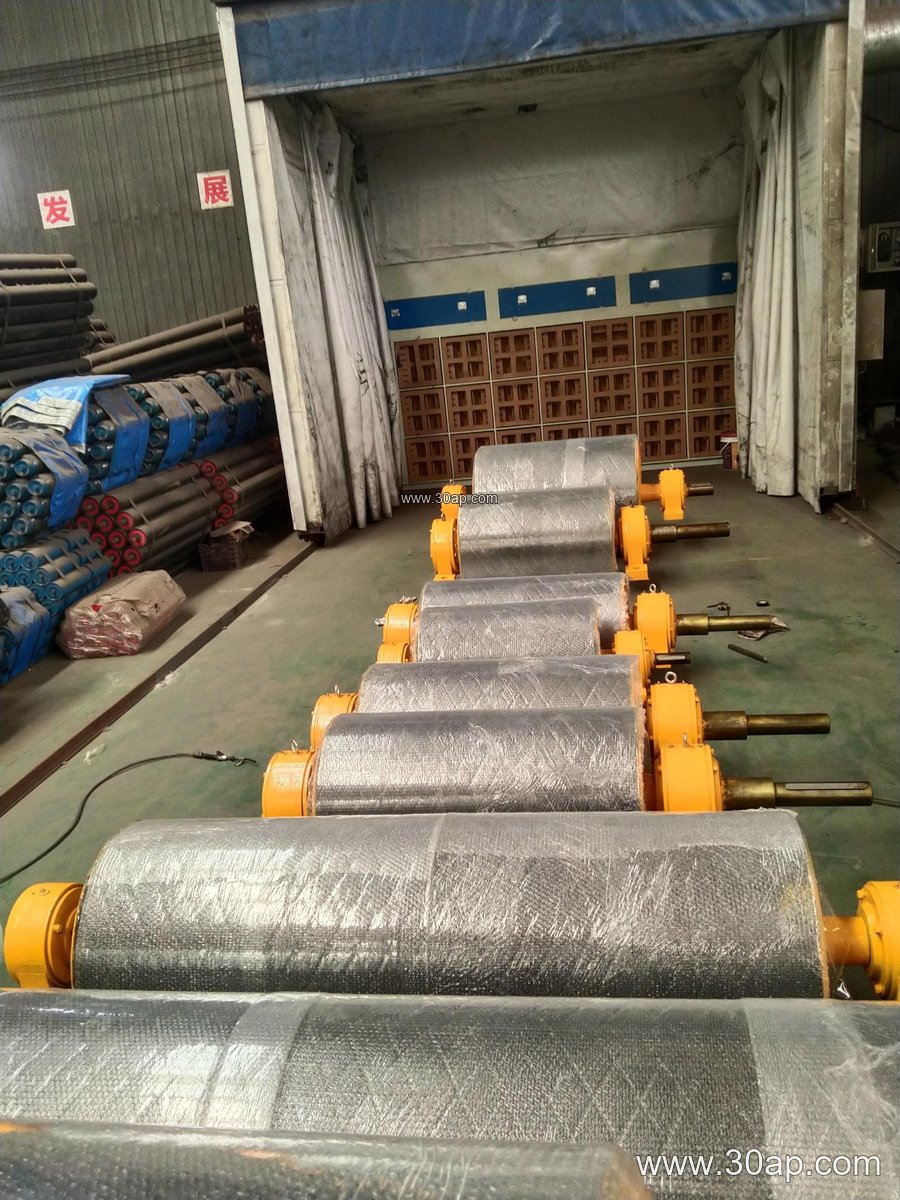
Where It Is Installed
Two locations appear most often. The first is the tail position on a short or medium conveyor, where the take-up device pulley also acts as the return drum. The second is a dedicated tensioning carriage on a horizontal or inclined run, guided by rails and pulled by a screw, gravity weight or hydraulic cylinder. Aggregate lines, cement plant clinker conveyors and port bulk terminals all use this arrangement to keep a stable belt path.
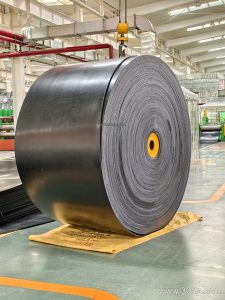
Selection should match the belt itself. A heavy-duty mining conveyor belt with a steel cord carcass behaves differently from a multi-ply fabric core belt, and the take-up travel and pulley diameter need to suit the belt’s stiffness. A rubber conveyor belt on a short crusher discharge may need only modest movement, while a long overland run with an EP conveyor belt or NN conveyor belt needs more reserve stroke.
Matching the Pulley to the Belt Line
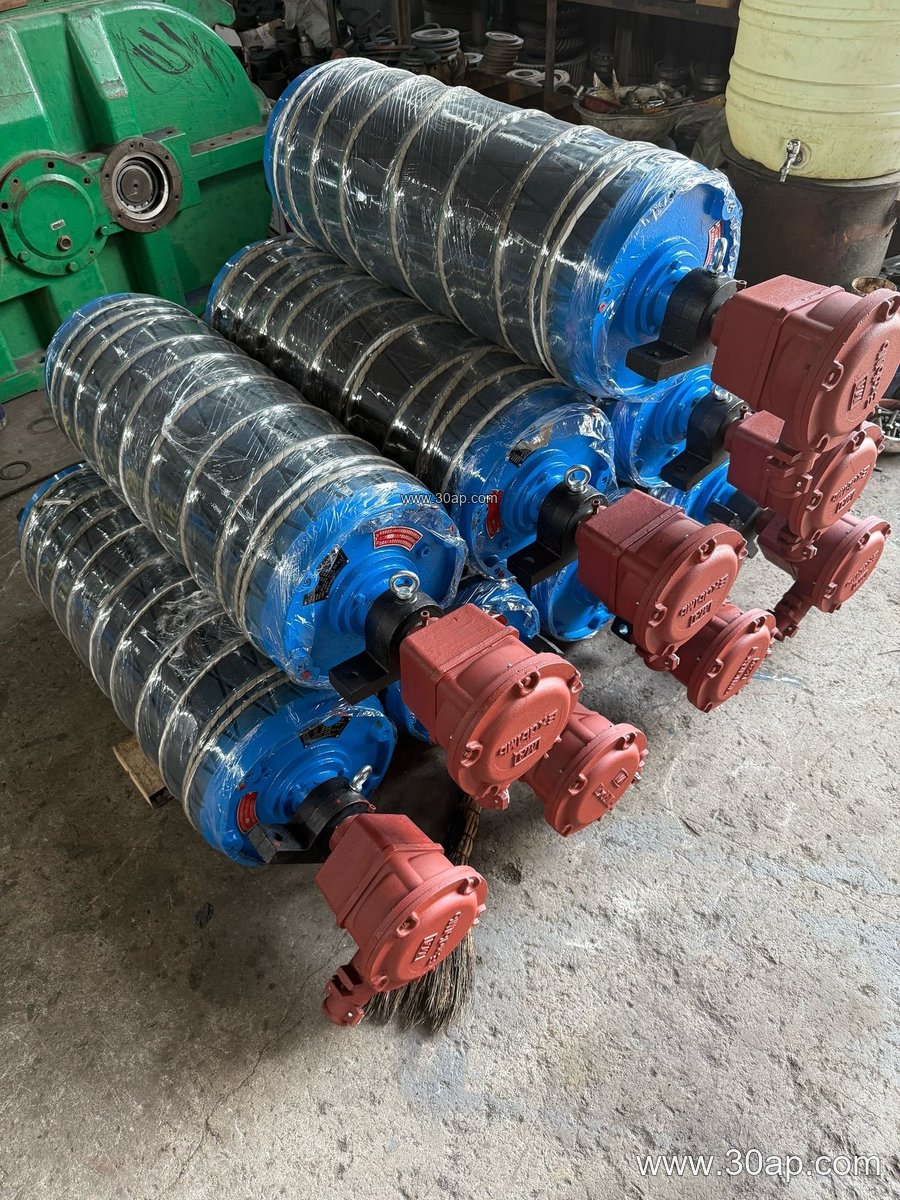
Buyers should share the belt width, belt type, duty cycle, wrap angle and expected take-up travel. Belt width and pulley diameter are related through the belt’s bending behaviour, not through a fixed table. A B800 belt may run on a Ø500 drum in one plant and a larger diameter in another, depending on tension and carcass. Do not assume a fixed shaft size from belt width.
| Parameter | Typical Reference | Notes |
|---|---|---|
| Belt width | B500 to B1400 | Face width usually exceeds belt width |
| Pulley diameter | Ø315 to Ø1000 | Set by belt stiffness and tension |
| Lagging | Plain, rubber, diamond, ceramic | Chosen for grip and wear |
| Lagging thickness | 8 to 20 mm | Confirm with supplier |
| Shaft diameter | Ø80 to Ø160 | Based on torque and load |
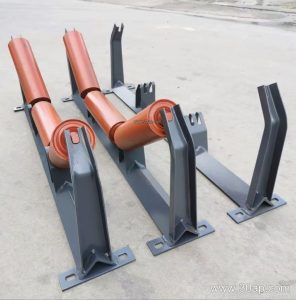
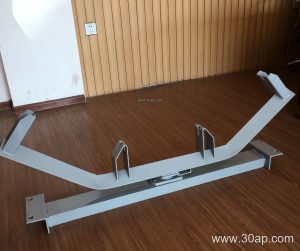
Also confirm the frame, bearing housing and conveyor bracket details, since the carriage must slide freely and stay aligned. A misaligned take-up drum quickly damages belt edges.
Maintenance Points
- Check bearing temperature and lubrication at each inspection.
- Keep the guide rails clean so the carriage moves without sticking.
- Inspect lagging for cuts, glazing or missing tiles.
- Verify that take-up travel remains within the designed stroke.
- Watch belt tracking near the tension station for early signs of misalignment.
For related equipment, buyers often review conveyor belt, idler roller and conveyor pulley specifications together. A well-matched take-up device pulley keeps the whole line running smoothly from the crusher to the stockpile.