What the Discharge-End Pulley Does
The discharge-end pulley is the last drum the belt wraps around before material leaves the conveyor. In many layouts it is simply the head pulley, but its job is specific: it must release the load cleanly, keep the belt tracking straight through the transition, and handle the highest tension in the system. Operators in quarry, cement, and power-plant coal handling often call it the head drum or unloading pulley. The name changes with the plant, but the function is the same, and it is not the same component as a tail pulley or a bend pulley.
Because it sits at the discharge point, the drum sees continuous abrasion from fine particles, plus the full working tension of the belt. A poorly matched discharge-end pulley can cause belt wander, premature cover wear, and spillage at the transfer chute. That is why buyers should treat it as a tension and wear component, not just a rotating cylinder.
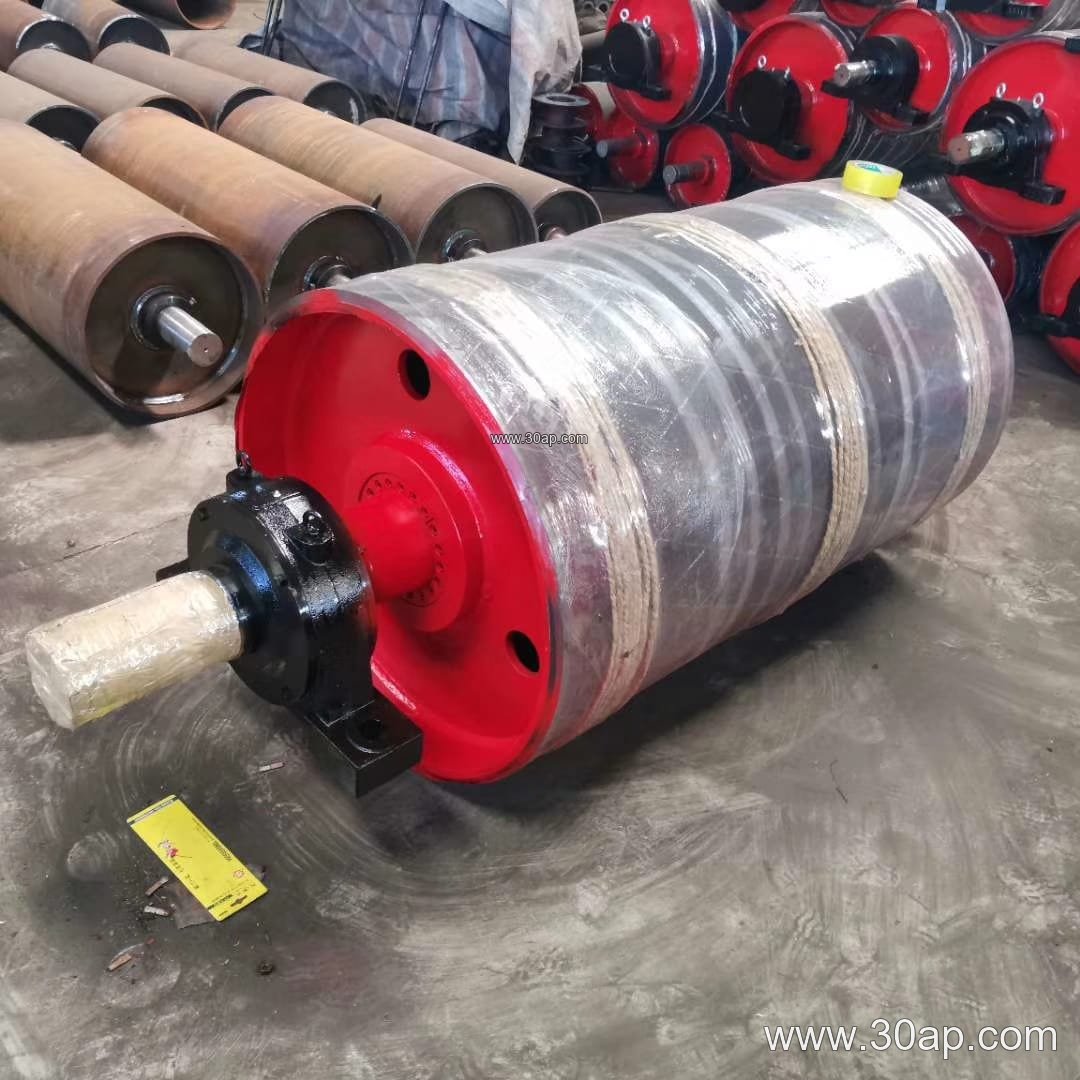
Construction Details That Matter
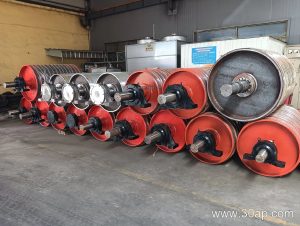
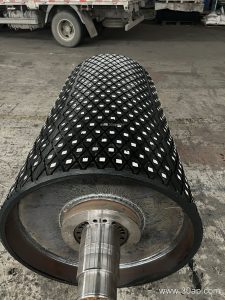
Most discharge-end pulleys are welded steel drums with a shaft, hub, and bearing housings. The shell thickness and end-disc design are chosen for the belt tension and the load carried. Lagging is common on the drive side of the drum, but at the discharge end the surface is often smooth or lightly rubber-covered to encourage material release. Rubber lagging helps grip and reduces slip when the pulley also drives the belt. Ceramic lagging is used where abrasive dust is heavy, but it can hold fines if the belt is not cleaned well.
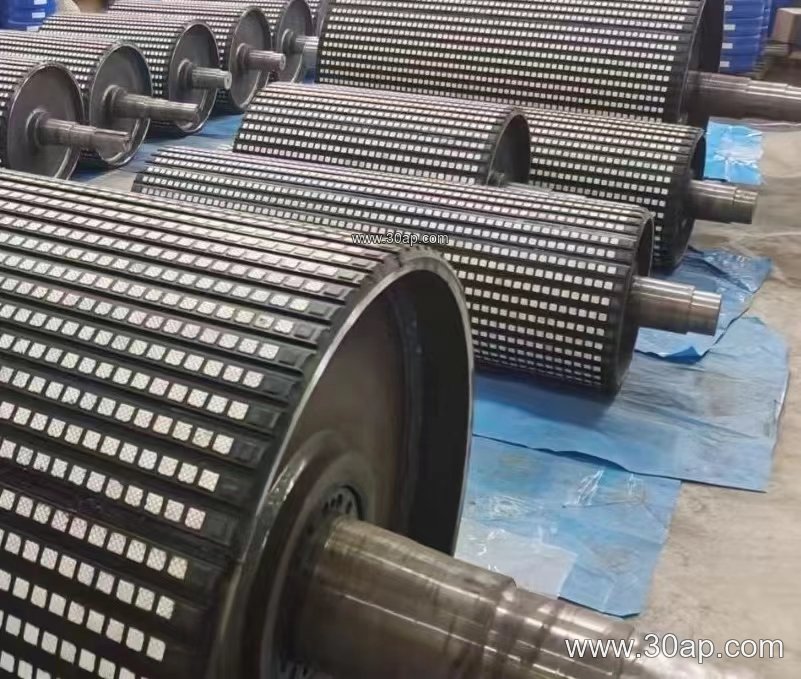
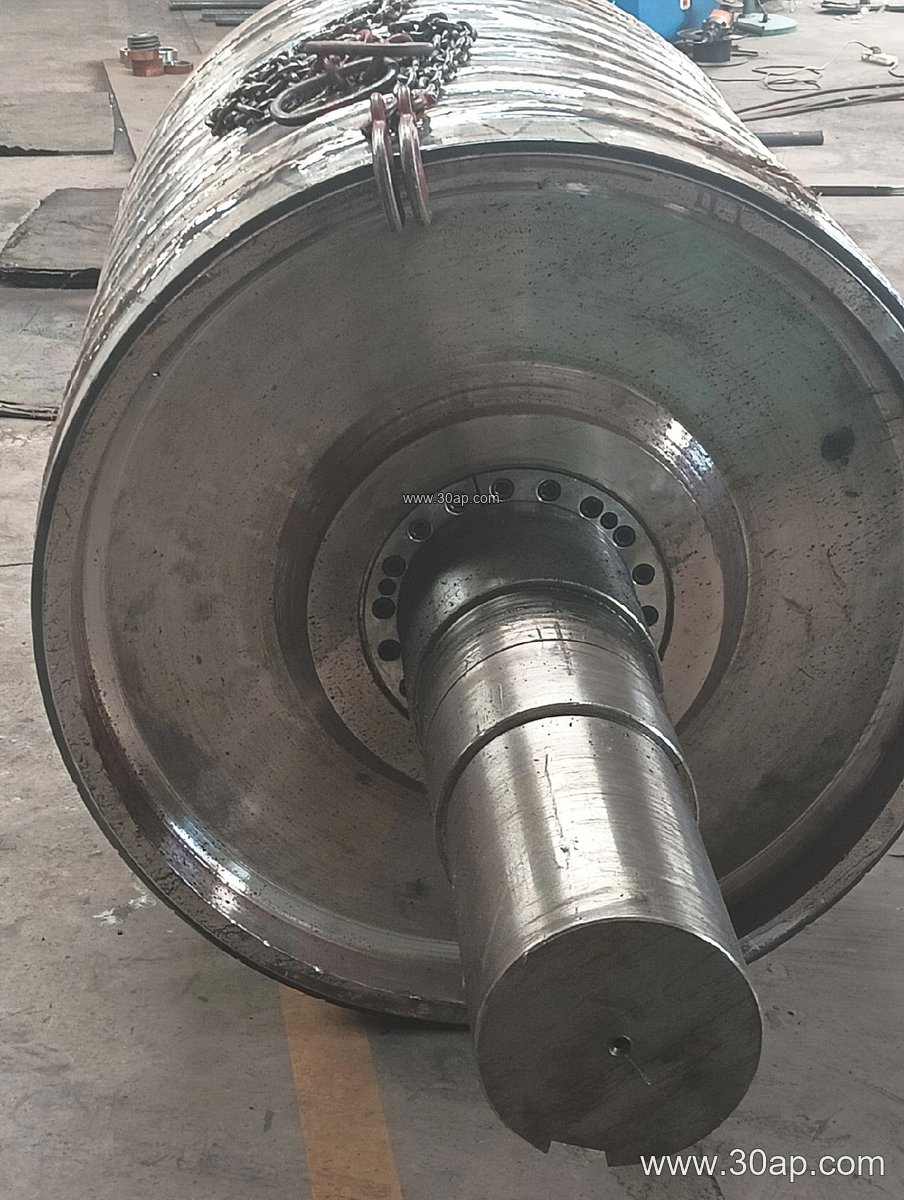
Bearing selection follows the shaft load and the belt pull. Shaft diameter is not fixed by belt width alone; it is determined by torque, bending load, and bearing life. A B800 discharge-end pulley may use different shafting than another B800 unit if the conveyor length and lift differ. This is why a specification sheet should list the calculated tension, not just the belt width.
Common Sizes and Reference Data
The table below shows reference combinations often seen in project drawings. They are examples, not universal matches. A B1200 belt, for instance, can be paired with different pulley diameters depending on speed and tension.
| Belt Width | Typical Pulley Face Width | Reference Diameter Range | Common Lagging Thickness |
|---|---|---|---|
| B500 | About 600 mm | Ø250 to Ø400 | 8 to 12 mm |
| B650 | About 750 mm | Ø315 to Ø500 | 8 to 12 mm |
| B800 | About 950 mm | Ø400 to Ø630 | 10 to 15 mm |
| B1000 | About 1150 mm | Ø500 to Ø800 | 10 to 15 mm |
| B1200 | About 1400 mm | Ø630 to Ø1000 | 12 to 20 mm |
| B1400 | About 1600 mm | Ø800 to Ø1250 | 12 to 20 mm |
| B1600 | About 1800 mm | Ø1000 to Ø1400 | 15 to 20 mm |
| B1800 | About 2000 mm | Ø1250 to Ø1600 | 15 to 20 mm |
Face width is usually a little wider than the belt to allow for misalignment. Shaft diameters commonly appear in the range of Ø80 to Ø200 mm, but the final value must come from the conveyor designer. Treat the numbers above as orientation only.
Where It Fits in the Plant
You will find the discharge-end pulley at the head of overland conveyors, at the transfer point of a crushing circuit, and at the delivery end of ship-loading lines. In a sand and gravel plant it often sits above the first screen; in a cement plant it may discharge clinker into a silo feed chute. The belt type matters here. A heavy-duty mining conveyor belt or an abrasion resistant conveyor belt carries more load and may need a larger drum to limit bending stress. A steel cord conveyor belt generally needs a larger pulley diameter than a fabric core belt of the same width, but the exact ratio comes from the belt manufacturer, not from a universal rule.
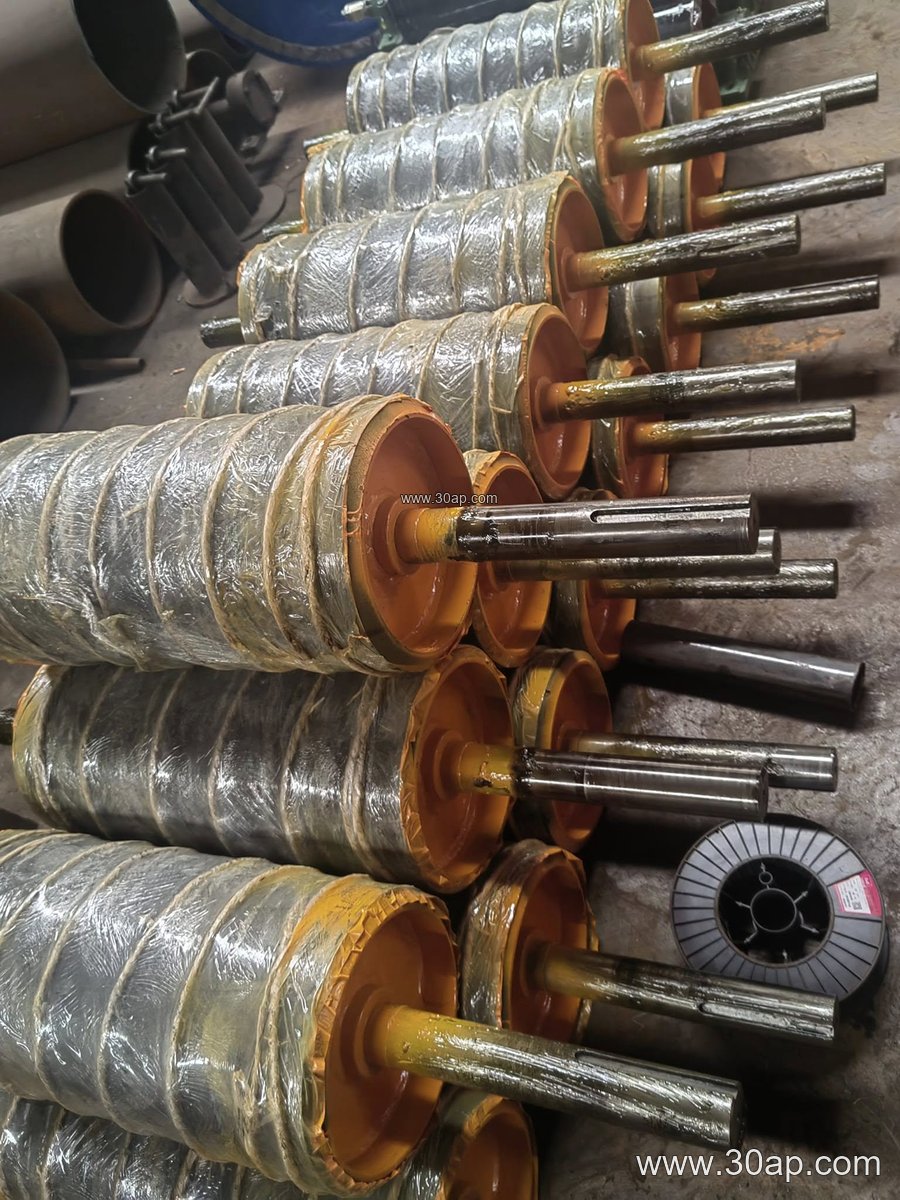
If the pulley also drives, it is a drive pulley rather than a pure discharge drum. If it only redirects the belt, it may be a bend pulley. The discharge-end pulley is defined by its position at the head and its role in releasing material.
Buyer Checklist
- Confirm whether the drum is driving or non-driving, and whether it is a head pulley or a bend pulley in the layout.
- Provide belt width, belt type, calculated tension, and belt speed. Belt types such as EP conveyor belt, NN conveyor belt, or flame retardant conveyor belt can change lagging and diameter choices.
- State the material: abrasive ore, hot clinker, or wet aggregate each calls for different lagging and shell protection.
- Check the conveyor bracket and bearing housing dimensions against the existing structure before ordering.
- Ask for the shaft diameter calculation, not just a catalog number. Shaft size should follow load, not belt width alone.
- Plan for inspection of lagging wear and bearing condition at each shutdown.
For more on matching drums with belts, idlers, and brackets, see conveyor pulley and conveyor belt resources. A discharge-end pulley that is correctly sized for tension and material will keep the transfer point clean and the belt running true.