What a Cast-Welded Pulley Is
A cast-welded pulley is a conveyor pulley built by combining cast steel or cast iron components with a welded steel shell and hub assembly. The casting gives the end discs and hub area precise geometry and good load distribution, while the welded shell keeps the drum light enough for large belt widths. This hybrid approach is common on heavy-duty conveyor pulleys used in mines, cement plants, power stations, and aggregate operations where shock loads and continuous duty are normal.
In many bulk material circuits, the cast-welded pulley serves as a drive pulley at the head end, pulling a rubber conveyor belt loaded with ore or clinker. Because the design allows thicker end discs and reinforced hubs, it handles the high torque that a tail or bend pulley would not normally see. If you are comparing positions, a bend pulley only redirects the belt, while the cast-welded drive drum must transmit power through the shaft and lagging.
How the Drum Is Built
The shell is usually rolled from steel plate and welded to cast end discs. The welds are arranged so that the rim, disc, and hub form a stiff unit without stress concentrations at the joint. Shafts are fitted through the hubs, and the connection may be keyed, shrink-fitted, or bolted depending on the design. The result is a pulley that can carry a conveyor belt under tension while resisting bending from the shaft.
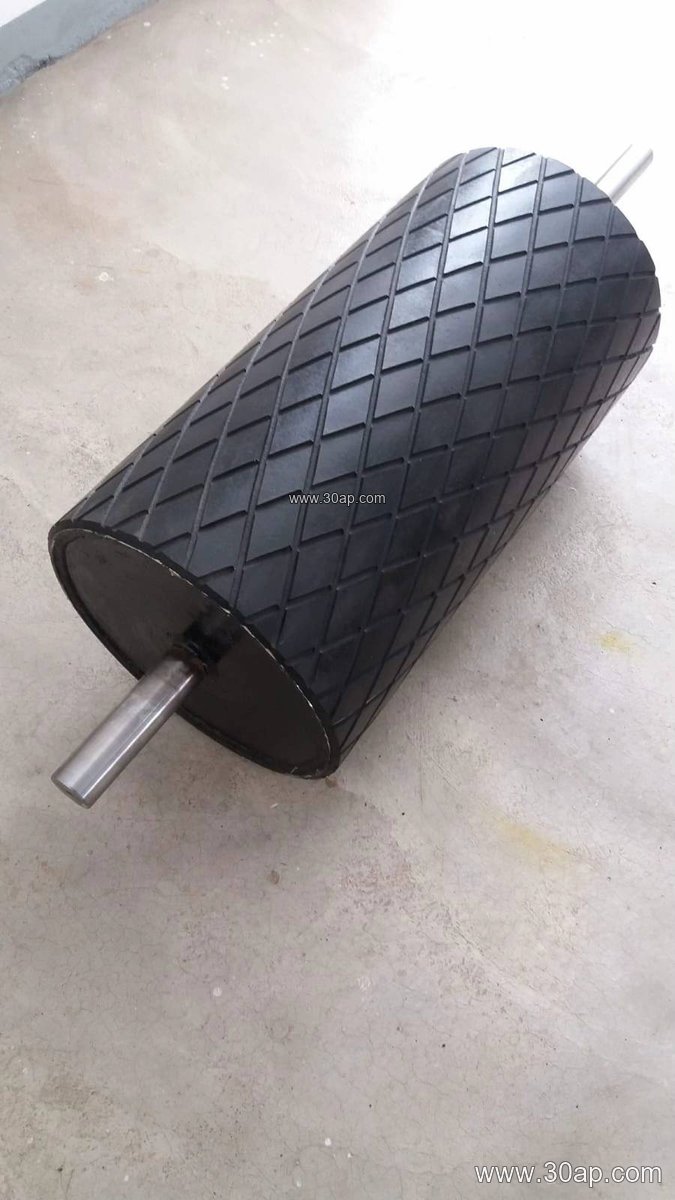
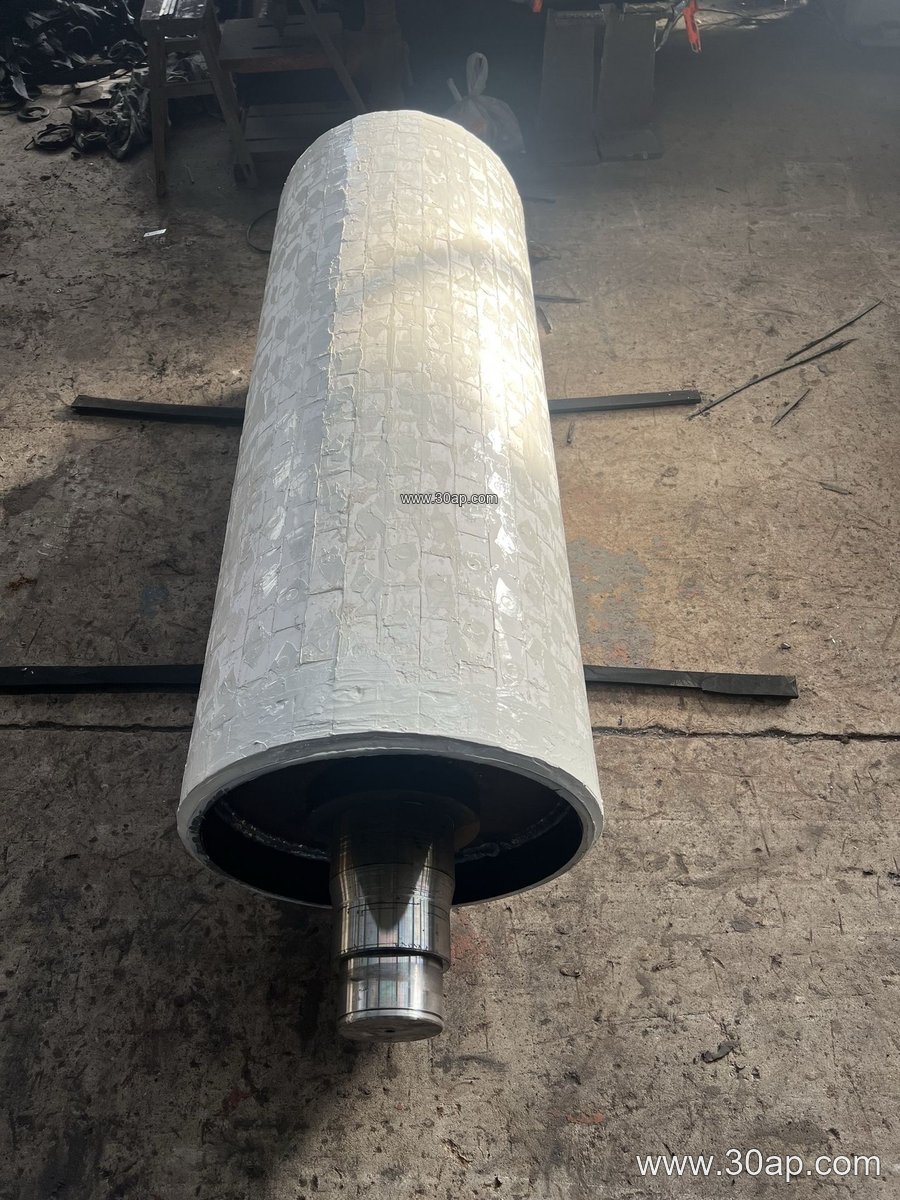
Surface treatment matters as much as the body. Common surface forms include plain finish, cast rubber lagging, cold-bonded rubber, hot vulcanized rubber, diamond lagging, herringbone lagging, and ceramic lagging. Lagging thickness is often 8, 10, 12, 15, or 20 mm. In a coal mining conveyor or a quarry conveyor, diamond or herringbone lagging helps grip a wet belt, while ceramic lagging is chosen where abrasive fines polish plain rubber too quickly.
Typical Duty Points and Industries
You will find this drum on overland conveyors, plant feed conveyors, and transfer points. In a limestone quarry or a sand and gravel line, it may drive a crusher conveyor belt that carries sharp rock. In a cement plant it can pull clinker or raw meal, and in a power plant it handles coal on a coal conveyor belt. The same construction is used on ship loading conveyors at ports and on stockyard conveyors at steel plants.
When the belt is a heavy-duty mining conveyor belt or a steel cord conveyor belt, the pulley must be matched to the belt tension and the shaft load. A fabric core conveyor belt such as an EP conveyor belt or NN conveyor belt may call for a smaller diameter, while a high-strength belt needs a larger drum to limit bending stress. The cast-welded pulley is also found in underground mining conveyor systems where flame retardant conveyor belt and anti-static conveyor belt properties are required.
Matching Diameter, Face Width, and Shaft
There is no single diameter for a given belt width. Selection depends on belt tension, belt thickness, pulley position, and the allowable bending angle. The table below shows common reference combinations, not fixed rules.
| Belt width | Typical pulley face width | Example diameter |
|---|---|---|
| B400 | About 500 mm | Ø200 to Ø315 |
| B500 | About 600 mm | Ø250 to Ø400 |
| B650 | About 750 mm | Ø315 to Ø500 |
| B800 | About 950 mm | Ø400 to Ø630 |
| B1000 | About 1150 mm | Ø500 to Ø800 |
| B1200 | About 1400 mm | Ø630 to Ø1000 |
| B1400 | About 1600 mm | Ø800 to Ø1250 |
A B800 × Ø500 pulley and a B1200 × Ø1000 pulley are both plausible, but the final choice should follow the conveyor design. Shaft diameters of Ø50, Ø60, Ø70, Ø80, Ø90, Ø100, Ø120, Ø140, Ø160, Ø180, and Ø200 mm are common, yet the shaft size is set by torque and load, not by belt width alone.
Buyer Checklist
- Confirm the pulley position: head, tail, take-up, or snub. These are not interchangeable.
- State the belt type, including whether it is an abrasion resistant conveyor belt, heat resistant conveyor belt, or oil resistant conveyor belt.
- Provide the belt width, expected tension, and shaft load so the drum and lagging can be sized correctly.
- Check that the conveyor bracket and idler roller layout allow clearance for the drum and its lagging.
- Ask how the lagging is bonded and whether the surface pattern suits wet or dry running.
For a balanced circuit, the cast-welded pulley should be specified together with the conveyor belt and the supporting conveyor pulley set, so that tension, traction, and wear life work as one system. A pulley that is oversized for the shaft or undersized for the belt tension will shorten bearing life, no matter how good the weld quality is.