What a Belt Conveyor Bracket Does on the Line
A belt conveyor bracket is the support frame that holds idler rollers in the correct position under and around the conveyor belt. In a quarry, a cement plant, or a power plant coal yard, the bracket is the quiet component that decides whether the belt tracks straight, whether the trough keeps its shape, and whether rollers can be replaced without cutting into the structure. It is often called a conveyor bracket or idler support bracket, and the name usually refers to the same fabricated steel part.
The bracket does not carry the material directly. It carries the rollers, and the rollers carry the belt. That chain matters when a heavy-duty mining conveyor belt runs at high tonnage: a weak frame shows up as roller misalignment, edge wear, and spillage long before the belt itself fails.
How the Bracket Is Built
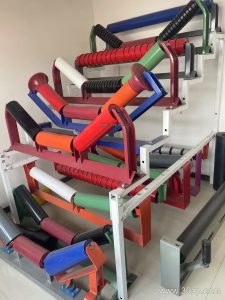
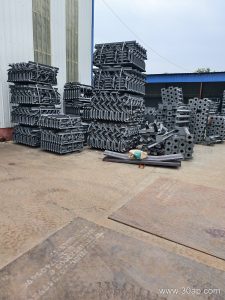
Most brackets are made from angle steel, channel steel, or folded steel plate. The choice depends on load, span, and corrosion exposure. A typical assembly includes a cross beam, mounting pads or slots for the roller shafts, and end plates that bolt to the conveyor stringer. Adjustable versions add slotted holes or pivoting arms so the trough angle can be set on site.
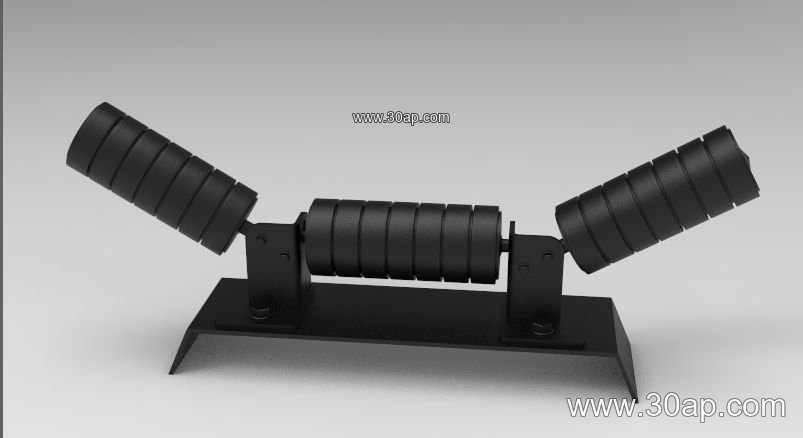
- Carrying side brackets hold three or more rollers in a trough shape.
- Return side brackets support the belt on flat or V-shaped rollers.
- Impact brackets sit under loading points and are built heavier.
- Self-aligning brackets allow small lateral movement to correct belt drift.
Welding quality, hole alignment, and galvanizing or painting all affect service life. In a wash plant or a coastal port, surface treatment is as important as steel thickness.
Trough Angle, Belt Width, and Roller Diameter
The bracket geometry ties belt width to trough angle and roller diameter. A 30 degree trough is common for general bulk material, while 35 degree and 45 degree troughs are used where a deeper material bed is needed. Transition brackets near the head and tail pulleys gradually flatten the belt to prevent edge stress.
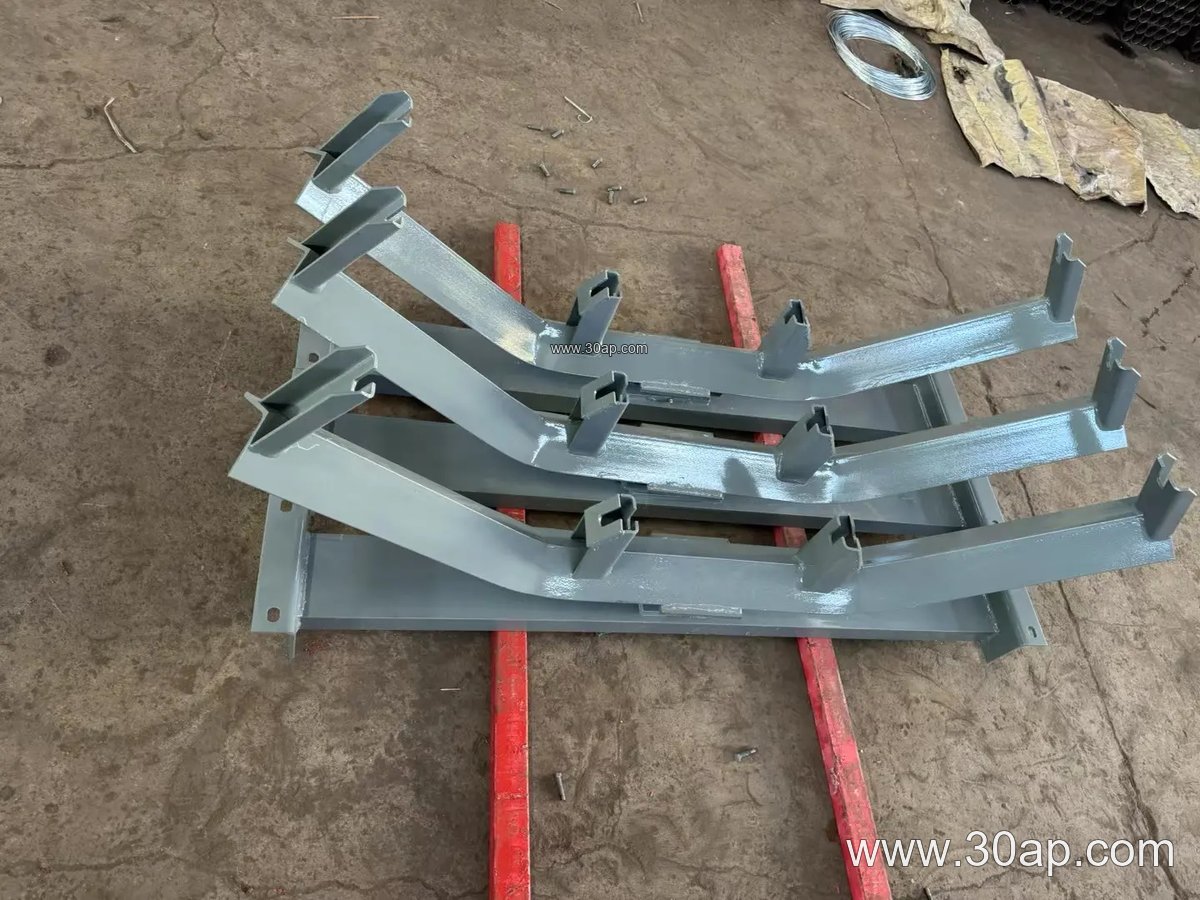
Common reference combinations include B800 with 35 degrees and Ø108 rollers, B1200 with 45 degrees and Ø133 rollers, and B650 with 30 degrees and Ø89 rollers. These are examples, not fixed rules. A wider belt can use more than one roller diameter, and the final match depends on load, speed, and the conveyor pulley layout. Installation hole spacing and beam length change with belt width and trough angle, so they should be confirmed from the drawing rather than assumed.
| Reference Item | Common Range |
|---|---|
| Belt width | B500 to B2200 |
| Trough angle | 20, 30, 35, 45 degrees |
| Roller diameter | Ø89, Ø108, Ø133, Ø159, Ø194 |
| Forward tilt | about 1.5 to 2 degrees |
| Material | angle steel, channel steel, folded plate |
Where These Frames Are Used
In a limestone mine or a crushing and screening line, carrying brackets keep an abrasion resistant conveyor belt aligned through transfer points. In a coal washing plant, flame retardant and anti-static belts run over brackets that must resist dust and moisture. Cement plants use them on clinker and raw meal lines, while steel plants and sintering floors rely on sturdy return brackets under hot or oily conditions.
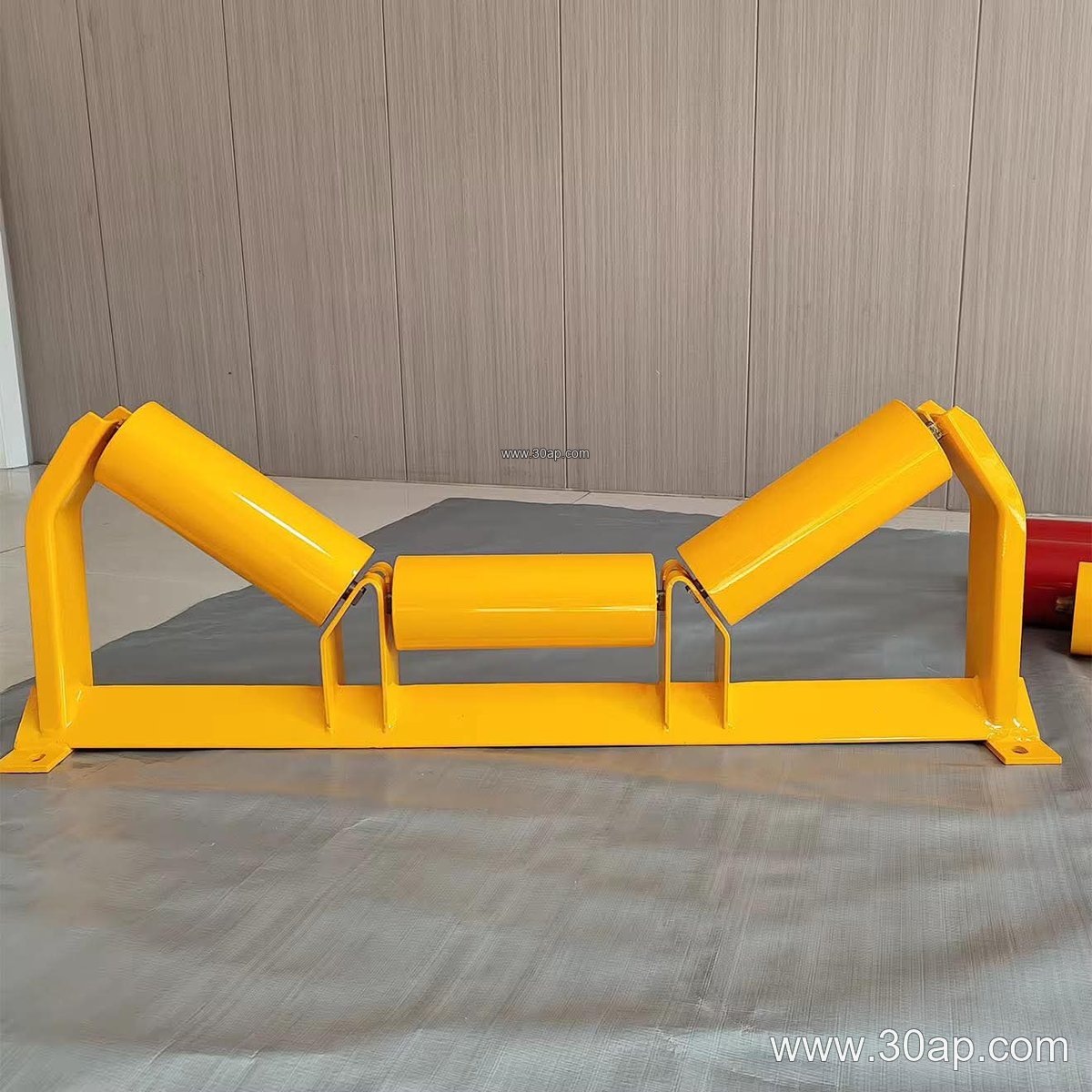
Port grain silos, fertilizer handling, and tunnel spoil removal also use the same basic frame with different surface protection. The belt type changes, but the bracket’s job stays the same.
Buyer Checklist Before Ordering
Start with the belt width and the required trough angle, then confirm the roller diameter and shaft end size. Ask for the mounting hole pattern and the distance between stringer centers. State whether the frame is fixed or adjustable, and whether it is for the carrying run, return run, or a transition zone.
Check the steel grade, welding standard, and finish. For a quarry conveyor belt or an iron ore line, specify a heavier frame at impact points. For a food grade or oil resistant belt application, pay attention to cleanability and coating. Spare parts should match existing roller shafts so that maintenance crews can swap rollers without modifying the bracket.
Finally, request a drawing review before production. Small dimensional errors in a belt conveyor bracket can cause belt mistracking across the whole conveyor, and correcting them after installation is far more costly than catching them at the drawing stage.