What Conveyor Bracket Fabrication Covers
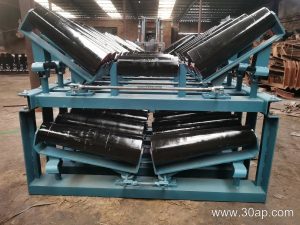
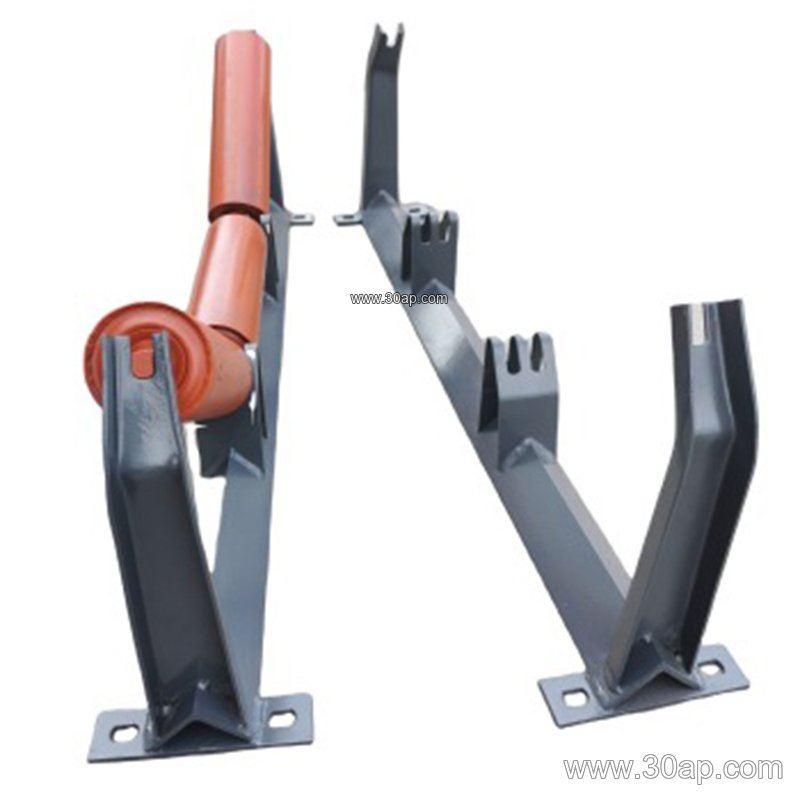
Conveyor bracket fabrication is the process of cutting, bending, drilling and welding the steel frames that hold idler rollers in position along a conveyor line. In a quarry, a cement plant or a power plant coal yard, these brackets carry the full weight of the belt and the material on it, so the fabrication quality directly affects tracking, noise and belt life. A well-made bracket keeps the roller axis square to the belt path, which is the basis of any stable trough.
The work usually starts with a drawing package based on belt width, trough angle and roller diameter. A fabricator then marks, cuts and assembles the parts before surface treatment. Because a bracket is a structural part rather than a wear part, the main risks are twist, poor hole alignment and weak welds, not abrasion.
Materials and Build Methods
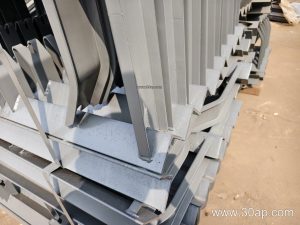
Most brackets are fabricated from angle steel, channel steel or folded steel plate. Angle steel is common for light and medium frames, channel steel suits longer spans and heavier loads, and folded plate gives a cleaner profile with fewer weld seams. The table below shows typical material choices against bracket duty.
| Material | Typical Use | Notes |
|---|---|---|
| Angle steel | Standard trough brackets, return brackets | Simple cutting, low cost |
| Channel steel | Wide belts, heavy material loads | Better bending stiffness |
| Folded steel plate | Transition and impact brackets | Fewer welds, neat edges |
Fabrication steps normally include shearing or plasma cutting, drilling of roller mounting holes, jig-based assembly, welding, straightening and finally painting or galvanizing. A drilling jig is worth the effort because matched hole spacing keeps the idler roller sitting flat and prevents one side of the belt from lifting.
Common Bracket Types and Their Place on the Line
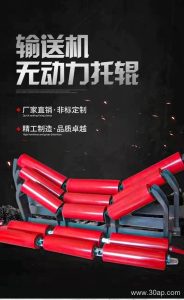
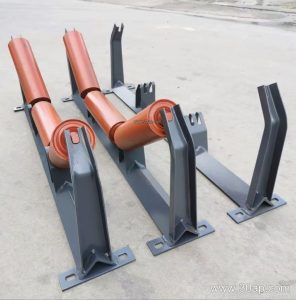
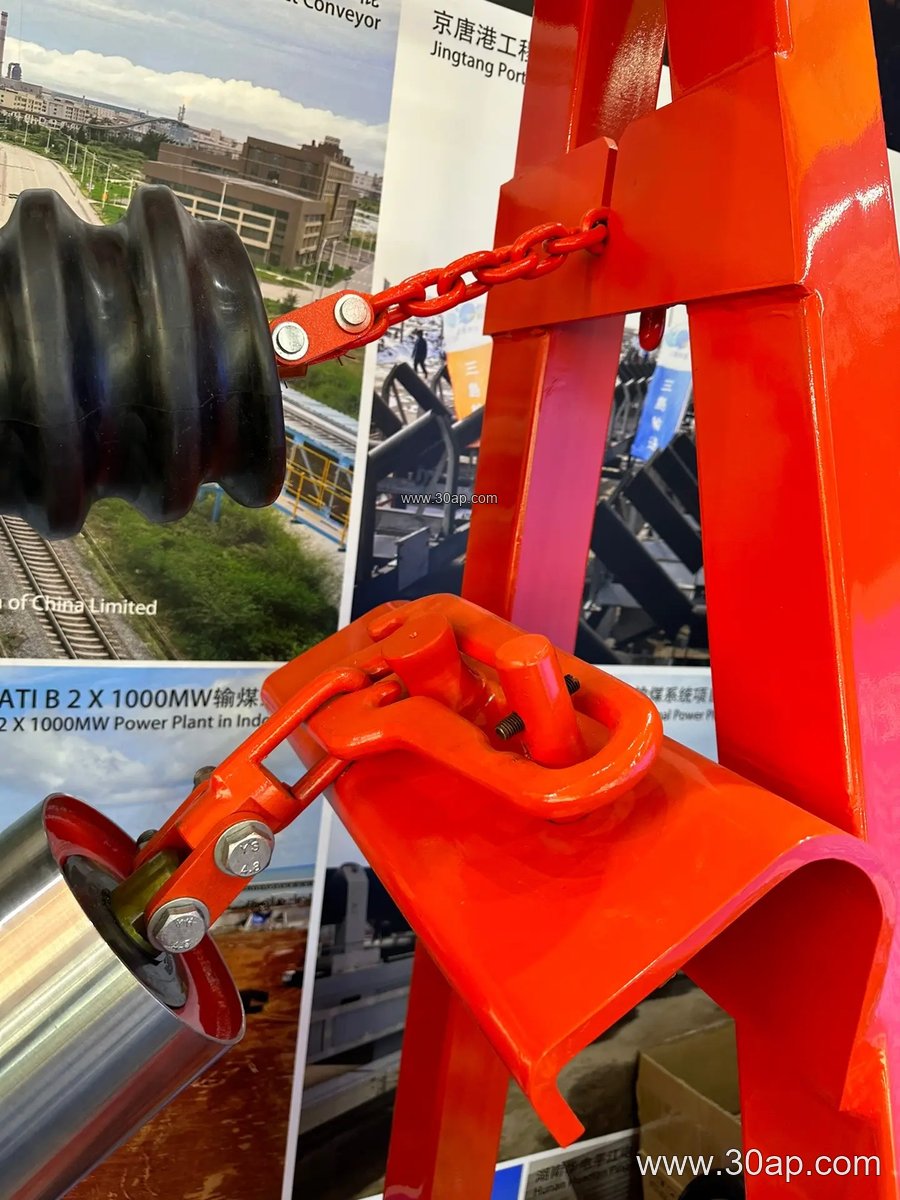
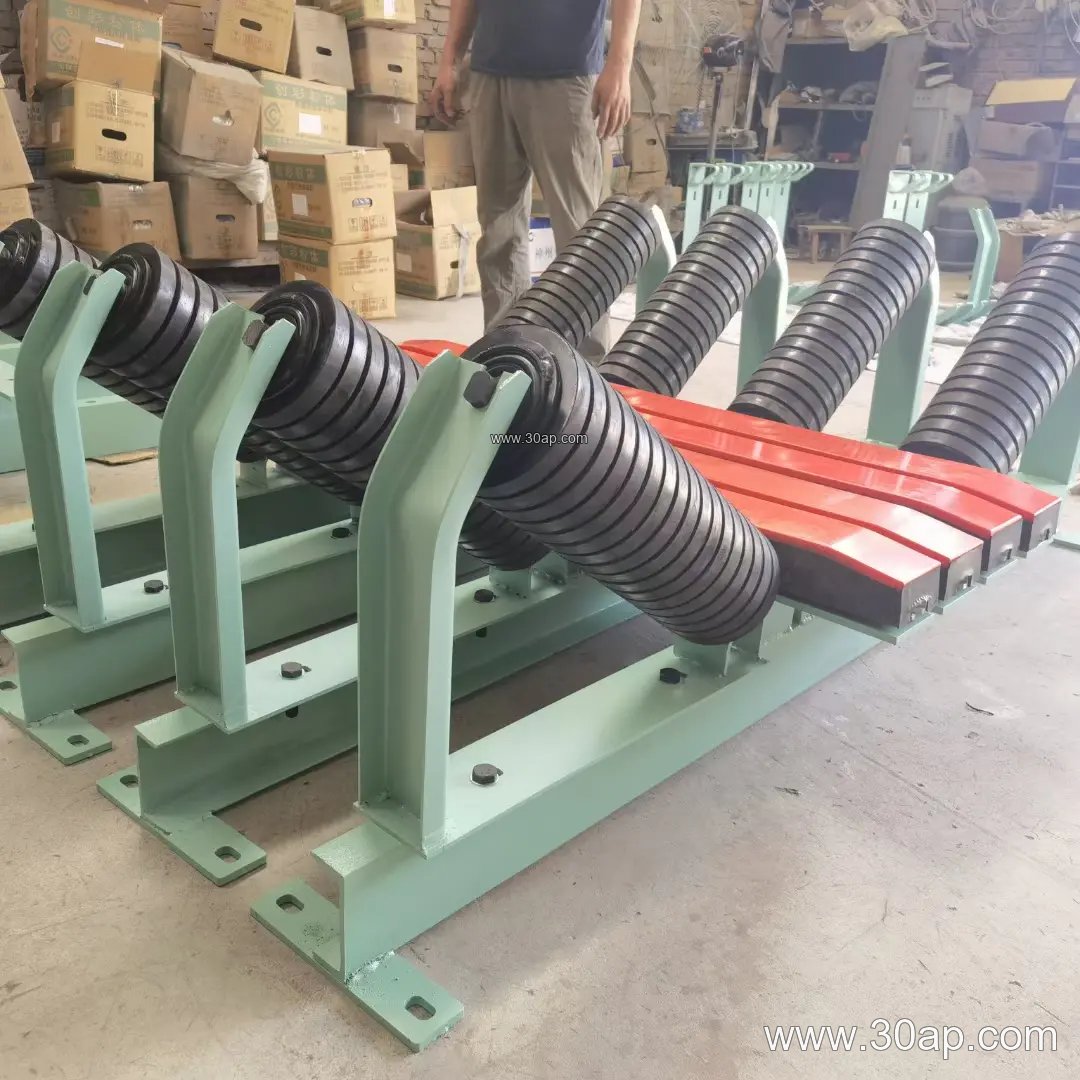
Trough brackets carry the loaded side of the belt and are built with a fixed or adjustable trough angle. Return brackets support the empty side, often in a flat or V shape. Transition brackets sit near pulleys where the belt changes from flat to troughed. Impact brackets use cushioning rollers below the loading point. Self-aligning brackets are a separate group that corrects belt drift, and they should not be confused with plain carrying brackets.
For comparison, a conveyor pulley handles tension and direction change at the ends of the line, while a bracket only supports the roller between them. The two work together but are never substitutes. The same applies to drive, tail and bend pulleys, each with its own role.
Matching Belt Width, Trough Angle and Roller Diameter
Fabricators usually work from common belt widths such as B500, B650, B800, B1000, B1200, B1400, B1600, B1800, B2000, B2200. Trough angles of 20, 30, 35 and 45 degrees are standard, and adjustable brackets allow movement between these values. Roller diameters of Ø89, Ø108, Ø133, Ø159 and Ø194 cover most duties. There is no fixed rule that one belt width matches only one angle or one roller size; the combination follows the material, capacity and design of the conveyor.
| Belt Width | Typical Trough Angle | Typical Roller Diameter |
|---|---|---|
| B650 | 30 degrees | Ø89 |
| B800 | 35 degrees | Ø108 |
| B1000 | 35 degrees | Ø108 or Ø133 |
| B1200 | 45 degrees | Ø133 |
| B1400 | 35 to 45 degrees | Ø133 or Ø159 |
| B1800 | 35 to 45 degrees | Ø159 or Ø194 |
Mounting hole spacing and crossbeam length change with belt width and trough angle, so they are set by design rather than by a universal figure. A forward tilt of about 1.5 to 2 degrees is common on some carrying brackets to help centering.
Where the Fabricated Brackets Are Used
These frames appear wherever a troughed belt runs. In a limestone mine or aggregate crushing line they support the belt after the crusher, where impact and dust are constant. In a power plant coal handling system they sit under a flame retardant conveyor belt that must meet fire safety rules. In a cement plant they carry clinker and raw meal, and in a port they support ship loading lines handling bulk material.
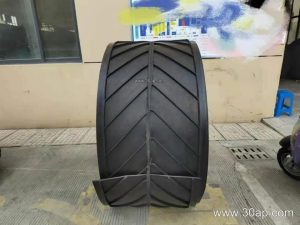
Choice of belt and bracket often travels together. A heavy-duty mining conveyor belt with a thick cover needs a stronger frame than a light EP conveyor belt on a short yard conveyor. Where a corrugated sidewall conveyor belt or skirted conveyor belt is used, the bracket layout must clear the cleats and sidewalls. For steep inclines, a chevron conveyor belt may run on the same bracket family but with attention to roller contact.
Buyer Checklist Before Ordering
- Confirm belt width, trough angle and roller diameter as a set, not separately.
- Ask for the mounting hole drawing and check it against the selected idler roller.
- State the environment: dusty coal yard, wet wash plant or hot clinker line changes coating and steel grade.
- Decide between fixed and adjustable brackets based on how often the trough angle may change.
- Check weld quality and straightness, since a twisted frame causes belt mistracking.
Good conveyor bracket fabrication is quiet work that rarely gets noticed until it fails. Checking dimensions, steel grade and hole alignment at the fabrication stage is far cheaper than correcting belt drift later. For related belt and roller data, see the reference pages at conveyor-belt.example and idler-roller.example, which list belt and roller families used alongside these frames.