What the Ø159 Impact Idler Does
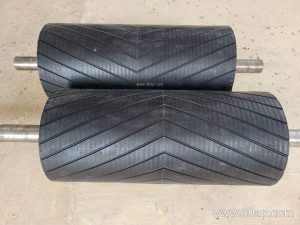
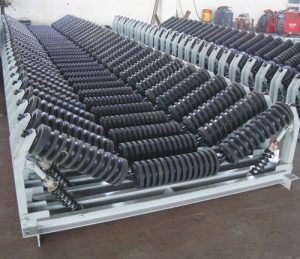
An impact idler with a 159 mm roller diameter is a buffer roller used at conveyor loading points where falling material hits the belt. The larger diameter gives the roller more surface area and strength to absorb shock, while the rubber rings or other elastic surface help soften the impact. This protects the conveyor belt from cuts, punctures and edge damage, and reduces stress on the idler roller itself. In a typical transfer chute, several Ø159 impact idlers are mounted close together under the belt, often just after the feed point, so the belt is supported before material settles.
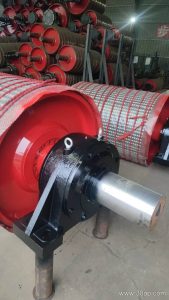
The product is not a substitute for a drive pulley, tail pulley or bend pulley. Those are conveyor pulleys that transmit power or change belt direction. The Ø159 impact idler belongs to the idler roller family and works together with conveyor brackets and the main conveyor frame.
Construction and Common Features
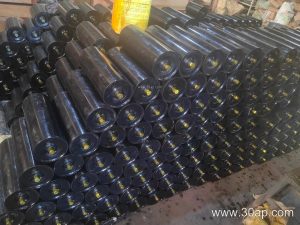
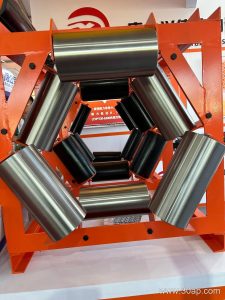
A standard Ø159 impact idler uses a steel tube shell with a shaft, bearing housings and sealing arrangement. The impact version usually carries rubber rings or a rubber-covered surface to cushion the load. The roller diameter is 159 mm, which is one of the larger sizes in the idler range and is often chosen for high-drop loading zones. Bearings may vary with design, and common bearing numbers such as 6308 or 6310 can appear in heavy-duty versions, but the exact bearing should follow the manufacturer’s specification.
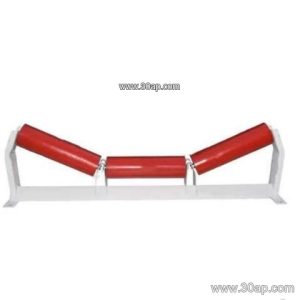
Roller length and idler group form are not fixed. For a three-roll troughing set, the roller length changes with belt width and trough angle. The table below gives common reference examples only; side rollers and center rollers may differ, and final dimensions are determined by the conveyor design.
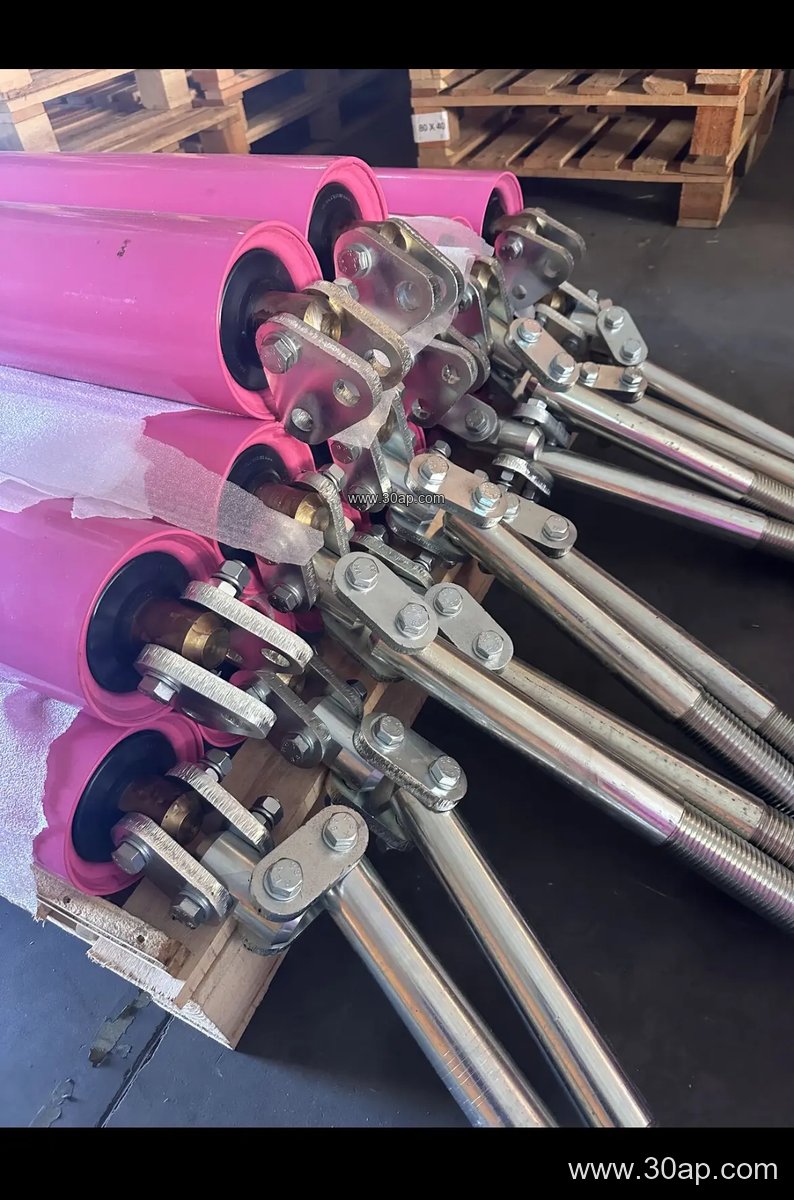
Reference Examples for Ø159 Impact Idler Arrangements
| Belt width | Common roller length (three-roll trough) | Typical trough angle |
|---|---|---|
| B800 | 315 mm | 30° or 35° |
| B1000 | 380 mm | 30° or 35° |
| B1200 | 465 mm | 30° or 35° |
| B1400 | 530 mm | 30° or 35° |
| B1600 | 600 mm | 30° or 35° |
These values are not universal. A 159 mm roller can be used with different belt widths and idler configurations, and one belt width does not require one fixed roller length.
Where It Fits in the Conveyor Line
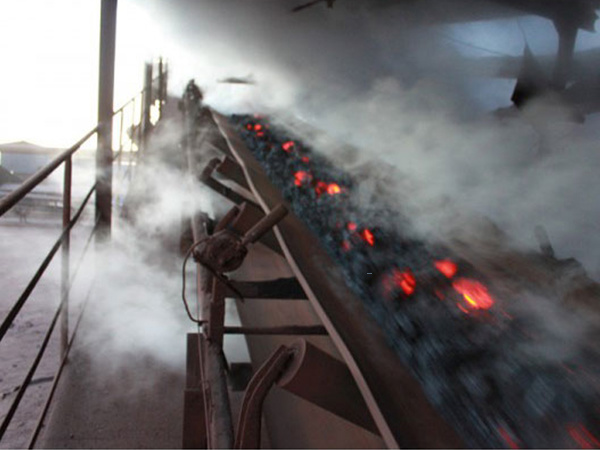
The Ø159 impact idler is most at home in the loading zone of a belt conveyor. In a quarry or sand and gravel plant, it sits under the crusher discharge belt where rock lumps fall onto the belt. In a coal mining or coal preparation plant, it can be found at transfer points feeding a coal mining conveyor belt. Cement plants use impact idlers at clinker and raw material transfer stations, and power plants use them in coal handling systems. The same roller type can appear in iron ore, copper ore and gold mining operations where heavy lumps are loaded.
For very abrasive loads, the belt itself may be an abrasion resistant conveyor belt; for high-drop zones, an impact resistant conveyor belt is often selected. The impact idler and the belt work as a pair. A heavy-duty mining conveyor belt may need a robust idler frame and brackets to match.
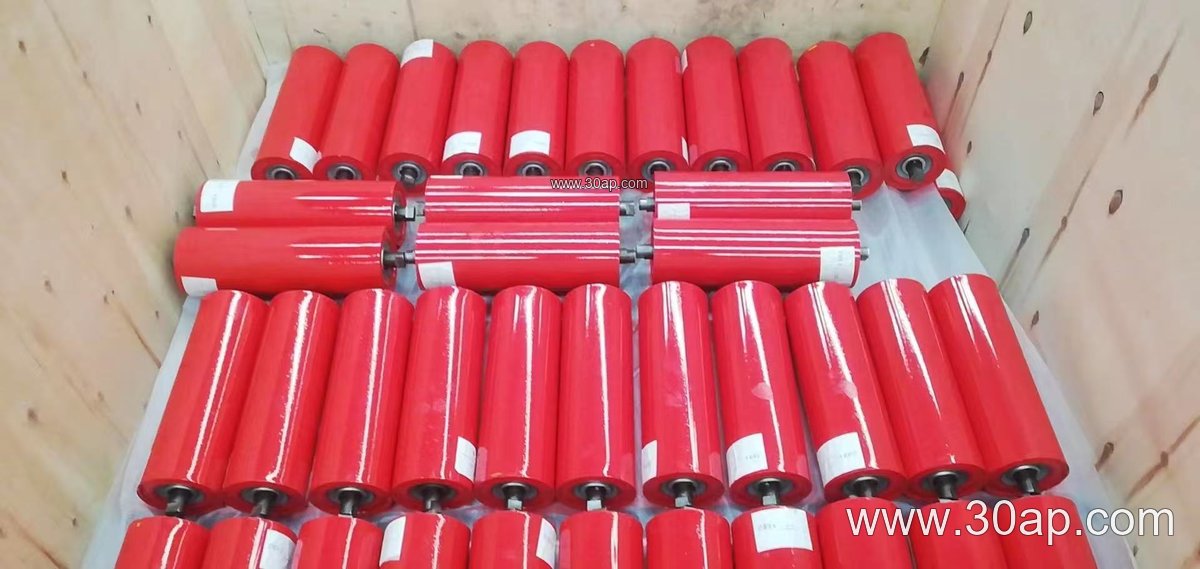
Selection Points for Buyers
Buyers should confirm the belt width, the trough angle, the idler group form and the loading height before choosing a Ø159 impact idler. The roller length should match the selected idler group, and the shaft and bearing arrangement should suit the load. Rubber ring thickness and hardness affect cushioning, so the material being handled matters. For sticky or wet material, a smooth rubber surface may be preferred; for sharp rock, a thicker rubber ring can help.
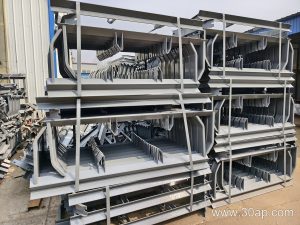
It is also worth checking how the idler will be mounted. Conveyor brackets and frame dimensions vary, and the impact idler should fit without modification. In a coal mining conveyor system, flame retardant and anti-static properties may be required for the belt, but those requirements apply to the conveyor belt rather than the idler itself. The idler specification should focus on diameter, length, bearing, sealing and surface form.
Maintenance and Replacement Notes
Impact idlers usually wear faster than carrying idlers because they take the direct hit from falling material. Regular inspection should look for worn rubber rings, seized bearings, bent shafts and loose brackets. When replacing a Ø159 impact idler, keep the same roller length and mounting style, and check that the new roller matches the trough angle of the idler group. If the loading point has been changed, the number and spacing of impact idlers may also need review.
In dusty plants such as a cement plant or a coal preparation plant, seal quality matters. A good seal keeps fine dust out of the bearing and extends service life. Buyers can ask for the sealing arrangement and bearing type, but should treat them as design choices rather than fixed rules. The Ø159 impact idler is a practical buffer component, and its performance depends on correct selection, installation and routine care.