What a Conveyor Frame Does
A conveyor frame is the steel backbone that holds every rotating part of a belt conveyor in the right position. It carries the idler roller sets, supports the conveyor pulley at each end, and keeps the belt path straight from the loading point to the discharge. In a quarry, a cement plant, or a power plant coal yard, the frame is what turns a length of conveyor belt into a working machine. Without a rigid and well aligned structure, even a premium rubber conveyor belt will wander, spill material, and wear out early.
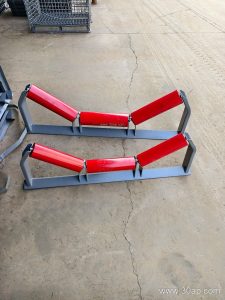
The frame is not a single part. It is a system of stringers, cross beams, legs, and brackets that are bolted or welded together. Each section is designed around the belt width, the trough angle, and the load it must carry. A frame built for a B650 line in a sand and gravel plant looks very different from one built for a B1800 primary crusher discharge, even though both serve the same basic purpose.
How the Structure Is Built
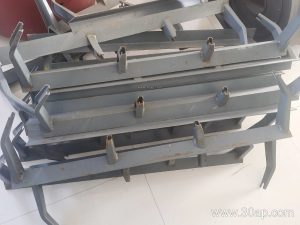
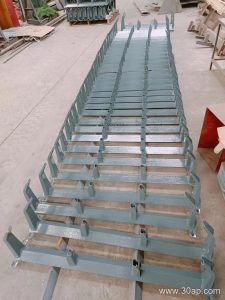
Most frames are fabricated from angle steel, channel steel, or folded steel plate. The choice depends on span, load, and site conditions. Long spans and heavy ore loads usually call for deeper channel sections, while lighter aggregate lines can use folded plate stringers. Sections are typically bolted for easy transport and adjustment, though welded frames are also common in fixed installations.
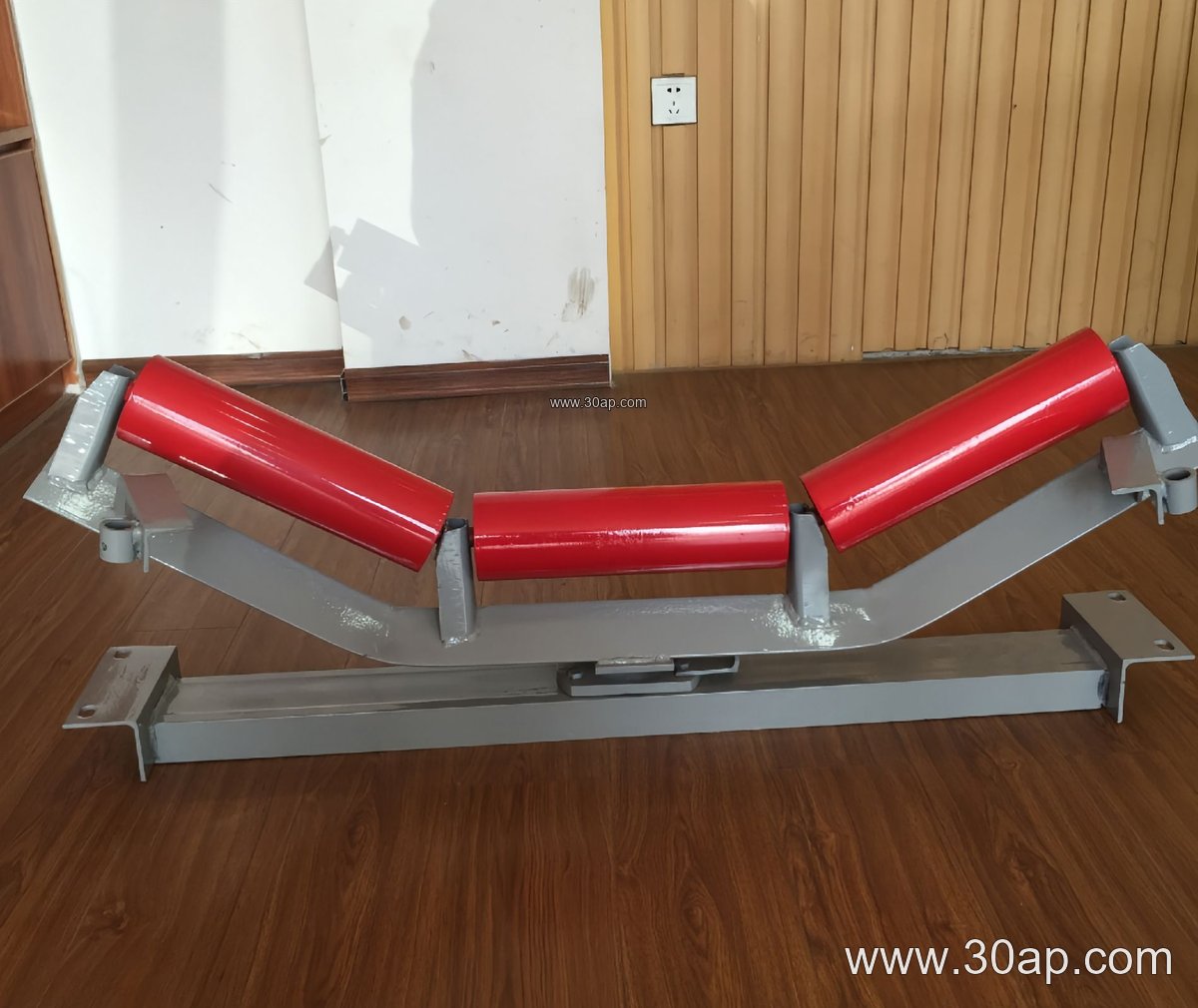
- Stringers run along the belt direction and set the overall line.
- Cross beams carry the idler roller sets and set the trough profile.
- Legs and bracing transfer load to the ground or to a steel structure.
- Brackets connect idlers, pulleys, and accessories to the main frame.
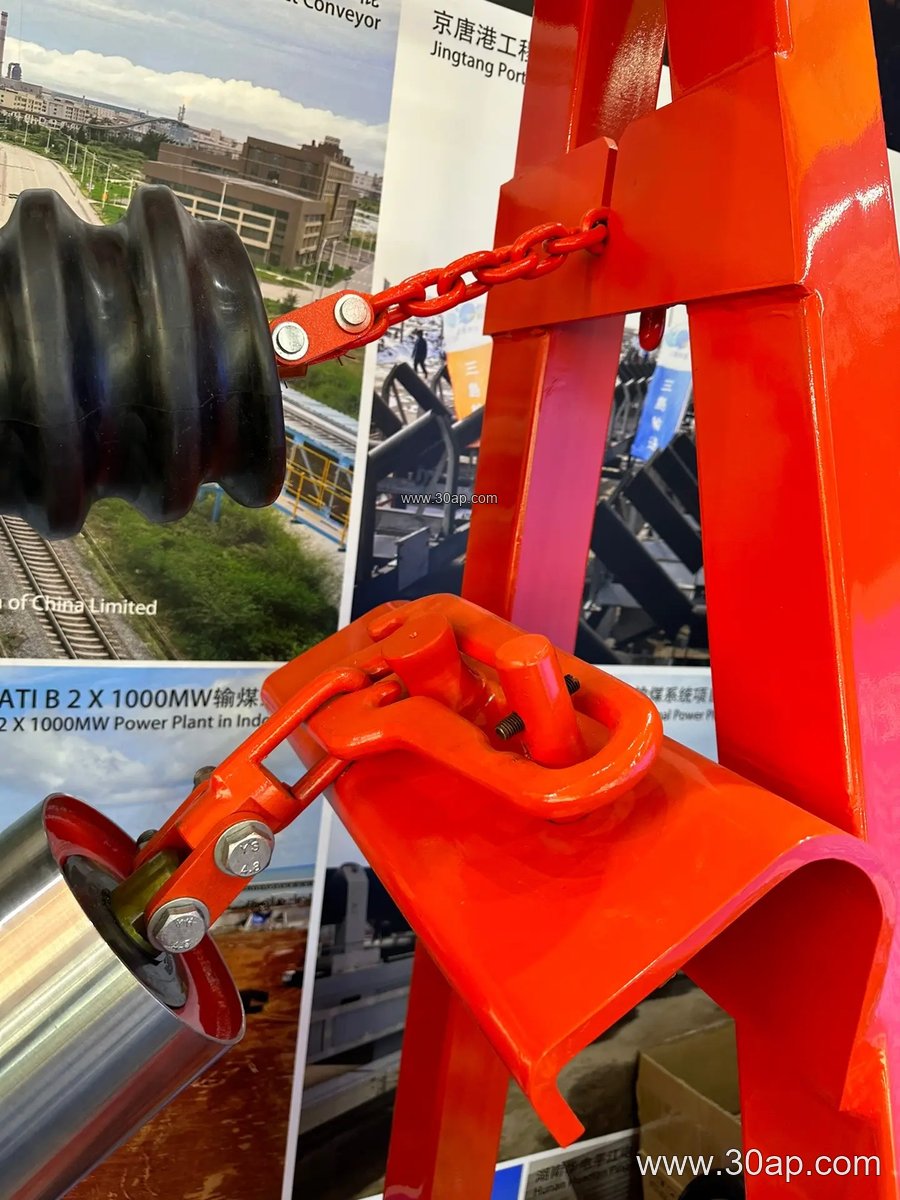
A conveyor bracket is a small part with a large effect. It fixes the idler position, so a poorly made bracket can tilt a roller and start belt misalignment. The same applies at the ends, where the conveyor pulley must sit square to the frame centerline.
Trough Angle and Belt Width on the Same Frame
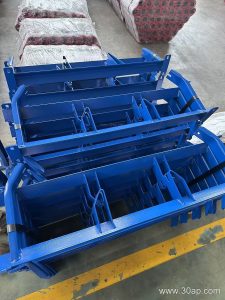
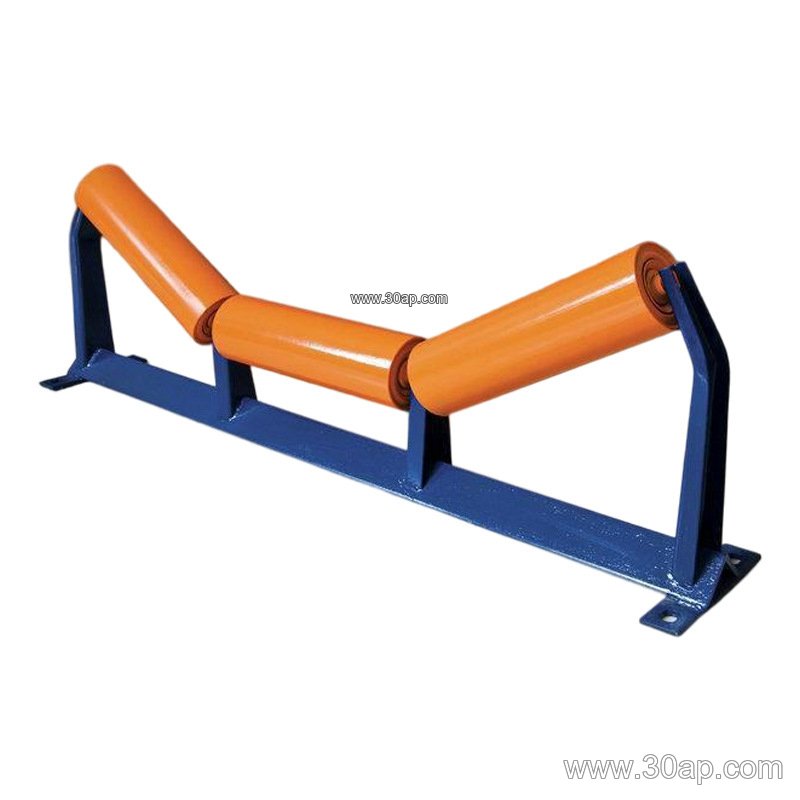
The trough angle is one of the first decisions in frame design. Common values are 20, 30, 35, and 45 degrees. A 30 degree frame suits many bulk materials, while 35 or 45 degrees helps contain a wider belt carrying a large cross section. Adjustable frames allow the angle to be changed within this range on site.
Belt width and roller diameter work together but are not locked to one another. A B800 frame might run with Ø89 or Ø108 rollers depending on load and speed, and a B1200 line often uses Ø133 or Ø159. Designers confirm the combination from belt tension, material weight, and idler spacing rather than from a single rule.
| Frame Parameter | Common Reference Range |
|---|---|
| Belt width | B500, B650, B800, B1000, B1200, B1400, B1600, B1800 |
| Trough angle | 20°, 30°, 35°, 45° |
| Idler diameter | Ø89, Ø108, Ø133, Ø159, Ø194 |
| Forward tilt | About 1.5° to 2° |
Installation hole spacing and beam length change with belt width and trough angle, so they are set by design for each project rather than taken as fixed numbers.
Where These Frames Are Used
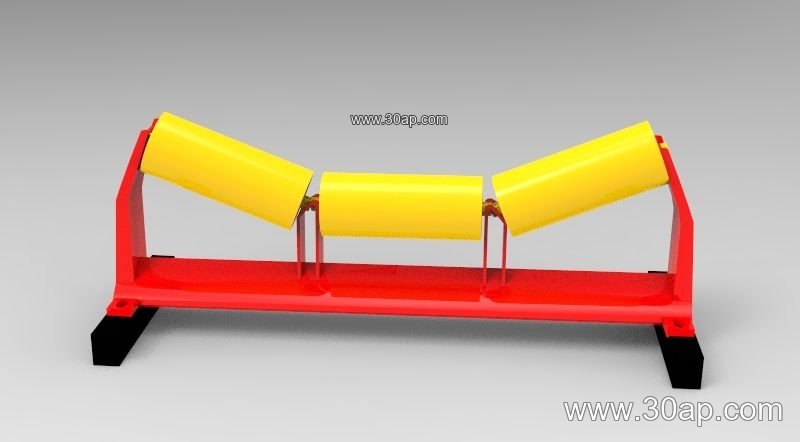
In a limestone mine or crushing and screening line, carrying frames handle sharp rock and heavy impact at the transfer points. Buffer idler brackets are often fitted near the loading zone to absorb shock. In a coal washing plant or power plant coal handling system, flame retardant conveyor belt and anti-static belt run on frames that must stay aligned through long galleries. Port terminals and steel plants use wide frames with large pulleys for high capacity, while fertilizer and grain silo operations favor cleaner, lighter structures.
Return side design matters as much as the carrying side. A V-type return bracket helps center the belt and shed stray material, which protects the conveyor pulley and reduces downtime.
Buyer Checklist
- Confirm belt width and expected trough angle before ordering any section.
- Match frame strength to the material, from aggregate conveyor belt duty to heavy iron ore service.
- Ask how the supplier handles adjustable versus fixed brackets.
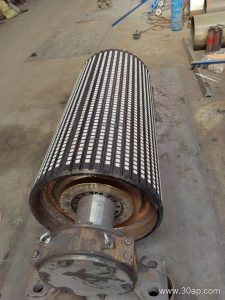
- Check that pulley mounting points suit the selected conveyor pulley size.
- Plan for alignment checks after installation, since a square frame is the base of straight running.
Whether the line moves coal, clinker, or copper ore, the conveyor frame is the part that keeps everything else working together. Buyers who treat it as a structural system, not a list of steel pieces, get longer belt life and fewer stoppages.