What a Conveyor Take-Up Pulley Does
A conveyor take-up pulley is the rotating component that holds and guides the belt at the tensioning station of a conveyor. Its job is not to drive the belt, but to keep enough wrap and pre-tension on the belt so that the drive pulley can transmit power without slipping. In a typical arrangement, the take-up pulley sits on a movable carriage or a counterweight frame, and as the belt stretches or the load changes, the pulley moves to absorb the slack.
This is a tensioning pulley, and it should not be confused with the head pulley that discharges material or the tail pulley that returns the belt. Those are separate positions in the conveyor layout. A take-up pulley is often smaller in diameter than the drive pulley because it carries lower torque, but it still has to handle full belt tension and repeated movement.
Construction and Surface Options
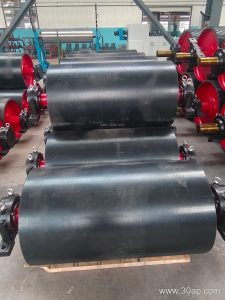
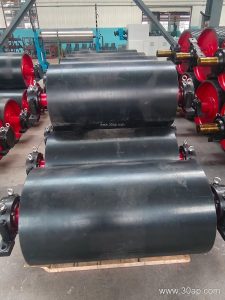
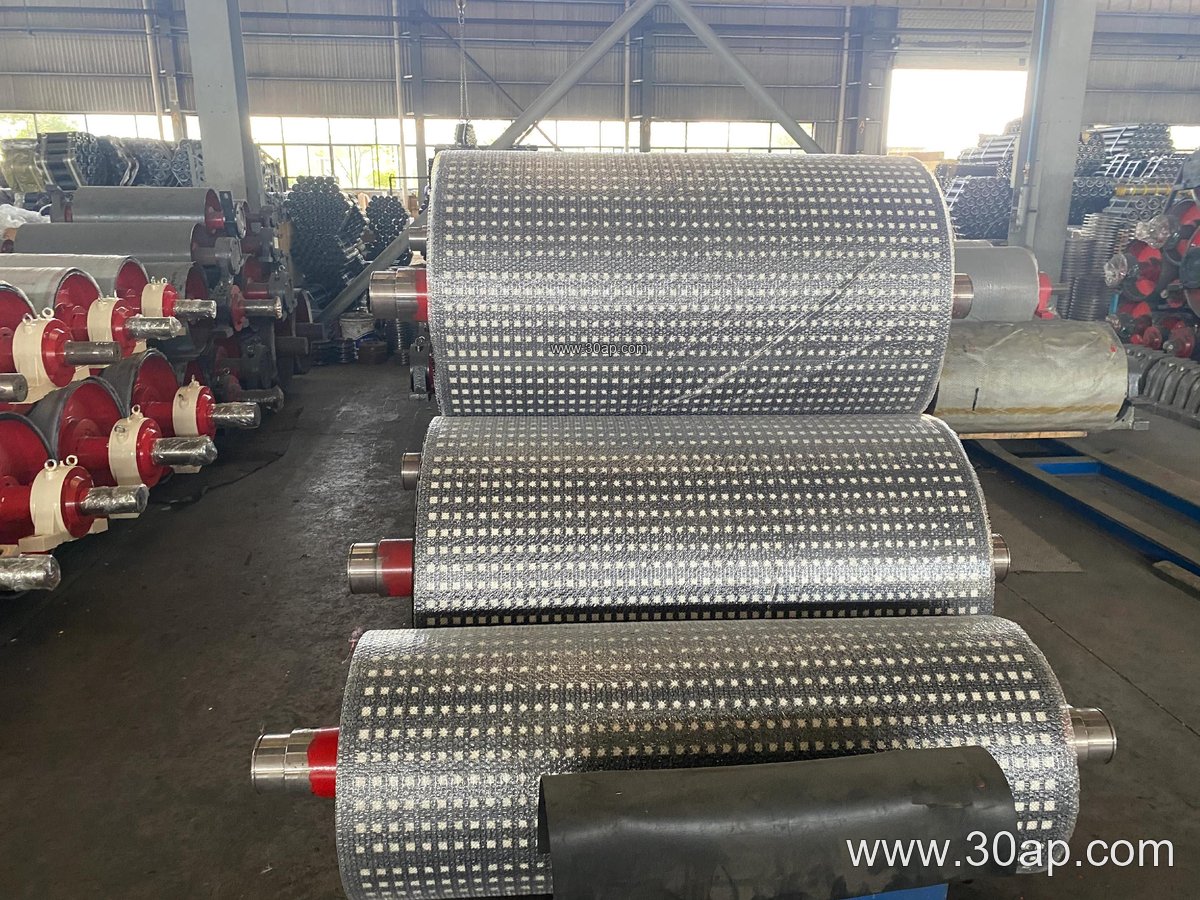
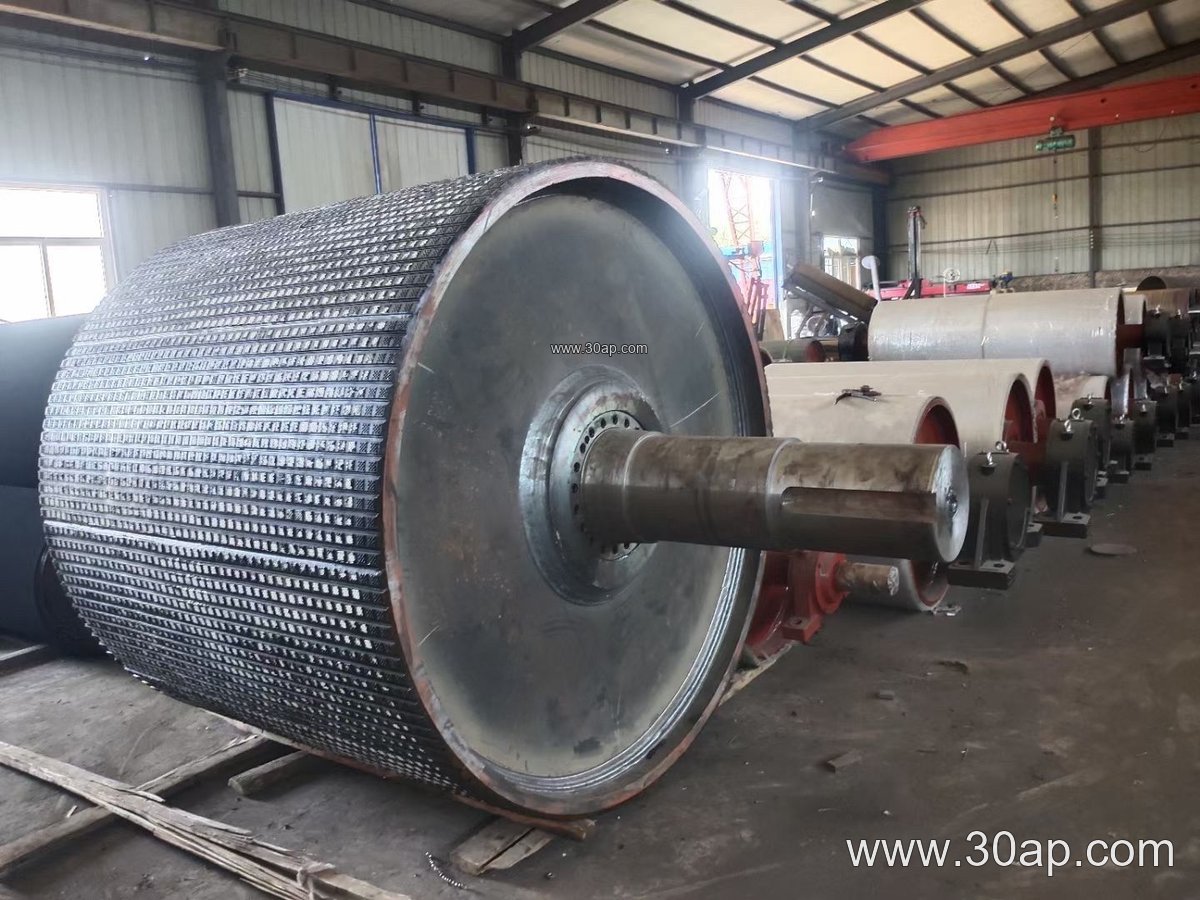
The pulley body is usually a welded steel drum with a shaft, hubs, and end discs. The shell can be plain, or it can be covered with rubber to improve grip and protect the belt. Common surface forms include plain face, hot vulcanized rubber, cold bonded rubber, diamond grooving, and ceramic lagging. Lagging thickness is often 8, 10, 12, 15, or 20 mm, chosen by the designer according to belt tension and environment.
Bearings are mounted in pillow blocks or flanged housings, and the whole assembly runs on a slide frame, a swing arm, or a vertical guide. In dusty plants, sealed bearing housings and good alignment matter more than a fancy surface finish, because a tensioning pulley that cannot move freely stops doing its job.
Where It Fits in the Line
You will see take-up pulleys in quarry conveyors, limestone mines, iron ore plants, coal washing stations, cement clinker lines, and power plant coal handling systems. In a typical aggregates circuit, the take-up pulley works behind a crusher conveyor belt that carries heavy rock, and the belt may be an abrasion resistant conveyor belt or a heavy-duty mining conveyor belt. In a coal preparation plant, a flame retardant conveyor belt is common, and the take-up station must be kept clear of spilled material.
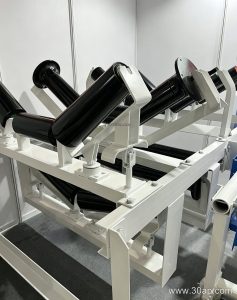
The pulley also pairs with the conveyor belt, idler roller, and conveyor bracket in a single mechanical system. If the take-up pulley is misaligned, the belt may train to one side and wear the idler roller edges. If the carriage sticks, the belt may slip on the drive pulley during start-up. So the take-up pulley is a small part of the layout but a key part of belt control.
Sizing Notes for Buyers
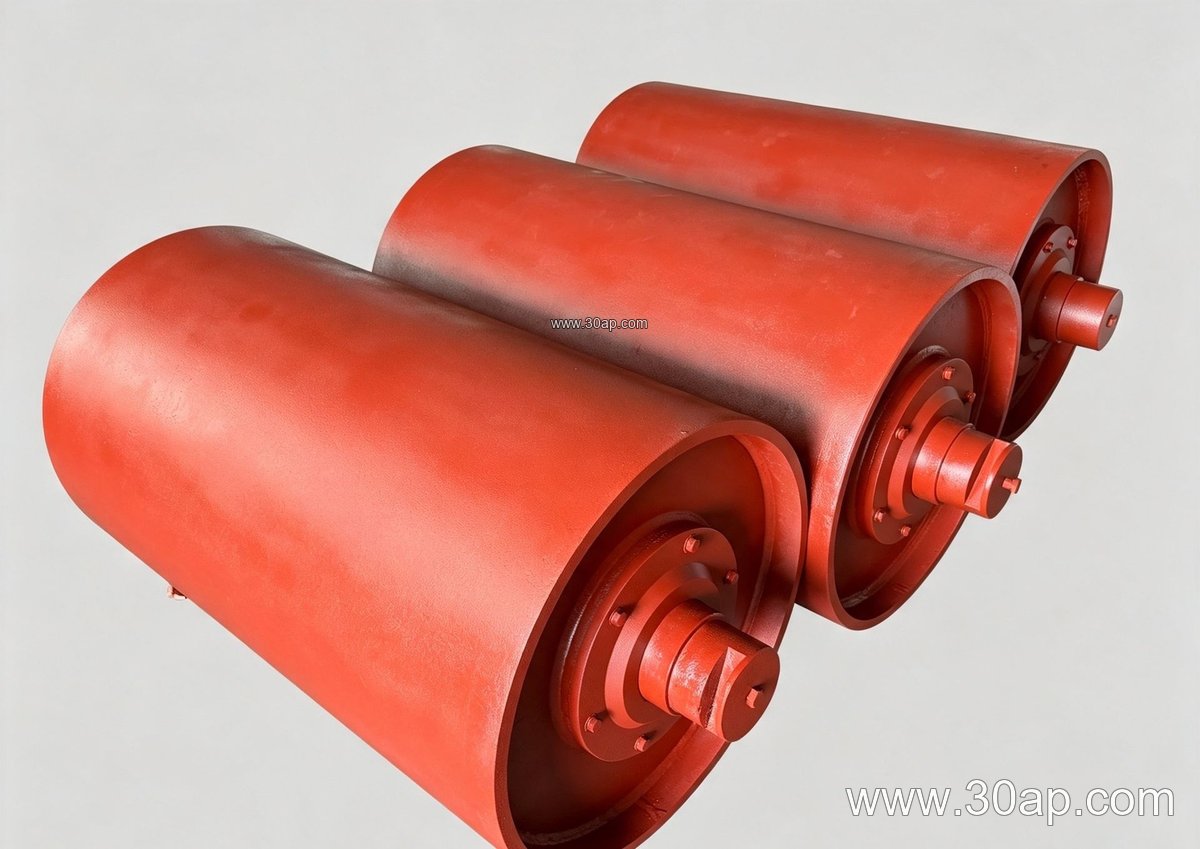
Take-up pulley size is normally described by belt width and pulley diameter. Common belt widths include B500, B650, B800, B1000, B1200, B1400, and B1600, and common diameters include Ø315, Ø400, Ø500, Ø630, and Ø800. The pulley face is usually wider than the belt, for example a B800 belt may run on a pulley face of about 950 mm, and a B1200 belt on about 1400 mm. These are reference patterns, not fixed rules.
Shaft diameter is determined by torque and load, not by belt width alone. Typical shaft sizes range from Ø80 to Ø200, and the final choice belongs to the conveyor designer. A buyer should provide the belt width, the belt type, the maximum tension, the travel distance, and the mounting position. For a rubber conveyor belt or an EP conveyor belt, the take-up travel may differ from a steel cord conveyor belt because stretch behavior is different.
Selection and Maintenance Tips
- Confirm whether the pulley is fixed or moving, and whether the frame is a slide, swing, or counterweight type.
- Match the lagging to the duty. Plain face is fine for many clean tensioning points; rubber lagging helps in wet or dusty service.
- Check that the pulley face and the belt width are compatible, and allow room for belt wander.
- Keep the guide rails clean, lubricate the slide blocks, and inspect the lagging for wear.
- Check bearing temperature and shaft alignment after the first weeks of operation.
In a sand and gravel plant, a worn take-up pulley can cause belt slip and spillage around the transfer point. In a port bulk terminal, a sticking carriage can reduce throughput on a long conveyor. Regular inspection of the take-up pulley, together with the idler roller and conveyor bracket, keeps the whole line running steadily. For more conveyor pulley information, visit conveyorpulley.net and check the take-up pulley range for mining and bulk material duty.