What a Deep Trough Idler Does
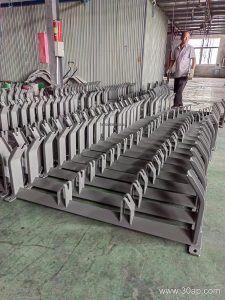
A deep trough idler is a carrying idler set whose rolls are arranged at a steep trough angle, typically 35 degrees or 45 degrees, so the conveyor belt forms a deep U-shaped pocket. That deeper profile keeps bulk material centred and reduces spillage when the belt is loaded heavily or moves at speed. In a quarry conveyor line or a cement plant clinker transport route, this small change in geometry often decides whether fines stay on the belt or end up on the walkway.
The product is also described as a deep troughing idler or deep-angle trough idler. All three names refer to the same assembly. It should not be confused with a transition idler, which sits near a conveyor pulley to gradually change belt shape, or with a return idler, which supports the empty strand.
How the Assembly Is Built
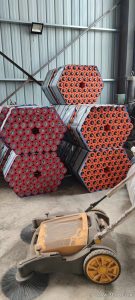
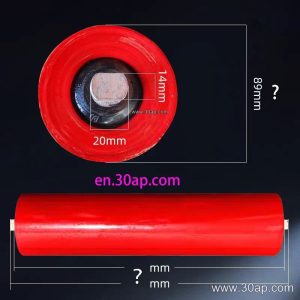
The set usually contains three rolls mounted in a steel frame, with the two side rolls inclined upward. Roll shells are commonly steel tube, and buyers may request nylon, ceramic or rubber-ring surfaces for particular duties. Rubber rings help absorb impact at transfer points, while ceramic lagging can suit abrasive ore duties. Each roll runs on sealed bearings; common bearing references include 6204, 6205, 6305, 6306, 6308 and 6310, selected according to load and roll diameter rather than belt width alone.
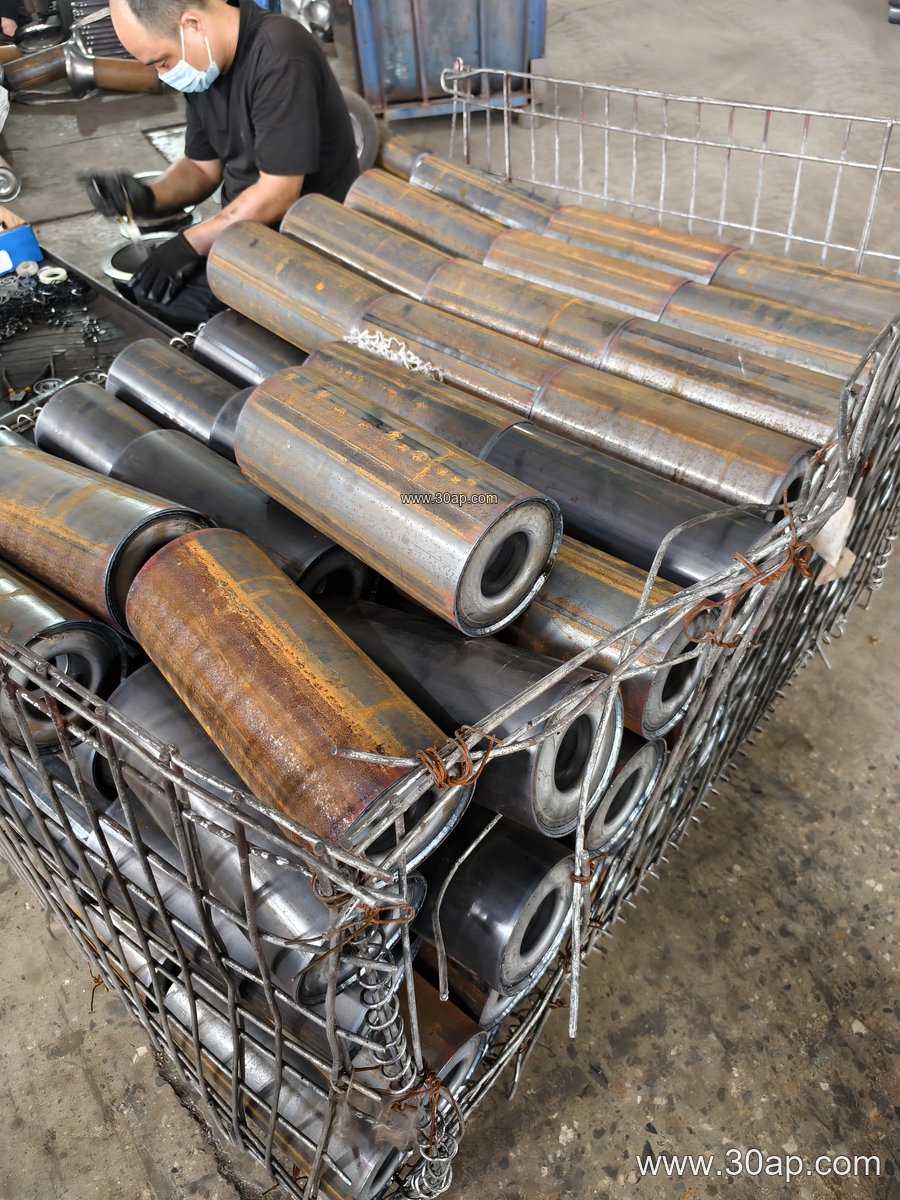
Roll diameters commonly range from Ø63 mm to Ø219 mm across the product family, and roll length changes with belt width, trough angle and frame form. For a three-roll deep trough set, typical mid-roll lengths are roughly 200 mm at B500, 315 mm at B800, 465 mm at B1200 and 600 mm at B1600, but side rolls and centre rolls may differ and final values are set by design.
Where Deep Troughing Pays Off
Deep trough angles are useful wherever a conveyor carries loose, free-flowing or lumpy material and the belt is wide enough to justify the extra depth. In an iron ore or copper ore handling circuit, the deeper pocket helps contain heavy lumps during acceleration. At a power plant coal yard feeding a Coal Mining Conveyor Belt, the same geometry reduces wind loss on exposed sections. Sand and aggregate plants also use it on primary feed conveyors where surge loading is normal.
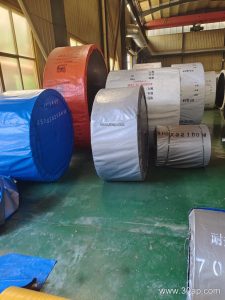
Because the belt must bend more sharply at the side rolls, belt flexibility matters. A stiff Steel Cord Conveyor Belt may need a gentler transition, while an EP Conveyor Belt or NN Conveyor Belt usually adapts more easily. Where oil or heat is present, an Oil Resistant Conveyor Belt or Heat Resistant Conveyor Belt should be matched to the idler surface and frame finish.
Specification Reference
The table below gives common reference values for planning discussions. It is not a fixed matching rule; every conveyor is engineered around its own belt, load and speed.
- Trough angles: 20, 30, 35 and 45 degrees; 35 and 45 are typical for deep trough designs
- Roll diameters: Ø63, Ø76, Ø89, Ø102, Ø108, Ø127, Ø133, Ø159, Ø178, Ø194, Ø219 mm
- Belt widths: B400, B500, B650, B800, B1000, B1200, B1400, B1600, B1800, B2000, B2200, B2400
- Roll surfaces: steel tube, nylon, ceramic, rubber ring
- Bearing references: 6204, 6205, 6305, 6306, 6308, 6310
- Frame forms: single roll, two roll, three roll troughing set
A 1200mm Wide Conveyor Belt on a high-tonnage line may use a different roll diameter than a 650mm belt on a short transfer, and shaft diameter is calculated from load and bearing selection, never from belt width by itself.
Buyer Checklist
Before ordering, confirm belt width, belt type, trough angle, roll diameter, roll length and frame spacing. Ask whether the duty involves impact, abrasion, heat, oil or flame risk, because those factors guide the choice between a standard steel roll and a rubber-ring or ceramic version. Check that the frame fits the existing conveyor bracket and that the mounting height matches neighbouring idler sets, since a mismatch can create belt tracking problems.
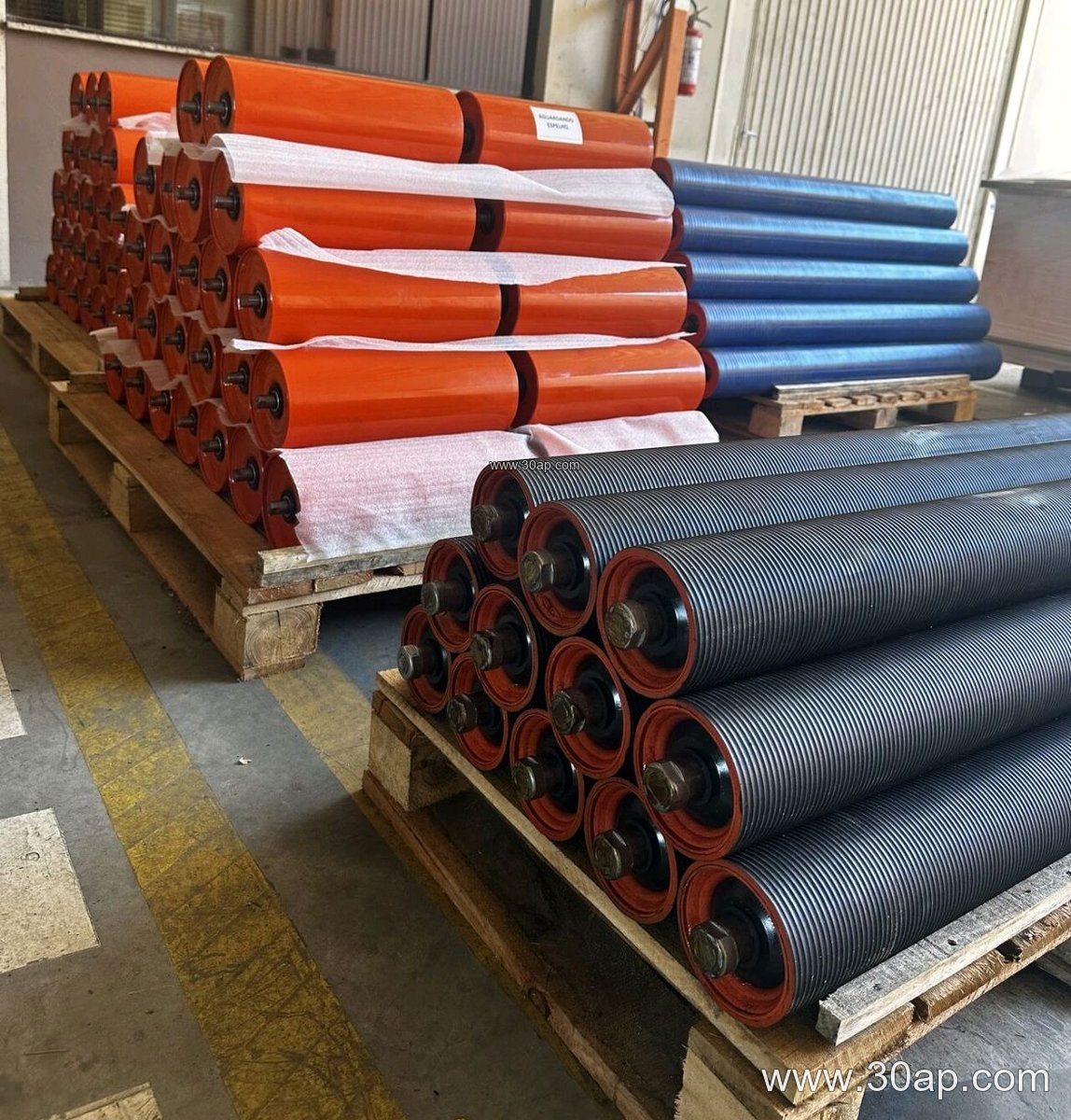
Also review maintenance access. Sealed bearings reduce regreasing frequency, but contaminated environments still call for periodic inspection of roll rotation and shell wear. Spare rolls should be stocked in the same diameter and bearing reference to avoid mixing parts on the same conveyor.
Installation and Care
Align new deep trough sets with the stringer centreline and check that all rolls turn freely before the belt is tensioned. On a long overland or port conveyor, a few misaligned sets can cause edge wear and gradual belt damage. Keep the material stream centred at the loading point, and inspect the trough after the first weeks of operation for loose bolts or flattened rubber rings.
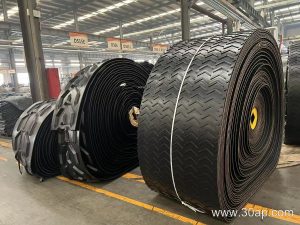
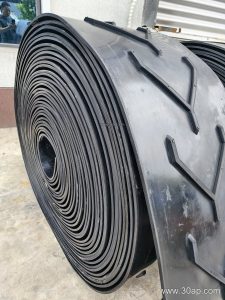
For belt selection around the idler, consider whether the duty calls for a Flame Retardant Conveyor Belt underground, an Abrasion Resistant Conveyor Belt in a crusher circuit, or a Chevron Conveyor Belt on an incline. Each interacts differently with the trough profile, so the idler and belt should be reviewed together rather than ordered separately.