What a Stainless Steel Idler Is and Where It Fits
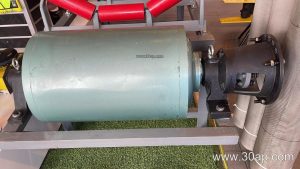
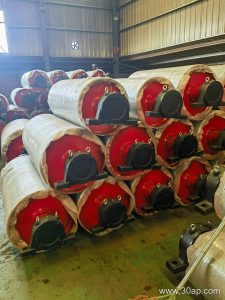
A stainless steel idler is a conveyor idler roller whose shell, bearing housing, and often the shaft are made from stainless steel rather than painted carbon steel. It supports the conveyor belt on the carrying or return side of a conveyor, keeping the belt profile stable while material moves from the loading point to the discharge. In practice, you will see it described as a stainless idler roller, an SS idler, or a corrosion-resistant idler. Drive pulleys, tail pulleys, and bend pulleys are different components that transmit or redirect belt tension; they are not interchangeable with idlers, and this article stays with the idler itself.
Construction Details That Matter
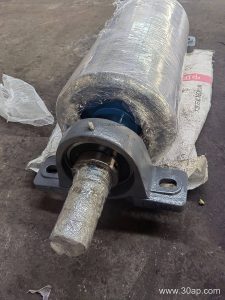
The typical build is a seamless or welded stainless tube, machined end caps, a pressed bearing housing, and a shaft that runs through the roller on sealed bearings. Common bearing sizes for general idler work include 6204, 6205, 6305, 6306, 6308, and 6310, but the bearing should be matched to the load and shaft design rather than to a single tube size. Sealing is the heart of a stainless idler: labyrinth seals, felt or rubber lip seals, and grease-retaining covers keep fine dust and moisture away from the bearing. In wash-down areas, the seal and the grease choice often decide service life more than the steel grade does.
Roller Surface and Body Forms
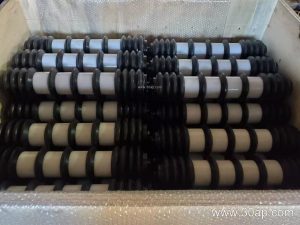
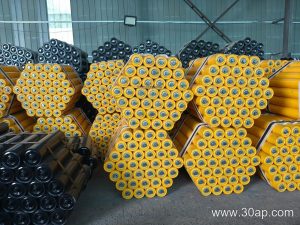
Stainless shells can be supplied plain, or fitted with rubber rings, nylon sleeves, or ceramic lagging when grip, noise, or wear resistance is needed. Roller diameters commonly used across conveying systems include Ø63, Ø76, Ø89, Ø102, Ø108, Ø127, Ø133, Ø159, Ø178, Ø194, and Ø219 mm. The right diameter depends on belt width, belt speed, load, and the idler spacing in the conveyor design.
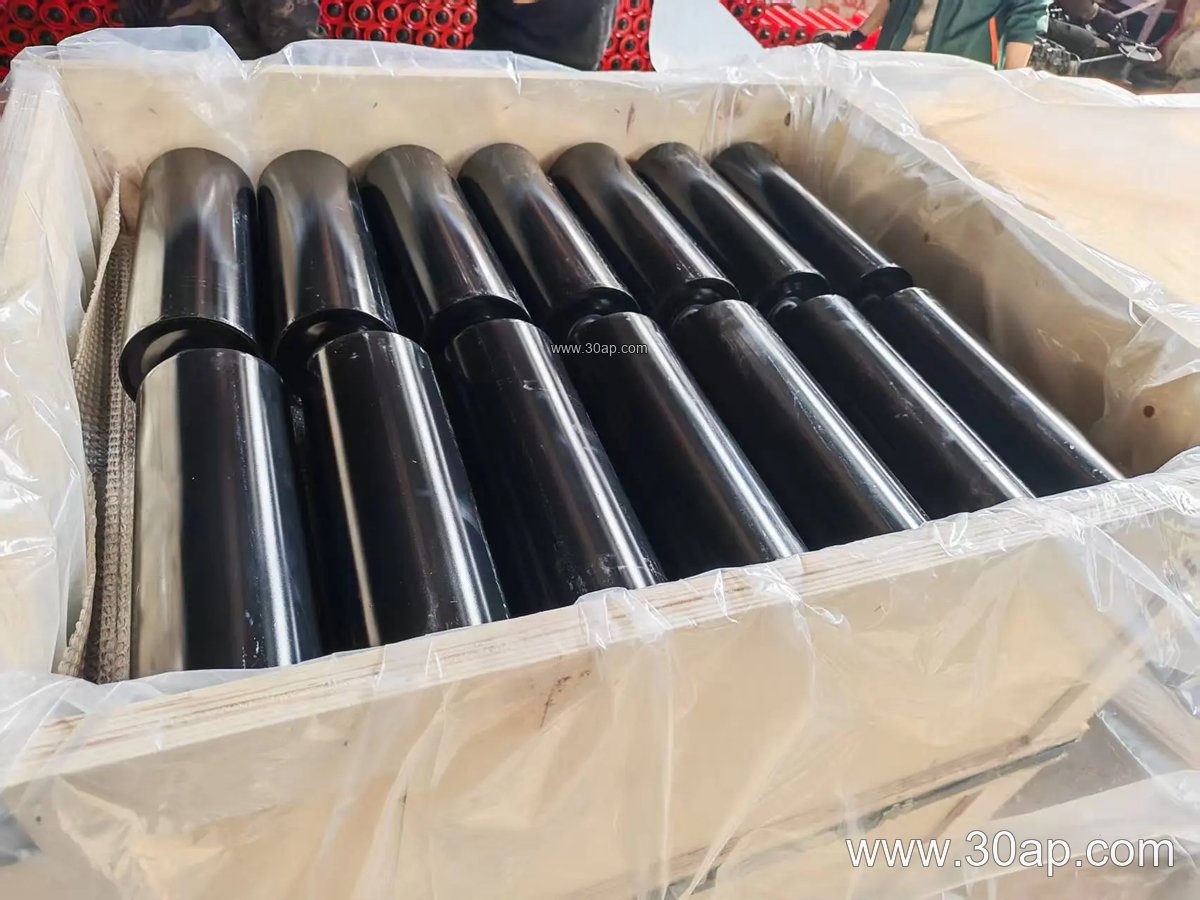
Typical Idler Forms
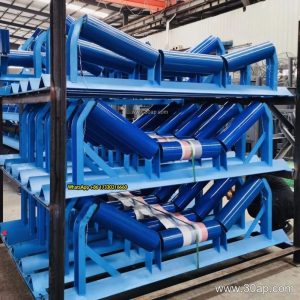
- Troughing idlers in two-roll and three-roll arrangements, with trough angles of 20, 30, 35, or 45 degrees
- Transition idlers placed near pulleys to ease the belt from flat to troughed
- Return idlers, including flat and V-return designs
- Impact idlers and rubber-ring impact idlers under loading chutes
- Self-aligning idlers, including friction and tapered types, for belt tracking
- Spiral or comb idlers for sticky material
Roll length follows belt width, trough angle, and roll arrangement. As a common reference, a three-roll troughing set may use roughly 200 mm rolls at B500, 250 mm at B650, 315 mm at B800, 380 mm at B1000, 465 mm at B1200, 530 mm at B1400, 600 mm at B1600, 670 mm at B1800, and 750 mm at B2000. These are examples, not fixed pairings, and side rolls can differ from the centre roll.
Where Stainless Idlers Earn Their Cost
Two settings usually justify stainless steel. The first is a fertilizer or chemical plant, where fine corrosive dust and occasional spillage attack ordinary painted rollers. The second is a port or food-processing conveyor with regular wash-down, where moisture and cleaning agents shorten the life of carbon steel shells. A stainless idler also suits coastal installations and any plant handling salt-laden air. In a quarry or a coal handling line, standard painted idlers often remain the economical choice, and stainless is reserved for wet or corrosive sections.
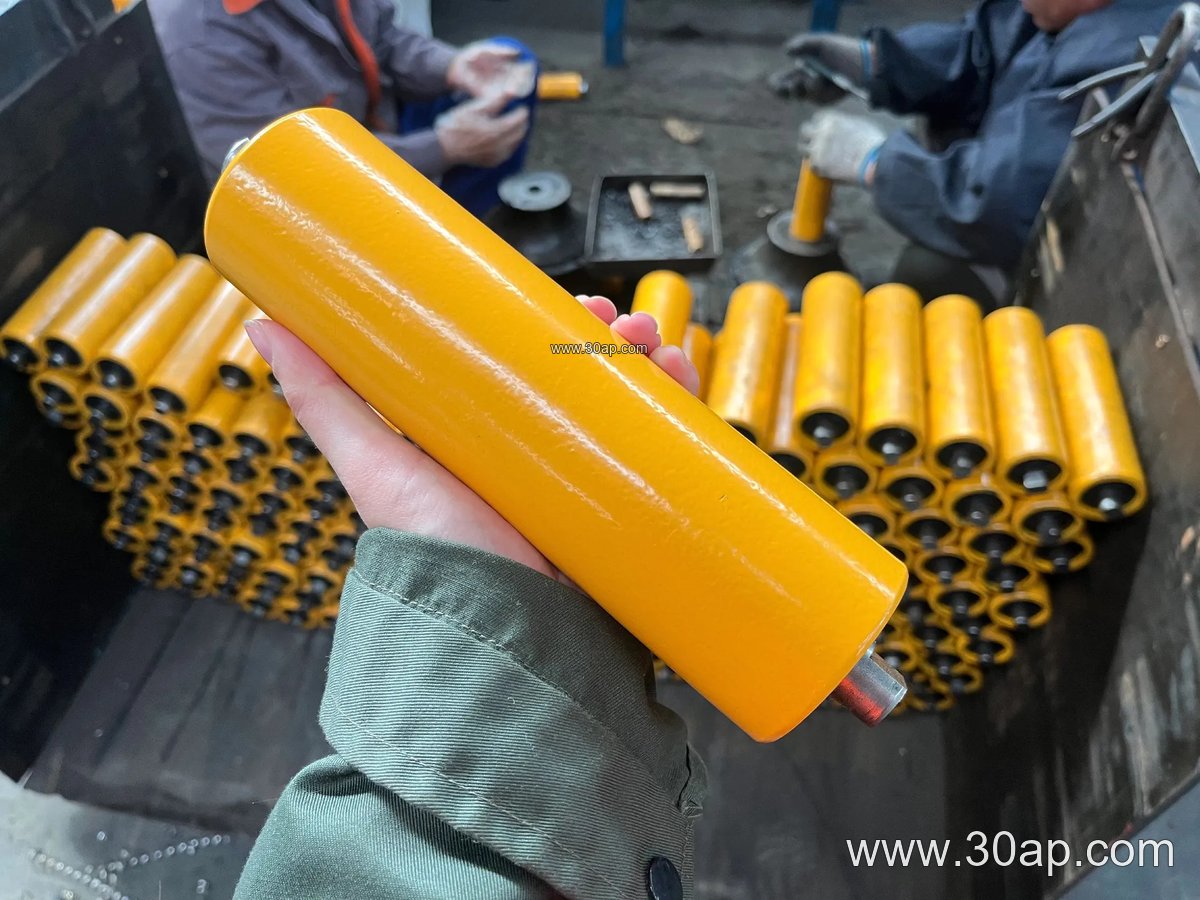
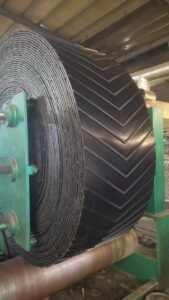
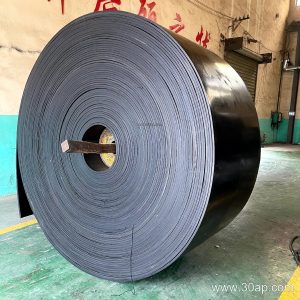
The belt itself should be considered at the same time. A heavy-duty mining conveyor belt or an abrasion resistant conveyor belt running on undersized rollers will wear faster, while a flame retardant conveyor belt in a coal mining conveyor line needs idlers that keep the belt centred and cool. Matching belt width, such as a 1000mm conveyor belt or a 1200mm conveyor belt, to the correct idler frame and roll length avoids edge loading and belt wander.
Buyer Checklist Before Ordering
Ask for the steel grade and finish, the bearing size and seal type, the shaft material and end connection, and the roller diameter and wall thickness. Confirm the trough angle, the number of rolls per set, and the roll length for your belt width. Check whether the idler will be mounted on a standard conveyor bracket or a custom frame. For corrosive duty, request the grease specification and confirm that the seal is suitable for wet cleaning. For high-tonnage lines, ask about dynamic load rating and recommended idler spacing rather than assuming one size fits all.
Reference Parameters
| Item | Typical Options |
|---|---|
| Roller diameter | Ø63, Ø76, Ø89, Ø102, Ø108, Ø127, Ø133, Ø159, Ø178, Ø194, Ø219 mm |
| Belt width | B400 to B2400, including B650, B800, B1000, B1200, B1400, B1600, B1800, B2000 |
| Trough angle | 20, 30, 35, 45 degrees |
| Bearing | 6204, 6205, 6305, 6306, 6308, 6310 |
| Roll surface | Plain stainless, rubber ring, nylon, ceramic |
Finally, plan maintenance. Stainless resists corrosion but does not resist wear or impact indefinitely. Inspect seals after wash-down, check for belt misalignment that loads one side of the idler, and replace rollers with damaged shells before they cut into the belt. A well-specified stainless steel idler, matched to the conveyor belt, frame, and operating environment, will outlast a cheaper roller where moisture and chemicals are part of daily operation. More conveyor component references are available at www.beltconveyoridler.com for belt, idler, and pulley selection.