What a Gold Mining Conveyor Belt Does
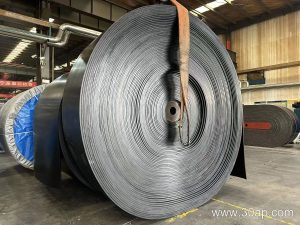
A gold mining conveyor belt moves crushed ore, gold-bearing rock, and screened aggregate between the crusher, screen deck, stockpile, and mill feed points. In gold operations the belt often works harder than the mine plan suggests, because wet or sticky ore, sharp silica dust, and uneven feed loads all attack the same rubber surface. A properly specified Gold Mining Conveyor Belt is therefore a wear-critical component rather than a simple accessory, and the choice of carcass, cover compound, and edge protection decides how long the line stays in service.
The same family of belting serves coal, cement, power plant, quarry, and sand making plant lines, so buyers usually compare a mining conveyor belt with general bulk material conveyor belt designs before settling on a gold-specific build.
How the Belt Is Built
Most gold plant belts use a fabric core or steel cord carcass under a rubber cover. The carcass carries tension, while the top cover absorbs impact from the crusher discharge and the bottom cover protects against abrasion on the idler roller path.
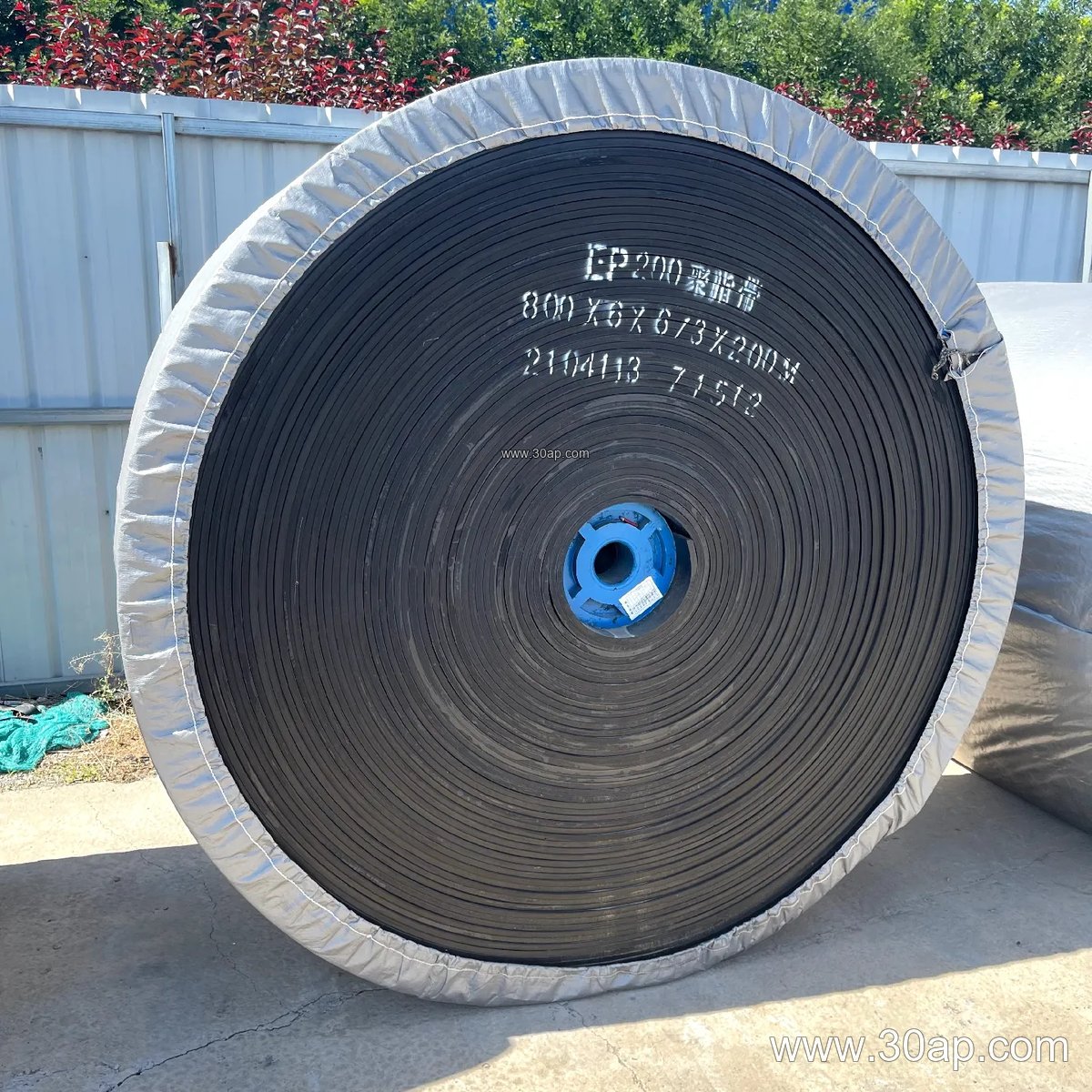
- Carcass options: EP conveyor belt (polyester-nylon), NN conveyor belt (nylon-nylon), multi-ply fabric core conveyor belt, and steel cord conveyor belt for long overland runs.
- Cover compounds: abrasion resistant conveyor belt grades for ore, heat resistant conveyor belt grades near dryers or kilns, oil resistant conveyor belt grades near gearboxes and lubricated drives, and flame retardant conveyor belt or fire resistant conveyor belt grades where the site requires them.
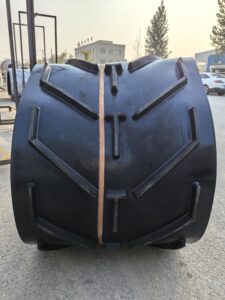
- Edge and profile options: chevron conveyor belt for inclined transfer points, corrugated sidewall conveyor belt or skirted conveyor belt to contain spillage on steep lifts, and pipe conveyor belt where dust control and route flexibility matter.
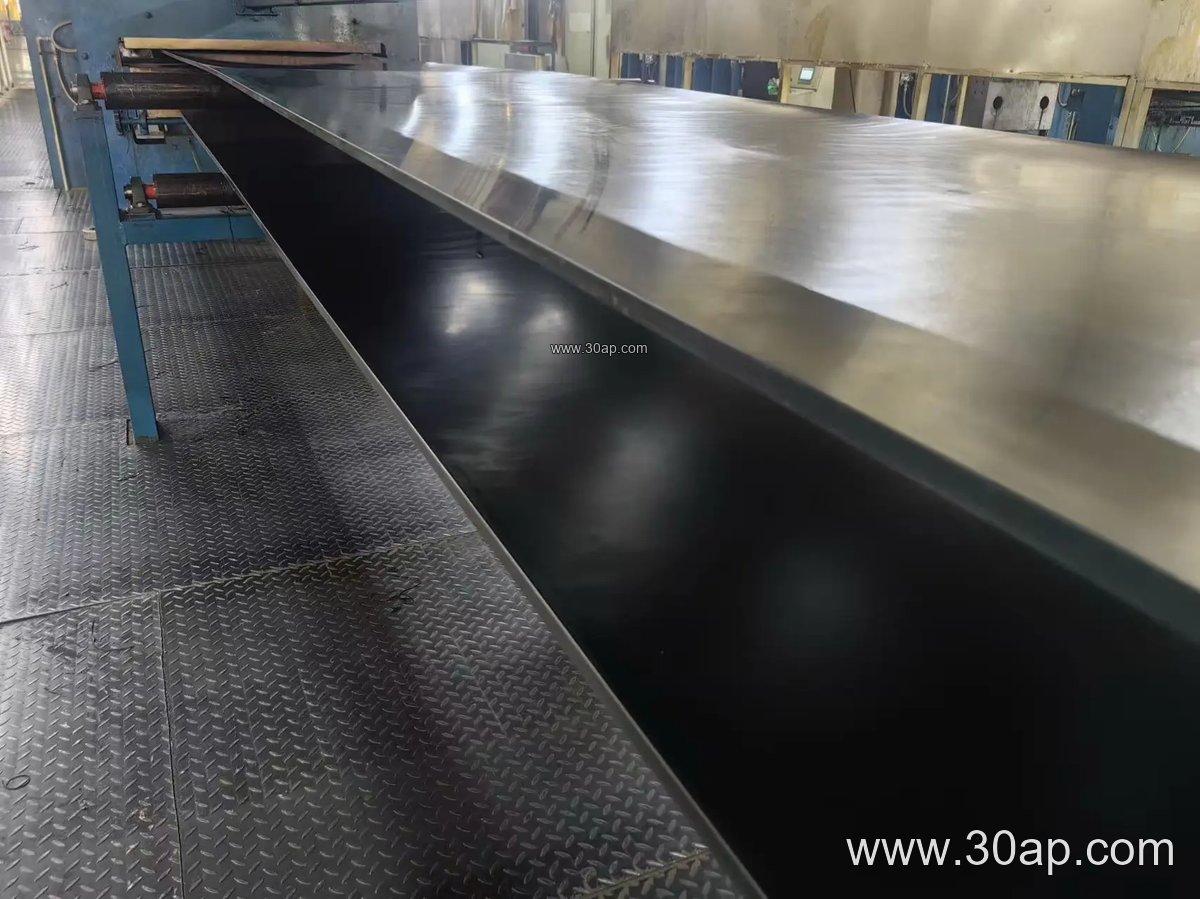
Cover thickness is usually quoted as top plus bottom, for example 4+2 mm, 5+2 mm, 6+2 mm, or 8+3 mm. Fabric cores commonly run from 2 to 6 plies depending on the duty and the required tensile strength.
Typical Strength and Width References
The table below lists common reference values; final selection is set by the conveyor design, the tonnage, the incline, and the lump size. Values are indicative only.
| Parameter | Common reference range |
|---|---|
| EP fabric grades | EP200, EP315, EP400, EP500, EP630, EP800, EP1000, EP1250, EP1600, EP2000 |
| Belt width | B500, B650, B800, B1000, B1200, B1400, B1600, B1800, B2000 |
| Cover thickness | 3+1.5, 4+2, 5+2, 6+2, 8+3 mm |
| Ply count | 2 to 6 plies for fabric cores |
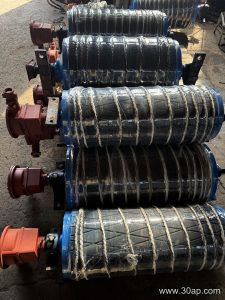
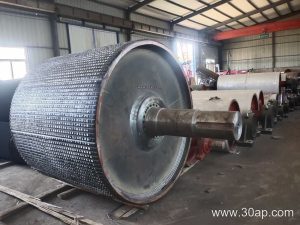
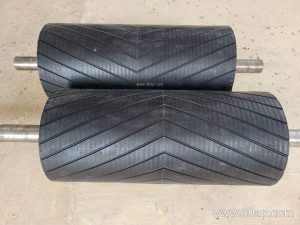
Width and pulley diameter are matched by the conveyor designer, not by a fixed rule. A wider belt does not automatically require one specific conveyor pulley size, and shaft diameter is calculated from the actual load case.
Where Gold Plant Belts Are Used
In a typical gold circuit the belt appears at the primary crusher discharge, the screen feed, the fine ore stockpile, the mill feed, and the concentrate or tailings transfer. Each position has its own demands:
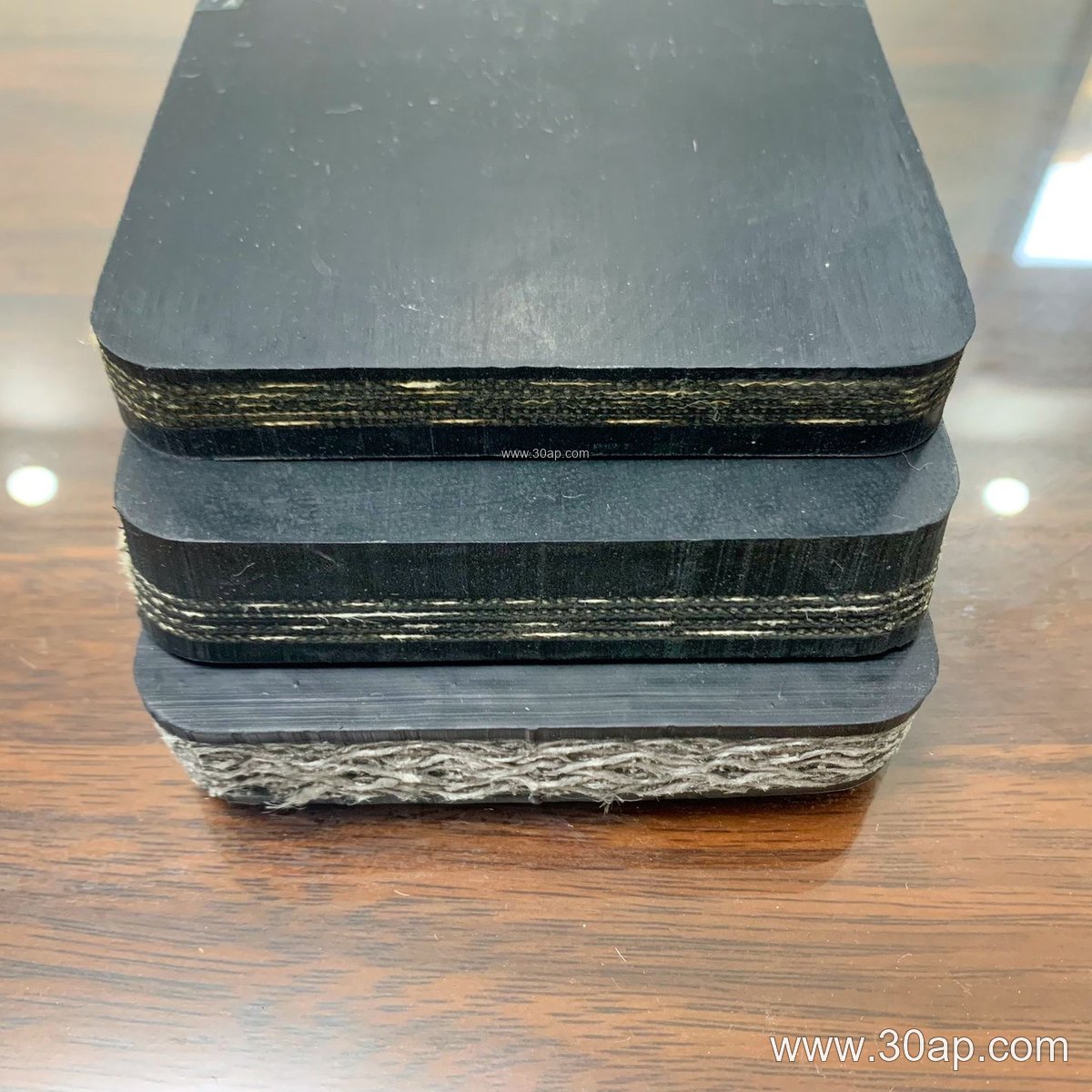
- Crusher discharge: impact resistant conveyor belt with a thick top cover and closely spaced idler roller support.
- Wet or clay-rich ore: chevron or skirted profiles to prevent rollback and spillage.
- Long overland haul: steel cord conveyor belt such as ST1000, ST1250, ST1600, ST2000, ST2500, or ST3150 grades, with careful conveyor pulley alignment at drive, tail, and bend positions.
- Underground or confined galleries: underground mining conveyor belt with flame retardant and anti-static properties, often PVG or PVC mining conveyor belt constructions where the site standard calls for them.
Similar belting is used in cement plant, steel plant, and port ship loading conveyors, so spare-part planning across a group of sites can sometimes share specifications.
Buyer Checklist
Before ordering, confirm the following with the conveyor designer and the belt supplier:
- The required tensile grade and the number of plies, not just the belt width.
- Top and bottom cover thickness and the compound type suited to the ore, moisture, and temperature.
- Whether flame retardant, anti-static, cold resistant, or acid and chemical resistant properties are needed.
- Edge condition and profile type, and whether an endless conveyor belt splice is preferred over a mechanical joint.
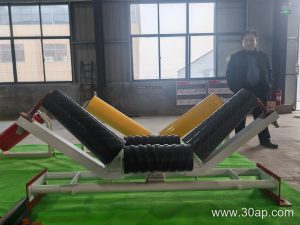
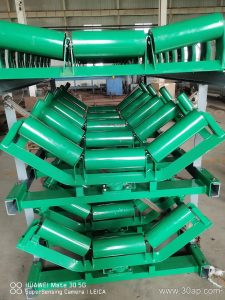
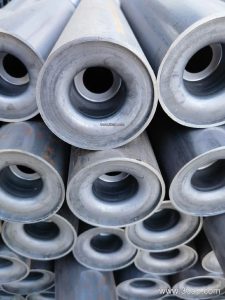
- Compatibility with the existing conveyor pulley, idler roller, and conveyor bracket layout, including transition distances.
Request the belt data sheet with cover hardness, carcass construction, and splice method, and keep a spare roll for the highest-wear position. For gold plants, the abrasion resistant conveyor belt at the crusher discharge is usually the first item to stock. Browse more belting and conveyor component options at www.example.com/gold-mining-conveyor-belt and confirm dimensions against the actual conveyor drawing before purchase.