What a Non-Standard Conveyor Bracket Is
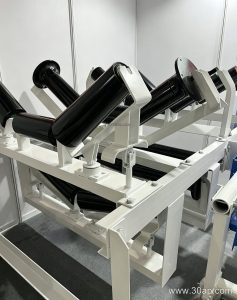
A non-standard conveyor bracket is a support component made to fit a conveyor frame that does not follow the usual catalogue geometry. Instead of forcing an existing structure to accept an off-the-shelf part, the bracket is drawn and fabricated around the actual installation: the frame rail spacing, the required trough angle, the roller end shape, the available mounting holes, and the load path of the belt above it. In practice, engineers also call the same item a custom conveyor support bracket or a made-to-order idler support frame, and the two expressions describe the same fabricated steel part.
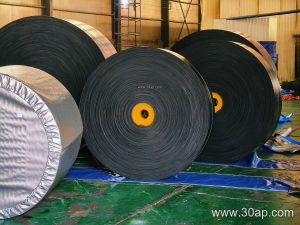
These brackets turn up wherever a conveyor has been modified, extended, or built for a specific duty. A quarry line running an abrasion resistant conveyor belt through a rebuilt transfer point, a cement plant adjusting an incline, or a power plant coal handling gallery with irregular steelwork all may need supports that no standard drawing covers.
How the Bracket Is Built
Most non-standard conveyor brackets are formed from angle steel, channel steel, or folded steel plate. The choice follows the span, the roller load, and the stiffness required at the mounting point. A short bracket carrying a single return roller might be folded from plate, while a wide troughing support under a heavy bulk material conveyor belt usually calls for channel or angle sections with gusseted corners.
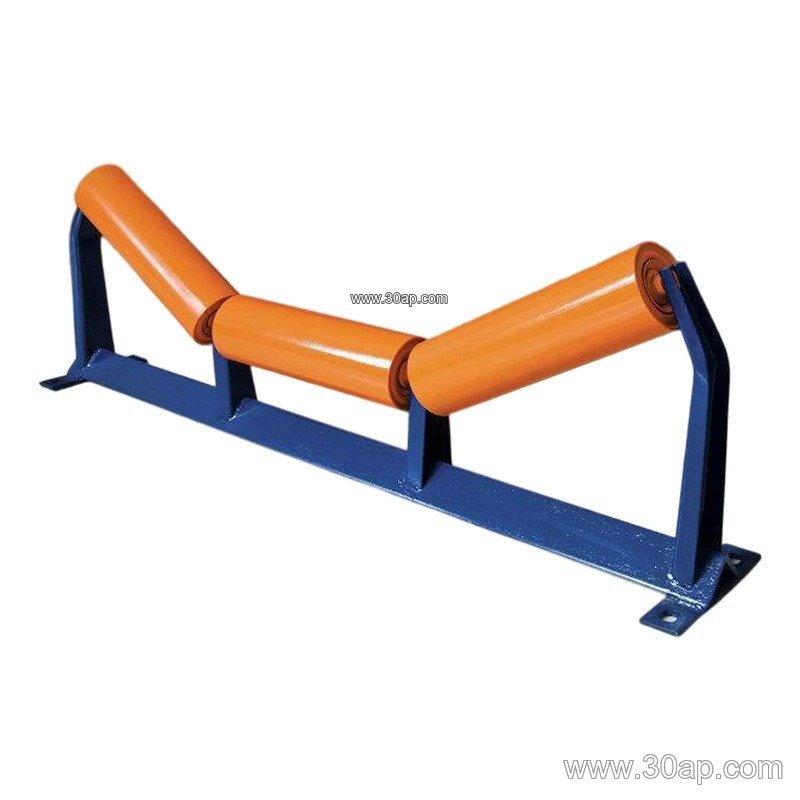
Typical build details include:
- Slotted or drilled mounting holes positioned to match the existing frame
- Bent end plates that hold the roller shaft at the correct height
- Reinforcing ribs where the bracket meets the main stringer
- Welded or bolted roller seats, depending on how the idler roller is retained
- Galvanized, painted, or bare steel finish selected for the site environment
Because the geometry is custom, hole spacing and crossbeam length are determined by the belt width, trough angle, and frame design rather than by a fixed table.
Where It Fits on the Conveyor
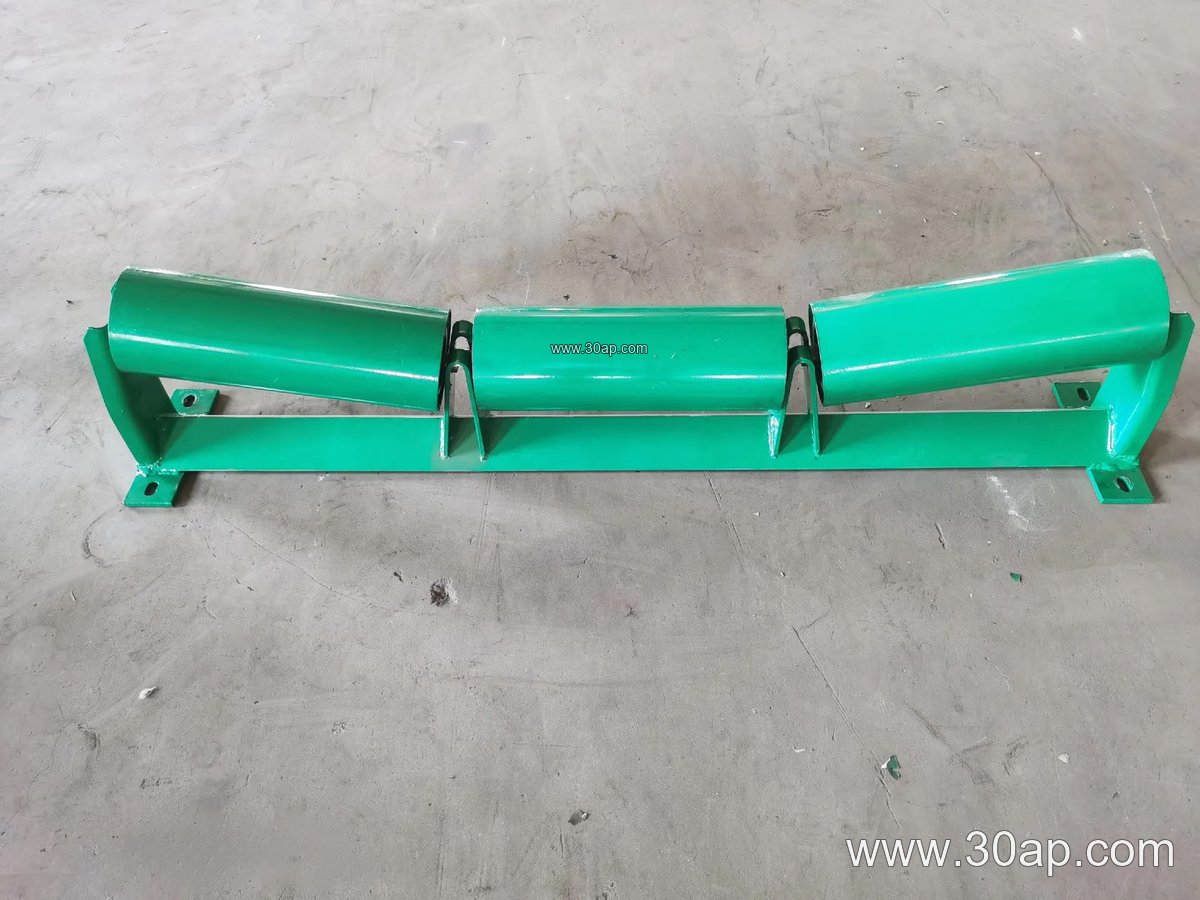
Support brackets appear at several points along a conveyor. Troughing brackets carry the upper idler roller set and set the trough angle that shapes the belt. Transition brackets sit near the head or tail and guide the belt from flat to troughed. Return brackets hold the lower rollers, and V-return or flat-return versions may be used depending on belt tracking needs. Alignment brackets, sometimes with a slight forward tilt of about 1.5 to 2 degrees, help correct belt drift on long runs.
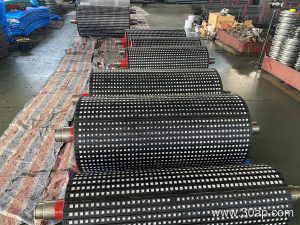
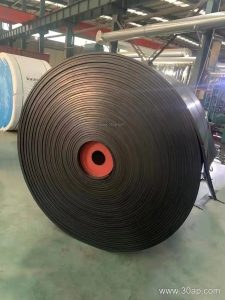
These parts work together with the conveyor pulley, the conveyor belt, and the idler roller, so a custom bracket is rarely specified in isolation. On a crushing and screening line, a bracket that holds the wrong roller height can wear the belt edge and disturb tracking within a few shifts.
Common Sizes and Configurations
Reference dimensions below show the range typically discussed during design. They are design references, not fixed pairings, and the final combination is set by the conveyor layout.
| Parameter | Common Reference Values |
|---|---|
| Belt width | B500, B650, B800, B1000, B1200, B1400, B1600, B1800, B2000 |
| Trough angle | 20°, 30°, 35°, 45° |
| Roller diameter | Ø89, Ø108, Ø133, Ø159, Ø194 |
| Bracket material | Angle steel, channel steel, folded plate |
| Bracket types | Troughing, transition, return, V-return, impact, self-aligning, adjustable, suspended |
A B800 frame at 35 degrees with Ø108 rollers is one possible arrangement; a B1200 line at 45 degrees with Ø133 rollers is another. Neither is mandatory, and a single belt width can suit more than one roller diameter or trough angle.
Applications Across Industries
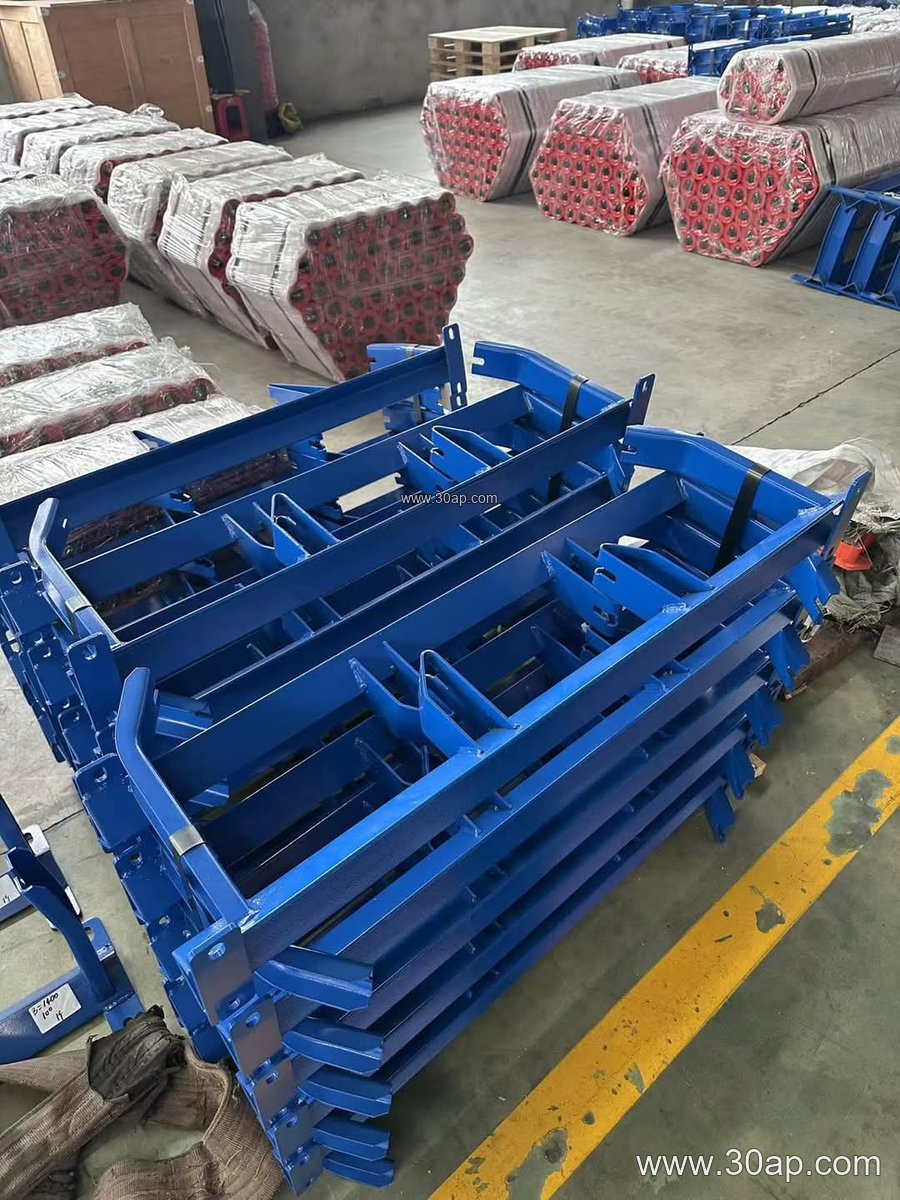
Custom supports are common in limestone mines and aggregate plants where frames are assembled on site and rarely match a catalogue. In a coal preparation plant, flame retardant conveyor belt runs often need brackets that clear structural steel and service walkways. Iron ore and copper ore handling circuits favor heavier sections because impact and abrasion are severe. Port ship loading conveyors may require brackets that fit restricted gallery spaces, while fertilizer and grain silo installations often ask for clean, painted fabrications.
Whatever the site, the bracket must match the conveyor frame and the roller it carries, not the other way around.
What Buyers Should Check
Before ordering a non-standard conveyor bracket, confirm the frame rail spacing, the roller shaft end type, the required trough angle, and the mounting hole pattern. Send a sketch or measured drawing rather than a verbal description. State the belt width and the roller diameter together, since the bracket geometry depends on both. Ask how the part will be finished and whether it will be bolted or welded to the frame. For high-abrasion duties, mention the abrasive material and the operating environment so the fabricator can select an appropriate steel section. Finally, request a dimensional check drawing before production, because a custom bracket that is a few millimeters off can stall an entire installation.