What a Guide Idler Bracket Does
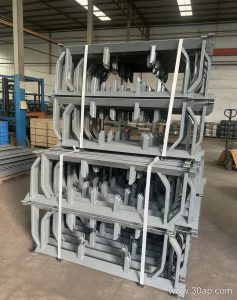
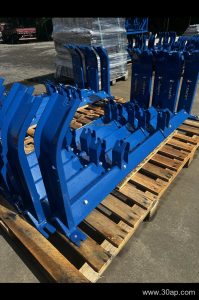
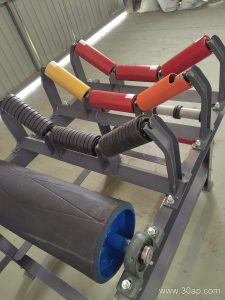
A guide idler bracket is the mounting component that holds a guide idler in the correct position relative to the conveyor belt. In practice, it is a steel support that carries a small-diameter roller or a pair of rollers close to the belt edge, helping to keep the belt centered as it runs. On a long overland line or a short transfer in a cement plant, this bracket works together with the troughing frames, return rollers and the conveyor pulley to maintain a stable belt path. The bracket itself does not tension the belt or drive it; its job is to locate the guide roller accurately and keep that position under load.
Because the guide roller sits near the belt edge, the bracket must resist side loads as well as the weight of the roller. Buyers often treat it as a minor part until belt misalignment causes edge damage, spillage or rubbing on the structure. A well-made guide idler bracket is therefore a small but important piece of the alignment system.
Construction and Typical Materials
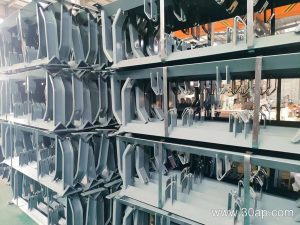
Most guide idler brackets are fabricated from angle steel, channel steel or folded steel plate. The frame is usually welded or bolted, with a base plate that mounts to the conveyor stringer or cross beam and a vertical or angled arm that carries the roller shaft. Slotted holes are common so the roller position can be adjusted during installation.
Typical build details include:
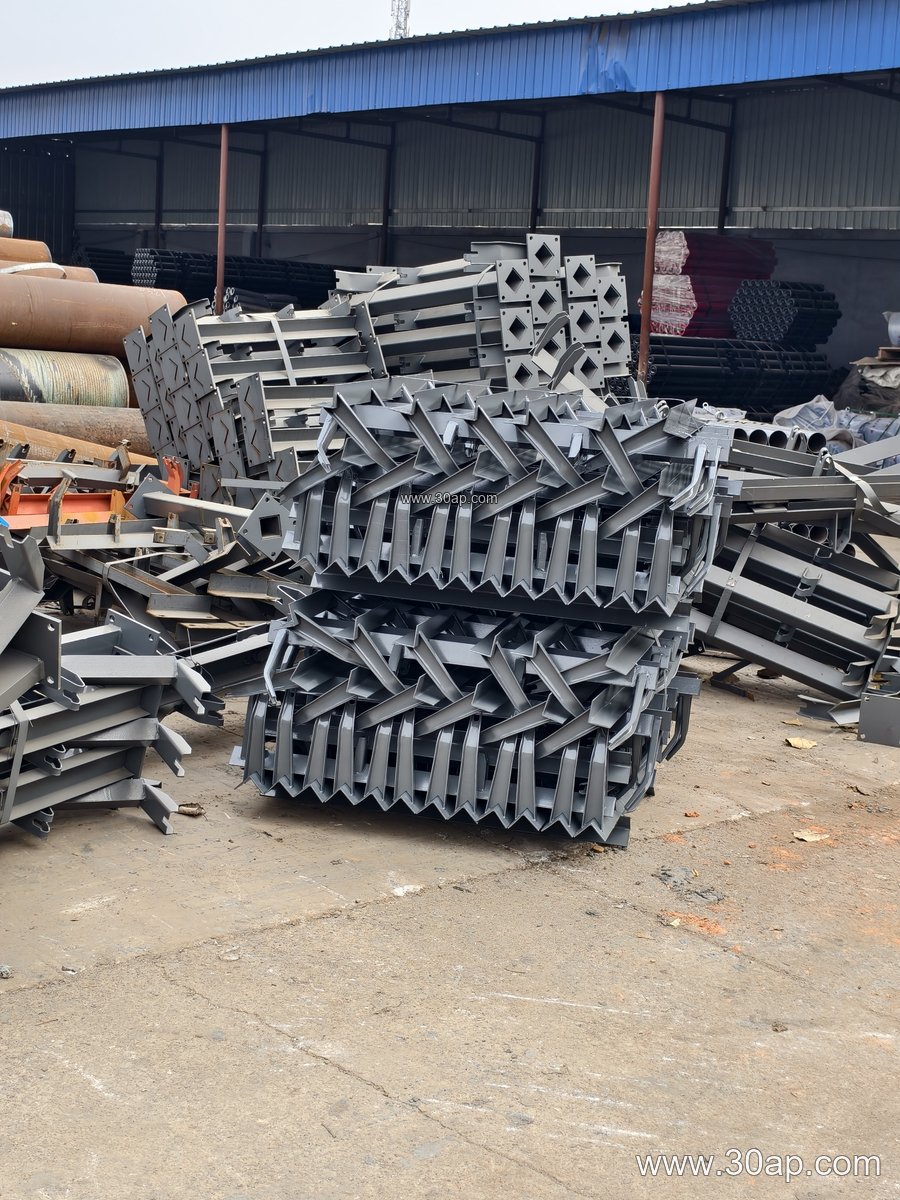
- Mounting base drilled or slotted for bolting to the conveyor frame
- Roller shaft seat sized to the guide roller bearing housing
- Reinforcing gussets where the arm meets the base
- Painting or galvanizing for corrosion protection in wet or dusty plants
Material thickness and weld size should match the duty. A bracket for a 650mm belt in a sand and gravel line is lighter than one for a 1800mm belt carrying iron ore. The bracket should be stiff enough that the guide roller does not deflect when the belt pushes against it.
Where Guide Idler Brackets Are Used
These brackets appear wherever belt tracking needs local correction. In a coal handling system at a power plant, they are often installed just before the head pulley and after the loading point. In a quarry or stone crushing plant, they help keep an abrasive conveyor belt centered on the structure after a transfer chute. In a cement plant, they may be fitted on the return side to control belt wander caused by off-center material loading.
They are also used in iron ore and copper ore handling, in fertilizer and grain silo conveyors, and in tunnel spoil removal lines. On a pipe conveyor belt or a corrugated sidewall belt, the guide arrangement is usually different, but the same principle applies: a bracket positions a roller that contacts the belt and limits lateral movement. A guide idler bracket is not a substitute for a training idler frame or a self-aligning return bracket; those are separate alignment devices, and each has its own mounting style.
Matching the Bracket to Belt Width and Roller Size
Selection starts with the belt width, the roller diameter and the space available on the conveyor frame. Common belt widths include B500, B650, B800, B1000, B1200, B1400, B1600 and B1800. Guide rollers are often Ø89, Ø108 or Ø133, with larger diameters on heavy-duty lines. There is no fixed rule that ties one belt width to one roller diameter; the design engineer confirms the combination against belt speed, load and available clearance. A B800 belt, for example, might use a Ø108 guide roller in one plant and a different size in another.
| Reference item | Typical range | Note |
|---|---|---|
| Belt width | B500 to B1800 | Bracket length and hole spacing change with width |
| Guide roller diameter | Ø89, Ø108, Ø133 | Selected by design, not by width alone |
| Mounting | Bolted or welded | Slotted holes allow adjustment |
| Material | Angle, channel, folded plate | Thickness matched to duty |
Installation hole spacing and cross beam length are usually determined by the conveyor design, so the bracket should be ordered against a drawing rather than guessed from belt width.
Buyer Checklist
Before ordering, confirm the belt width, the guide roller diameter and bearing type, the mounting hole pattern, and whether the bracket is fixed or adjustable. Ask for the material grade and surface treatment, especially in a coal mining conveyor belt system where flame retardant conveyor belt and anti-static conveyor belt requirements may also apply to nearby components. Check that the bracket will not interfere with the return run or with a skirted conveyor belt at the loading zone.
For maintenance, inspect the bracket for bent arms, loose bolts and corrosion during routine belt inspections. A distorted guide idler bracket can push the belt off center instead of correcting it. Replacement brackets should match the original mounting dimensions, and any change in roller size should be reviewed against the belt path.
Whether the plant handles EP conveyor belt, NN conveyor belt, steel cord conveyor belt or a heat resistant conveyor belt, the guide idler bracket plays the same supporting role: it holds the guide roller where the belt needs it. Ordering the right bracket starts with accurate dimensions and a clear understanding of how it fits the conveyor structure.