What a Large-Diameter Conveyor Pulley Does
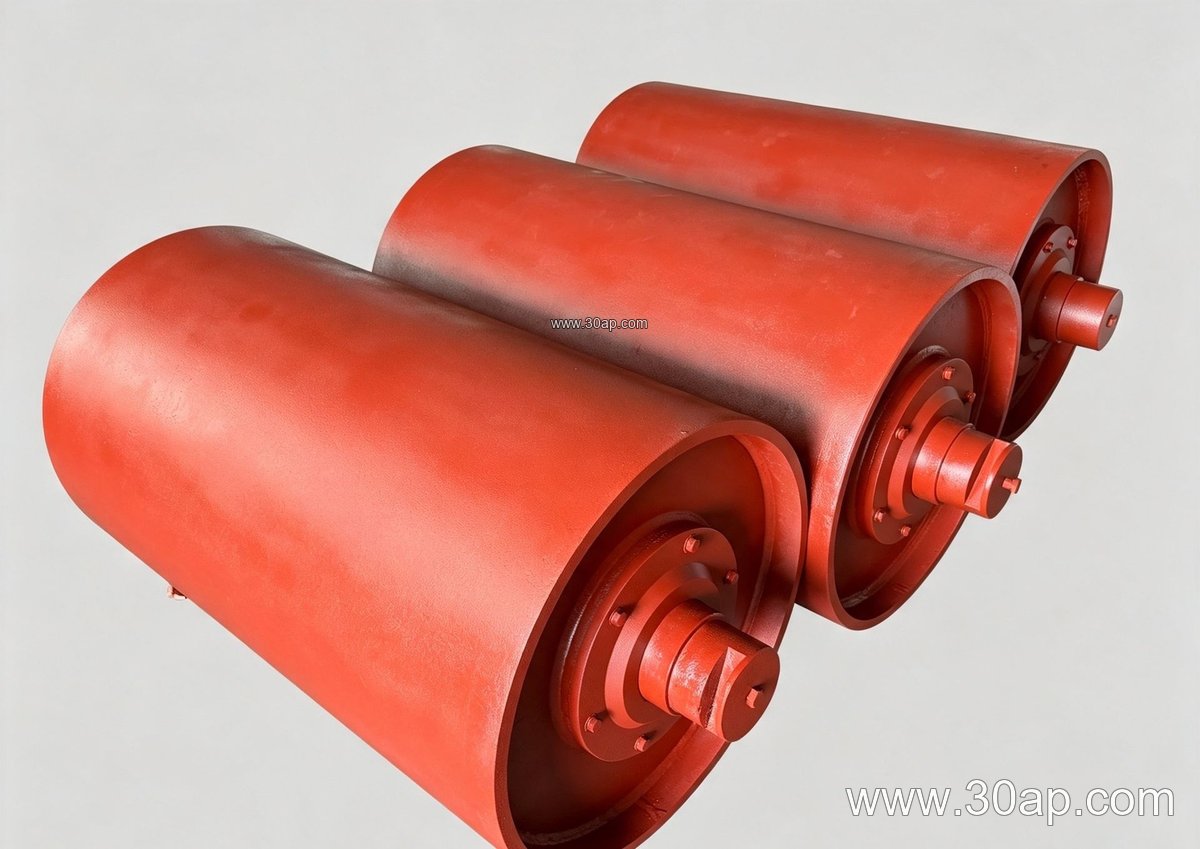
A large-diameter conveyor pulley is the drum that carries and drives the belt at the head, tail, or tensioning point of a bulk handling conveyor. Increasing the drum diameter reduces belt bending stress, improves traction on the drive side, and gives the belt more contact area as it wraps around the shell. In a quarry, a coal preparation plant, or a power station coal yard, that extra wrap can mean longer belt life and steadier starting under load. The pulley is not a standalone item: it works together with the conveyor belt, the idler roller set along the carry side, and the conveyor bracket that fixes the bearing housing to the frame.
Where the Large Diameter Matters Most
Diameter is usually the first parameter a buyer looks at, but its effect depends on position. A large-diameter conveyor pulley at the head or drive position increases the arc of contact, which helps transmit torque without slip. At the tail, a larger drum reduces the reverse bend on the return belt. At a take-up or bend point, the diameter is often chosen to keep the belt from sharp flexing. In heavy-duty mining conveyor belts and steel cord conveyor belt installations, the pulley diameter should be checked against the belt’s minimum bend radius rather than picked by belt width alone.
Construction and Surface Options
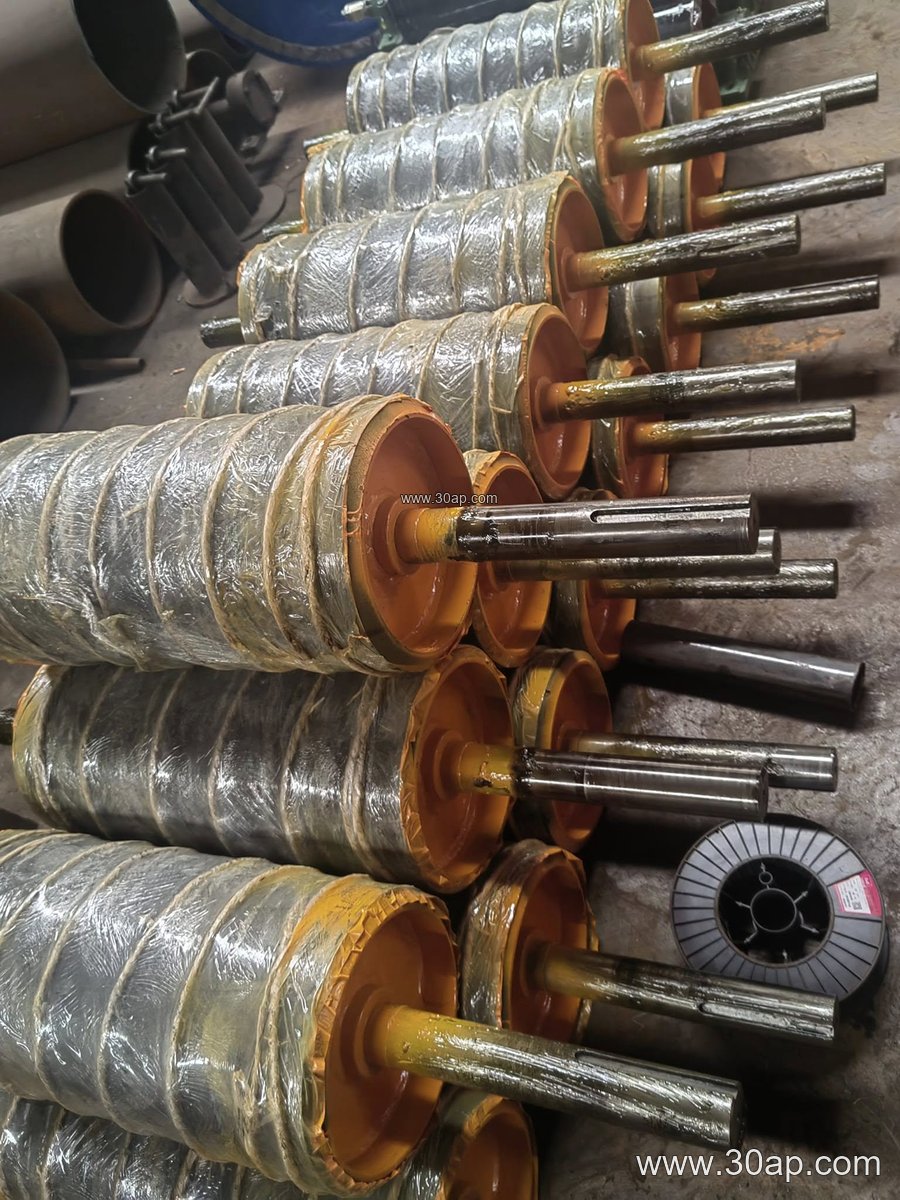
The shell is commonly a rolled steel cylinder with welded end discs, a machined hub, and a shaft sized by torque and radial load. Bearings are selected for the duty cycle, and the pulley is usually balanced before shipment. Surface finish is a separate decision:
- Plain shell for light abrasion and clean material
- Hot vulcanized or cold-bonded rubber lagging for general grip
- Diamond or herringbone lagging for wet, dusty conditions
- Ceramic lagging where slip and wear are severe
Lagging thickness is often 8, 10, 12, 15, or 20 mm. A thicker layer adds traction but also changes the effective diameter, so the belt path and take-up stroke should be reviewed together.
Common Size Combinations
The table below shows reference combinations, not fixed rules. Any belt width may be paired with more than one diameter depending on tension, belt type, and conveyor geometry.
| Belt Width | Typical Face Width | Reference Diameter |
|---|---|---|
| B800 | about 950 mm | Ø500 |
| B1000 | about 1150 mm | Ø630, Ø800 |
| B1200 | about 1400 mm | Ø800, Ø1000 |
| B1400 | about 1600 mm | Ø800, Ø1000, Ø1250 |
| B1600 | about 1800 mm | Ø1000, Ø1250 |
| B1800 | about 2000 mm | Ø1250, Ø1400 |
| B2000 | about 2200 mm | Ø1400, Ø1600 |
Shaft diameters commonly fall in the Ø50 to Ø200 mm range, but the final value comes from torque and load calculation, never from belt width alone. Face width is normally slightly larger than the belt so the belt edge does not run on the shell corner.
Matching the Pulley to the Belt and the Plant
A large-diameter conveyor pulley should be selected together with the belt specification. An abrasion resistant conveyor belt running at high tension in an iron ore plant may need a bigger drum than a fabric core belt on a short transfer. Heat resistant conveyor belt and flame retardant conveyor belt grades used in a cement kiln area or underground coal mining conveyor can have their own minimum pulley diameter rules from the belt maker. For pipe conveyor belt and corrugated sidewall conveyor belt systems, the pulley profile and clearance need extra attention, because the belt cross-section is not flat.
Buyers should ask for the belt tension, the required wrap angle, the lagging type, the shaft material, the bearing type, and the mounting position. If the pulley is a drive pulley, confirm the motor and gearbox coupling details. If it is a tail or bend pulley, confirm the take-up travel and the clearance to the conveyor bracket. For heavy-duty mining conveyor belt lines, spare parts planning should include bearing housings, lagging sheets, and locking assemblies.
Inspection and Maintenance Notes
Check lagging wear at the belt entry edge, where slip and impact are highest. Confirm that the pulley is aligned with the idler roller frames so the belt does not track to one side. Worn lagging lowers friction and can cause belt slip, especially on a wet coal conveyor or an aggregate conveyor belt in an open yard. A large drum is heavy, so lifting points and bearing access should be planned before installation.
For conveyor systems in a limestone mine, a sand and gravel line, or a port bulk terminal, the large-diameter conveyor pulley is a wear item as much as a structural one. Choosing it by diameter alone is not enough; the shell, shaft, lagging, and belt grade should be reviewed as one package.