What a Conveyor Bracket Assembly Does
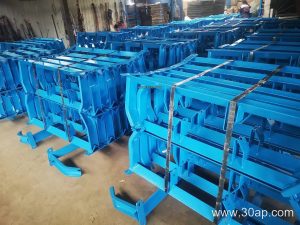
A conveyor bracket assembly is the structural frame that holds the idler rollers in position along a conveyor line. It connects the rollers to the main conveyor frame and sets the trough angle, the roller spacing and the height of the belt path. In a quarry, a cement plant or a power plant coal yard, the bracket assembly is the part that keeps the belt running in a steady line instead of sagging or wandering. The assembly is often called a conveyor idler bracket or roller support frame, but it is the same product: a welded or bolted unit that carries the rollers and, indirectly, the loaded belt.
Because the bracket sits between the belt and the structure, its alignment and strength directly affect belt life. A poorly fitted bracket can wear the edge of a rubber conveyor belt, load the roller bearings unevenly and create spillage at transfer points.
How the Assembly Is Built
Most assemblies are fabricated from angle steel, channel steel or folded steel plate. A typical troughing unit has two or three roller cradles set at a fixed angle, welded to a cross beam with mounting feet or hook ends. The feet either bolt to the conveyor stringer or hook into it, depending on the frame design. Common materials are painted carbon steel and galvanized steel; heavier-duty versions use thicker section steel for impact zones.
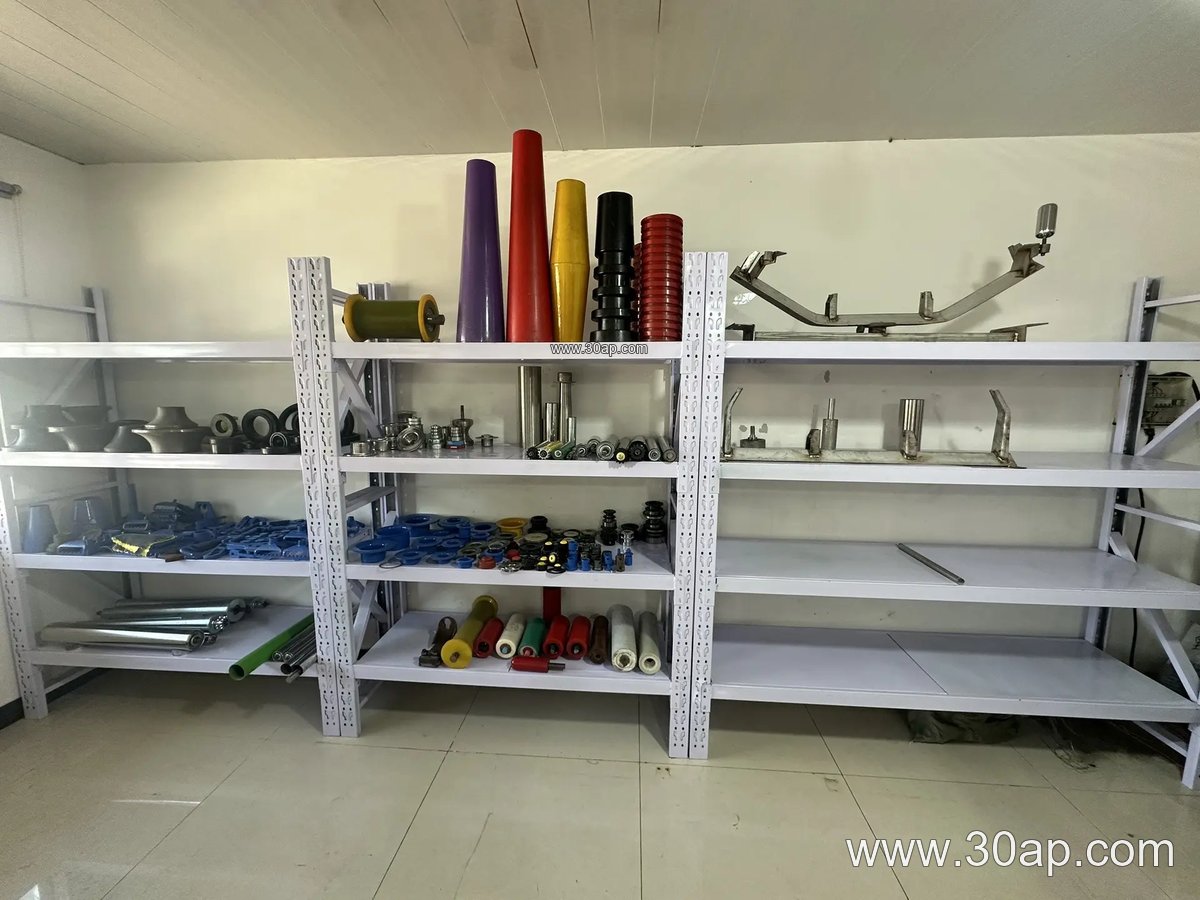
Key structural details include:
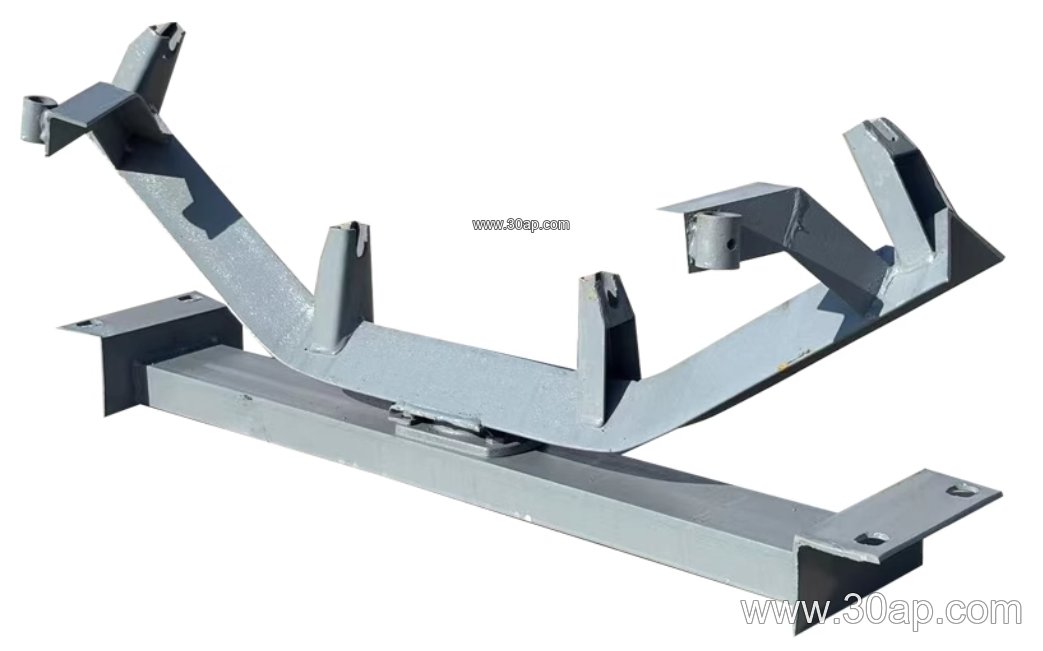
- Cross beam length and mounting hole spacing, which follow the belt width and frame type.
- Trough angle, usually 20, 30, 35 or 45 degrees; adjustable brackets allow the angle to be changed on site.
- Roller cradle spacing, sized to the idler diameter such as Ø89, Ø108, Ø133, Ø159 or Ø194.
- Reinforcing plates at welded joints where the bracket carries the highest load.
A common example is a B800, 35 degree, Ø108 troughing bracket assembly used on a medium-duty aggregate line. A wider B1200 belt may use a 45 degree, Ø133 arrangement, but the belt width alone does not fix the angle or the roller diameter; the duty, material and frame design decide the combination.
Types and Where They Fit
The bracket family covers several positions along the conveyor. Troughing brackets support the carrying side; return brackets and V-return brackets hold the belt on the return run. Impact brackets with cushion rollers sit under loading points, and self-aligning brackets help correct belt tracking. Transition brackets ease the belt from flat to troughed. Adjustable brackets let maintenance teams fine-tune the trough angle without replacing the frame.
These units are used in stone crushing lines, limestone mines, iron ore handling, coal washing plants, cement kilns and clinker lines, power station coal conveyors, port ship loaders, steel sintering plants and tunnel spoil removal. The same frame style may appear under a heavy-duty mining conveyor belt or a lighter EP conveyor belt, but the bracket and roller are selected for the actual load, not for the belt name alone.
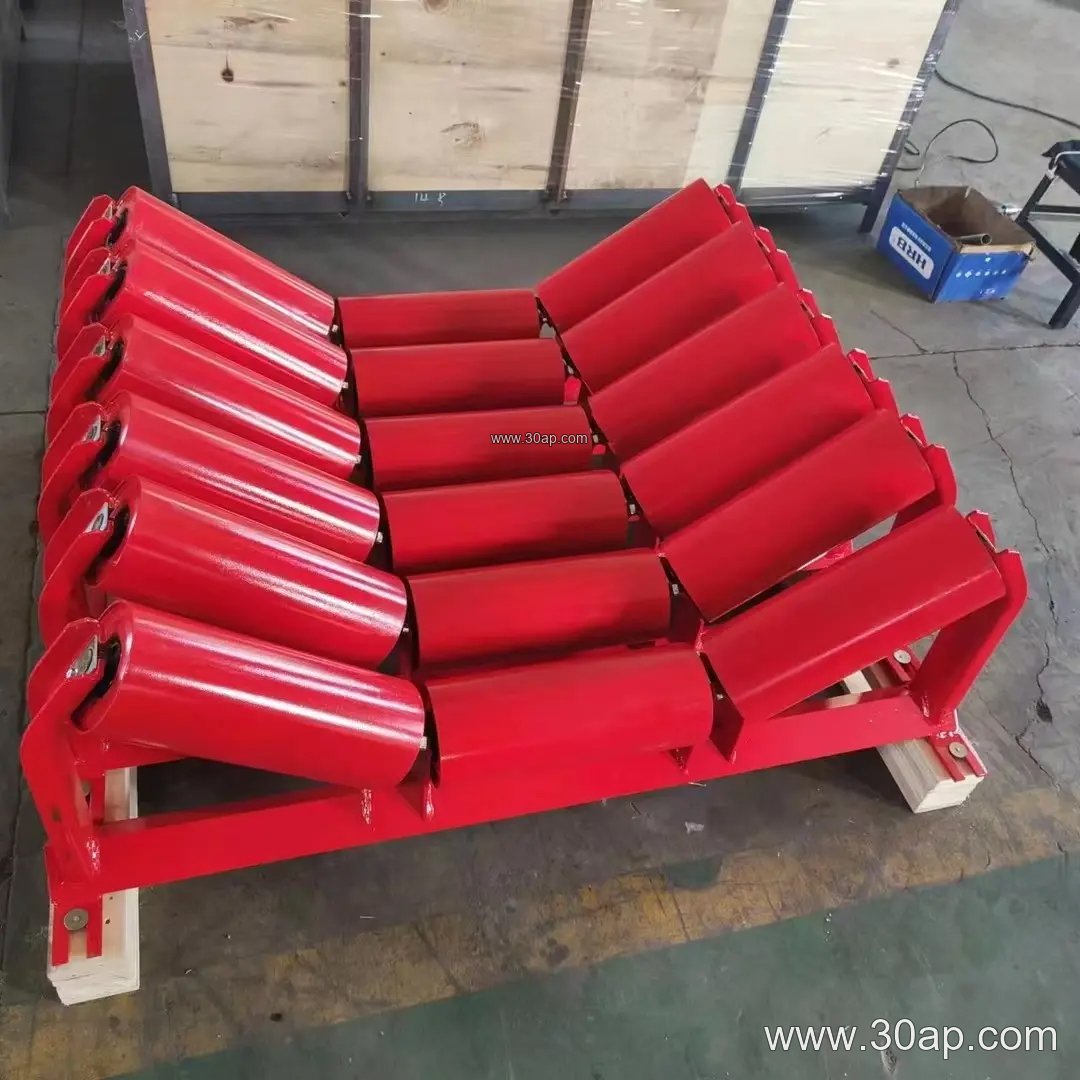
Matching Brackets to Belt and Rollers
Selection starts with the belt width and the material being carried. Reference values are often grouped as follows:
| Belt width | Typical bracket use | Common roller diameter |
|---|---|---|
| B500–B650 | Light to medium troughing | Ø89, Ø108 |
| B800–B1000 | General bulk handling | Ø108, Ø133 |
| B1200–B1400 | Heavy plant conveyors | Ø133, Ø159 |
| B1600–B2000 | High capacity main lines | Ø159, Ø194 |
The figures above are guides, not fixed pairs. A B1000 frame can carry different roller sizes depending on load and speed, and a 30 degree bracket may be replaced by a 35 or 45 degree version when material behavior changes. Mounting hole spacing and beam length are always determined by the frame design.
What Buyers Should Check
Ask for the bracket drawing before ordering. Confirm the belt width, trough angle, roller diameter, mounting method and hole spacing. Check the steel section thickness and the surface treatment. For dusty or wet sites, galvanized or painted frames reduce corrosion, and for impact zones a cushion bracket is worth the extra cost. Buyers should also confirm that the bracket works with the chosen idler roller series and that replacement parts match the existing frame. A bracket assembly that fits the frame correctly protects the conveyor belt, reduces downtime and keeps the whole conveyor pulley and roller system running as designed.