What a Dual Drive Pulley Does
A dual drive pulley is a conveyor pulley that receives torque from two drive units, one coupled to each end of the shaft. Instead of relying on a single motor and gearbox, the conveyor designer splits the driving power between two sides of the same pulley shell. This arrangement is common on long, heavily loaded conveyors where a single drive would demand an oversized gearbox, a very large shaft, or a belt with more tension than the rest of the structure can reasonably handle. In a quarry feeding a primary crusher, or a power plant coal handling line, the dual drive pulley often sits at the head position and pulls the loaded belt toward the discharge point.
The product is also described as a twin-drive pulley or a double-drive conveyor pulley. These are equivalent names for the same component. It should not be confused with a tail pulley, a bend pulley, or a take-up pulley, which serve different positions and duties on the conveyor.
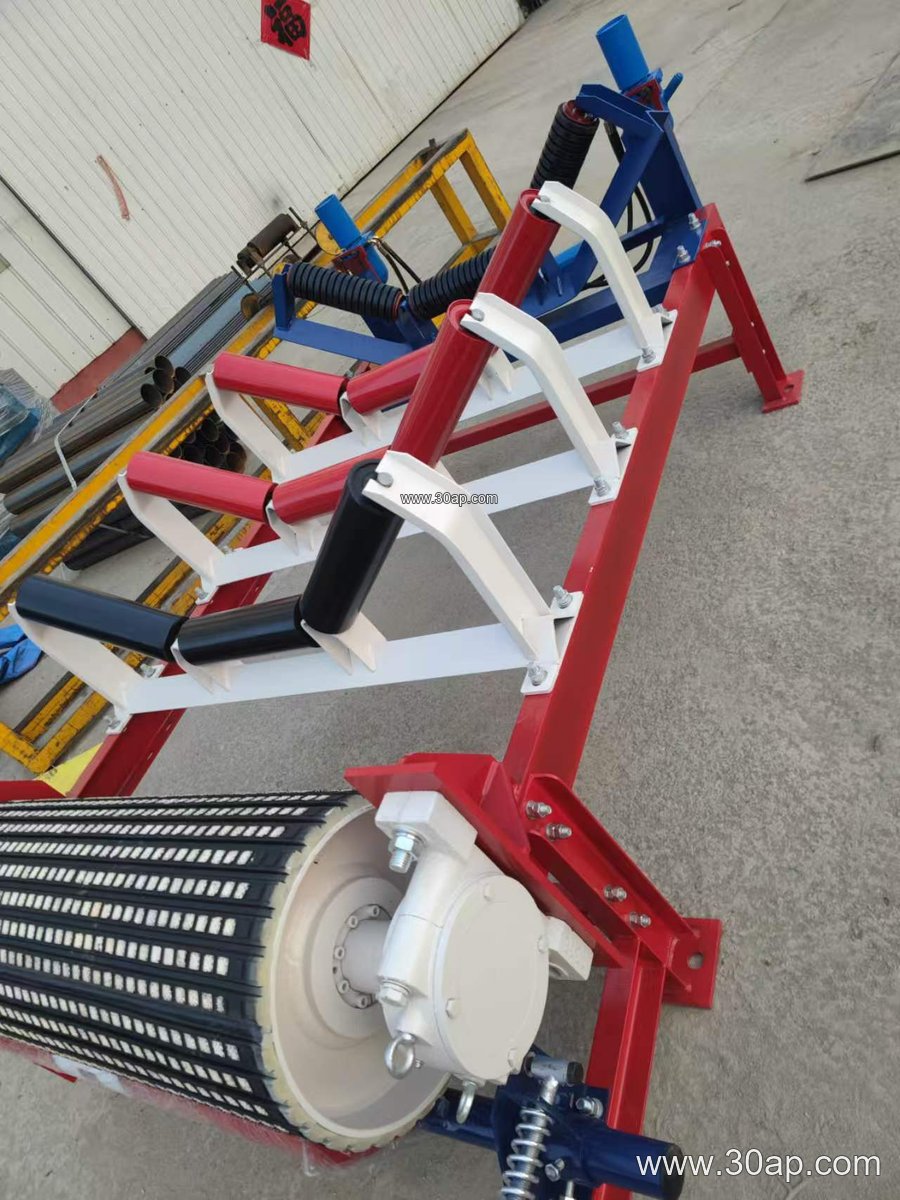
Construction and Power Path
The shell is usually a rolled steel cylinder machined at both ends and welded to end discs. The shaft passes through the shell and is supported by bearing housings mounted on a sturdy conveyor bracket at each side of the conveyor frame. Each shaft end carries a coupling hub or a keyed extension for the gearbox output. Because two drives push the same shell, the shaft and the shell-to-end-disc welds carry combined torque, so the design must account for the total power rather than half of it.
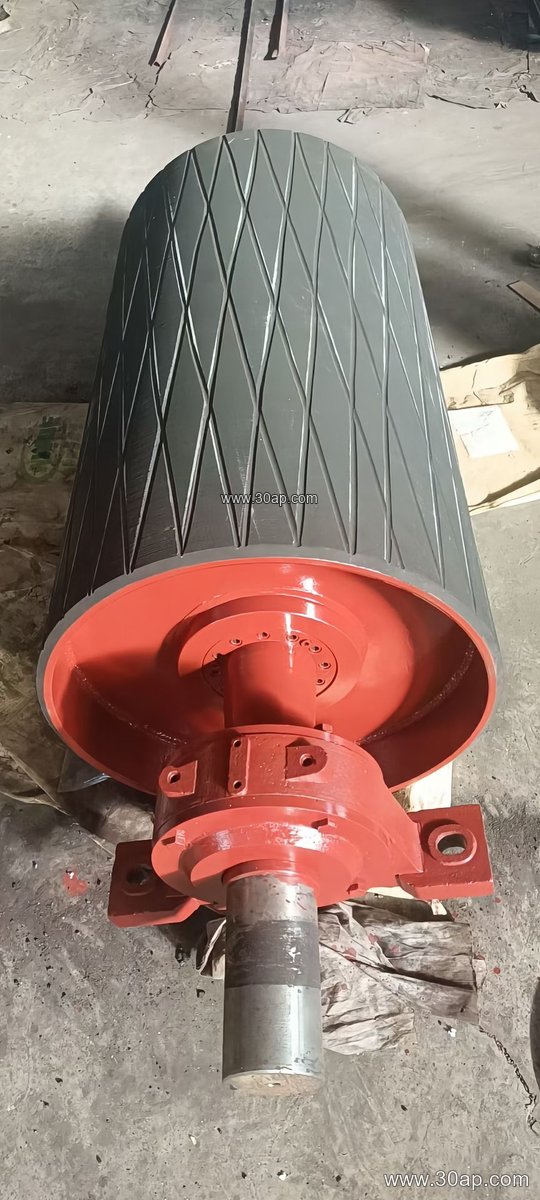
- Shell and end discs sized for the total tangential force
- Shaft diameter chosen from torque and bending load, not from belt width alone
- Two bearing assemblies, one per side, with adequate lubrication access
- Lagging applied to the shell face to raise friction against the conveyor belt
- Couplings or drive hubs arranged so the two drives share load evenly
Load sharing is the practical heart of the design. Motors and gearboxes are matched, and control logic is often used to keep the two drive units pulling together. If one side takes most of the torque, the pulley and the belt both suffer.
Lagging and Grip
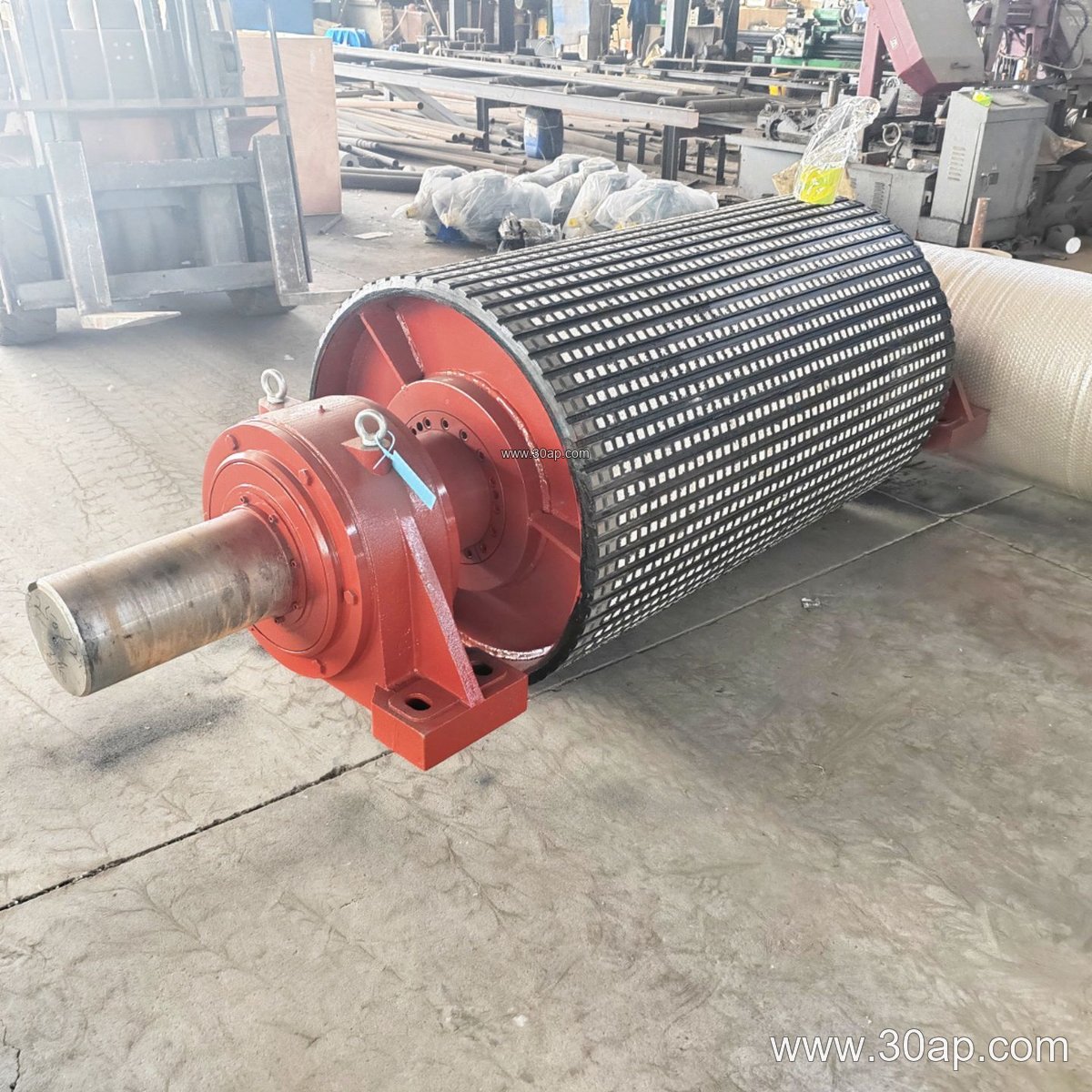
Surface treatment matters as much as shell thickness. Common surface forms include plain finish, cast rubber, cold-bonded rubber, hot-vulcanized rubber, diamond grooving, herringbone grooving, and ceramic lagging. Lagging thickness is frequently 8, 10, 12, 15, or 20 mm depending on duty. A diamond or herringbone pattern helps shed water and fines, which is useful in a wash plant or a tunnel mucking line. Ceramic tiles suit very high-traction duties but need careful bonding. The right choice depends on the material being carried, the belt cover, and whether the conveyor runs wet or dry.
Sizing Notes for Buyers
Dual drive pulleys are built around the belt width and the required torque. Shell face width is normally a little wider than the belt, for example about 950 mm for a B800 belt, about 1150 mm for B1000, and about 1400 mm for B1200. Diameter is selected from belt tension, wrap angle, and lagging requirements, with common values such as Ø500, Ø630, Ø800, Ø1000, and Ø1250. A B800 × Ø500 unit and a B1200 × Ø1000 unit are both realistic combinations, but no single belt width is tied to one diameter.
| Belt width | Typical shell face width | Common diameter range |
|---|---|---|
| B650 | about 750 mm | Ø400 to Ø630 |
| B800 | about 950 mm | Ø500 to Ø800 |
| B1000 | about 1150 mm | Ø630 to Ø1000 |
| B1200 | about 1400 mm | Ø800 to Ø1250 |
| B1400 | about 1600 mm | Ø1000 to Ø1400 |
Shaft diameters commonly fall in the Ø80 to Ø200 range, but the final value follows torque and bearing load calculations. Buyers should supply the belt width, belt speed, material, capacity, and drive power so the pulley maker can confirm the shaft and bearing size.
Where It Fits in the Plant
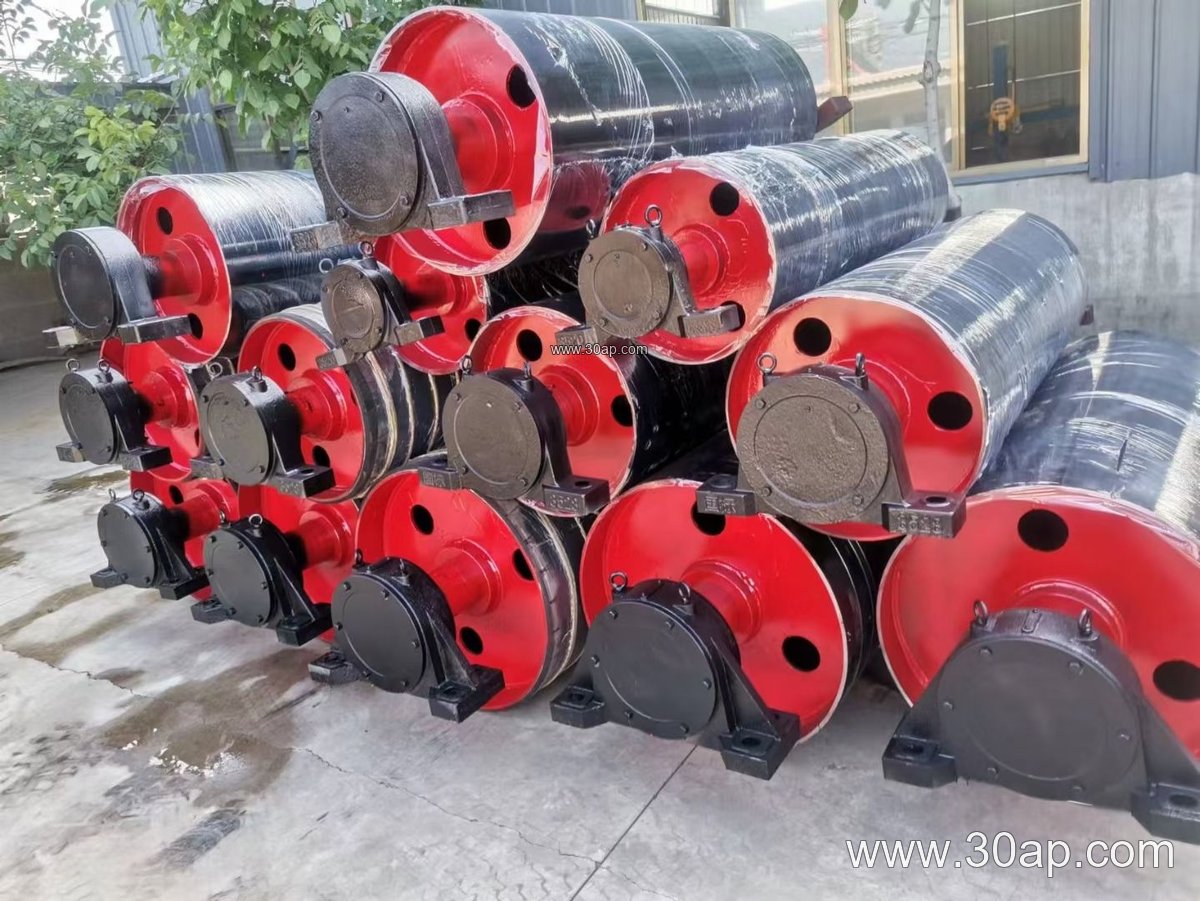
These pulleys appear in limestone mines, iron ore concentrators, coal preparation plants, cement clinker lines, and port bulk terminals. They are often paired with a heavy-duty mining conveyor belt such as an EP conveyor belt or a steel cord conveyor belt on the longest runs. On a crusher conveyor belt handling sharp rock, the drive pulley needs strong lagging and a robust shell. On a coal mining conveyor belt, flame retardant conveyor belt covers and anti-static properties are usually specified alongside the pulley.
Maintenance checks should cover lagging wear, bolt torque on bearing housings, coupling alignment, and grease condition. Uneven lagging wear on one side can indicate poor load sharing between the two drives. For replacement planning, record the shell face width, diameter, shaft size, lagging type, and bearing model so the new dual drive pulley matches the existing conveyor bracket and gearbox positions.