What a Friction-Type Self-Aligning Idler Does
A friction-type self-aligning idler is a training idler that steers a wandering conveyor belt back toward the centerline without any motor, sensor, or external power. Its steering action comes from friction between the rotating roller surface and the belt. When the belt drifts sideways, the offset load makes the idler assembly pivot slightly about its vertical axis, and that small rotation produces a corrective force that nudges the belt back on track. Because the mechanism is mechanical and self-contained, it suits dusty, wet, and remote installations where electronic tracking systems would be difficult to maintain.
This idler is a distinct subtype of the self-aligning family. It should not be confused with a conical self-aligning idler, which relies on tapered roller geometry, or with a plain training idler that uses vertical guide rollers. Each has its own place, and the friction version is often chosen where moderate misalignment correction is needed at a reasonable cost.
Construction and Working Principle
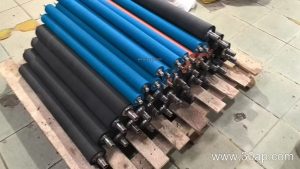
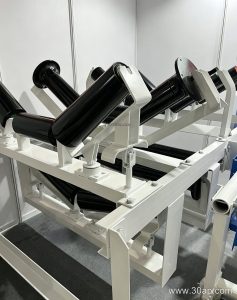
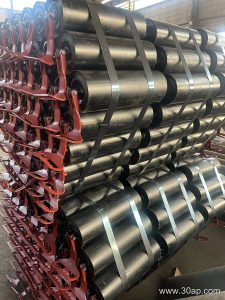
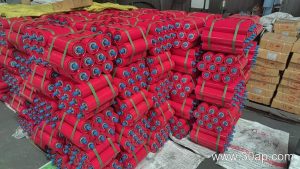
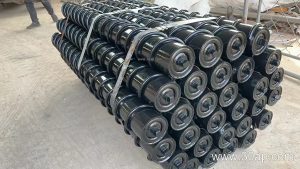
The assembly usually consists of two or three rollers mounted on a pivoting frame, carried on a vertical shaft or bearing seat that allows the whole group to swing a few degrees. The rollers are commonly steel tube with painted or galvanized surfaces, and rubber-covered versions are available where extra grip is useful. Standard bearing sizes such as 6204, 6205, 6305, or 6306 appear across the range, matched to roller diameter and load rather than to belt width alone.
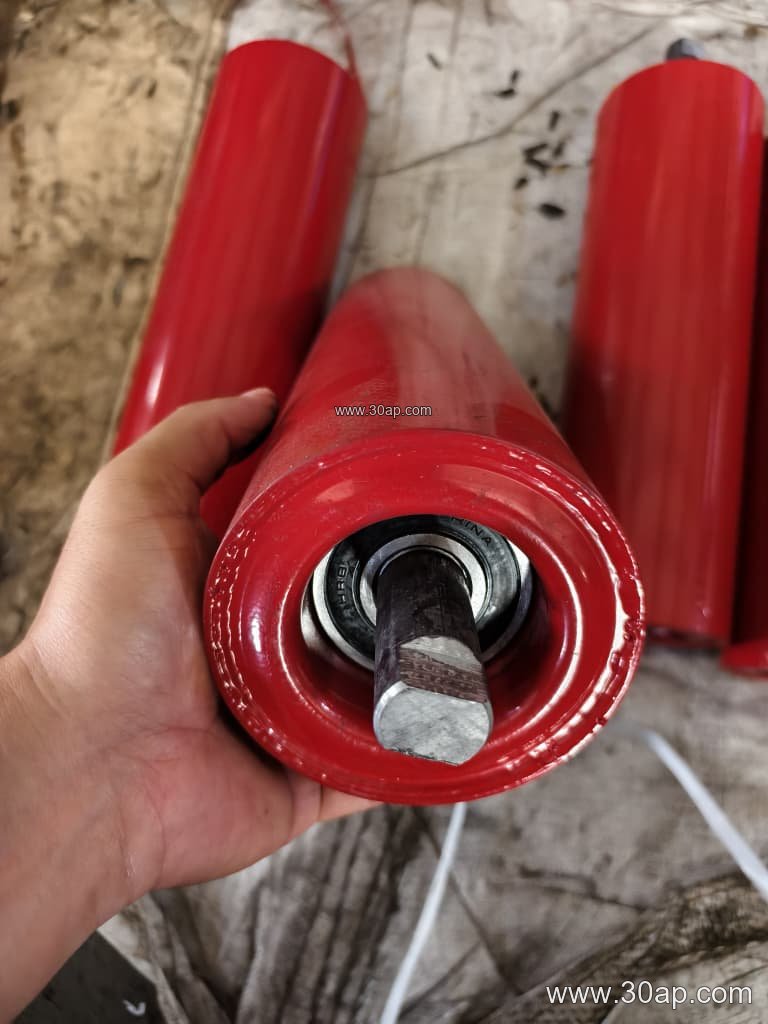
Friction between the belt cover and the roller surface is what converts lateral drift into a turning moment. The frame swings in the direction that opposes the drift, and the belt is guided back. Typical roll diameters for training idlers run from about Ø89 to Ø159, with larger sizes used on high-tonnage lines. The return-side version often uses a V-shaped or flat arrangement, while the carrying side typically uses a two- or three-roller trough set.
- Pivoting frame with vertical shaft and thrust bearing
- Two or three rollers, steel or rubber-covered
- Sealed bearing housings for dust and moisture protection
- Mounting feet or brackets matching the conveyor structure
Where It Fits on a Conveyor
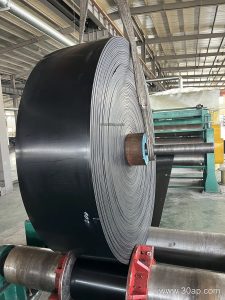
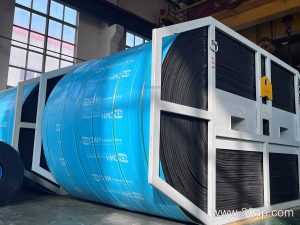
Friction self-aligning idlers are normally installed on the carrying run at intervals along a long conveyor, and on the return run where belt wander is a recurring problem. They are especially useful after a loading point, where off-center material discharge can push the belt sideways, and on curves or inclined sections where tracking is naturally less stable. In a quarry or aggregate line feeding a crusher, a pair of these idlers downstream of the hopper can prevent edge damage and spillage. In a coal handling system at a power plant, they help keep a flame retardant conveyor belt centered through transfer towers and long galleries.
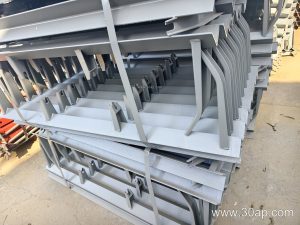
They are not a substitute for correct pulley alignment. Drive pulleys, tail pulleys, and bend pulleys each have a fixed role, and none of them can be replaced by a training idler. Proper alignment of the conveyor pulley set, the conveyor bracket frames, and the belt splice remains the foundation of good tracking.
Typical Sizes and Selection Notes
Sizing follows the belt width, the trough angle, and the load, not a single fixed formula. The table below shows common reference ranges; actual roll length and diameter are set by the conveyor designer.
| Belt width | Common roll diameter | Trough angle |
|---|---|---|
| B650 | Ø89 to Ø108 | 20 to 35 degrees |
| B800 | Ø89 to Ø133 | 20 to 35 degrees |
| B1000 | Ø108 to Ø159 | 30 to 35 degrees |
| B1200 | Ø127 to Ø159 | 30 to 35 degrees |
| B1400 | Ø133 to Ø178 | 30 to 45 degrees |
| B1600 and above | Ø159 to Ø194 | 35 to 45 degrees |
A slight forward tilt of about 1.5 to 2 degrees is sometimes built into training idlers to assist centering; this is a design detail, not a universal requirement. Buyers should confirm the mounting height, the bracket hole pattern, and the available space before ordering, since a friction-type unit needs clearance to swing.
Buyer Checklist
- Confirm belt width, trough angle, and whether the idler is for the carrying or return side.
- Check the roller surface: plain steel, rubber-covered, or ceramic-covered for abrasive duty.
- Verify bearing size and sealing class against the site conditions.
- Match the frame and conveyor bracket dimensions to the existing structure.
- Plan a maintenance routine: inspect for seized bearings and worn roller surfaces, and keep the pivot free of compacted material.
On abrasive duties such as iron ore or copper ore handling, an abrasion resistant conveyor belt and well-sealed idlers work together to reduce downtime. In cold climates, a cold resistant conveyor belt paired with properly lubricated bearings keeps the training system responsive. Whatever the application, the friction-type self-aligning idler remains a simple, field-proven way to keep a belt where it belongs. For related components such as the conveyor belt, idler roller, and conveyor pulley, coordinate sizing with the same conveyor layout to avoid mismatched tracking behavior.