What a Trough Idler Bracket Set Does on a Conveyor
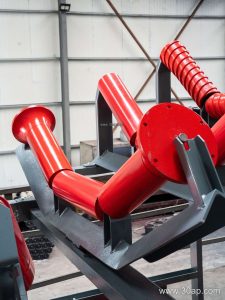
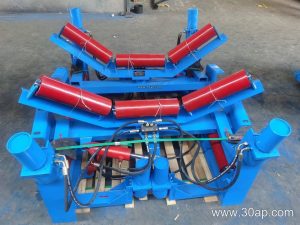
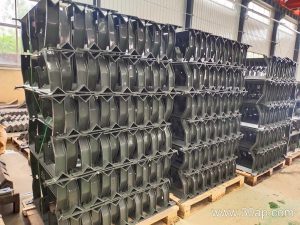
The trough idler bracket set is the structural frame that holds the three-roller trough assembly in place along the carrying side of a conveyor. It positions the centre roller horizontally and the two side rollers at a defined trough angle, so the conveyor belt forms a stable trough for bulk material. In a quarry or a coal-fired power plant, this bracket set is the interface between the idler roller and the conveyor bracket system that anchors the whole assembly to the conveyor stringer. Without a correctly aligned set, the belt can drift, spill material, or wear unevenly.
Construction and Common Materials
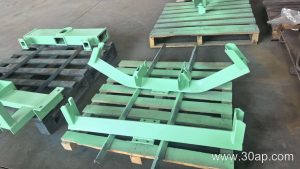
A typical set is fabricated from angle steel, channel steel, or folded steel plate. The side arms are angled to match the required trough angle, and the mounting slots are positioned to accept the idler shafts. The set usually includes the main cross beam, two side brackets, and the fixing hardware. For heavy-duty mining conveyor belt lines, thicker channel sections are often used to resist vibration and impact from large lumps. Surface treatment may include painting or galvanising, but the exact finish should be confirmed with the supplier for the specific site conditions.
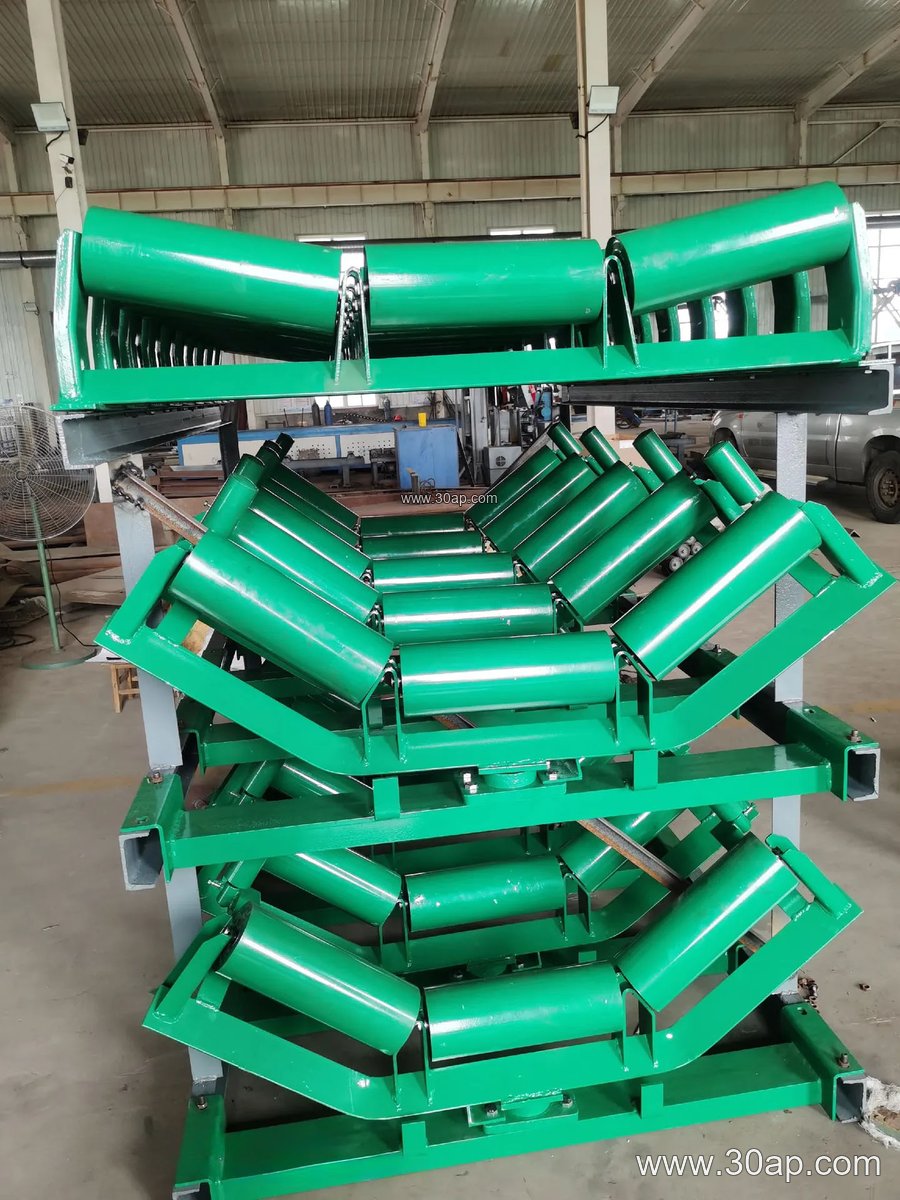
Key Components in a Standard Set
- Main cross beam with mounting holes for the centre idler
- Two side arms set at the selected trough angle
- Bolted or welded connection plates to the conveyor stringer
- Adjustment slots for aligning the idler roller with the belt path
Where It Fits in Bulk Handling Systems
In a limestone quarry, the trough idler bracket set supports the carrying run that feeds a crusher conveyor belt. In a coal washing plant, the same bracket set keeps the coal mining conveyor belt in a stable trough as it transports wet, abrasive material. The set is also used in cement plants, aggregate conveyor lines, and port loading conveyors. It is not a substitute for the drive pulley, tail pulley, or bend pulley; those are separate components that transmit power or change belt direction. The bracket set works together with the idler roller and the conveyor belt to maintain the material profile.
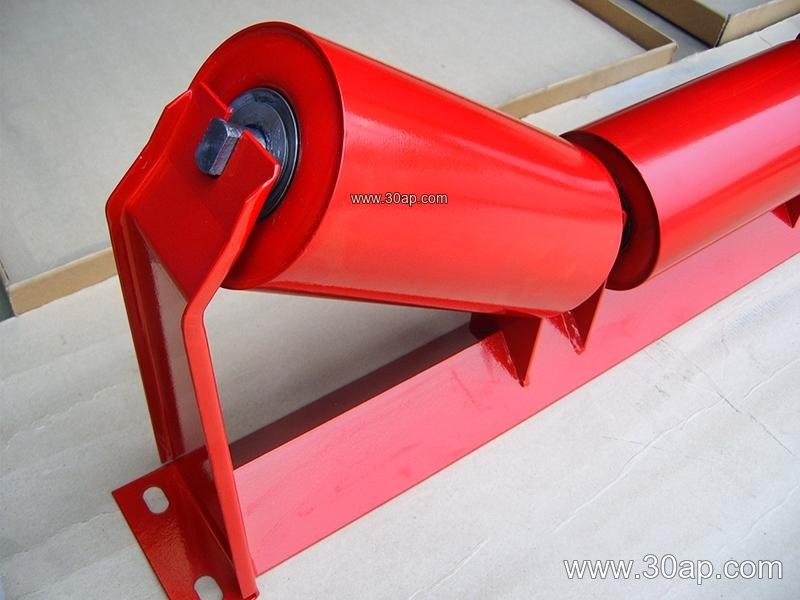
Matching Bracket Sets to Belt Width and Trough Angle
Selection starts with the belt width and the required trough angle. Common belt widths include B500, B650, B800, B1000, B1200, B1400, B1600, B1800, B2000, B2200. Trough angles of 20, 30, 35, and 45 degrees are typical. Adjustable bracket sets allow the trough angle to be changed within a range, which is useful when the same conveyor handles different materials or when the belt needs re-profiling after wear. Fixed bracket sets are simpler and often chosen where the duty is constant.
Roller diameters such as Ø89, Ø108, Ø133, Ø159, and Ø194 are commonly matched to the belt width and load, but there is no fixed rule that one belt width can only use one roller diameter. The mounting hole spacing and cross beam length are determined by the belt width, trough angle, and roller diameter together. For example, a B800, 35-degree set with Ø108 rollers is a common combination, while a B1200, 45-degree set may use Ø133 rollers. These are reference examples, not universal specifications.
Reference Dimensions for Planning
| Belt Width | Typical Trough Angle | Common Roller Diameter | Bracket Type |
|---|---|---|---|
| B500 | 20–30 degrees | Ø89 | Fixed or adjustable |
| B650 | 30 degrees | Ø89–Ø108 | Fixed or adjustable |
| B800 | 30–35 degrees | Ø108 | Fixed or adjustable |
| B1000 | 35–45 degrees | Ø108–Ø133 | Fixed or adjustable |
| B1200 | 35–45 degrees | Ø133 | Fixed or adjustable |
| B1400 | 35–45 degrees | Ø133–Ø159 | Fixed or adjustable |
| B1600 | 35–45 degrees | Ø159 | Fixed or adjustable |
Adjustable vs Fixed Bracket Sets
Adjustable trough idler bracket sets are useful in plants that handle multiple materials or need to fine-tune the belt profile. The side arms can be set to different angles, and the mounting slots allow lateral adjustment. Fixed sets are welded or bolted at a single angle and are often used in dedicated lines such as a coal mining conveyor belt system or a cement plant raw mill feed. The choice depends on how often the conveyor duty changes and whether the maintenance team needs to re-align the idlers during service.
Buyer Checklist for Trough Idler Bracket Sets
- Confirm the belt width and the required trough angle before ordering.
- Check the roller diameter and shaft size to ensure the bracket slots match the idler roller.
- Ask for the mounting hole spacing and cross beam length, since these vary with belt width and angle.
- Specify the material and surface treatment for the site environment, such as dusty quarry or wet coal plant.
- Consider whether an adjustable set or a fixed set suits the maintenance plan.
- Verify that the bracket set is designed for the conveyor stringer spacing and bolt pattern.
For bulk handling operations that use a rubber conveyor belt or a heavy-duty mining conveyor belt, the trough idler bracket set is a small but critical part of the support system. It should be selected together with the idler roller and the conveyor bracket layout, not in isolation. For more information on conveyor components and belt support, visit our site at trough idler bracket set and conveyor idler roller.