What a 1250mm Drive Pulley Does
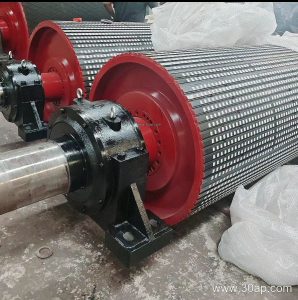
A 1250mm drive pulley is the head-end drum that turns belt tension into forward motion on a belt conveyor. Mounted at the discharge point and coupled to the gearbox or motor, it grips the conveyor belt through friction and pulls the loaded strand toward the head. In a quarry, a limestone mine, or a coal washing plant, this drum is often the single component that sets the pace for the whole line. Because the drum face is wide, it suits medium-to-wide belts and can be paired with an EP conveyor belt or a steel cord conveyor belt depending on tension demand.
The figure 1250mm normally refers to the drum face width, while the diameter is selected separately. A 1250mm drive pulley may run with a Ø800, Ø1000, or Ø1250 shell, and the correct combination depends on belt speed, wrap angle, and starting torque rather than on width alone.
Construction and Surface Options
The shell is usually rolled from steel plate, machined true, and welded to end discs and a hub. The shaft is sized from torque and radial load, commonly in the Ø120 to Ø200 range for this class of drum, and is never chosen from belt width by rule of thumb. Bearings sit in pillow blocks bolted to the conveyor bracket or frame.
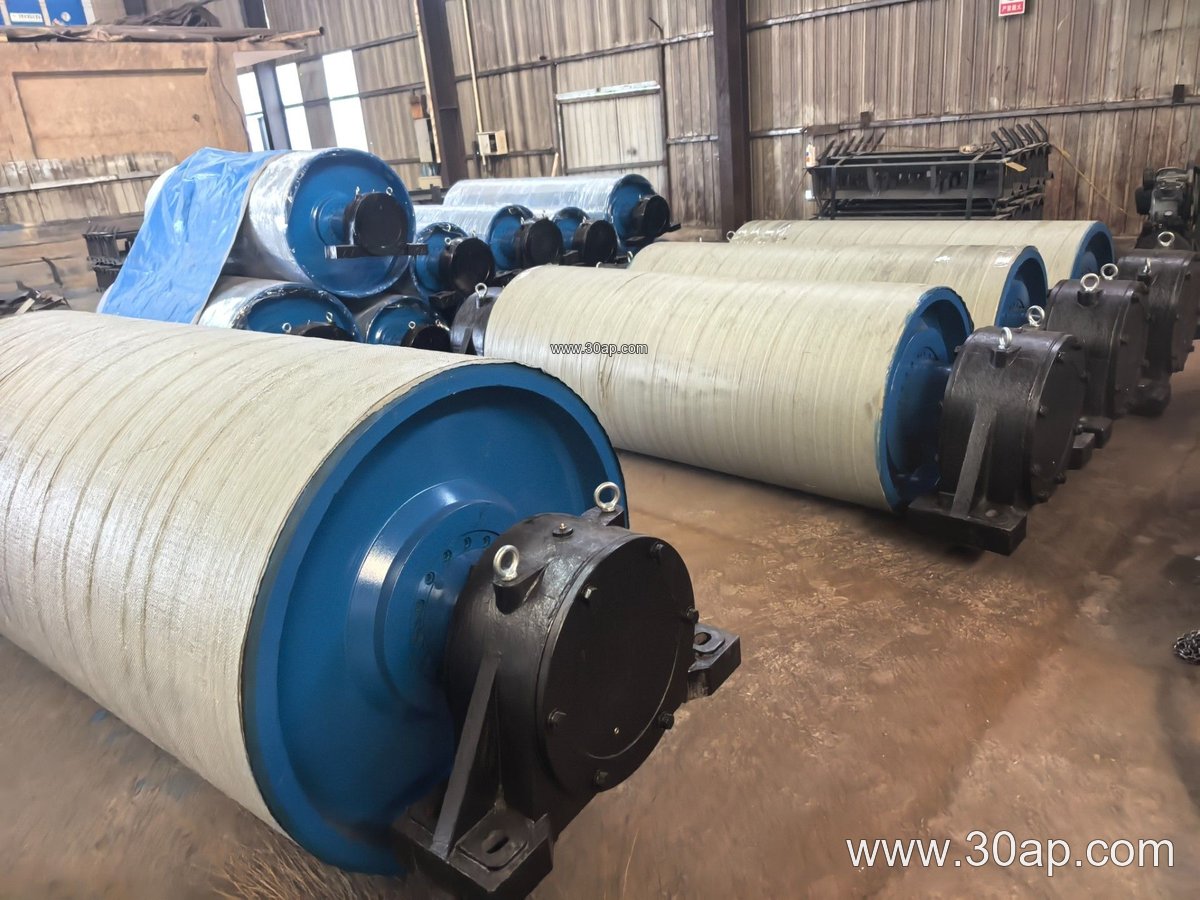
Lagging is where buyers have real choices. Plain face suits light, clean duty; hot-vulcanized rubber, cold-bonded rubber, diamond grooving, chevron pattern, or ceramic tiles improve grip in wet or dusty service. Common lagging thicknesses are 8, 10, 12, 15, and 20 mm. In a cement plant or power plant coal yard, diamond rubber lagging is a frequent pick for balance between grip and cleaning.
Typical Dimensions and Matching Data
The table below gives reference figures only; final sizes are confirmed by design calculation.
| Item | Common reference values |
|---|---|
| Drum face width | 1250 mm |
| Shell diameter | Ø800, Ø1000, Ø1250 mm |
| Belt width fit | B1000, B1200 combinations |
| Shaft diameter | Ø120, Ø140, Ø160, Ø180, Ø200 mm |
| Lagging thickness | 8, 10, 12, 15, 20 mm |
| Surface form | Plain, diamond, chevron, ceramic |
A B1200 belt running with a Ø1000 shell and 12 mm diamond lagging is a common arrangement in aggregate and ore handling, but it is not a fixed rule. Wider belts such as B1400 or B1600 generally call for a wider drum face, so a 1250mm face is best matched to belt widths around B1000 to B1200.
Where It Fits in the Conveyor Layout
This drum belongs at the head or drive station, not at the tail. A tail pulley or bend pulley serves a different purpose and cannot replace the drive function. In a crushing and screening circuit, the drive pulley at the discharge of a crusher conveyor belt must handle shock loads from lump ore, so impact-resistant lagging and a robust shaft are worth considering. In a port or ship loading line, steady high tension favors a steel cord conveyor belt paired with a large-diameter drum to limit bending stress.
Drive pulleys also appear in underground mining conveyor systems, where flame retardant conveyor belt and anti-static conveyor belt grades are typical, and in fertilizer or grain silo conveyors where a food grade conveyor belt may run on a stainless or rubber-lagged face.
Buyer Checklist Before Ordering
- Confirm belt width, belt type, and measured belt tension so the drum diameter and shaft can be calculated together.
- State the duty: abrasive ore, wet coal, hot clinker, or oily scrap each points to a different lagging compound.
- Check pulley face width against belt width; the face is normally wider than the belt to allow tracking tolerance.
- Verify shaft diameter from torque and load, and confirm bearing size and bolt pattern against the conveyor bracket.
- Ask for dynamic balancing records for high-speed drives, and confirm lagging groove depth and hardness.
Maintenance is mostly about lagging wear, bearing lubrication, and checking that the drum stays square to the belt. A worn lagging surface reduces grip and lets the belt slip, which raises heat and wear on the conveyor belt. Re-lagging on site is possible with cold-bonded rubber, while hot-vulcanized replacement usually means removing the drum.
For anyone sourcing a 1250mm drive pulley, the practical advice is simple: treat width, diameter, shaft, and lagging as one design set, and confirm each value against the actual conveyor duty rather than copying a catalog number.