What a Thick Conveyor Belt Is
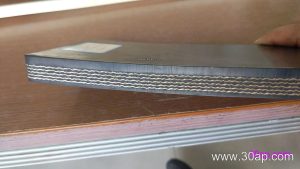
A thick conveyor belt is a heavy-gauge rubber belt built with a substantial cover and a strong carcass so it can carry abrasive, dense, or sharp bulk material without frequent replacement. In many plants the same product is simply called a heavy-duty conveyor belt, and the two terms often describe the same construction. The extra thickness usually sits in the top cover, the bottom cover, or both, while the carcass may be EP fabric, NN fabric, or steel cord depending on the load and the conveyor geometry.
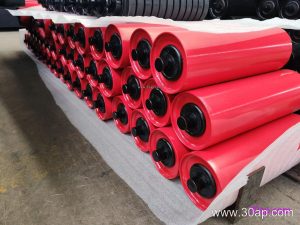
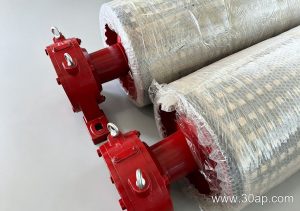
Thickness alone is not a performance rating. A 10 mm thick belt with a light carcass will not match a thinner belt with a higher-strength steel cord carcass. Buyers should treat cover thickness and tensile strength as separate decisions, then check how the belt runs on the conveyor pulley, idler roller, and conveyor bracket arrangement before ordering.
How the Belt Is Built
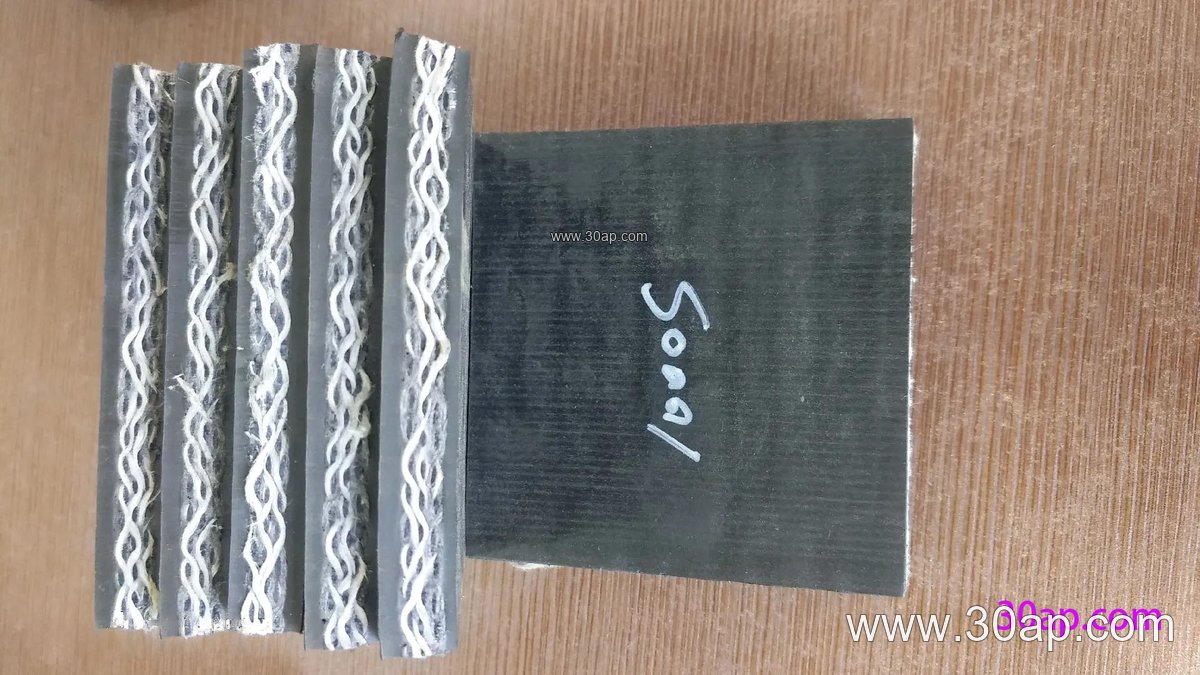
The carcass carries tension. EP Conveyor Belt grades such as EP200, EP400, EP630, and EP1000 use polyester warp and nylon weft, while NN Conveyor Belt grades like NN200 and NN300 use nylon in both directions. For very long runs or high tonnage, a Steel Cord Conveyor Belt with ST1000, ST1600, or ST2000 class cord is common. The rubber layers are bonded to the carcass under heat and pressure, and the cover compound is selected for the duty.
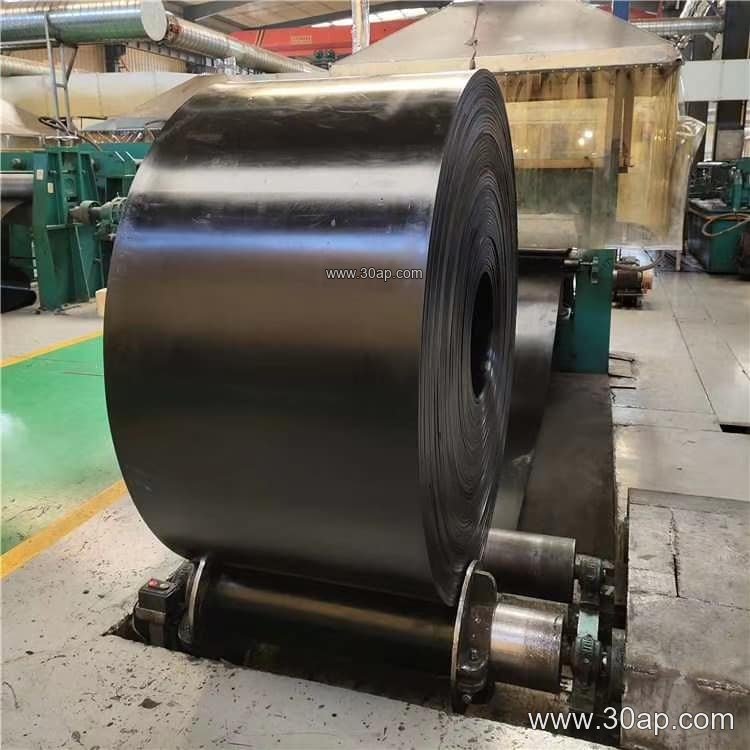
- Top cover: often 4+2 mm, 5+2 mm, 6+2 mm, or 8+3 mm in heavy work
- Carcass: usually 2 to 6 fabric plies, or steel cord for high tension
- Bottom cover: sized to protect the belt on the return side and at the tail pulley
- Edge protection: important where material is loaded off-center
Cover compounds change the belt’s behavior. An Abrasion Resistant Conveyor Belt suits crushed rock and sand, a Heat Resistant Conveyor Belt handles cement clinker or sinter, and a Flame Retardant Conveyor Belt or Fire Resistant Conveyor Belt is specified for coal handling. Oil Resistant Conveyor Belt and Cold Resistant Conveyor Belt cover other site conditions.
Where Thick Belts Are Used
Mining, quarrying, and aggregate plants are the classic users. A Mining Conveyor Belt moving ore from a primary crusher must absorb impact at the loading point, so a thick top cover and an Impact Resistant Conveyor Belt design are often paired. Coal Mining Conveyor Belt and Underground Coal Mining Conveyor Belt service usually require flame-retardant grades, and PVG Conveyor Belt or PVG800S Conveyor Belt constructions are seen in underground work.
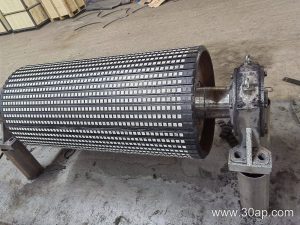
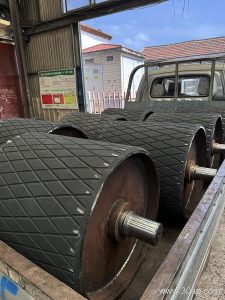
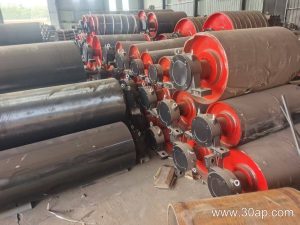
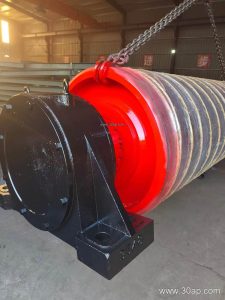
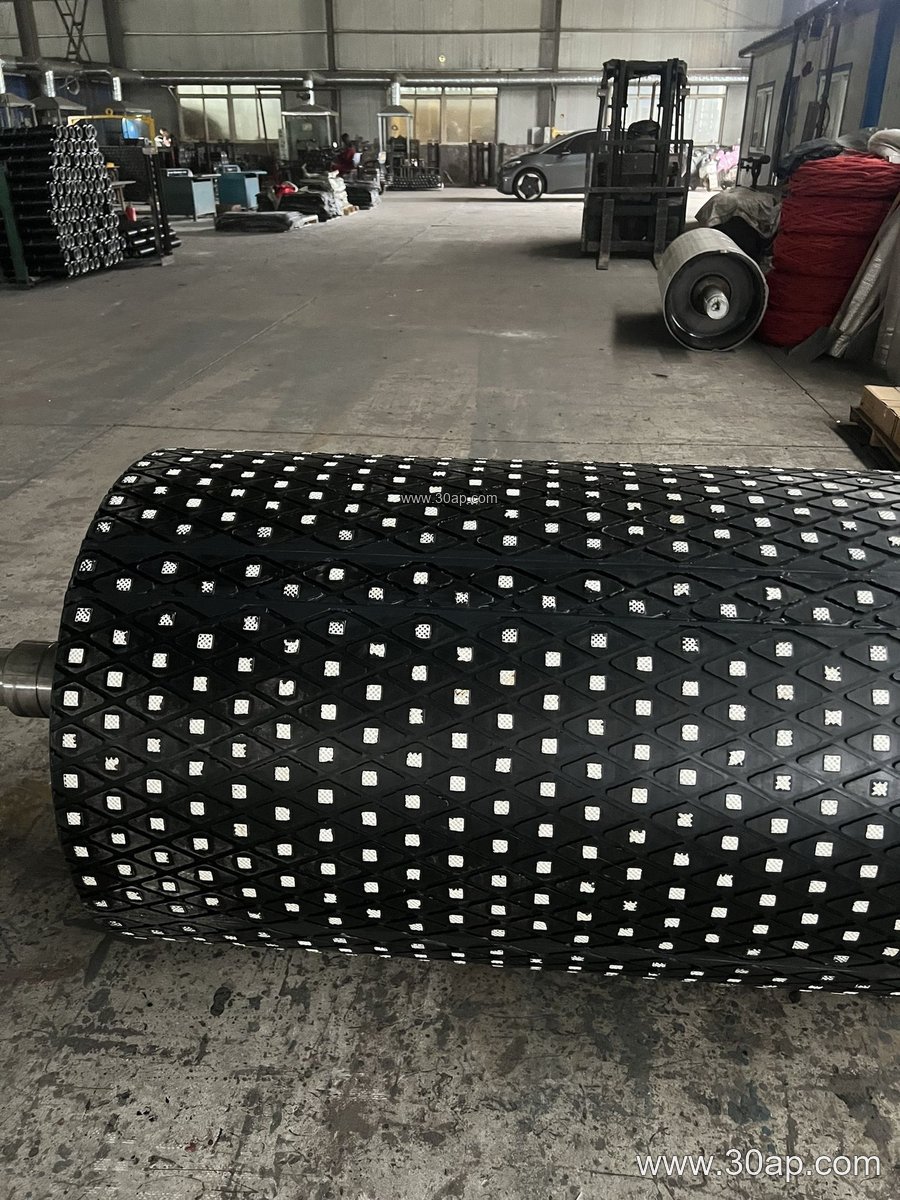
Cement plants use abrasion-resistant and heat-resistant belts for clinker and raw meal. Power plants move coal and limestone on wide belts, while steel plants handle sinter and coke. Ports and ship loading terminals use long runs where a High Strength Conveyor Belt reduces the number of transfer points. In each case the drive pulley, tail pulley, and bend pulley are separate components with separate duties, and none of them should be treated as a substitute for another.
Width, Thickness, and Strength
Width and thickness are chosen together with the tonnage, lump size, and troughing angle. Common widths include B500, B650, B800, B1000, B1200, B1400, B1600, B1800, and B2000, and wide belts such as a 1200mm Wide Conveyor Belt or 1800mm Wide Conveyor Belt are normal in high-capacity ports and mines. A thick belt does not require one fixed pulley diameter; pulley size follows belt tension, carcass flexibility, and the conveyor design.
| Item | Typical reference |
|---|---|
| Fabric carcass grades | EP200, EP315, EP400, EP500, EP630, EP800, EP1000, EP1250 |
| Steel cord grades | ST1000, ST1250, ST1600, ST2000, ST2500 |
| Cover combinations | 3+1.5, 4+2, 5+2, 6+2, 8+3 mm |
| Belt widths | B500 to B2000, with wider sizes on request |
| Surface options | smooth, Chevron Conveyor Belt, Skirted Conveyor Belt, Corrugated Sidewall Conveyor Belt |
These figures are common reference values, not a fixed specification for every conveyor. Actual cover thickness, ply count, and strength class should be confirmed against the duty and the pulley layout.
Selection and Maintenance Notes
Start with the material: lump size, moisture, temperature, and abrasiveness. Then check the conveyor profile, because a steep incline may call for a Chevron Conveyor Belt or a Corrugated Sidewall Conveyor Belt instead of a plain thick belt. Confirm the minimum pulley diameters, the idler roller spacing at the loading zone, and the take-up travel. A Pipe Conveyor Belt or an Endless Conveyor Belt may be a better fit for special routes, but those are different constructions and should not be compared as direct replacements.
On site, keep the belt centered, inspect the conveyor pulley lagging, and watch for cover wear at the loading point. A thick cover can be repaired or re-spliced, so record the original thickness and strength class for future orders. For buyers comparing suppliers, ask for the carcass type, cover grade, and full thickness in writing rather than accepting a single number.