What a Driving Pulley Does
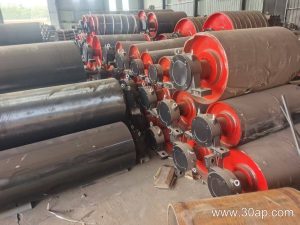
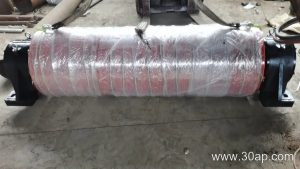
A driving pulley is the drum that turns the conveyor belt. It is usually mounted at the head end of the conveyor and is coupled to the gearbox or motor, so the friction between the lagged drum surface and the belt cover carries the load forward. In many plants the same component is simply called a head pulley or drive drum, and those names point to the same product. It should not be confused with a tail pulley, which returns the belt at the rear, or a bend pulley, which only changes belt direction.
The drive drum is the point where the whole conveyor’s power enters the belt. If it slips, the belt slows, the load backs up, and the motor draws more current. That is why the selection of diameter, lagging and shaft is more critical here than at any other drum position on the conveyor.
How the Drum Is Built
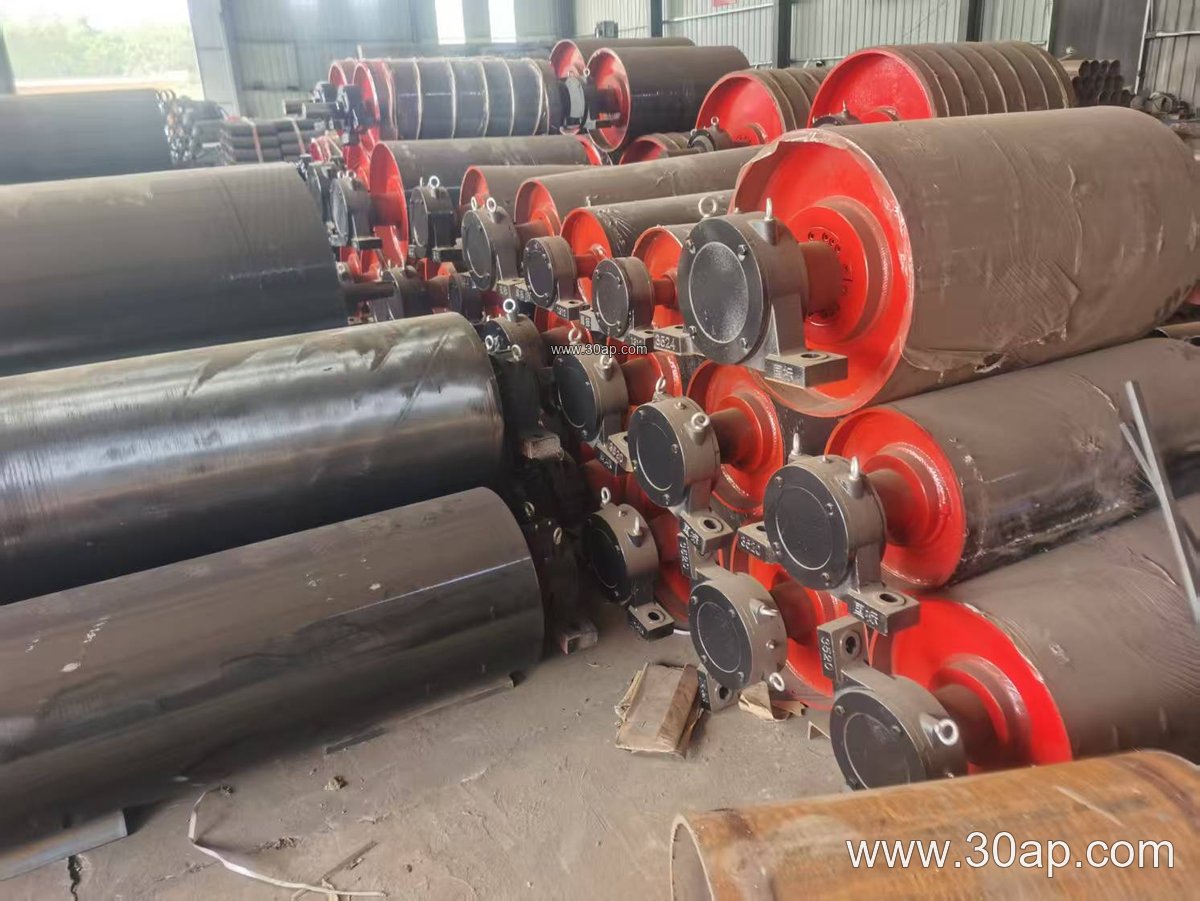
A typical driving pulley consists of a cylindrical shell, two end discs, a shaft, and a lagging layer on the shell face. The shell is usually rolled steel, machined for balance, and welded to the discs. The shaft is keyed or shrink-fitted to the discs and supported by bearing housings that sit on the conveyor bracket or frame. Lagging may be plain rubber, diamond grooved, herringbone, ceramic or hot-vulcanized rubber, with common thicknesses of 8, 10, 12, 15 and 20 mm.
Belt width and drum diameter are chosen together, but they are not a fixed pair. A B800 conveyor may run with a Ø500 drive pulley in one plant and a larger diameter in another, depending on belt tension, wrap angle and space. Common combinations include B800 × Ø500, B1200 × Ø1000 and B1400 × Ø800, but these are reference examples rather than rules. The shaft diameter, often Ø80 to Ø200 in heavy service, is determined by torque and load, not by belt width alone.
Where It Is Used
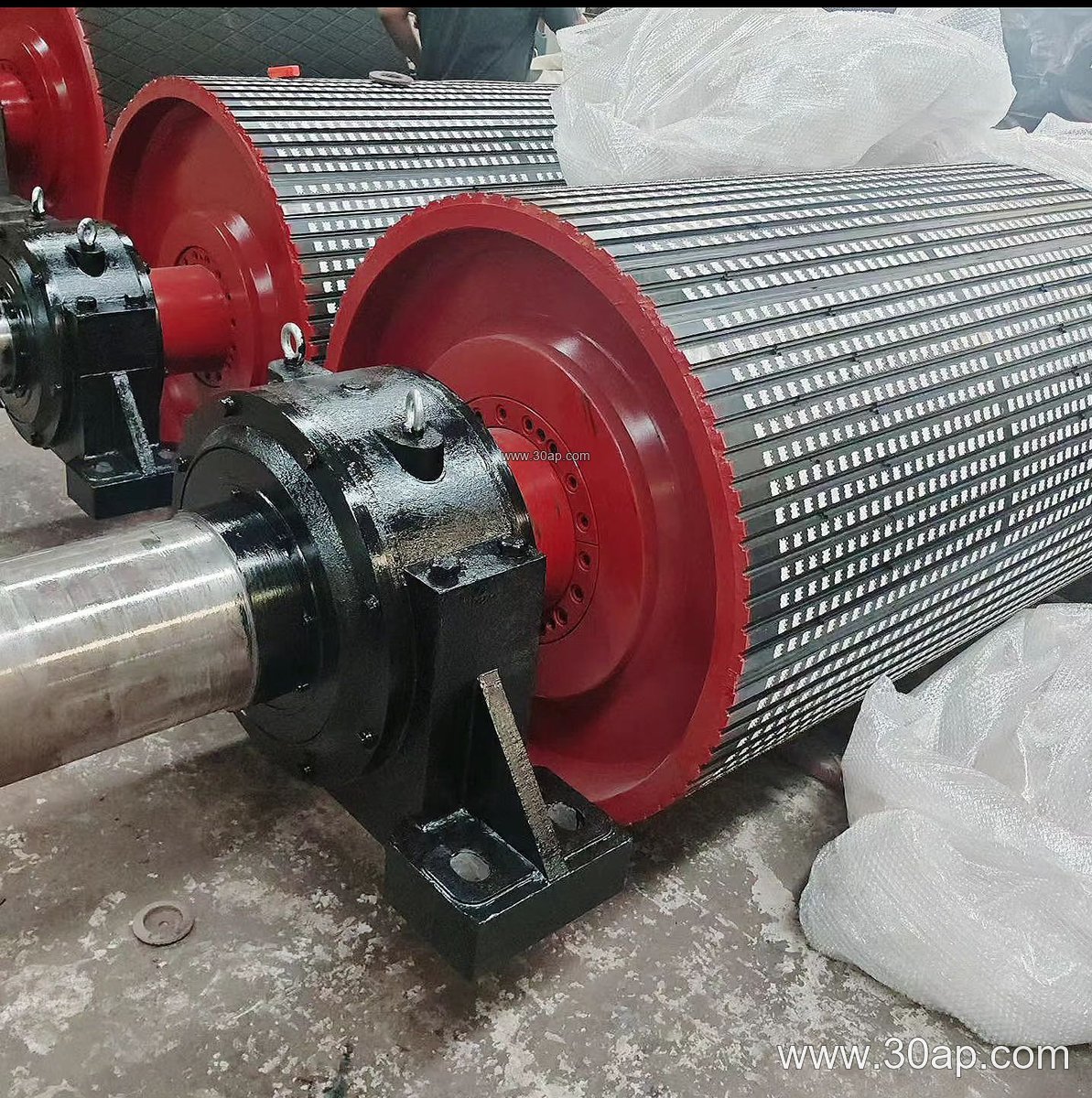
Drive pulleys appear in almost every bulk handling line. In a limestone quarry, a heavy-duty driving pulley pulls a high abrasion resistant conveyor belt loaded with blasted rock. In a coal washing plant, a flame retardant conveyor belt runs over a lagged drive drum in a dusty, sometimes wet environment. Cement plants use them on clinker and raw meal lines, while power plants rely on them for coal feeding systems. Port bulk terminals, steel sinter lines and aggregate plants all depend on a properly lagged head drum to keep the belt tracking and transmitting power.
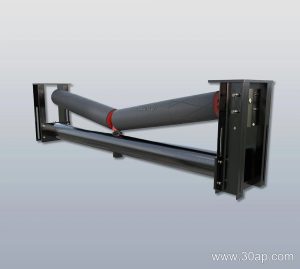
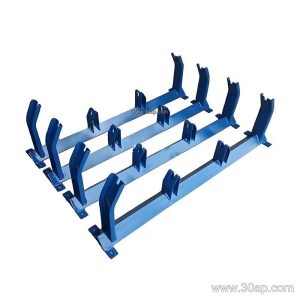
Underground coal mining conveyors often use a compact drive drum close to the face, while long overland lines may use a multi-drive arrangement with two or more driving pulleys in series. In each case the drum must match the belt, the idler roller set and the frame layout.
Lagging and Surface Selection
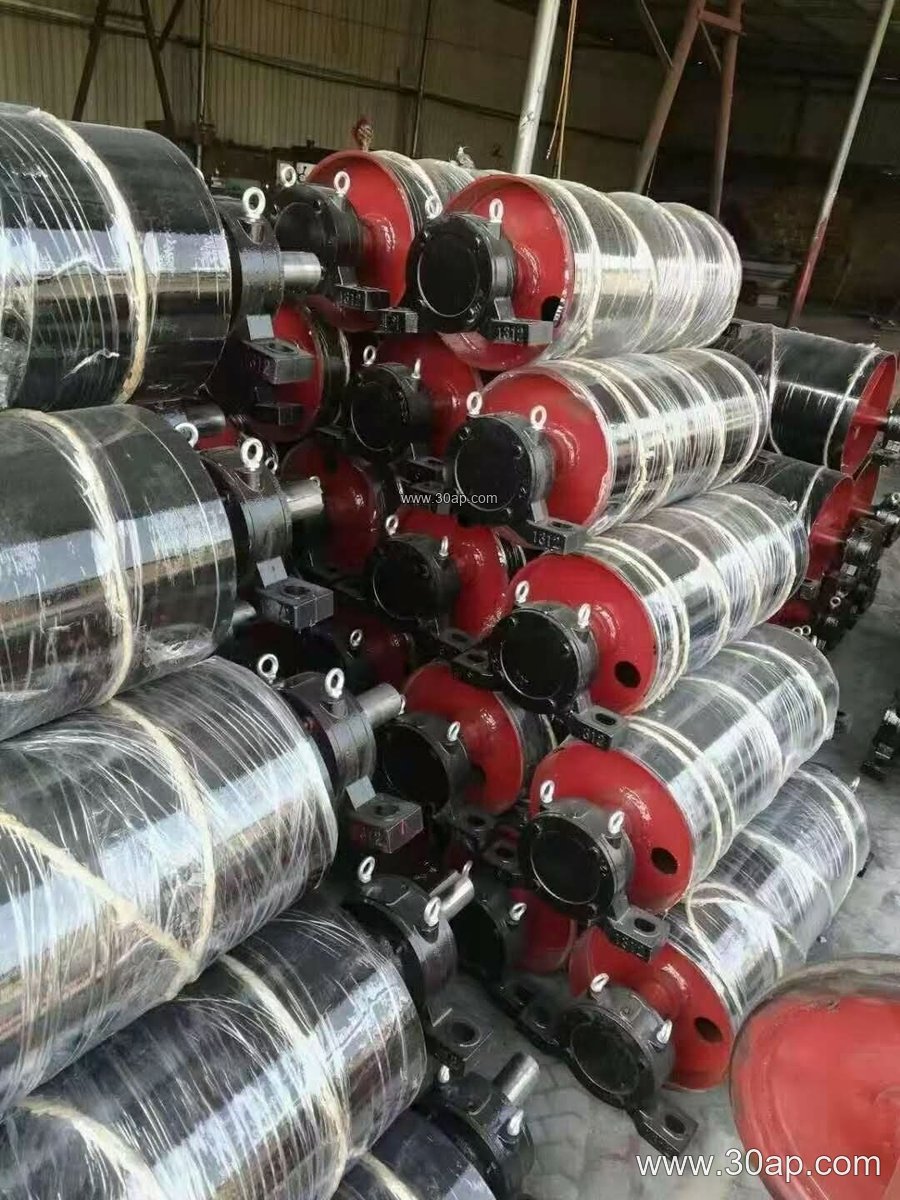
The lagging is what actually grips the belt. Plain rubber is a general-purpose choice. Diamond or herringbone grooving helps water and fines escape from the contact zone, which is useful in wet quarries and wash plants. Ceramic lagging offers high friction and wear resistance for high-tension drives. Hot-vulcanized rubber bonds tightly to the shell and suits heavy-duty mining conveyor belts, while cold-bonded rubber is easier to replace in the field.
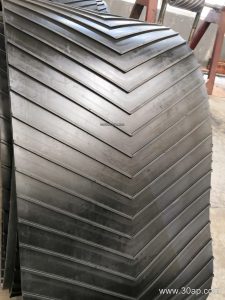
Surface choice should follow the belt cover. A smooth EP conveyor belt and a chevron conveyor belt present different contact patterns, and an oil resistant conveyor belt may need a lagging compound that tolerates the same oil. The drive drum does not need to match the belt type exactly, but the friction pair should be considered together.
What Buyers Should Check
- Confirm the belt width and the required drum face width; the face is normally wider than the belt, for example about 950 mm for B800 and about 1400 mm for B1200.
- State the belt tension and wrap angle so the supplier can size the shell, shaft and lagging.
- Specify the lagging type and thickness rather than leaving it open.
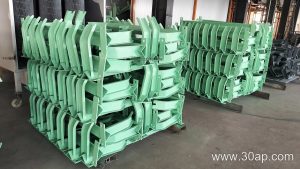
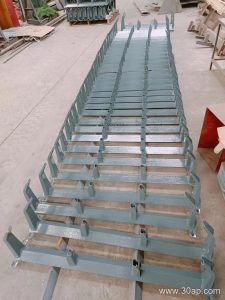
- Check bearing housing dimensions and the conveyor bracket interface before ordering.
- Ask for the balance grade and runout tolerance if the drum will run at higher speed.
Maintenance is mainly about lagging wear, bearing condition and bolt tightness. A worn lagging surface reduces friction and causes slip, so periodic inspection of the drive drum pays off. For related components such as the conveyor pulley, idler roller and conveyor bracket, keep spares consistent with the original design so the whole line stays aligned.