What a Mining Ceramic Lagged Pulley Does
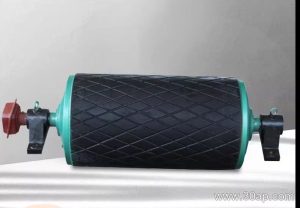
A mining ceramic lagged pulley is a conveyor pulley whose shell is covered with ceramic tiles set into a rubber backing. It is used where the belt needs reliable grip and the working face is exposed to abrasive, wet or oily conditions. In a quarry, limestone mine, iron ore plant or coal washing circuit, slip between the belt and the pulley wastes power and shortens belt life. The ceramic lagging raises friction and resists wear far better than plain steel or smooth rubber in many of these duties.
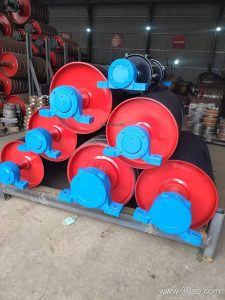
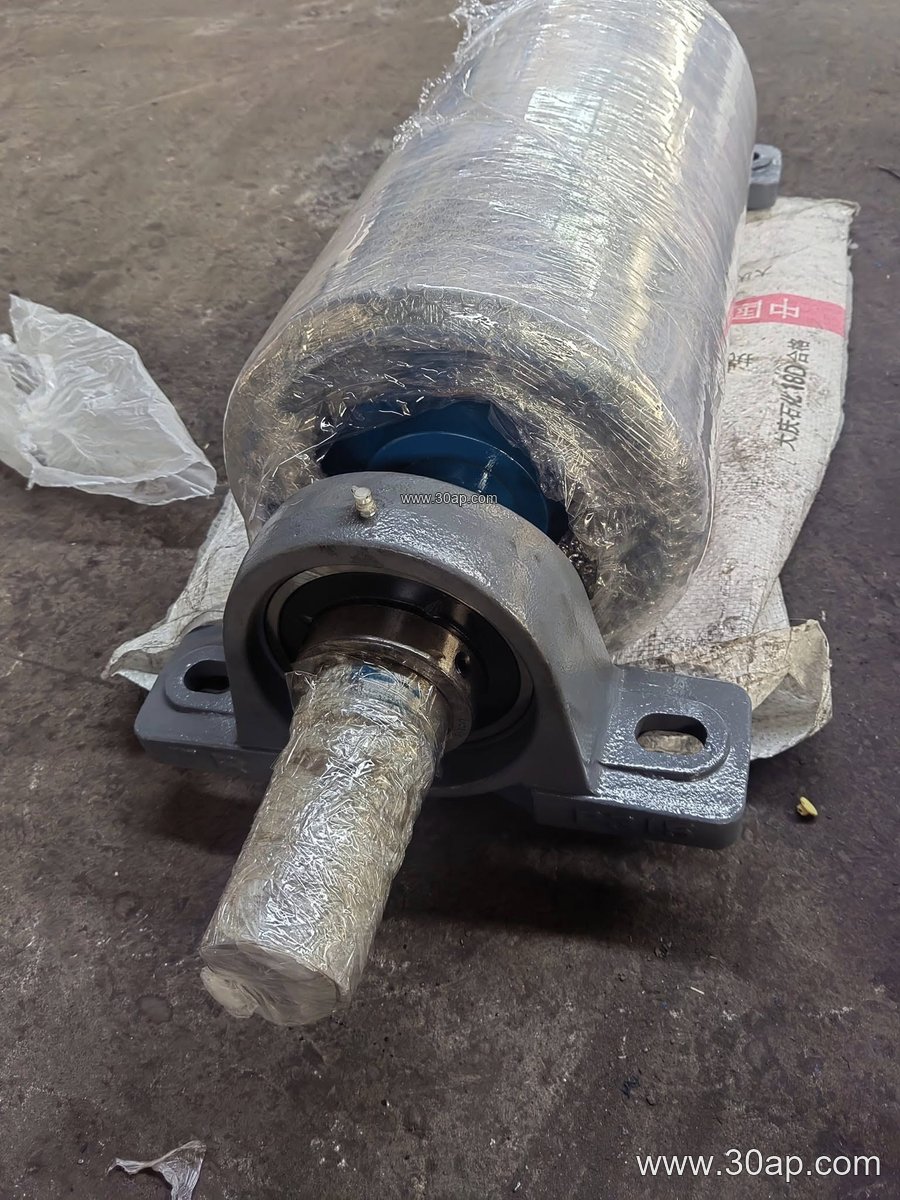
The pulley itself remains a standard conveyor pulley: a cylindrical shell, end discs, a shaft, bearing housings and a locking arrangement. What changes is the surface. Ceramic tiles, usually small blocks with a raised pattern, are bonded into a rubber layer that is applied to the shell. The rubber absorbs shock and keeps the tiles in place, while the ceramic provides the hard, grip-enhancing face.
How the Ceramic Lagging Is Built
There are two common routes. In one, tiles are vulcanised into a rubber sheet in a mould, and the finished lagging is then bonded to the pulley shell. In the other, the rubber backing is applied first and the tiles are set into it before curing. Both aim for a continuous, well-bonded surface with no gaps where water or fines can creep in.
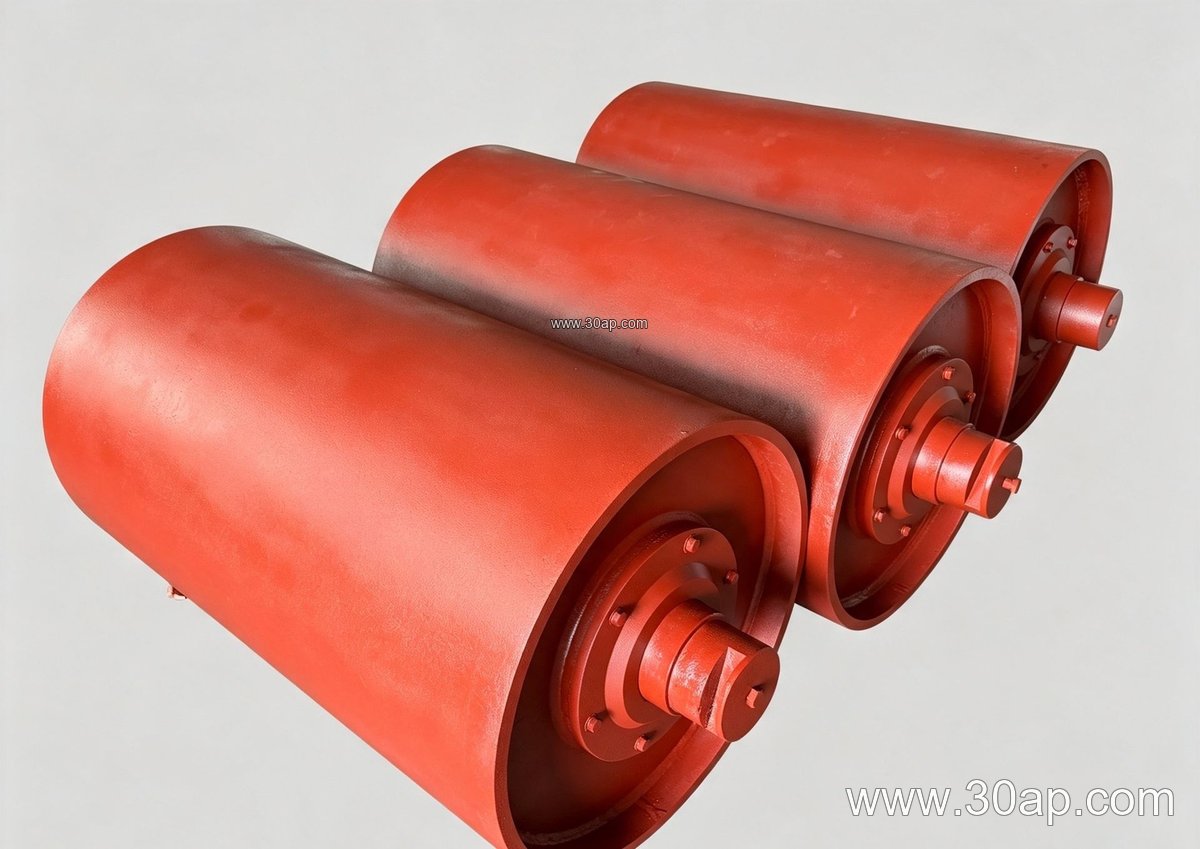
The tile pattern matters. Diamond or square patterns give multi-directional grip, while grooved layouts help water and fines escape from the contact zone. Lagging thickness is often 8, 10, 12, 15 or 20 mm depending on the duty, but the final figure should follow the pulley design and the belt tension involved.
- Shell: welded steel, machined for balance
- Lagging: ceramic tiles in rubber backing
- Shaft: sized by torque and load, not by belt width alone
- Bearings: selected for radial load and speed
- Surface finish: flat or patterned, with drainage grooves where needed
Where It Fits on the Conveyor
This type of pulley is most often used as a drive pulley, because that is where traction is needed. It can also serve as a tail pulley on a short, heavily loaded conveyor or as a bend pulley in a route with several changes of direction. These positions are not interchangeable: a drive pulley must transmit torque, a tail pulley mainly guides and supports the belt return, and a bend pulley changes direction under moderate load. A ceramic lagged drive pulley is a specific choice for the head end, not a universal replacement for every pulley on the line.
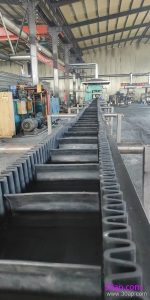
Typical installations include a quarry conveyor feeding a crusher, an ore conveyor at a copper or gold plant, a coal mining conveyor in a washing plant, and a cement plant clinker line. In these places the belt may be a heavy-duty mining conveyor belt, an abrasion resistant conveyor belt, or a flame retardant conveyor belt for underground use. The pulley must match the belt’s tension and the amount of wrap around the drum.
Sizes and Matching to the Belt
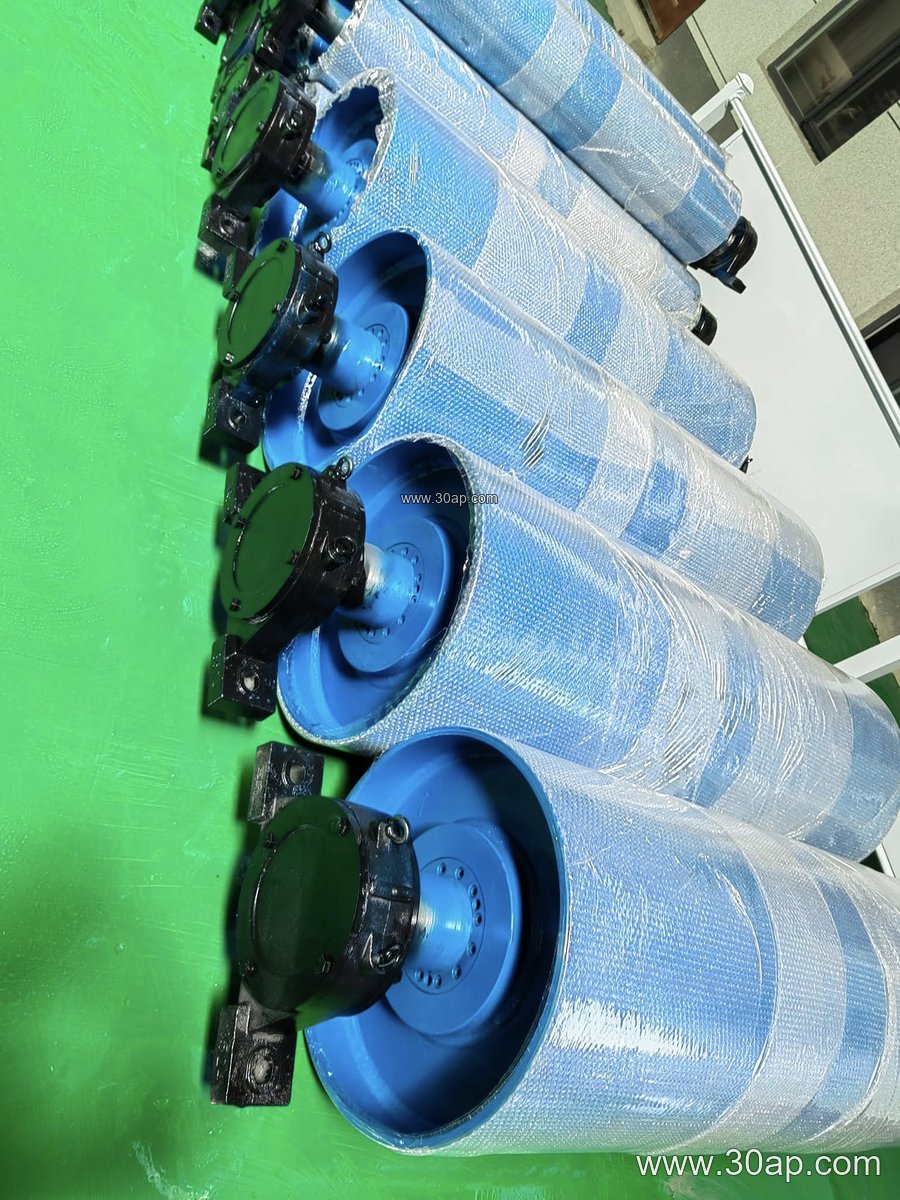
Pulley dimensions follow the conveyor design. Common belt widths include B650, B800, B1000, B1200 and B1400, and the shell face is normally wider than the belt. Diameters such as Ø500, Ø630, Ø800 and Ø1000 appear in many drive positions, while shaft sizes like Ø100, Ø120 or Ø140 are determined by torque and bearing load. There is no fixed rule that one belt width matches one diameter or one shaft size.
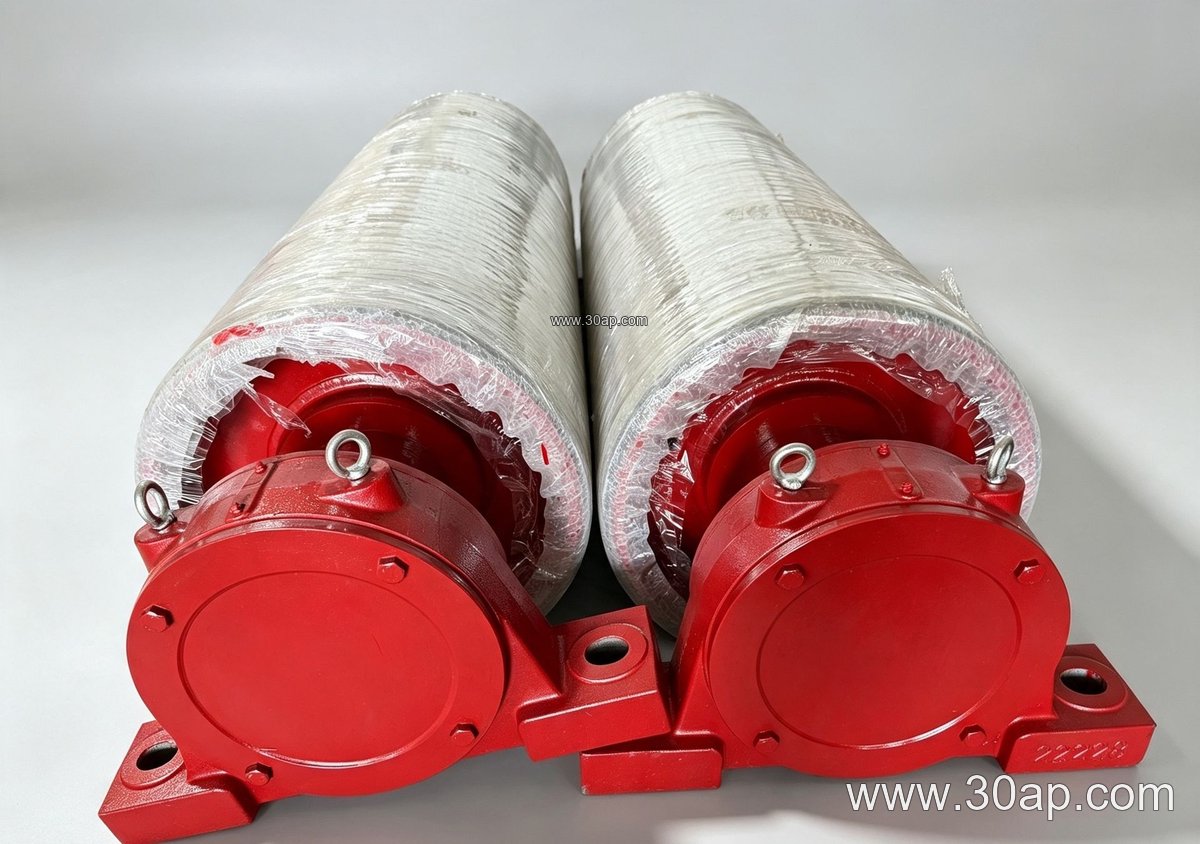
| Parameter | Typical range | Note |
|---|---|---|
| Belt width | B650 to B1800 | Face width usually wider than belt |
| Pulley diameter | Ø400 to Ø1250 | Set by belt tension and wrap angle |
| Lagging thickness | 8 to 20 mm | Thicker for high wear |
| Shaft diameter | Ø80 to Ø200 | By torque and load, not belt width |
| Surface form | Diamond, square, grooved | Grooved helps drainage |
When a conveyor uses an EP conveyor belt or a steel cord conveyor belt, the drive pulley must be sized for the higher tension that these belts carry. A fabric core conveyor belt on a shorter line may need a smaller drum. On a multi-ply fabric core conveyor belt running in a sand and gravel plant, a ceramic lagged pulley can reduce slip without the belt needing extra tension.
What Buyers Should Check
First, confirm the duty: is the pulley a drive, tail or bend unit, and what is the belt width and belt type? Second, check the lagging thickness and tile pattern against the material being carried. Wet, sticky or fine material benefits from grooves that clear water. Third, confirm the shaft and bearing size from the conveyor design rather than from a catalogue rule of thumb. Fourth, ask how the lagging is bonded and whether tiles are replaceable in sections.
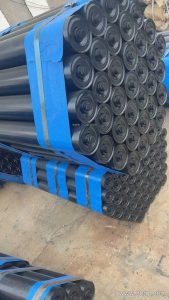
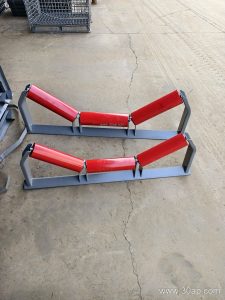
Maintenance is mostly inspection. Look for missing tiles, lifted edges, rubber cracking and material build-up between the belt and the drum. A worn ceramic face can be re-lagged, which is often cheaper than replacing the whole pulley. Keep the conveyor bracket and idler roller alignment in good order, because misalignment concentrates wear on one side of the lagging. For more conveyor pulley options, visit ckmachinery.com/conveyor-pulley and match the drum to your belt and load.