What a Conveyor Bracket Really Does
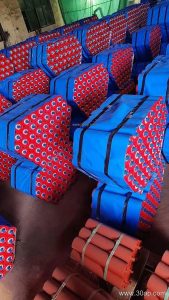
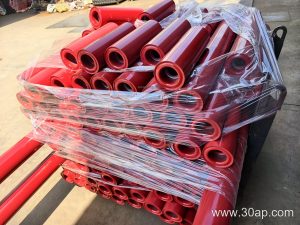
In a belt conveyor, the conveyor bracket is the steel frame that holds the idler roller in place and sets the trough angle of the belt. Buyers searching for Conveyor Bracket Procurement are usually sourcing these support frames for a new line or replacing worn ones on an existing structure. The bracket carries the load of the belt and material, keeps the rollers aligned, and determines how deeply the belt is troughed. Get the bracket wrong and the belt will mistrack, spill material, or wear unevenly.
The bracket is a simple fabrication, but it is not a commodity. A troughing bracket for a B1200 line in a cement plant is a different animal from a return bracket on a small aggregate conveyor. Procurement has to match the frame to the belt width, the roller diameter, and the duty of the site.
How the Frame Is Built
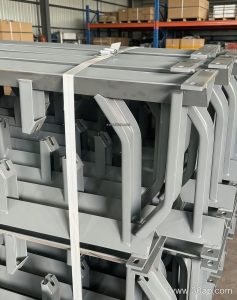
Most conveyor brackets are fabricated from angle steel, channel steel, or folded steel plate. The common forms include:
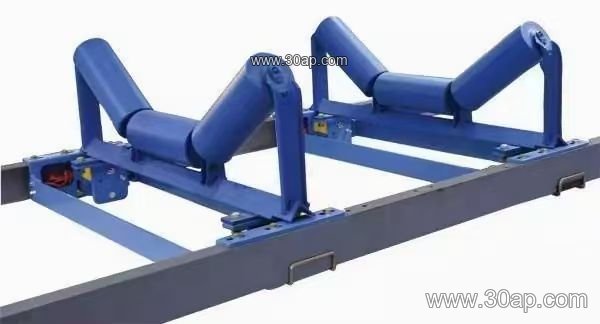
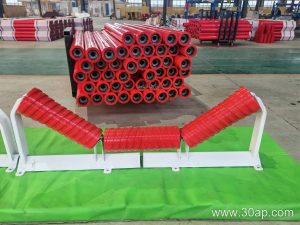
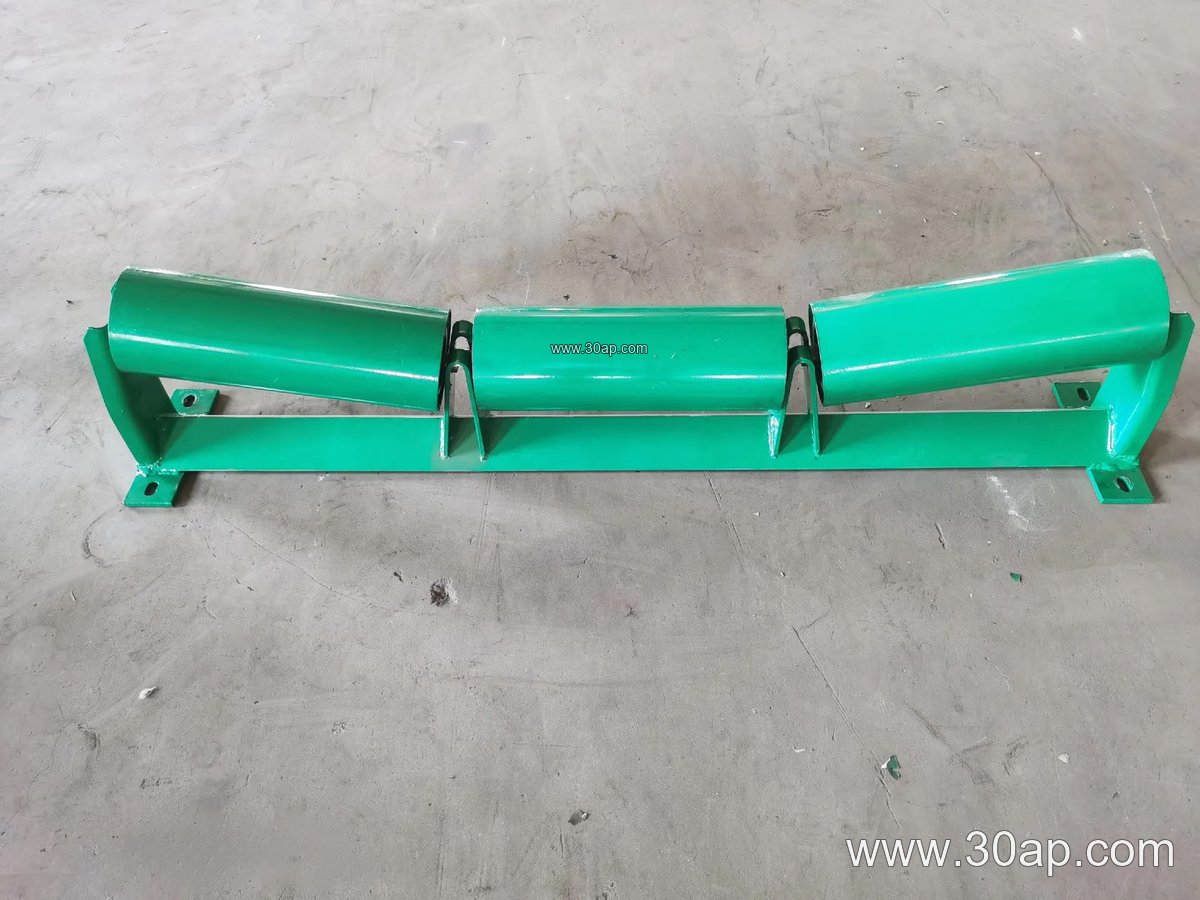
- Troughing brackets and upper troughing frames that carry three rollers at a set trough angle
- Transition brackets used where the belt changes from flat to troughed
- Return brackets and V-return brackets that support the empty belt
- Impact brackets positioned under the loading point
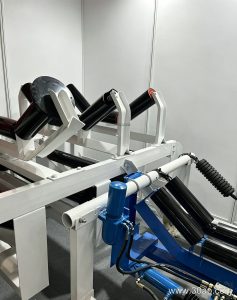
- Self-aligning brackets and forward-leaning brackets for belt training
- Hanging brackets and adjustable brackets for structures that need field adjustment
Welds, hole spacing, and crossbeam length are all set by the belt width and trough angle. A bracket for B800 is not drilled the same as one for B1600, and the mounting hole distance changes with the design. Buyers should treat hole spacing as a drawing item, not a guess.
Matching Bracket to Belt and Roller
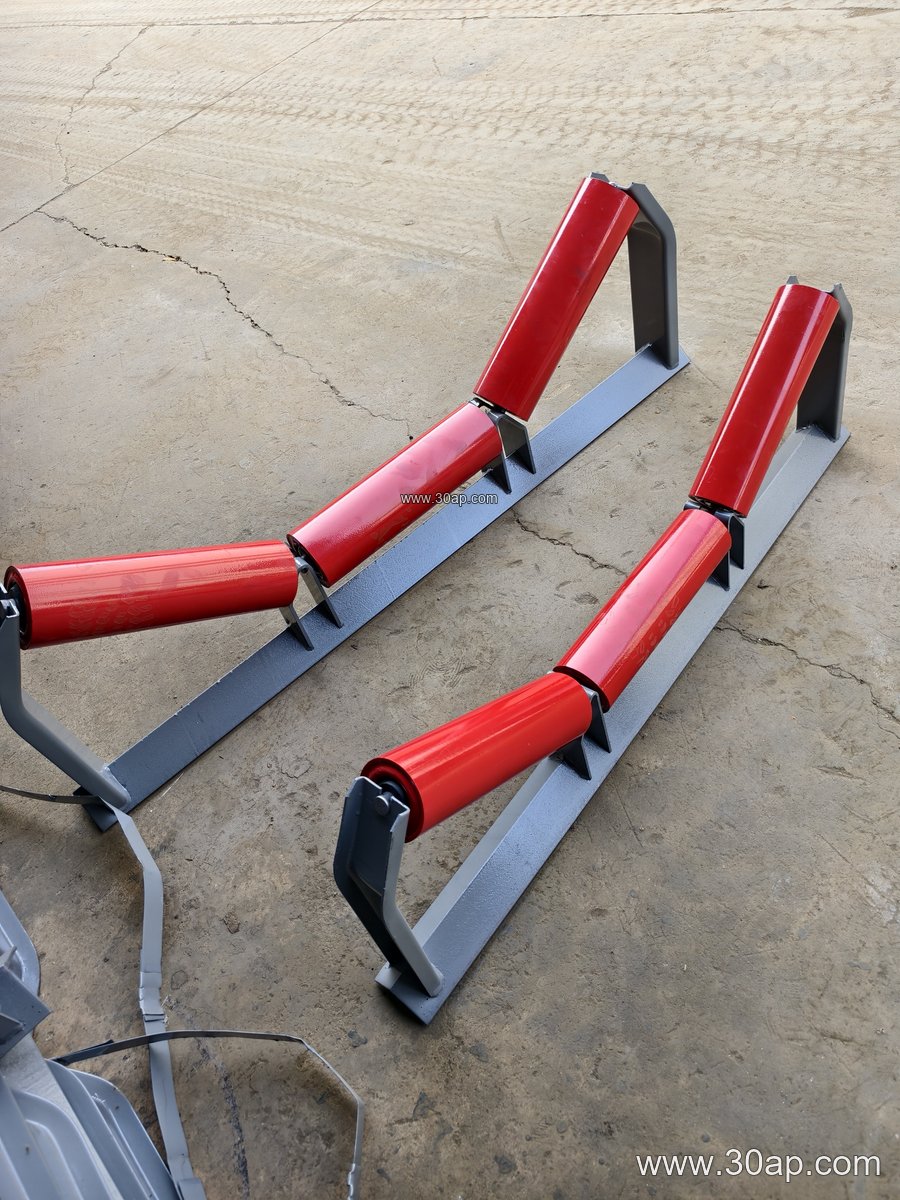
The bracket, the idler roller, and the conveyor belt work as one system. The trough angle is usually 20, 30, 35, or 45 degrees, and adjustable brackets can move between these angles. Forward-leaning brackets commonly sit at about 1.5 to 2 degrees to help center the belt. Roller diameters such as Ø89, Ø108, Ø133, Ø159, and Ø194 are matched to the belt width and load, but there is no fixed rule that one belt width takes only one roller diameter or one trough angle.
A typical reference set might look like this:
- B650, 30 degrees, Ø89 for a light aggregate line
- B800, 35 degrees, Ø108 for a sand and gravel plant
- B1200, 45 degrees, Ø133 for a cement or power plant coal line
- B1400 to B1800, 35 to 45 degrees, Ø159 or Ø194 for heavy ore duty
These are common combinations, not mandatory pairings. The final choice depends on belt tension, material density, and the structural design of the conveyor.
Where These Frames Are Used
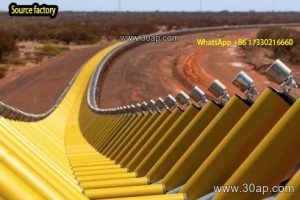
Troughing support frames appear wherever bulk material moves on a belt. In a limestone quarry or stone crushing line, they sit under an abrasion resistant conveyor belt carrying crushed rock. In a coal preparation plant or underground coal mining conveyor, flame retardant and anti-static belts run over brackets built for dusty, wet conditions. Cement plants, power plant coal yards, and iron ore terminals use heavier frames with larger rollers. Port ship loading conveyors and bulk material handling systems rely on long runs of aligned brackets to keep the belt tracking.
The belt type matters to procurement too. A steel cord conveyor belt is stiffer and may need different transition geometry than a multi-ply fabric core belt or an EP conveyor belt. A pipe conveyor belt or corrugated sidewall belt has its own support requirements, so the bracket drawing should come from the conveyor designer, not from a catalog page.
What Buyers Should Check Before Ordering
Good Conveyor Bracket Procurement starts with a clear specification. Confirm the belt width, the trough angle, the roller diameter, the mounting hole spacing, and the crossbeam length. State the material and finish, and say whether the bracket is fixed or adjustable. Ask for drawings before production, especially for transition and impact positions. For a mining conveyor belt line, confirm that the frame suits the belt’s stiffness and the site’s dust and moisture conditions.
Also plan for maintenance. Spare troughing brackets and return brackets kept on site reduce downtime when a frame bends after a jam or a roller seizure. Keep the same hole pattern across spare frames so they drop into the existing structure.
Finally, compare suppliers on fabrication quality, drawing control, and delivery rather than on a single price line. A bracket is a small part of the conveyor cost, but it controls belt life and uptime across the whole line.