What Conveyor Pulley Lagging Does
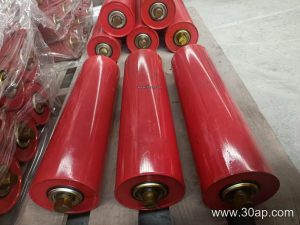
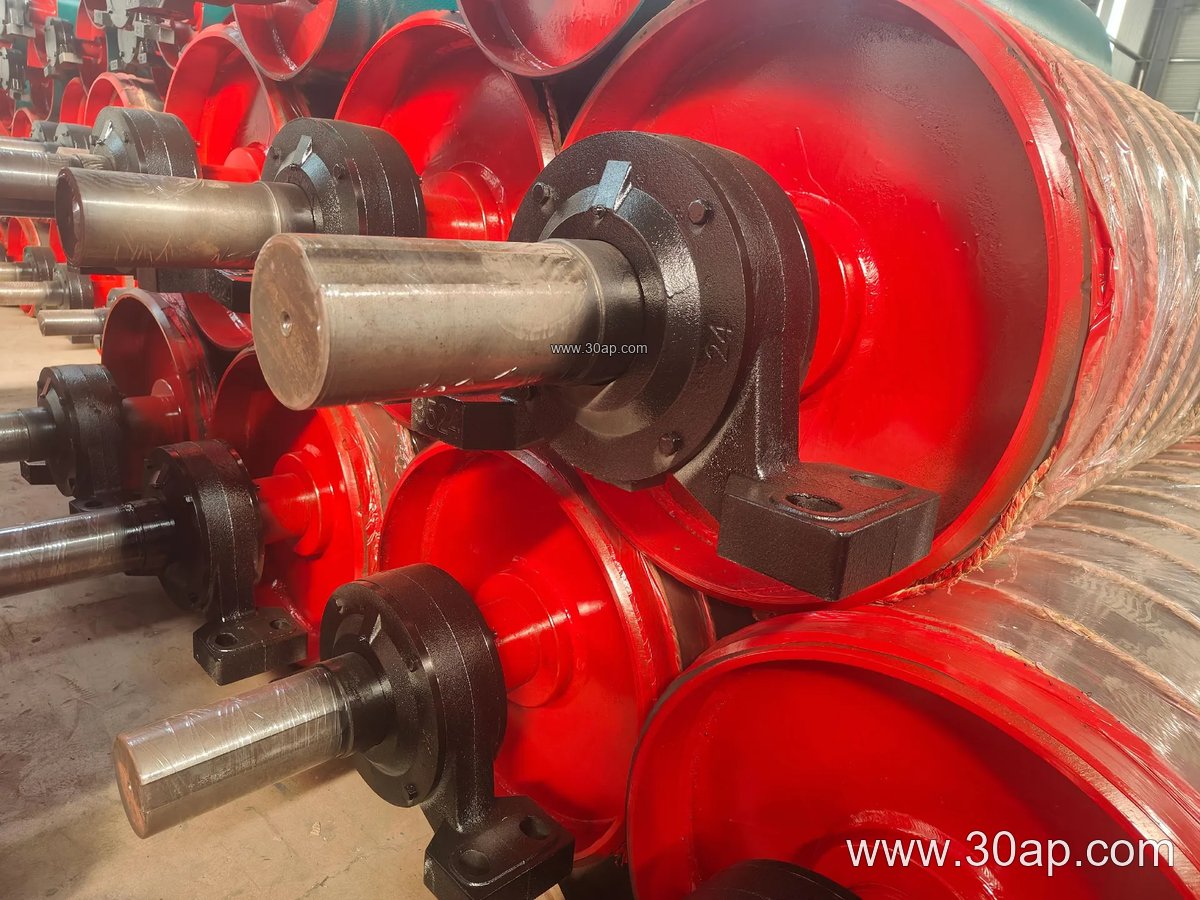
Conveyor pulley lagging is the sacrificial rubber or ceramic layer applied to the drum face of a conveyor pulley. Its job is simple but critical: increase friction between the pulley shell and the conveyor belt, protect the pulley surface from wear, and keep the belt tracking straight under load. Without lagging, a bare steel drive pulley in a wet or dusty quarry, a coal washing plant, or a power plant coal yard would slip and wear quickly. The lagging is bonded or bolted to the drum, and it can be renewed without replacing the entire pulley.
How Lagging Is Built and Attached
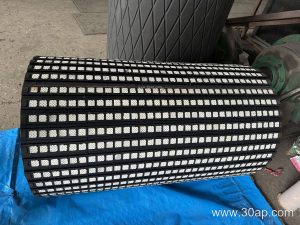
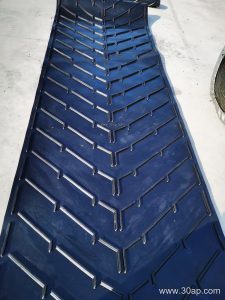
Most lagging starts as a rubber sheet or strip with a textured surface. Common forms include plain rubber, diamond groove, herringbone, and ceramic tile embedded in rubber. Thickness typically runs 8, 10, 12, 15, or 20 mm, chosen by the duty and the belt speed. Attachment methods vary. Cold-bonded rubber uses an adhesive system applied in the field. Hot-vulcanized lagging is cured under heat and pressure for a stronger bond. Bolt-on ceramic lagging uses countersunk fasteners and is common where slip is severe. The pulley shell itself is usually mild steel, and the lagging must be fitted to a clean, properly prepared surface.
Where It Fits on the Conveyor
Lagging matters most on the drive pulley, where torque transfer happens. It is also used on tail pulleys to reduce material buildup and on bend pulleys to maintain belt contact. A drive pulley with diamond lagging grips well in dry conditions; a ceramic lagging is often preferred on the head pulley of a high-tension overland conveyor in an iron ore mine or a limestone quarry. Tail pulleys may use plain rubber to shed fines, while bend pulleys may use thinner lagging to keep the belt path stable. The same pulley can be supplied with different surface forms, and the choice should follow the actual slip risk and material environment.
Matching Lagging to Belt and Duty
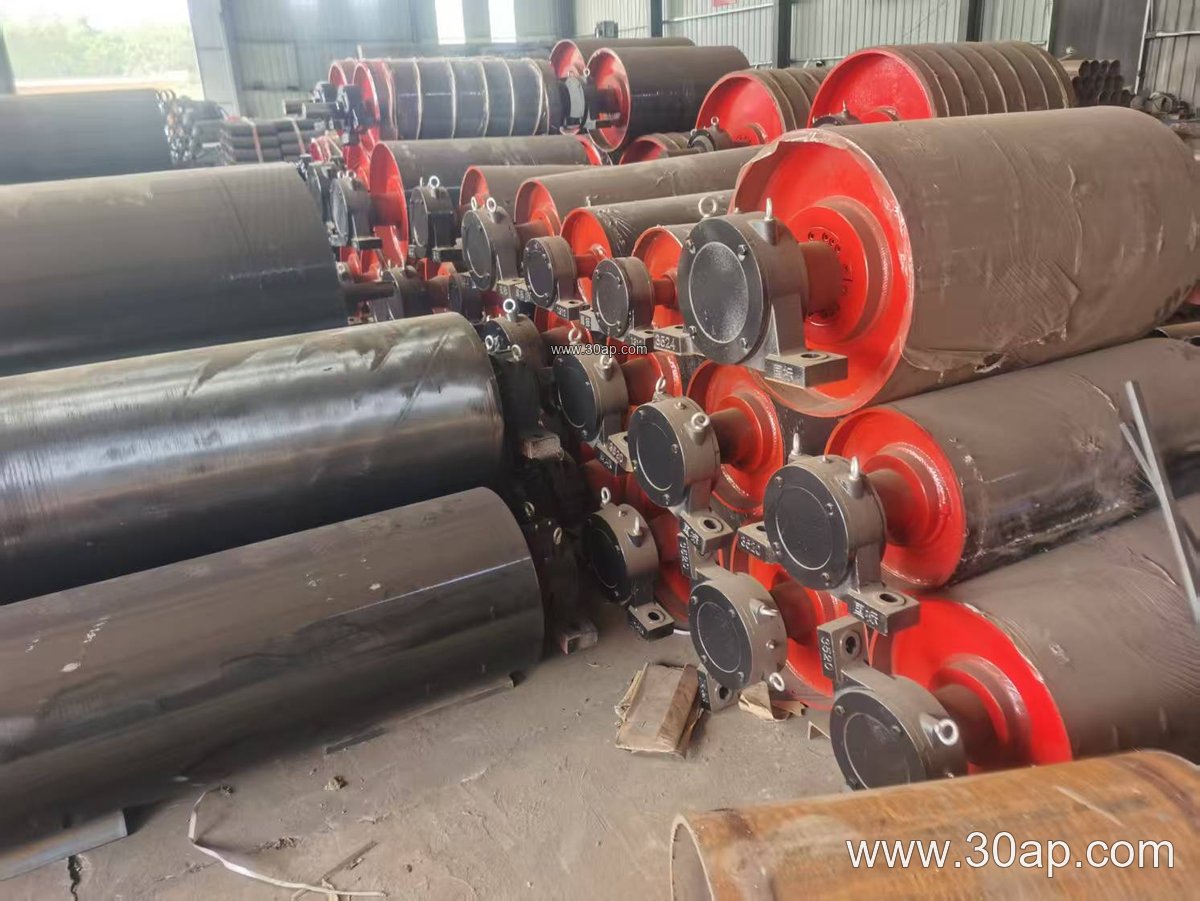
The conveyor belt and the pulley lagging work as a pair. A heavy-duty mining conveyor belt carrying coarse rock needs a pulley surface that will not polish smooth. An abrasion resistant conveyor belt on a crusher discharge may run over a drive pulley with 15 mm diamond lagging. A flame retardant conveyor belt in an underground coal mine needs lagging that does not introduce a fire risk, so rubber compounds are selected with care. Belt width does not dictate a single pulley diameter. A B800 belt might run on a Ø500 pulley in one plant and a Ø630 pulley in another, depending on belt tension and wrap angle. Shaft diameter is set by torque and load, not by belt width alone.
Common Size References
The table below shows typical combinations seen in specifications. These are reference values, not fixed rules or supply promises.
| Belt width | Pulley face width (approx.) | Common pulley diameter | Typical lagging thickness |
|---|---|---|---|
| B500 | 600 mm | Ø250, Ø315, Ø400 | 8–10 mm |
| B650 | 750 mm | Ø315, Ø400, Ø500 | 10–12 mm |
| B800 | 950 mm | Ø400, Ø500, Ø630 | 10–15 mm |
| B1000 | 1150 mm | Ø500, Ø630, Ø800 | 12–15 mm |
| B1200 | 1400 mm | Ø630, Ø800, Ø1000 | 15–20 mm |
| B1400 | 1600 mm | Ø800, Ø1000, Ø1250 | 15–20 mm |
| B1600 | 1800 mm | Ø1000, Ø1250, Ø1400 | 15–20 mm |
Shaft diameters commonly range from Ø50 to Ø200, again set by design torque. A B1200 × Ø1000 drive pulley and a B800 × Ø500 tail pulley are both realistic, but they serve different positions and loads.
Buyer Checklist
- Confirm the pulley position: drive, tail, bend, or take-up. Each has different slip and wear demands.
- Match the lagging surface to the material: diamond for general grip, ceramic for high slip, plain for shedding sticky fines.
- Check belt construction. A steel cord conveyor belt and a multi-ply fabric core conveyor belt transmit tension differently, so lagging hardness and thickness should suit the belt.
- Ask for the bonding method and cure conditions. Field adhesion quality decides lagging life.
- Verify pulley face width against belt width, and confirm shaft size from the drive calculation.
- Consider environment: heat resistant conveyor belt in a cement kiln area, oil resistant conveyor belt in a recycling line, or cold resistant conveyor belt at a port in winter.
For a quarry conveyor belt or a coal mining conveyor belt, lagging is a small cost item with a large effect on uptime. Specify it with the pulley, not after the pulley is built.