What a Custom Conveyor Bracket Does
A custom conveyor bracket is the structural interface that holds idler rollers and related components in the exact position your conveyor line needs. Unlike a catalog bracket, it is made to match a specific belt width, trough angle, roller diameter, and frame layout. In a quarry, cement plant, or power plant coal yard, the bracket often determines whether a belt tracks smoothly or drifts. The part is not a pulley or a roller, but it works closely with them. For example, a drive pulley pulls the belt, while the bracket keeps the carrying idlers at the right angle so the belt stays centered.
How It Is Built
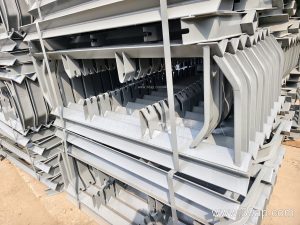
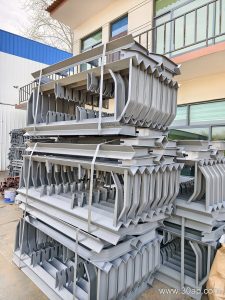
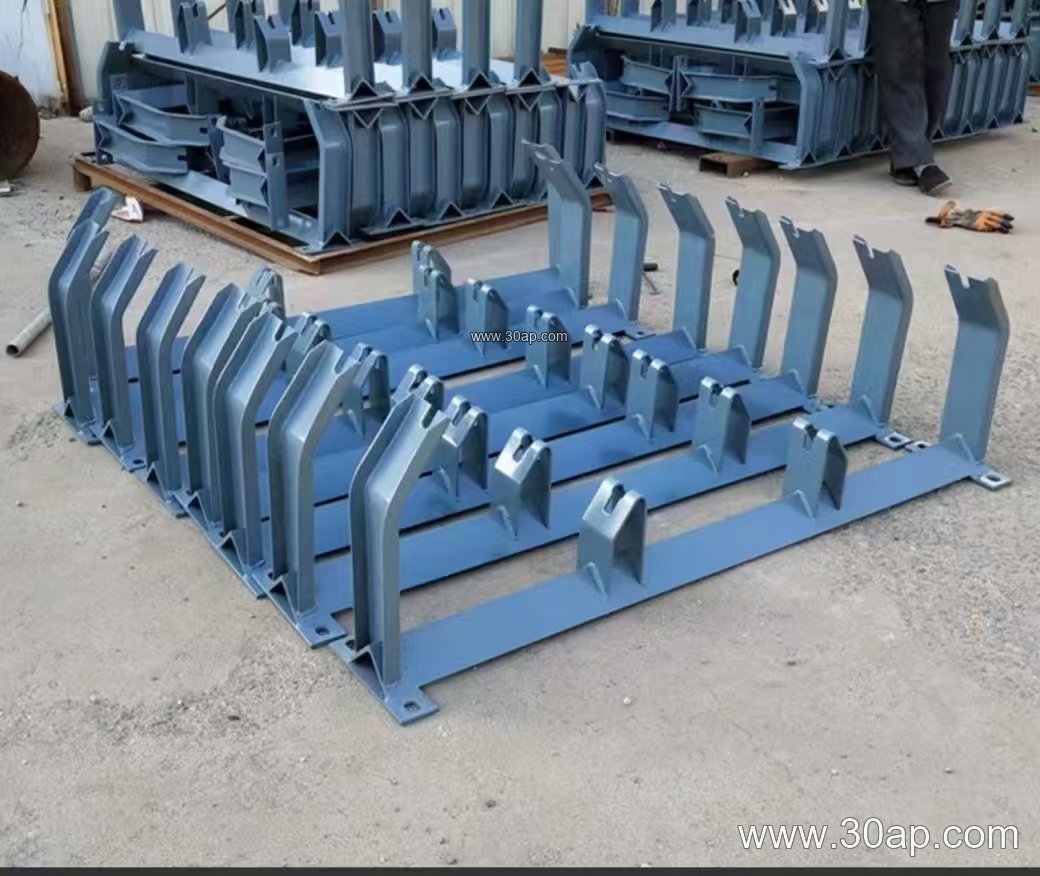
Most custom conveyor brackets are fabricated from angle steel, channel steel, or folded steel plate. The material choice follows the load and environment. A heavy-duty mining conveyor belt running ore may need thicker channel sections, while a lighter aggregate line can use folded plate. The bracket usually includes mounting slots or holes that align with the conveyor frame. Because belt width and trough angle change the geometry, hole spacing and crossbeam length are made to order rather than fixed. Common belt widths include B500, B650, B800, B1000, B1200, B1400, B1600, B1800, B2000, B2200, but a bracket is not limited to one size per width. Roller diameters such as Ø89, Ø108, Ø133, Ø159, and Ø194 are selected with the load and belt speed in mind.
Types and Where They Fit
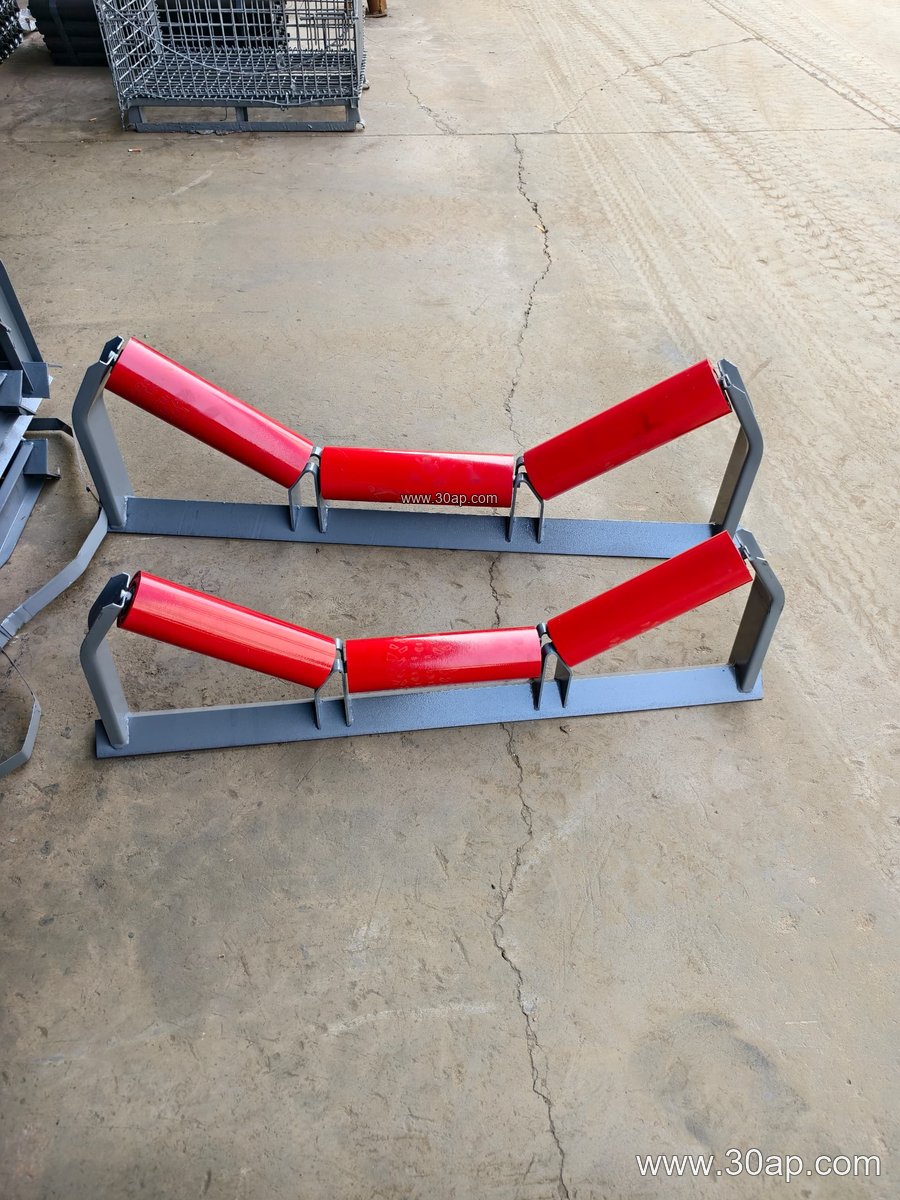
Custom brackets come in several forms. Trough brackets hold three idlers at 20, 30, 35, or 45 degrees, and adjustable versions can shift between these angles. Transition brackets guide the belt from flat to troughed. Return brackets support the lower run, including V-return designs. Impact brackets sit under loading points and carry impact idlers. Self-aligning brackets work with training idlers to correct belt drift. In a coal mining conveyor system, flame retardant conveyor belt and anti-static conveyor belt are often paired with well-aligned brackets to reduce misalignment. In a limestone quarry, a quarry conveyor belt may use 35-degree trough brackets with Ø133 rollers. For a cement plant, heat resistant conveyor belt can run on brackets designed for easy roller change during maintenance.
Selecting the Right Bracket
A buyer should start with the belt width and the required trough angle, then confirm the roller diameter and the frame hole pattern. The bracket must match the conveyor frame, not just the roller. If the line carries a heavy-duty mining conveyor belt or a steel cord conveyor belt, check that the bracket material and welding suit the load. For a pipe conveyor belt or corrugated sidewall conveyor belt, the bracket geometry is different from a standard trough bracket and should be specified separately. Adjustable brackets are useful where belt training may need fine tuning. Fixed brackets are simpler and often used where the frame is already aligned. A fabric core conveyor belt or EP conveyor belt usually works with standard trough brackets, while a chevron conveyor belt may need extra clearance. Always ask for a drawing that shows the mounting dimensions.
Installation and Maintenance Notes
Install brackets square to the belt centerline so the idlers sit evenly. Check bolt torque after the first run-in period. In a sand and gravel plant, dust can build up around the bracket, so keep the mounting surfaces clean. In a steel plant or sinter line, heat and scale may affect the bracket, and a heat resistant conveyor belt can help, but the bracket itself should be inspected for deformation. Replace bent brackets promptly; a misaligned bracket can wear the conveyor belt edge and damage an idler roller. Keep a small stock of common bracket sizes if your line uses several belt widths. For more information on matching brackets with conveyor belt and idler roller, visit our site at www.example.com/conveyor-bracket.