What a Three-Roll Idler Bracket Does
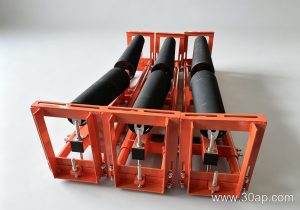
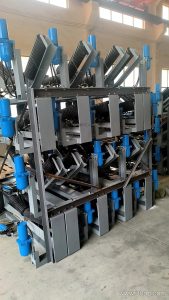
A three-roll idler bracket is a support frame that holds three idler rollers in a trough shape beneath the conveyor belt. Also called a three-roll troughing bracket or three-roll idler frame, it keeps the belt in a stable U-profile so bulk materials stay centered during transport. In a quarry or a coal washing plant, this bracket is the interface between the conveyor belt and the idler roller set. The bracket itself does not turn; it positions the rollers at the correct angle and spacing so the belt runs smoothly.
Construction and Common Materials
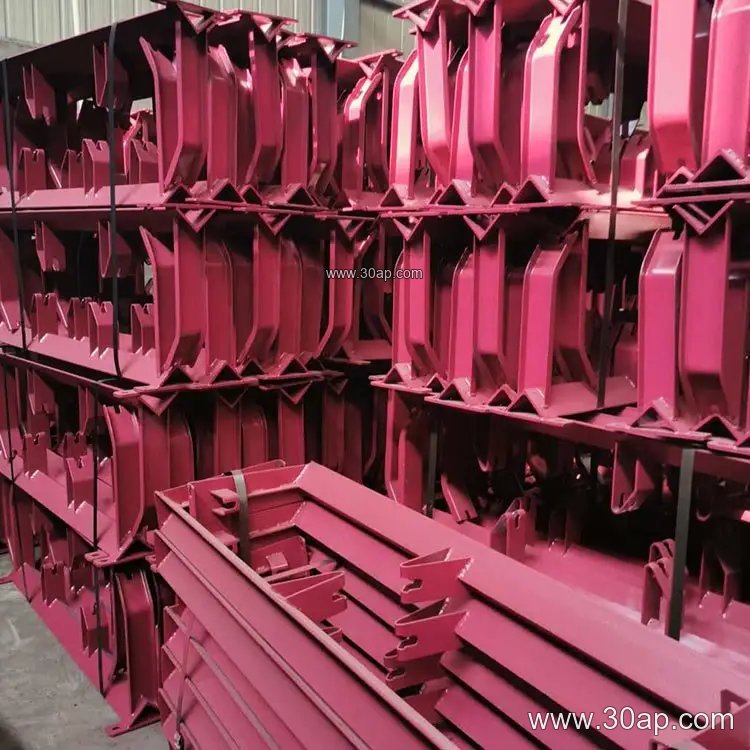
Most three-roll idler brackets are fabricated from angle steel, channel steel, or folded steel plate. The frame includes mounting slots or holes for the idler shafts, and the roll positions are set to form the desired trough angle. Typical trough angles include 20, 30, 35, and 45 degrees; adjustable brackets allow the angle to be changed within a range. Some designs add a slight forward tilt of about 1.5 to 2 degrees to help belt tracking. The bracket is usually bolted to the conveyor stringer or cross beam, and the hole spacing and beam length vary with belt width and trough angle.
Where It Fits in the Conveyor System
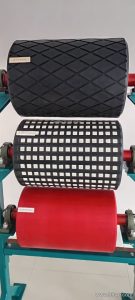
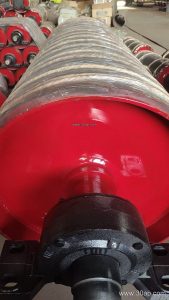
Three-roll idler brackets are used on the carrying side of a belt conveyor, especially where material load is heavy or the belt needs consistent support. You will find them in limestone mines, iron ore operations, cement plants, power plant coal handling, and aggregate crushing lines. They work together with the conveyor belt, idler rollers, and conveyor pulleys. Drive pulleys, tail pulleys, and bend pulleys are separate components with different roles; the three-roll bracket belongs to the idler support group, not to the pulley group. In a typical stone crushing line, a set of three-roll brackets supports an EP conveyor belt or a steel cord conveyor belt carrying crushed rock from the crusher to the screen.
Matching Belt Width, Trough Angle, and Roller Diameter
Selection starts with belt width and the required trough angle. Common belt widths for three-roll bracket applications include B500, B650, B800, B1000, B1200, B1400, B1600, and B1800. Roller diameters such as Ø89, Ø108, Ø133, Ø159, and Ø194 are used depending on load and belt speed. There is no fixed rule that one belt width must use only one trough angle or one roller diameter; the combination is chosen by the conveyor designer. For example, a B800 belt might run with a 35 degree trough and Ø108 rollers, while a B1200 belt may use a 45 degree trough with Ø133 rollers. The bracket must match the selected roll diameter and trough angle so the idler shafts sit correctly.
Fixed vs Adjustable and Other Bracket Forms
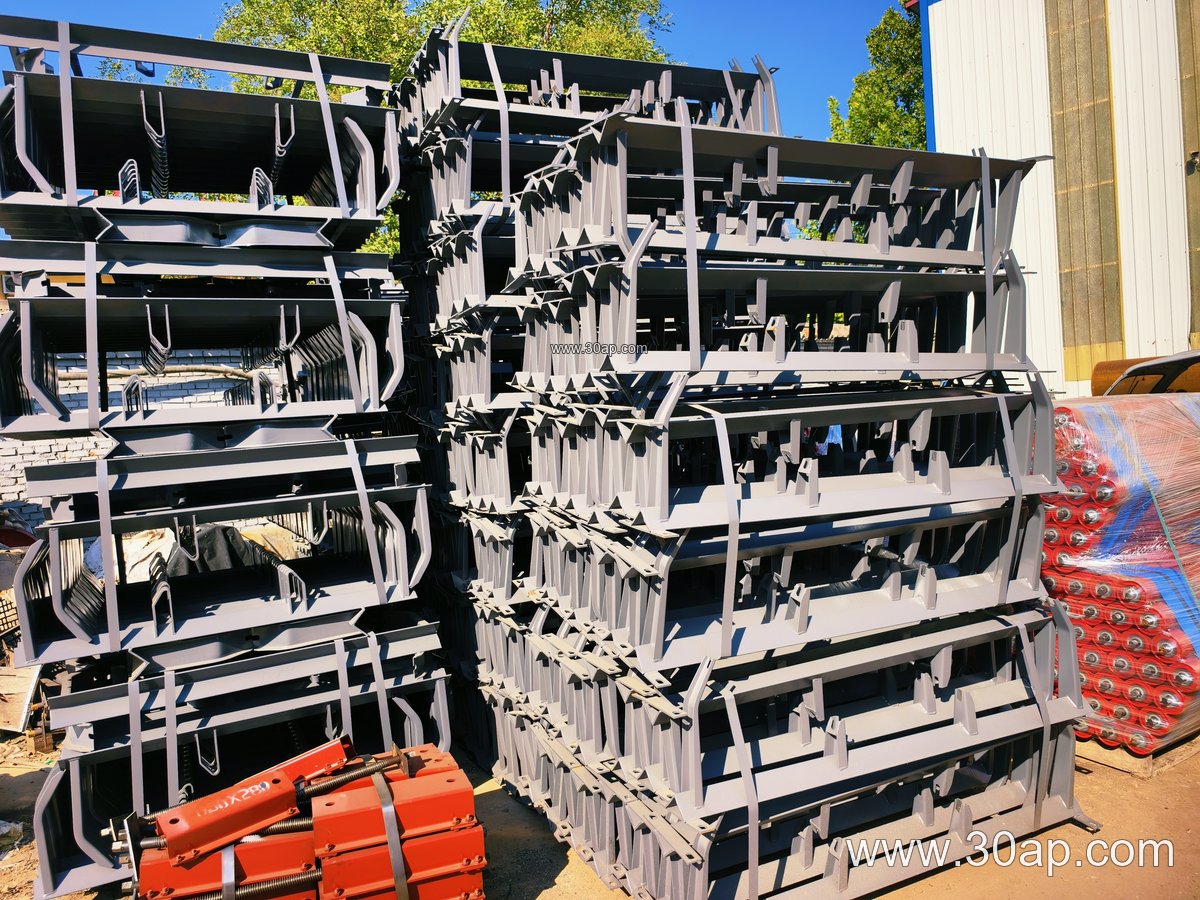
Fixed three-roll brackets hold a set trough angle and are simple and rigid. Adjustable three-roll brackets let maintenance staff change the trough angle to suit different materials or belt conditions. Other bracket forms in the same family include transition brackets near the pulley, impact brackets under the loading point, and self-aligning brackets for belt tracking. These are different subtypes with different jobs; a transition bracket is not a replacement for a standard three-roll bracket, and a return bracket supports the belt on the return side rather than the carrying side. When comparing, use the right bracket for the right position on the conveyor.
Buyer Checklist
- Confirm belt width and the required trough angle; check whether an adjustable bracket is preferred.
- Match the bracket to the idler roller diameter and shaft size used on the conveyor.
- Verify mounting hole spacing and cross beam length against the conveyor stringer drawing.
- Check material and finish for the environment: dusty quarry, wet coal washing plant, or hot cement plant.
- Ask for a dimensional drawing so the bracket fits the existing idler rollers and conveyor bracket layout.
For a conveyor system carrying abrasive rock or coal, the three-roll idler bracket should be selected together with the conveyor belt specification, such as an abrasion resistant conveyor belt or a flame retardant conveyor belt for underground mining. A well-matched bracket keeps the belt supported, reduces spillage, and helps the idler roller last longer in demanding bulk material handling.