What an Ore Conveyor Belt Is
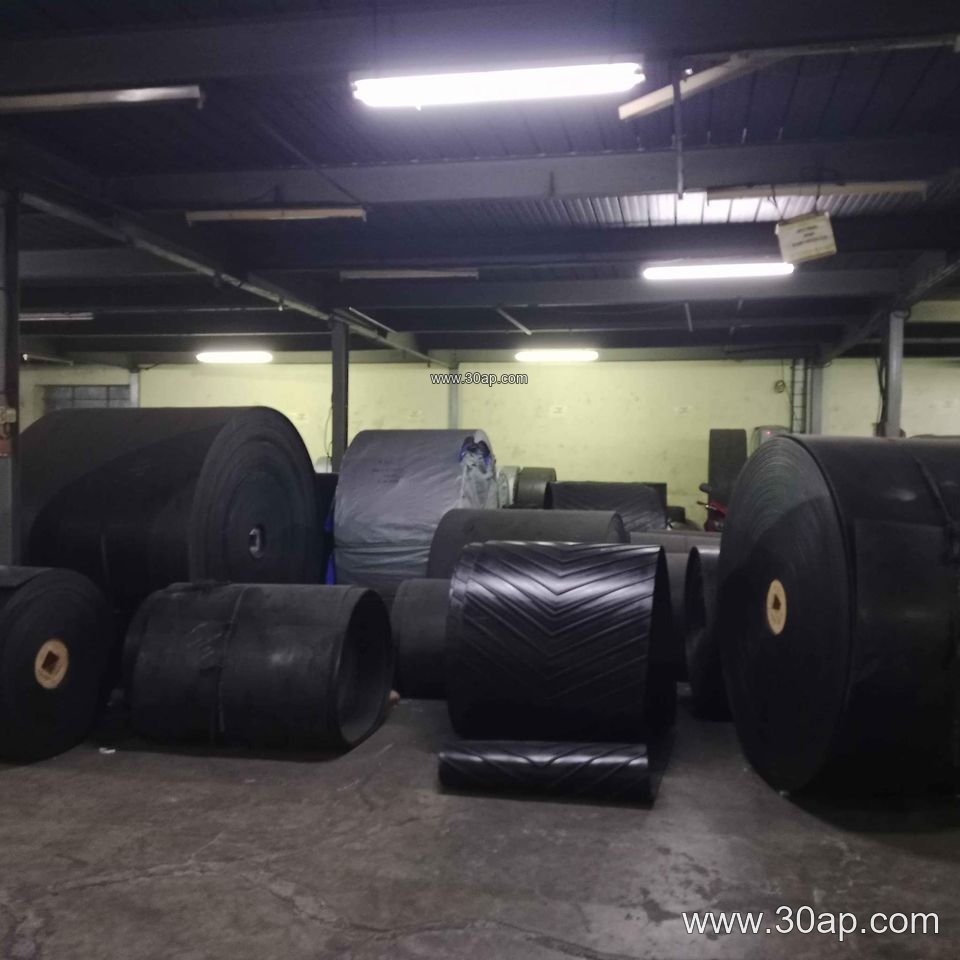
An ore conveyor belt is the load-carrying element of a continuous haulage system designed to move crushed or raw ore from the mine face, stockpile, or crusher to the processing plant or loadout point. Unlike general-purpose belts, this belt must tolerate sharp rock edges, heavy lumps, abrasive dust, and often wet or oily conditions. The product is typically specified as a heavy-duty rubber conveyor belt with a fabric or steel cord carcass, selected according to the ore type, lump size, and conveyor geometry.
Construction and Carcass Options
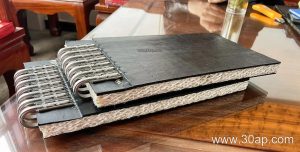
The belt body combines a tension-bearing carcass with rubber covers. Common carcass choices for ore duty include EP conveyor belt (polyester-nylon), NN conveyor belt (nylon-nylon), and steel cord conveyor belt for long, high-tension routes. Multi-ply fabric core conveyor belt constructions are widely used in crushing circuits and transfer points where impact resistance matters. Cover rubber grades are chosen for abrasion, heat, oil, or flame resistance as the site demands.
Key structural layers usually include:
- Top cover rubber for abrasion and impact protection
- Fabric plies or steel cords forming the tension member
- Bottom cover rubber for pulley contact and protection
- Breaker fabric or reinforced edge in heavy-duty designs
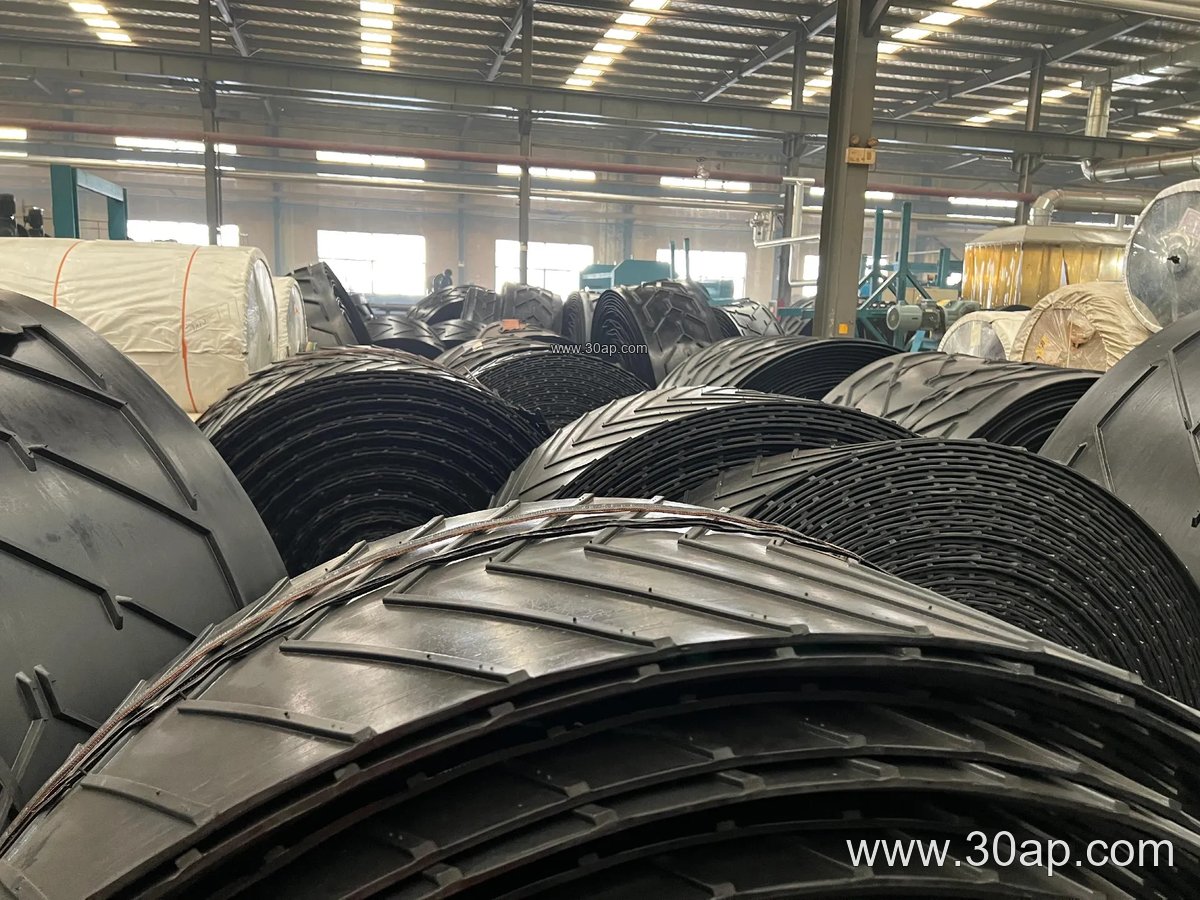
For steep inclines, a chevron conveyor belt or corrugated sidewall conveyor belt may be used to prevent material rollback. In underground coal or metal mines, flame retardant conveyor belt and anti-static conveyor belt properties are often required by site safety rules.
Where Ore Belts Are Used
These belts appear across mining and bulk handling industries. Typical installations include:
- Iron ore and copper ore primary crushing and conveying circuits
- Gold mining conveyor belt lines handling abrasive, wet ore
- Coal mining conveyor belt and underground mining conveyor belt systems
- Quarry conveyor belt and aggregate conveyor belt operations
- Cement plant conveyor belt feeding raw mills and kilns
- Power plant conveyor belt and steel plant conveyor belt yards
- Port conveyor belt and ship loading conveyor belt terminals
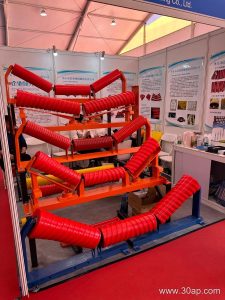
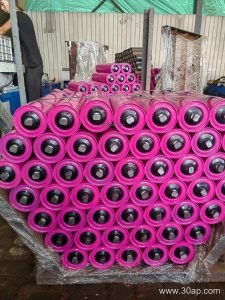
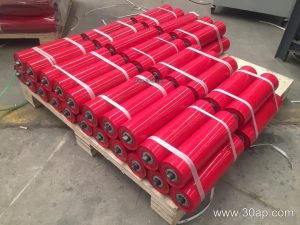
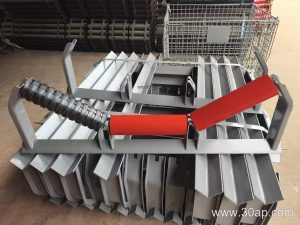
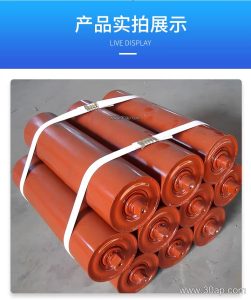
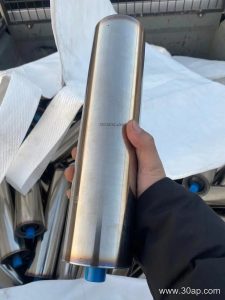
The belt works together with conveyor pulley assemblies, idler rollers, and conveyor brackets. Drive, tail, and bend pulleys each have distinct roles and are not interchangeable; correct alignment of the belt with these pulleys affects tracking and belt life.
Common Specifications and Dimensions
Buyers often compare belt width, carcass strength, and cover thickness. The values below are examples of common configurations; final selection depends on conveyor design, ore lump size, and duty cycle. Different manufacturers offer different ranges.
| Parameter | Common Examples |
|---|---|
| Belt width | B500, B650, B800, B1000, B1200, B1400, B1600, B1800, B2000 |
| EP carcass strength | EP200, EP315, EP400, EP500, EP630, EP800, EP1000, EP1250, EP1600, EP2000 |
| NN carcass strength | NN100, NN200, NN300, NN400 |
| Steel cord strength | ST1000, ST1250, ST1600, ST2000, ST2500, ST3150 |
| Cover thickness (top + bottom) | 3+1.5 mm, 4+2 mm, 5+2 mm, 6+2 mm, 8+3 mm |
| Fabric ply count | 2 to 6 plies typical |
For example, an EP1000 1200mm conveyor belt might suit a medium-duty ore transfer, while an EP1250 1800mm belt could be considered for higher capacity. A 1200mm wide conveyor belt or 1500mm wide conveyor belt is common in plant circuits; extra-wide belts are used where throughput is very high. Belt width and pulley diameter are matched by conveyor design, not by a fixed rule.
Buyer Checklist
Before ordering an ore conveyor belt, gather the following information:
- Ore type, maximum lump size, and bulk density
- Conveyor length, incline angle, and troughing configuration
- Required belt width and carcass strength from the conveyor designer
- Environmental conditions: temperature, moisture, oil, chemicals
- Safety requirements such as flame retardant or anti-static properties
- Pulley dimensions and idler roller spacing to confirm belt flexibility
Also consider belt splices, edge wear, and cover rubber grade. An abrasion resistant conveyor belt is often the baseline for ore, while heat resistant conveyor belt or oil resistant conveyor belt grades may be needed near crushers or oil-lubricated equipment. For cold climates, cold resistant conveyor belt compounds help prevent cracking. Discuss with the belt supplier whether an endless conveyor belt splice is preferred over mechanical fasteners for the duty.
Regular inspection of the belt surface, edges, and splice, together with checking conveyor pulley lagging and idler roller rotation, supports longer service life. The right ore conveyor belt specification balances carcass strength, cover protection, and site safety requirements.