What a Friction Idler Does on a Conveying Line
A friction idler is a training idler that steers a wandering conveyor belt back toward the center line using friction rather than a vertical pivot shaft. The roller frame rests on a friction surface, and when the belt drifts sideways it contacts the idler at an angle, generating a turning moment that swings the whole assembly slightly. That small rotation nudges the belt back on track. In a quarry, a cement plant, or a power plant coal yard, this self-correcting behavior keeps material centered and reduces edge damage on the conveyor belt.
The product is also called a friction training idler or friction self-aligning idler. It is not a drive pulley, tail pulley, or bend pulley, and it should not be confused with them; those are conveyor pulleys that transmit power or change belt direction, while a friction idler only guides. For the same reason, a friction idler is a distinct subtype from a plain troughing idler, a return idler, or an impact idler, and each has its own place in a conveyor system.
How the Assembly Is Built
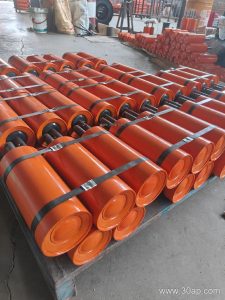
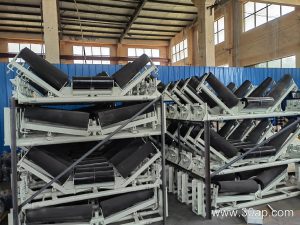
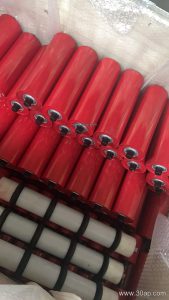
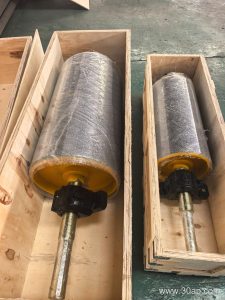
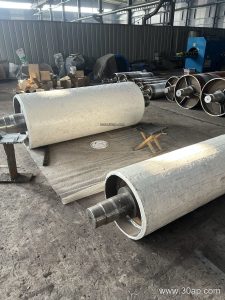
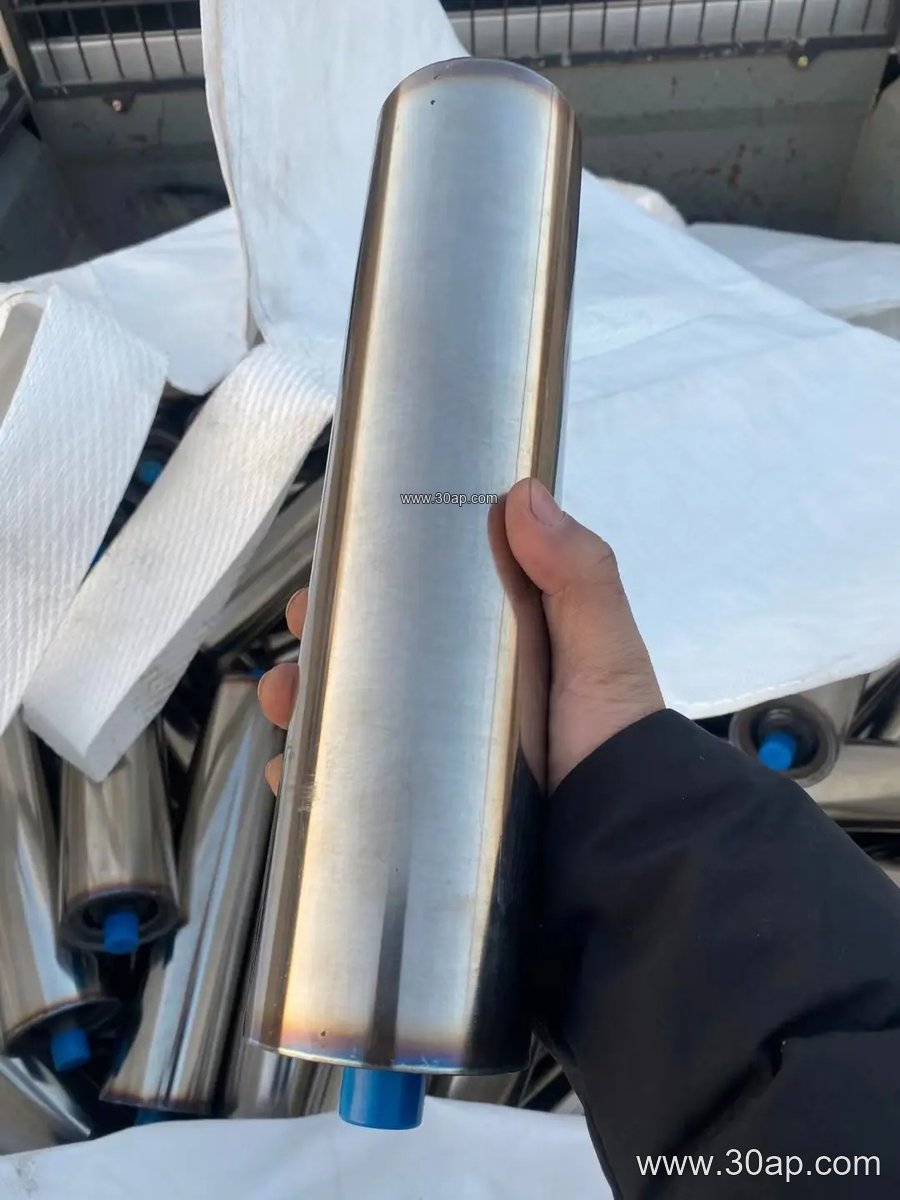
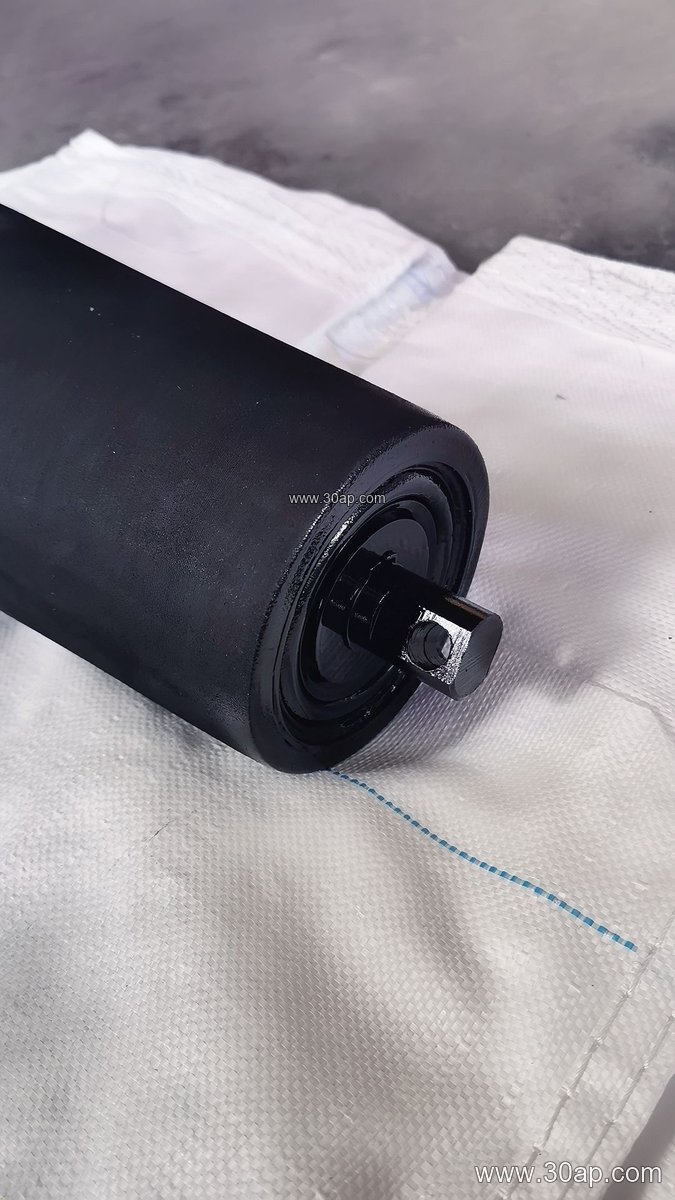
A typical unit combines a set of idler rollers mounted in a frame that sits on a friction plate or friction ring. The rollers may be steel tube, nylon, ceramic, or rubber-disc covered, depending on the duty. Bearings are commonly 6204, 6205, 6305, 6306, 6308, or 6310, matched to the roller diameter and load rather than to belt width alone. Common roller diameters include Ø63, Ø76, Ø89, Ø102, Ø108, Ø127, Ø133, Ø159, Ø178, Ø194, and Ø219 mm.
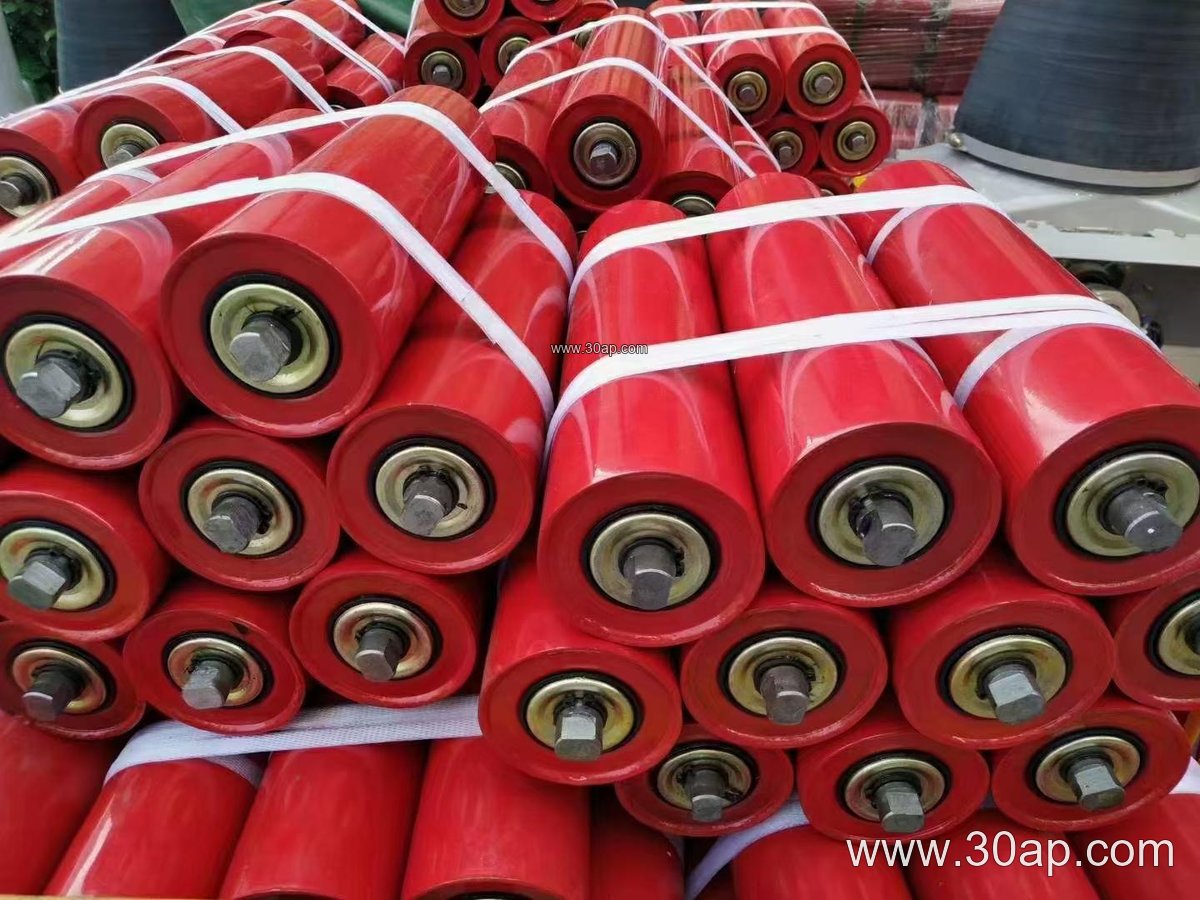
The frame usually carries two or three rollers in a trough form. Trough angles of 20, 30, 35, and 45 degrees are common, and a slight forward tilt of about 1.5 to 2 degrees is sometimes used on training idlers to assist centering. Roller length follows belt width, trough angle, and frame type; for a three-roller trough set, common examples are roughly 200 mm at B500, 250 mm at B650, 315 mm at B800, 380 mm at B1000, 465 mm at B1200, 530 mm at B1400, 600 mm at B1600, 670 mm at B1800, and 750 mm at B2000. These are reference examples only, and side rollers and center rollers can differ.
Where It Fits in a Conveyor
Friction idlers are usually installed on the carrying side at intervals along a long run, especially after curves, transfer points, and loading zones where the belt is most likely to misalign. They also appear on the return strand where tracking is critical. In a stone crushing line or an aggregate conveyor, a few well-placed units can prevent the belt from rubbing the frame and spilling material. In a coal mining conveyor or an underground mining conveyor, alignment matters for both safety and belt life.
They work alongside other components: the conveyor bracket supports the frame, the conveyor pulley at each end sets belt tension and direction, and the conveyor belt itself carries the load. A fabric core conveyor belt or an EP conveyor belt may behave differently from a steel cord conveyor belt under the same side load, so the number and position of training idlers should follow the belt construction and the actual tracking behavior observed on site.
Choosing the Right Unit
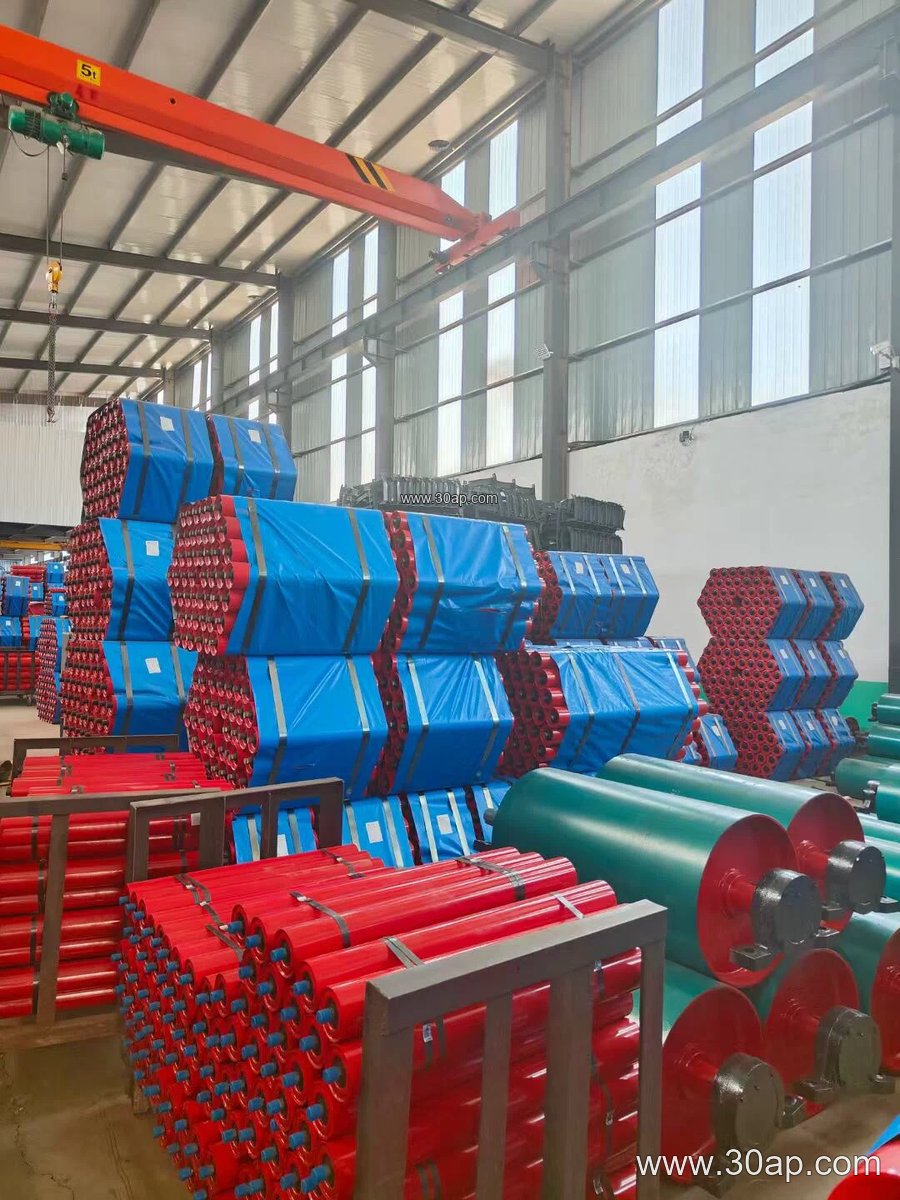
Buyers should confirm belt width, trough angle, roller diameter, roller surface, bearing size, and mounting height before ordering. A friction idler for a 650 mm belt is not automatically right for a 1200 mm belt, and one roller diameter does not dictate a single shaft size. The table below groups common reference values; final selection should be confirmed against the conveyor design.
- Belt width examples: B400, B500, B650, B800, B1000, B1200, B1400, B1600, B1800, B2000, B2200, B2400
- Roller diameter examples: Ø63, Ø76, Ø89, Ø102, Ø108, Ø127, Ø133, Ø159, Ø178, Ø194, Ø219 mm
- Trough angle examples: 20, 30, 35, 45 degrees
- Bearing examples: 6204, 6205, 6305, 6306, 6308, 6310
- Roller surface options: steel tube, nylon, ceramic, rubber disc
Also consider the environment. A dusty cement plant or a limestone quarry calls for good sealing; a power plant coal handling system may require flame retardant conveyor belt compatibility and careful grounding. In a port or ship loading conveyor, salt air and moisture make bearing protection important. For heavy-duty mining conveyor belt service, a robust frame and wear-resistant roller surface are worth the extra attention.
Maintenance and Practical Notes
Check the friction surface for dust buildup, because a clogged friction plate loses its self-aligning effect. Inspect bearings for noise or heat, verify that the frame swings freely, and confirm that the idler is not carrying belt load that belongs on a regular troughing idler. A friction idler is a guide, not a substitute for proper belt tension or pulley alignment. When tracking problems persist, examine the conveyor pulley alignment, the loading point, and the belt splice before adding more training idlers.
For related equipment such as an idler roller, a conveyor pulley, or a conveyor bracket, keep spare parts matched to the original specification so the training behavior stays predictable. Used correctly, a friction idler is a simple, low-maintenance way to extend belt life and keep bulk material moving smoothly.