What a Conveyor Take-Up Pulley Does
A conveyor take-up pulley is the drum that maintains working tension in a conveyor belt as it stretches, contracts, and shifts under load. It is a tensioning drum, not a drive drum and not a tail drum, and it usually sits in a take-up assembly that moves along rails, slides in a frame, or swings on a pivoted arm. In a coal preparation plant or a limestone quarry, the difference between steady belt tracking and constant spillage often comes down to how well this pulley keeps the belt snug without over-stressing it.
The take-up pulley works with the belt, the idler roller sets, and the conveyor bracket structure around it. Where a drive pulley transmits power and a bend pulley simply changes belt direction, the take-up pulley moves to absorb slack. That motion can be manual, gravity-driven with a weighted carriage, or powered by a screw or hydraulic cylinder.
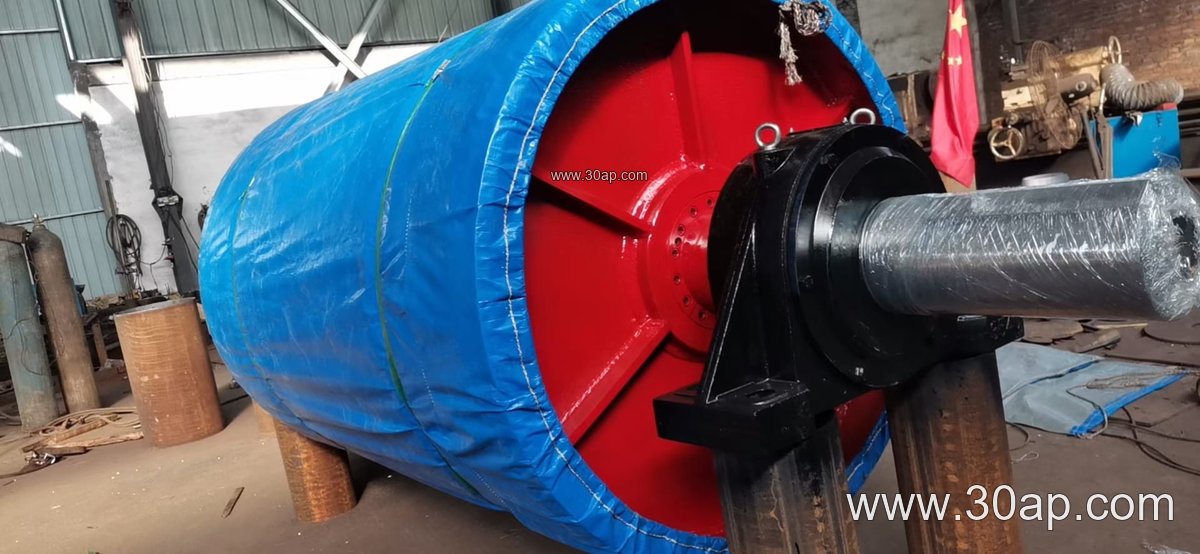
Construction and Surface Options
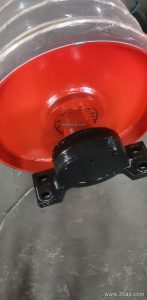
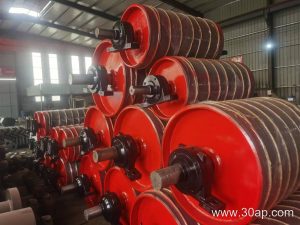
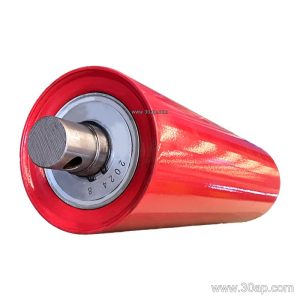
Most take-up drums are welded steel shells with machined end discs and a through shaft, supported by self-aligning bearing housings. Because they rotate continuously and often sit in dusty zones such as a crushing and screening line, bearing protection and grease access matter as much as shell strength. The lagging choice depends on whether the drum is expected to grip or simply guide.
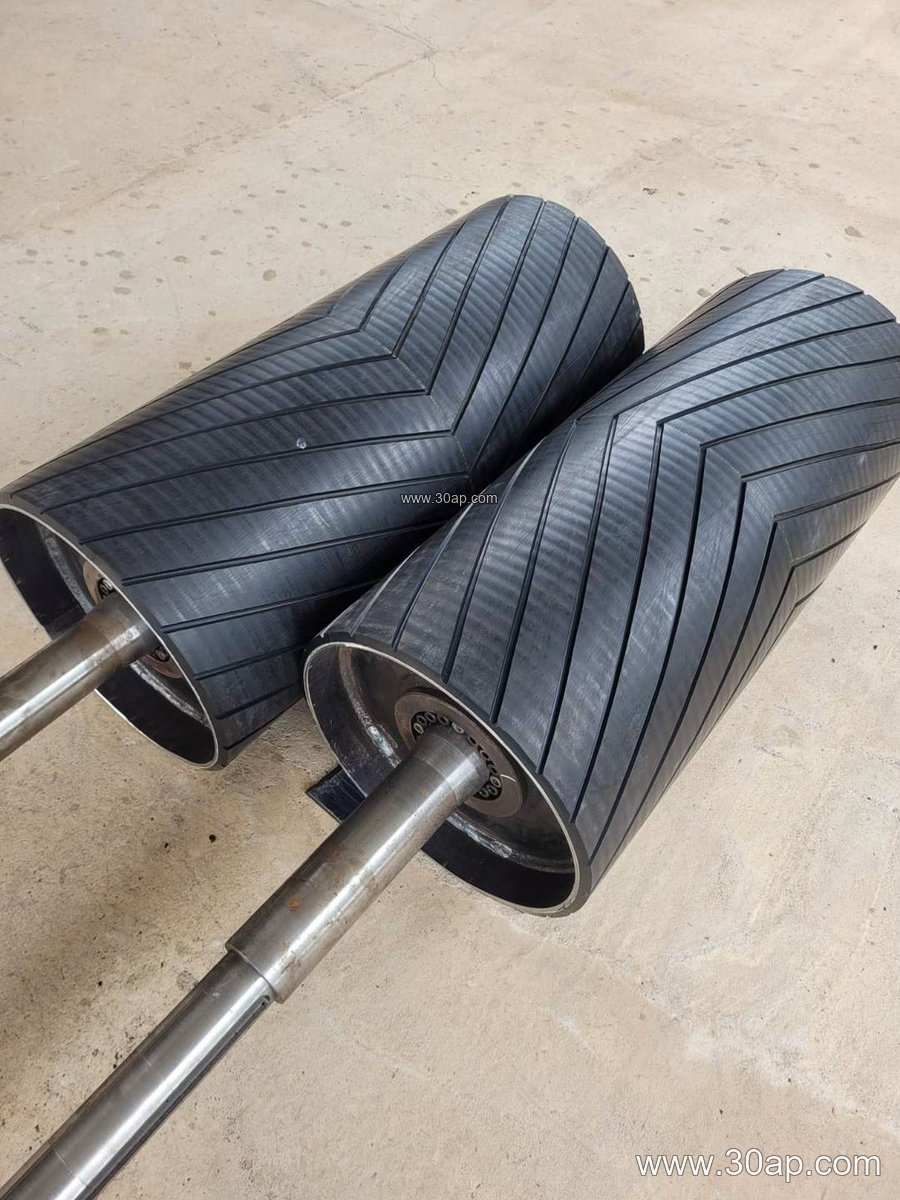
Common surface forms include plain finish, cold-bonded rubber, hot-vulcanized rubber, diamond groove lagging, and ceramic lagging. Lagging thickness is frequently 8, 10, 12, 15, or 20 mm, chosen according to contact pressure and wear conditions. In a wet washbox or a dusty cement plant clinker line, diamond or ceramic surfaces can help shed fines, while a plain face may be enough for a light-duty tensioning position.
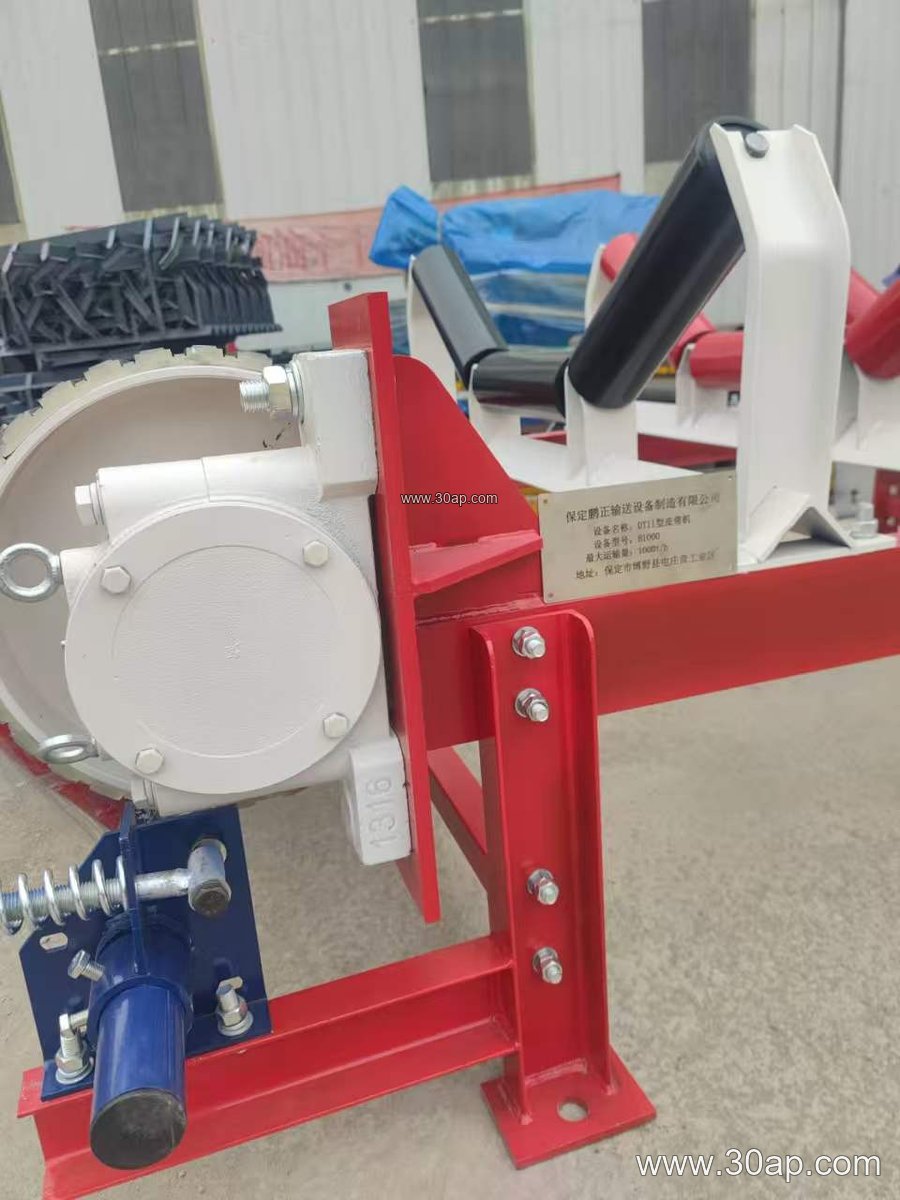
Sizing the Drum to the Belt
Shell width usually runs a little wider than the belt so the belt stays fully supported during lateral movement. Reference combinations such as B800 × Ø500, B1200 × Ø1000, and B1400 × Ø800 show the range of practical pairings, but no single belt width locks in one diameter. Diameter follows belt tension, wrap angle, and the space available in the take-up frame.
Shaft diameter is set by torque and load, not by belt width alone. Typical shaft sizes in the reference range span Ø50 to Ø200, and a heavier tensioning stroke or a large wrap angle pushes the design toward the upper end. Buyers should ask for the calculated belt tension rather than assuming a size.
Where It Fits in the Plant
Take-up positions appear on long overland runs, in tunnel muck removal, at port bulk terminals, and on the inclined conveyors feeding a power plant coal bunker. In an iron ore or copper ore circuit, a gravity take-up tower may carry a heavy counterweight several metres below the pulley. In a compact aggregate plant, a screw take-up at the tail end is more common because space is tight.
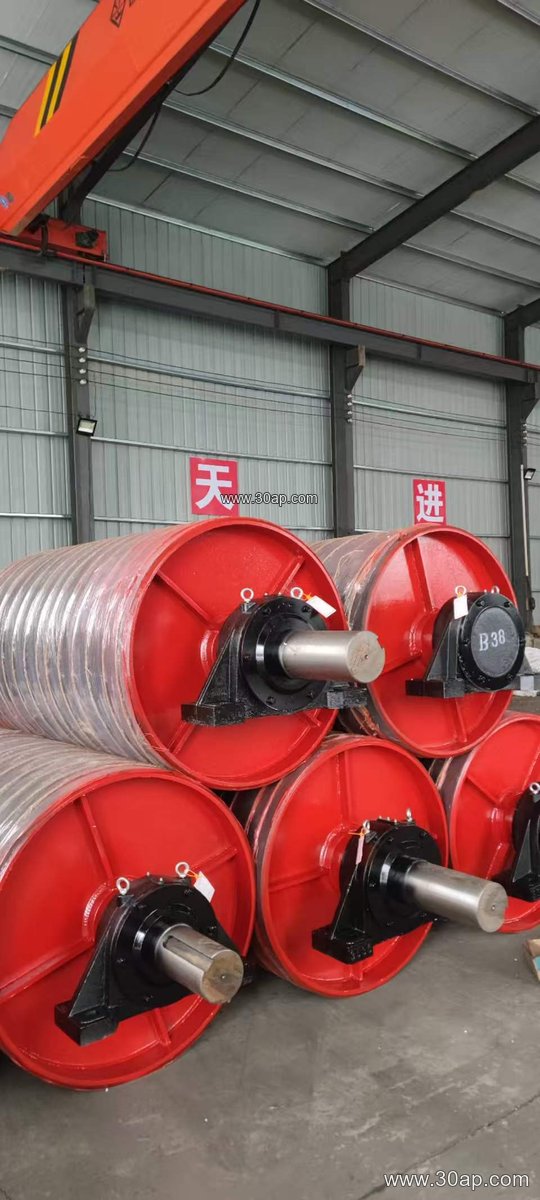
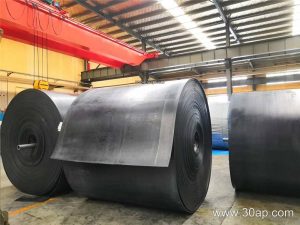
The pulley should be matched to the belt it tensions. A steel cord conveyor belt behaves differently from a multi-ply fabric core belt, and an abrasion resistant conveyor belt on a quarry conveyor belt may need a different lagging than a heat resistant belt near a kiln discharge. Flame retardant conveyor belt used in underground mining also brings its own tracking and tensioning behaviour that the take-up stroke must accommodate.
Selection Checklist for Buyers
- Confirm the belt tension and required take-up travel before choosing the drum diameter.
- State the belt width and the actual shell face width, not just the nominal size.
- Choose lagging based on grip needs, moisture, and abrasive dust, not habit.
- Check shaft size against the calculated torque and bearing capacity.
- Plan access for greasing, inspection, and lagging replacement.
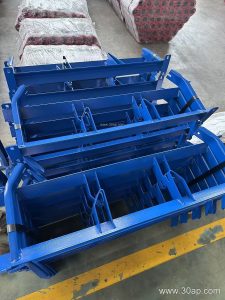
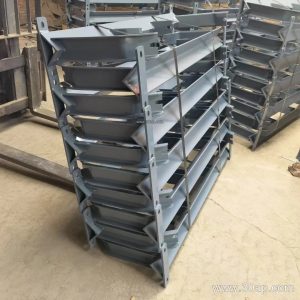
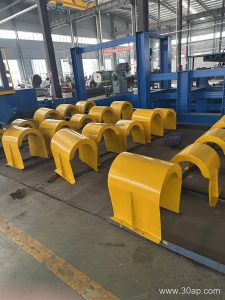
- Verify that the carriage or frame suits the conveyor bracket layout at the take-up station.
For a mine or cement works planning a belt upgrade, it also helps to review the whole tensioning path. Matching a take-up drum with the right conveyor pulley arrangement, the surrounding idler roller sets, and a belt specification such as EP conveyor belt or NN conveyor belt reduces the chance of rework later. Getting the tensioning drum right at the design stage keeps the belt tracking steady through start-up, load changes, and seasonal temperature swings.