What a Self-Aligning Idler Bracket Does
A Self-Aligning Idler Bracket is a training support that holds a set of idler rollers and pivots when the belt drifts sideways. Instead of bolting the rollers rigidly to the frame, this bracket sits on a vertical pivot or a linked steering arrangement, so a small sideways push from the belt turns the roller set slightly. That slight turn produces a gentle correcting force, and the belt walks back toward the center line. In a quarry, a cement plant, or a power plant coal yard, that small correction is often the difference between a stable run and a belt rubbing against the structure.
The same item is also called a self-aligning idler frame or self-training idler bracket. These are accurate equivalent names for the same product, and they describe the function rather than a different part.
How the Bracket Is Built
Most units combine a steel base, a pivoting head, and a roller mounting surface. Fabrication is usually from angle steel, channel steel, or folded steel plate, with welded gussets for stiffness. A central pivot pin with a bushing or bearing allows rotation, while stops or limit lugs keep the swing within a controlled range. On some designs a connecting rod links two brackets so they steer together.
Common construction details include:
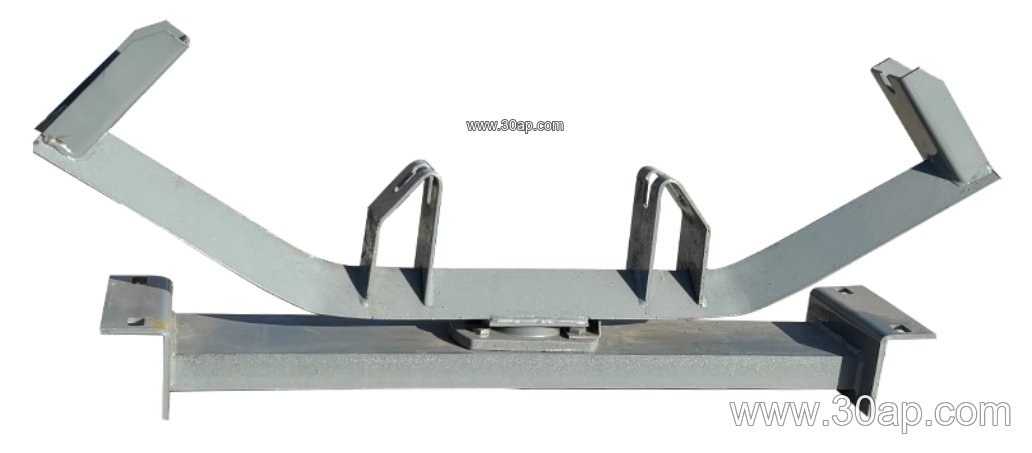
- Pivot assembly with a wear bushing and grease point
- Roller mounting slots or bolt holes that follow the trough angle
- Reinforced base plate for anchoring to the conveyor stringer
- Optional rubber or polyurethane contact pads on guide arms
Because the bracket carries the full load of the belt and material at that point, the weld quality and pivot clearance matter more than the paint finish. A stiff frame that does not bind is what allows the self-aligning action to work.
Where It Fits on the Conveyor
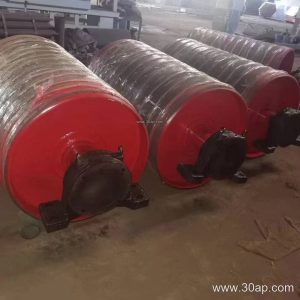
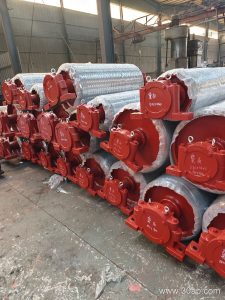
Self-aligning brackets are normally placed on the carrying side, usually as the first support after the feeding point and at intervals along long runs. Return-side training versions also exist for the lower strand. They are not a substitute for the drive pulley, tail pulley, or bend pulley; those parts transmit power and change belt direction, while the bracket only supports and steers the belt. A conveyor pulley and a self-aligning bracket do different jobs and are not interchangeable.
Typical installations include:
- Stone crushing and screening lines where off-center loading is common
- Coal handling and underground mining conveyors with uneven floor conditions
- Cement plant clinker and raw material transport
- Iron ore and copper ore transfer points at ports and steel plants
- Fertilizer and grain silo systems where belt tracking affects dust control
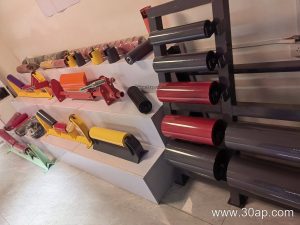
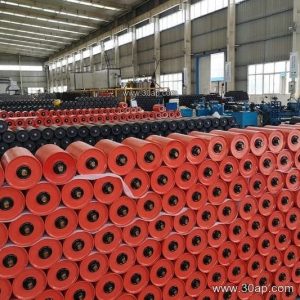
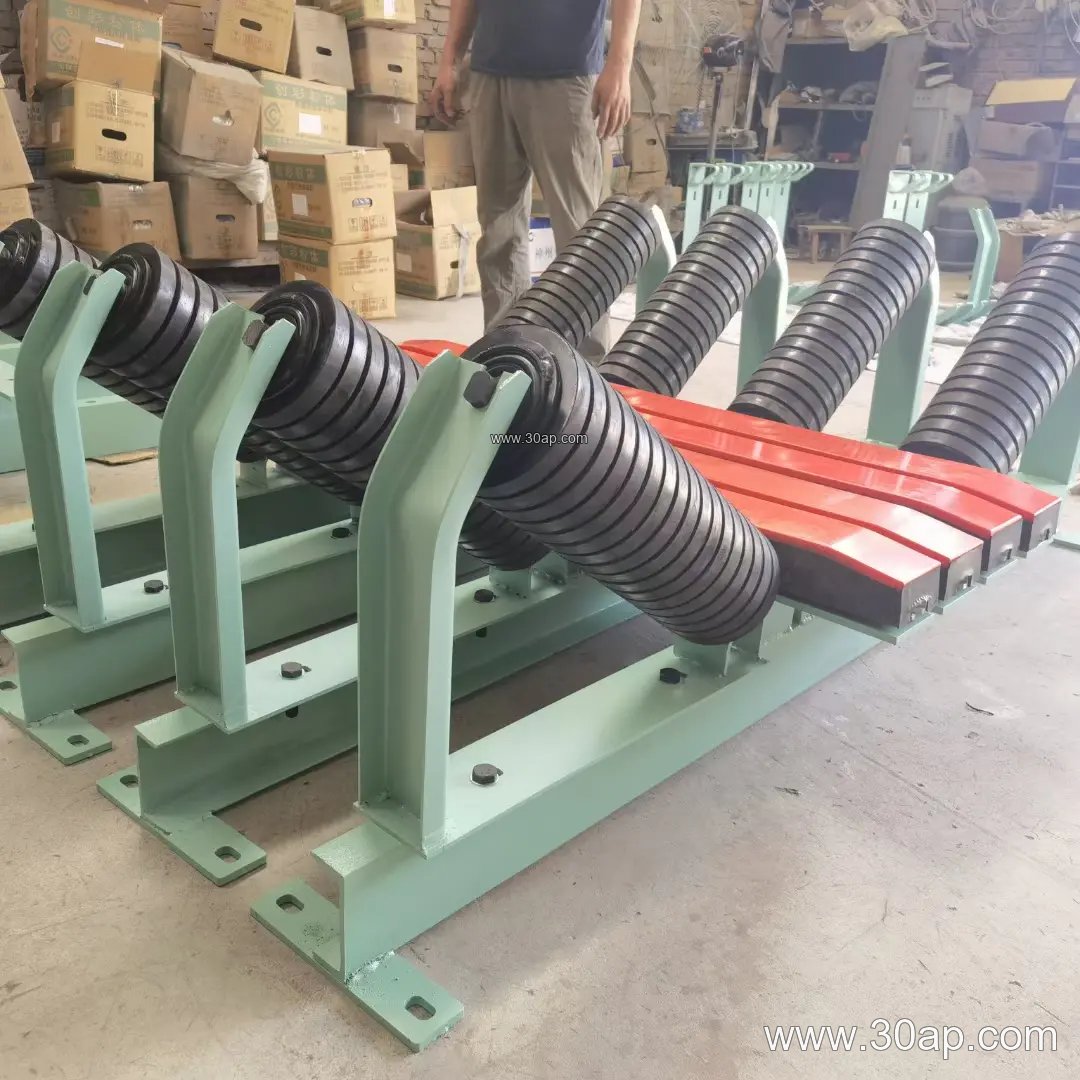
In these places the bracket usually works together with a conveyor belt, idler roller, and conveyor bracket set that is selected for the same belt width and load.
Matching the Bracket to Belt and Roller Size
Selection starts with belt width, trough angle, and roller diameter. The table below shows common reference combinations; these are examples only and actual mounting hole spacing and beam length are determined by design.
Reference Combinations
| Belt Width | Trough Angle | Roller Diameter | Typical Use |
|---|---|---|---|
| B500 | 20 degrees | Ø89 | Light aggregate lines |
| B650 | 30 degrees | Ø89 | Small crushing plants |
| B800 | 35 degrees | Ø108 | General bulk handling |
| B1000 | 35 degrees | Ø108 | Cement and coal conveyors |
| B1200 | 45 degrees | Ø133 | Heavy mining duty |
| B1400 | 35 degrees | Ø133 | Port and stockyard lines |
| B1600 | 45 degrees | Ø159 | High capacity ore transport |
| B1800 | 35 degrees | Ø159 | Large power plant coal systems |
| B2000 | 45 degrees | Ø194 | Extra-wide bulk conveyors |
Adjustable brackets allow the trough angle to be set among 20, 30, 35, and 45 degrees, while forward-leaning training rollers often sit at about 1.5 to 2 degrees. A wider belt does not require one fixed roller size, and a given belt width can work with more than one trough angle or roller diameter depending on load and speed.
Buyer Checklist
Before ordering, confirm the belt width, the required trough angle, the roller diameter, and the mounting pattern on the existing stringers. Ask whether the bracket is fixed or adjustable, and whether a linked pair is needed for stronger training. Check the pivot bushing material and the lubrication arrangement. For dusty sites such as a limestone mine or a coal washery, sealed pivots reduce seizure risk.
On the belt side, the bracket should suit the belt construction in use, whether that is a rubber conveyor belt, an EP conveyor belt, an NN conveyor belt, or a steel cord conveyor belt. Abrasion resistant, flame retardant, and heat resistant grades all behave differently when tracking, so the training layout should be reviewed against the actual belt type. Matching the self-aligning bracket to the belt and roller system, rather than treating it as an add-on, keeps the whole conveyor running straight.