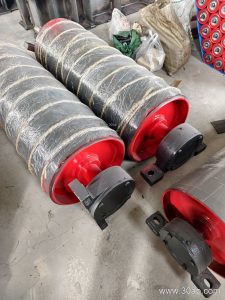
What a Striped Lagged Pulley Is
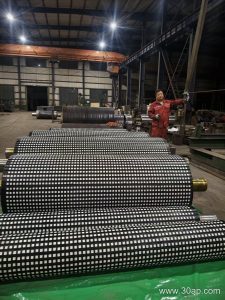
A striped lagged pulley is a conveyor pulley whose shell is covered with a rubber or elastomer lagging that carries a raised striped pattern across its face. The stripes are usually arranged as chevrons, diamonds or parallel ribs, and their main job is to improve grip between the pulley and the conveyor belt while giving water, dust and fine material somewhere to escape as the belt wraps the drum. In bulk handling plants this component is often simply called a striped lagging drum or a grooved rubber lagged pulley, and it normally sits in the drive position where traction matters most.
It differs from a plain smooth-faced drum because the pattern breaks the contact surface into a series of raised lands and recessed channels. That design helps a belt run straighter under load and reduces the chance of slip when the conveyor starts with a full load on an incline.
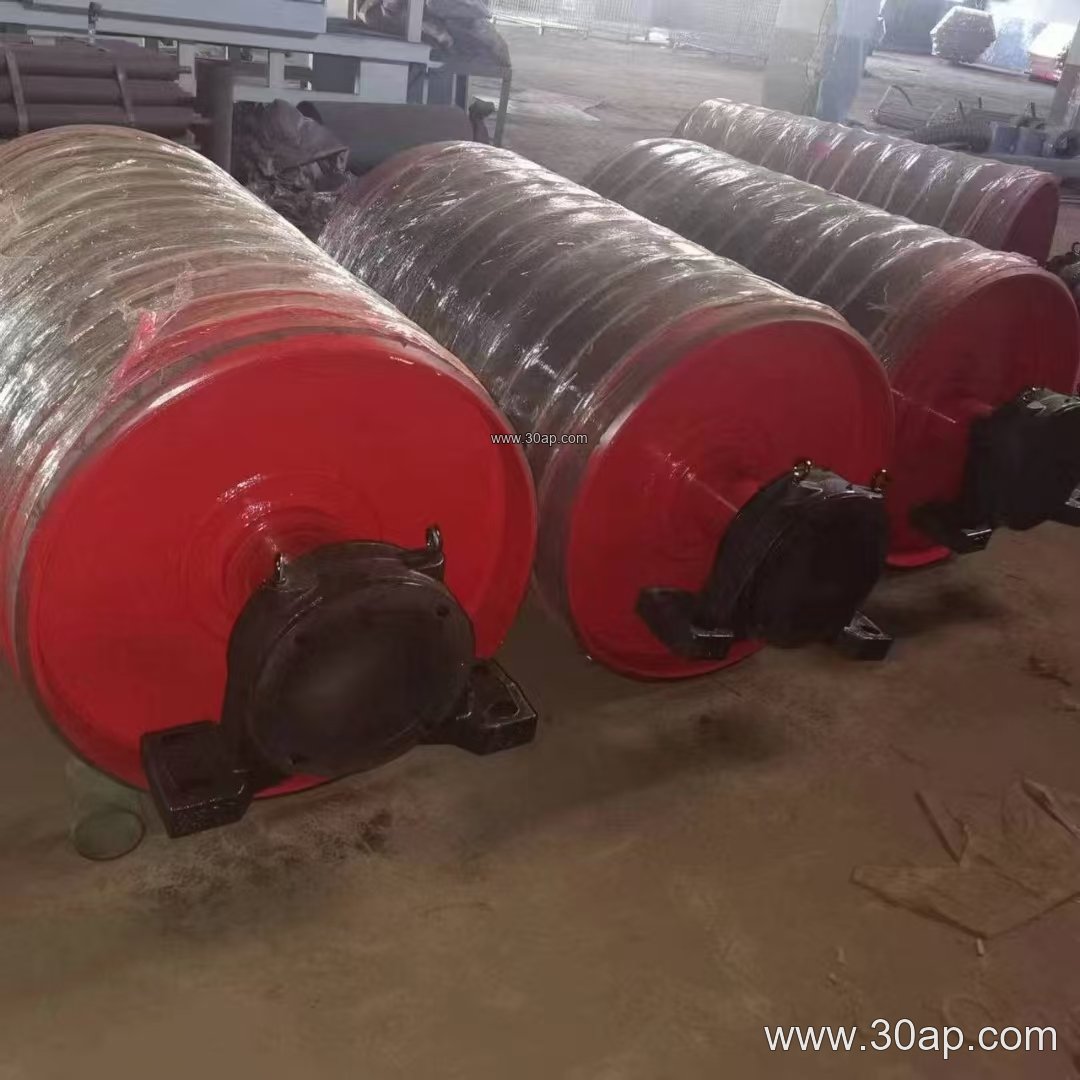
How the Striped Lagging Is Built
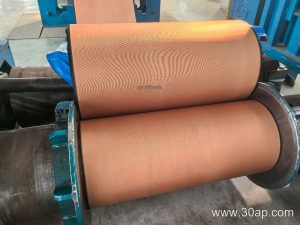
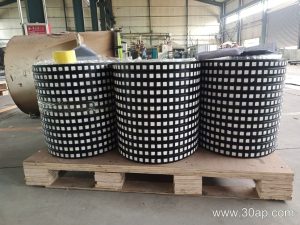
The pulley body is usually a welded steel shell with end discs, a shaft and bearing housings, machined so the face runs true. Lagging is then applied in one of several ways. Cold-bonded rubber sheets are glued and rolled onto the shell, hot-vulcanised rubber is cured in place for a stronger bond, and cast or moulded lagging can be produced with the stripe pattern already formed. Common lagging thicknesses are 8 mm, 10 mm, 12 mm, 15 mm and 20 mm, with the thicker grades used where impact and abrasion are heavy.
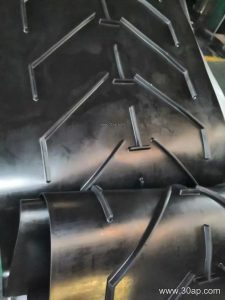
Stripe geometry matters as much as rubber hardness. A chevron or diamond pattern is often chosen for drive pulleys because it pushes contaminants outward as the drum turns. The stripe depth, pitch and edge relief should be cut cleanly so the belt does not catch on a raised edge.
Where It Fits on a Conveyor
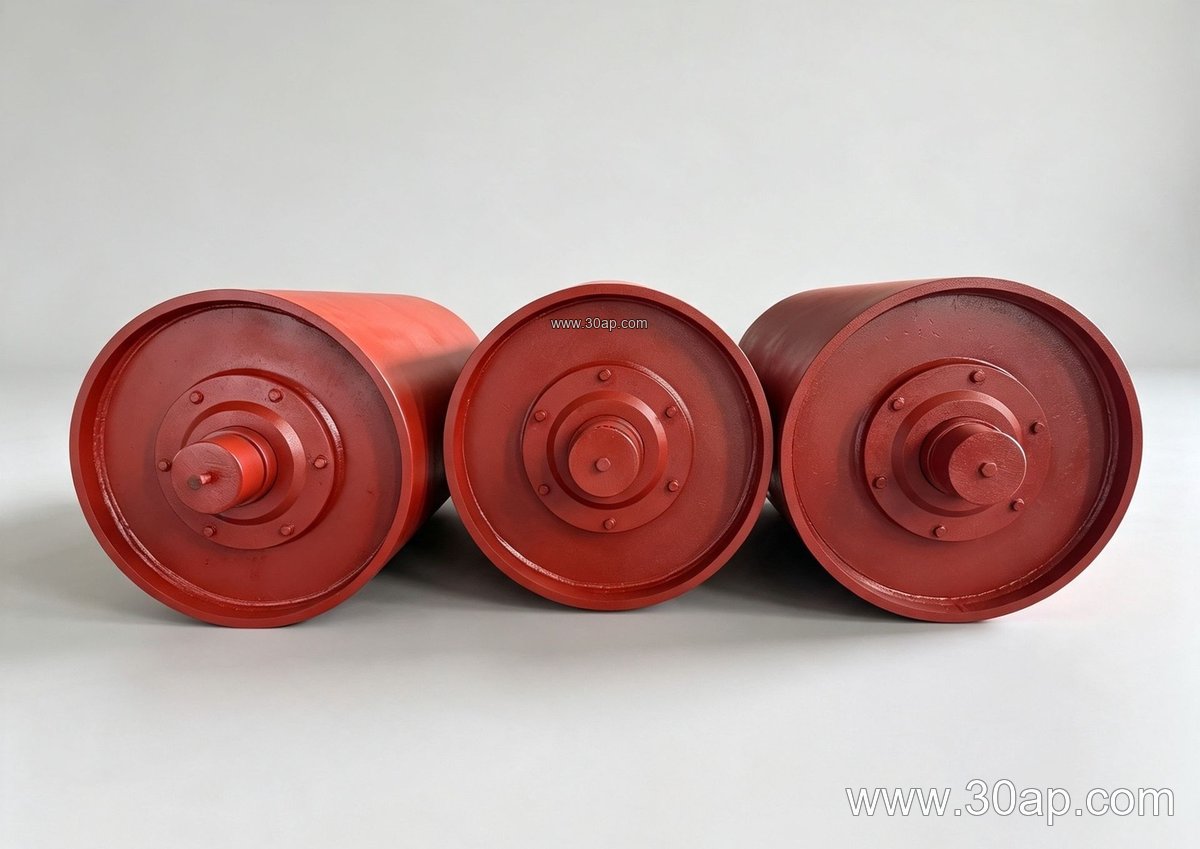
The most common location is the drive or head pulley, where the belt must transmit torque without slipping. A striped lagged pulley can also be used on a bend or snub position when extra grip is needed to keep wrap angle effective, but it should not be confused with a tail pulley, which mainly guides and tensions the belt return. In a quarry or aggregate line, the drive drum may work behind a crusher discharge where fines are present; in a coal handling plant the same drum may face coal dust and moisture. Both situations favour a pattern that sheds material rather than trapping it.
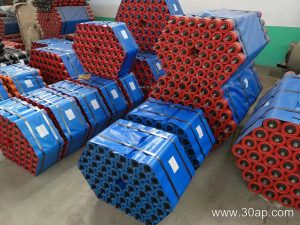
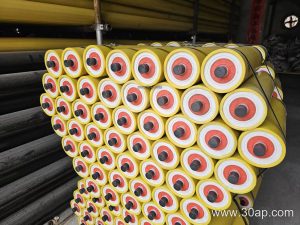
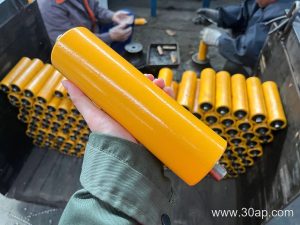
Related equipment around the drum includes the conveyor belt itself, the conveyor pulley set, idler roller groups and conveyor brackets that hold the assembly in line. A well-matched drive package keeps the belt centred and reduces edge wear on abrasive resistant conveyor belts used in stone crushing and sand making circuits.
Typical Size Ranges and Surface Options
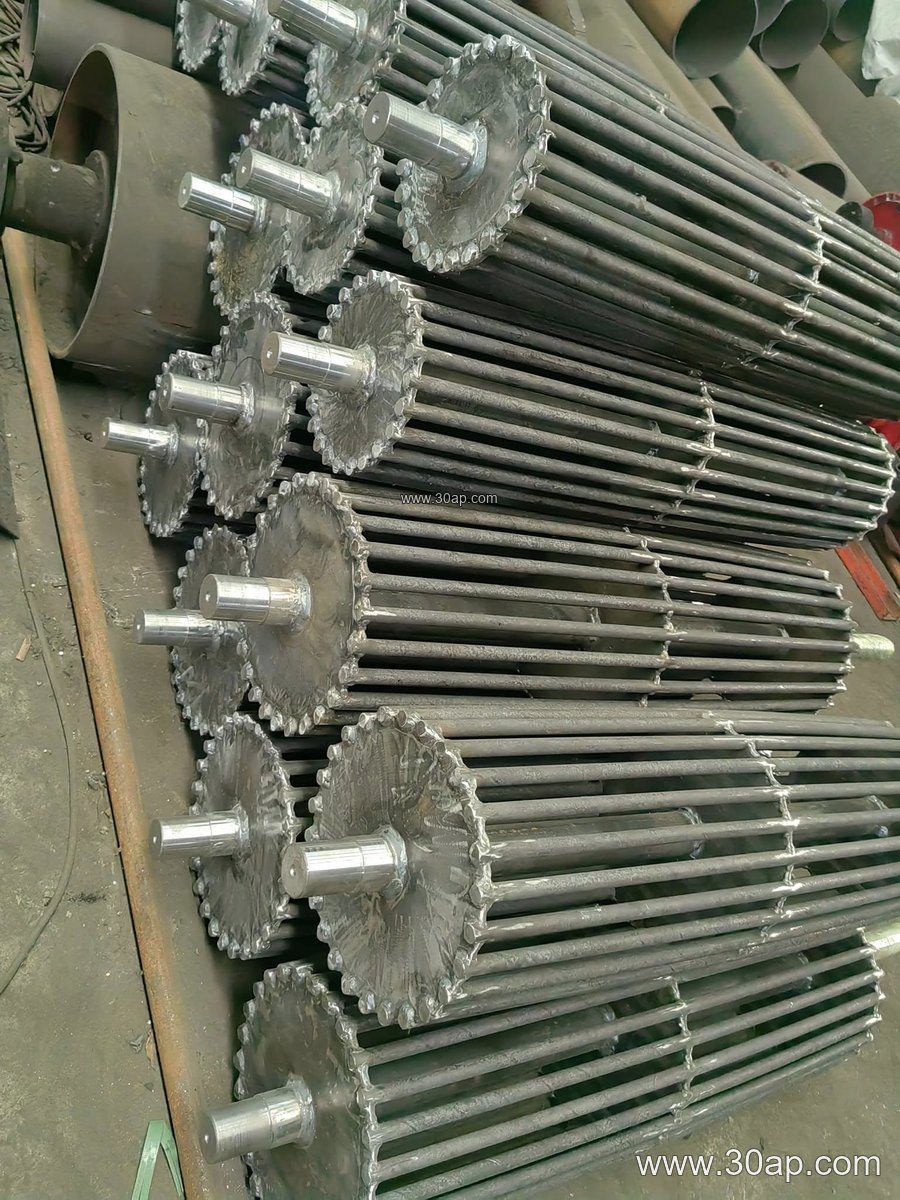
Pulley dimensions are selected from belt width, torque, wrap angle and shaft load rather than from a single fixed rule. The table below shows reference combinations that appear in general engineering practice; they are examples, not mandatory matches.
| Belt width reference | Typical pulley face width | Example diameter | Common lagging |
|---|---|---|---|
| B650 | about 750 mm | Ø400 to Ø500 | 10 to 12 mm striped rubber |
| B800 | about 950 mm | Ø500 to Ø630 | 10 to 15 mm striped rubber |
| B1000 | about 1150 mm | Ø630 to Ø800 | 12 to 15 mm striped rubber |
| B1200 | about 1400 mm | Ø800 to Ø1000 | 15 mm striped rubber |
| B1400 | about 1600 mm | Ø1000 to Ø1250 | 15 to 20 mm striped rubber |
| B1600 | about 1800 mm | Ø1250 to Ø1400 | 15 to 20 mm striped rubber |
Shaft diameters commonly run from Ø50 up to Ø200 depending on torque and bearing selection. A B800 drum with a Ø500 shell may use a modest shaft, while a B1400 drive pulley with a Ø1000 shell will need a much larger shaft because the load path is different. Buyers should ask for the shaft calculation rather than assuming a shaft size from belt width alone.
Buyer Checklist
- Confirm the duty position: drive, bend, snub or tension, and state the wrap angle.
- Match lagging pattern to conditions: chevron or diamond stripes for wet, dusty or inclined drives.
- Check belt width against pulley face width, allowing for tracking movement.
- Review lagging thickness and hardness for the conveyed material, especially in iron ore, copper ore or cement clinker service.
- Ask for balance grade, bearing type and shaft material before order release.
For a plant handling heavy bulk material, the striped lagged pulley should be specified together with the conveyor belt grade and the surrounding idler roller layout. A drive drum with good lagging can extend belt life on an abrasion resistant conveyor belt, while poor stripe selection may cause glazing or rapid wear. Matching the pulley to the actual load case is the practical route to reliable traction.