What the Ø127 Heavy-Duty Idler Is
The Ø127 Heavy-Duty Idler is a carrying or return roller built around a 127 mm nominal outside diameter. That diameter is a common middle ground between lighter series and very large rollers, which makes it a practical choice for conveyors that move abrasive bulk material at high tonnage. In a quarry, a coal preparation plant, or a cement clinker line, the idler roller must cope with dust, fines and continuous shock while keeping the belt tracking true. The Ø127 size is often paired with medium to wide belts, but the exact combination of shell length, bearing and frame is set by the conveyor design rather than by the diameter alone.
How the Roller Is Put Together
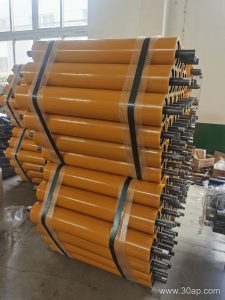
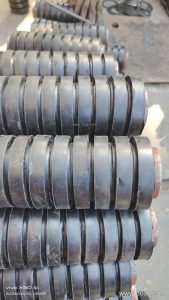
Heavy-duty service puts the focus on the shell, the shaft, the bearing housing and the seal. A typical Ø127 roller uses a thick steel tube with machined ends, a through shaft or stub shafts, and deep-groove ball bearings in a pressed or cast housing. Labyrinth seals and additional grease retention are common where water and fine grit are present. The roller surface can be plain steel, nylon, ceramic or rubber rings depending on whether the aim is wear life, belt grip or impact damping. A rubber-ring impact idler in this diameter is sometimes used at transfer points, while a plain steel shell suits long carrying runs.
Bearing selection is not tied to the diameter in a fixed way. Common bearing sizes in this class include 6205, 6305, 6306 and 6308, but the final choice depends on load, speed and expected life. Buyers should ask for the bearing brand and clearance rather than assume that one number always accompanies a 127 mm shell.
Where It Fits on the Conveyor
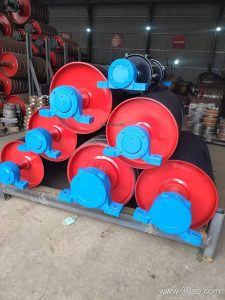
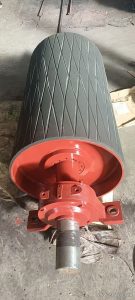
The Ø127 Heavy-Duty Idler appears in three-roll troughing sets on the carrying side, in return sets under the belt, and in transition zones near the head or tail. A three-roll trough set at 35 degrees is a frequent arrangement for aggregate and ore, while a 20 degree set may be used where the belt is wider or the material is more free-flowing. Transition idlers with smaller diameters are sometimes placed close to a conveyor pulley to ease the belt from flat to troughed, but the Ø127 roller remains the main workhorse in the steady run.
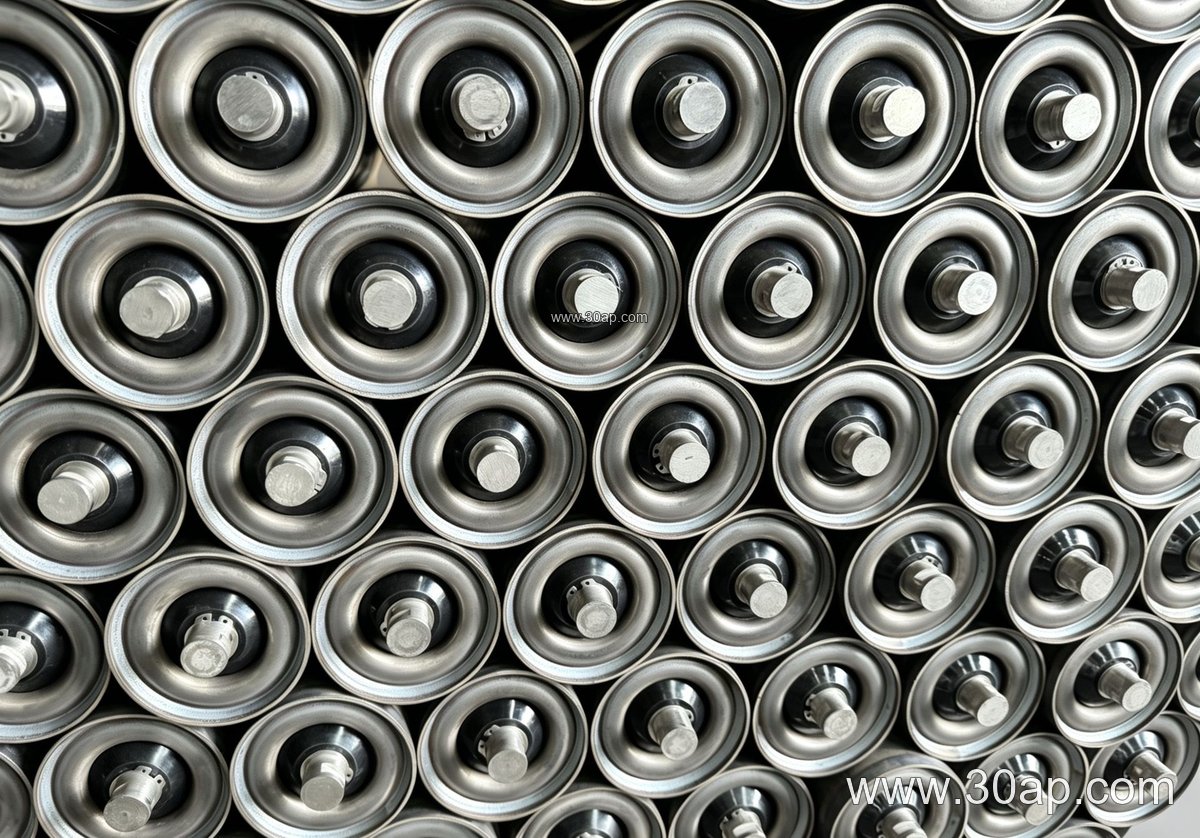
On the return side, a flat or V-return idler of the same diameter can support the empty belt. In dusty plants, a spiral or disc return roller may be chosen to shed material, but it is a different subtype and should not be treated as a direct substitute for a standard carrying idler.
Matching Diameter, Belt Width and Roll Length
No single belt width demands one fixed roller length. The roll length of a three-roll set changes with belt width, trough angle and frame design. The table below gives common reference values only; side rollers and centre rollers can differ, and the final length is confirmed by the conveyor drawing.
| Belt width | Typical roll length for a three-roll trough set |
|---|---|
| B500 | about 200 mm |
| B650 | about 250 mm |
| B800 | about 315 mm |
| B1000 | about 380 mm |
| B1200 | about 465 mm |
| B1400 | about 530 mm |
| B1600 | about 600 mm |
| B1800 | about 670 mm |
| B2000 | about 750 mm |
These figures are examples, not universal rules. A 1200 mm wide belt may use a different roll length if the frame is non-standard, and a 127 mm roller can be specified for several belt widths. The shaft diameter is also a design decision based on load and bearing seat, not something that can be read from the belt width alone.
Selection and Maintenance Notes
When specifying a Ø127 Heavy-Duty Idler, confirm the trough angle, the roll length, the bearing size, the seal type and the surface form. For a mine or a power plant coal yard, a flame retardant conveyor belt and an abrasion resistant conveyor belt are often part of the same system, and the idler should be chosen to match the belt load and speed. In a port or a steel plant, heavy-duty conveyor belts such as EP Conveyor Belt or Steel Cord Conveyor Belt may run over these rollers, so the roller’s dynamic load rating matters.
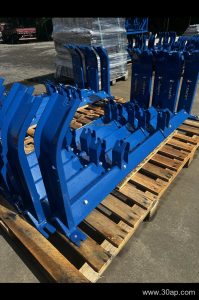
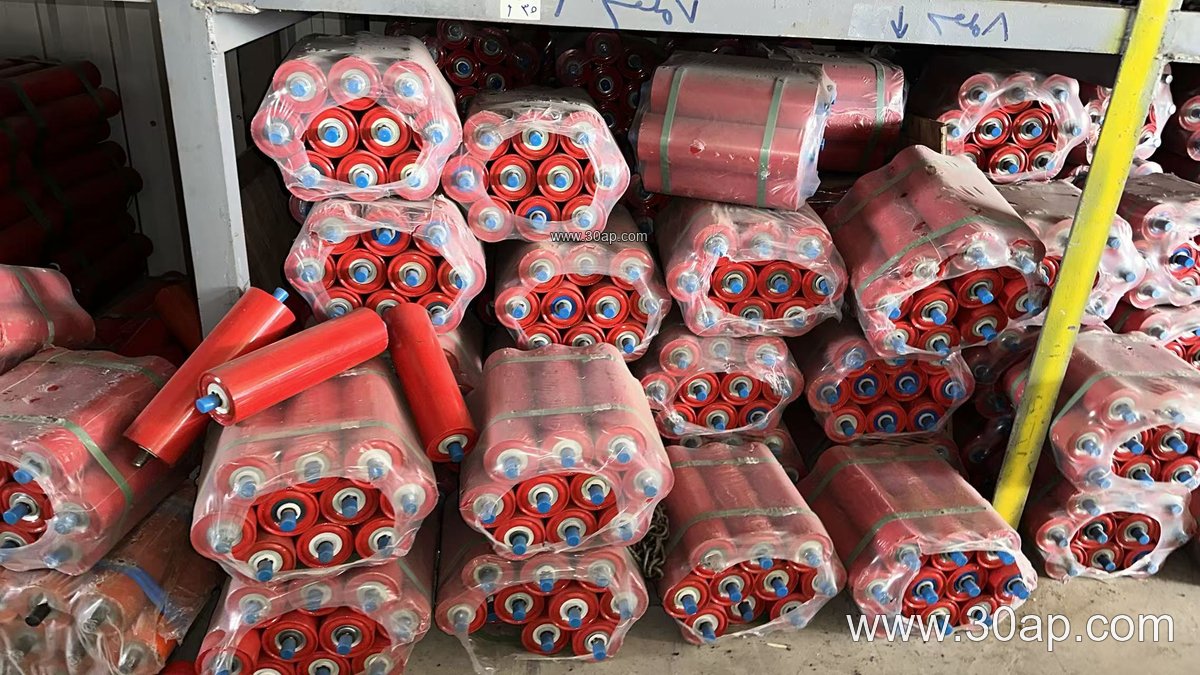
During operation, listen for squealing bearings, check for a seized shell and look for material build-up on the frame. A worn idler roller can cause belt mistracking and edge damage, so replacing a failed unit early is cheaper than repairing the belt. Keep spare rollers and conveyor brackets on hand for critical runs, and record the installation date so that service life can be reviewed.
For buyers comparing suppliers, ask for the shell wall thickness, the bearing clearance and the seal arrangement. A Ø127 Heavy-Duty Idler that is built for the actual duty will usually outlast a lighter roller that was chosen only by diameter.