What a Fixed Conveyor Bracket Does on the Line
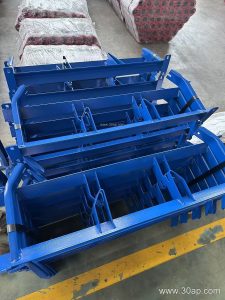
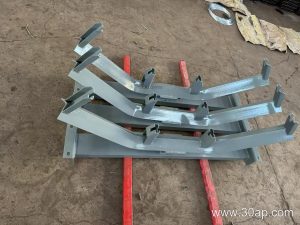
A fixed conveyor bracket is the non-adjustable frame component that holds idler rollers at a set angle and height along a conveyor structure. Once bolted or welded in place, the bracket keeps the trough shape constant, so the conveyor belt runs in a stable profile from one section to the next. In a quarry or a sand and gravel line, this predictability matters: a bracket that stays put helps the belt track straight and reduces spillage at transfer points.
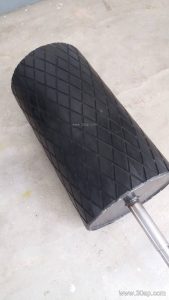
The fixed bracket is a distinct item from an adjustable bracket. An adjustable frame lets maintenance staff change the trough angle or fine-tune roller position on site. The fixed version is set at the design angle and locked in. Both belong to the same family of conveyor support hardware, but they serve different purposes. Drive pulleys, tail pulleys and bend pulleys are separate components again and are not interchangeable with any bracket type.
Construction and Mounting Details
Most fixed brackets are fabricated from angle steel, channel steel or folded steel plate. The material choice follows the load: light aggregate duty may use thinner folded plate, while a heavy-duty mining conveyor bracket in an iron ore or copper ore operation usually calls for thicker channel sections. The frame carries the idler roller seats, often with slotted or drilled holes matched to the roller shaft ends.
Typical build features include:
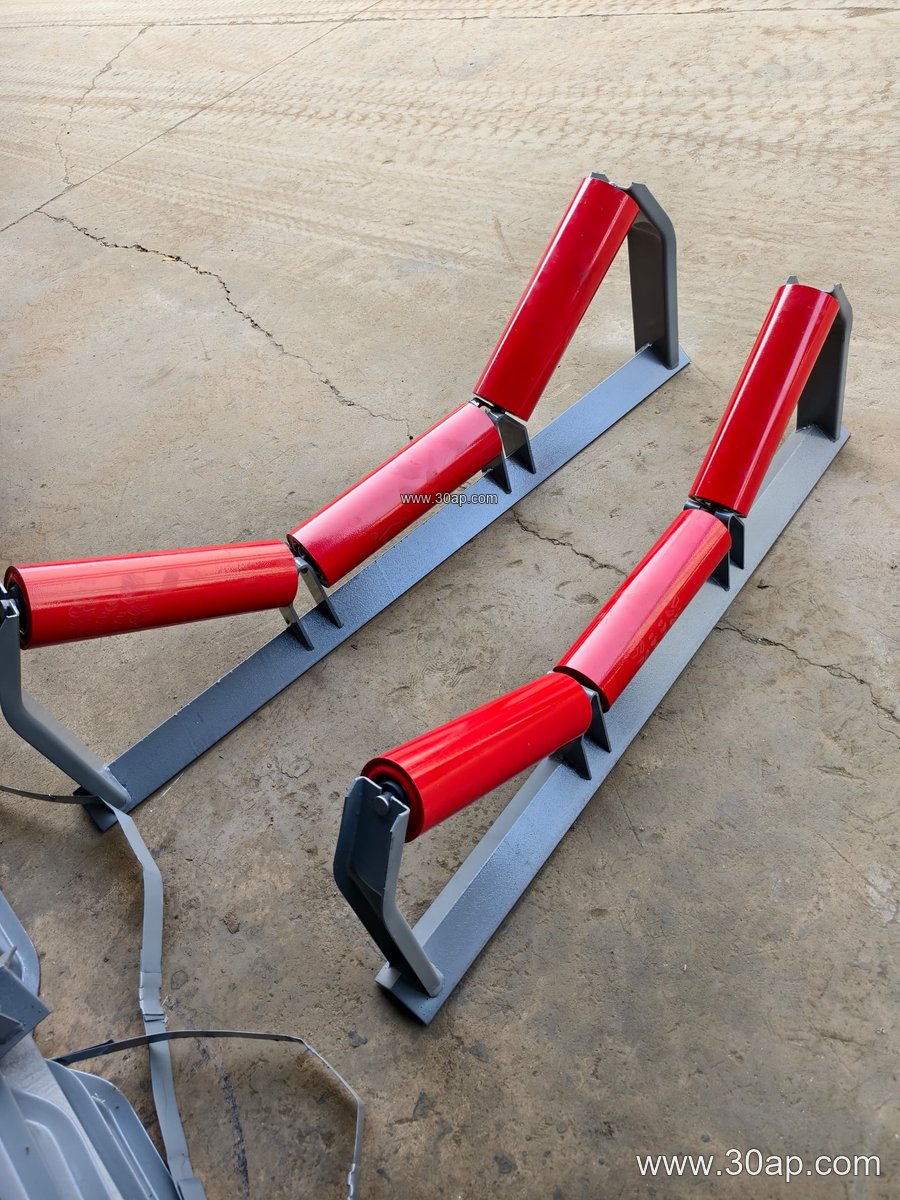
- Welded or bolted crossbeam that sets the trough angle
- Roller seats sized for common shaft diameters
- Mounting holes aligned with the conveyor stringer spacing
- Paint or galvanized finish for corrosion protection
Installation hole spacing and crossbeam length change with belt width and trough angle, so they are determined by design rather than fixed across all sizes. A bracket ordered for a 650 mm belt will not have the same footprint as one built for a 1400 mm belt.
Common Sizes and Configurations
Buyers often specify a fixed troughing bracket by belt width, trough angle and roller diameter together. The table below shows reference ranges that appear in catalogues; these are examples, not universal combinations.
| Belt width | Trough angle | Roller diameter | Typical use |
|---|---|---|---|
| B500, B650 | 20°, 30° | Ø89, Ø108 | Small aggregate lines, recycling |
| B800, B1000 | 30°, 35° | Ø108, Ø133 | Sand and gravel, cement plant |
| B1200, B1400 | 35°, 45° | Ø133, Ø159 | Coal mining, power plant coal handling |
| B1600, B1800 | 35°, 45° | Ø159, Ø194 | Iron ore, port bulk terminals |
Grouping is not rigid. A B800 frame can be built at 30° or 35°, and it can take different roller diameters depending on belt speed and load. What stays fixed is the bracket’s set angle. A forward-leaning variant, usually around 1.5° to 2°, is a separate design used for training the belt rather than for a standard trough.
Where Fixed Frames Fit in a Conveyor
Fixed brackets appear on the carry side as troughing frames and on the return side as flat or V-return supports. In a cement plant, they are common along the clinker and raw material routes; in a power plant coal yard, they hold the troughing idlers beneath wide belts carrying coal from stockpile to bunker. A steel plant may use them on sinter and coke lines, while a limestone mine relies on them through the crushing and screening circuit.
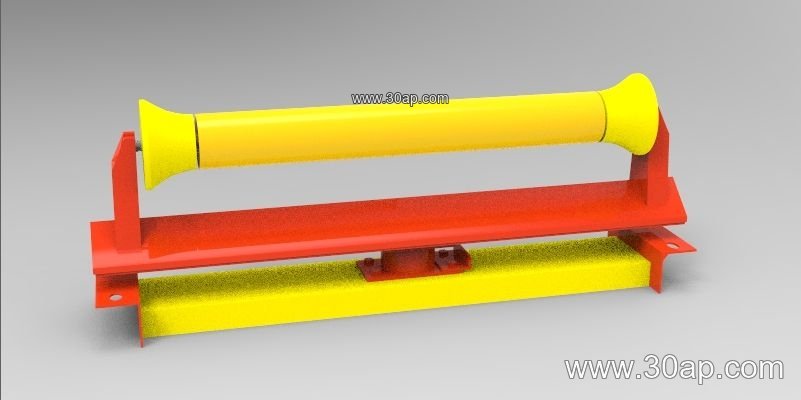
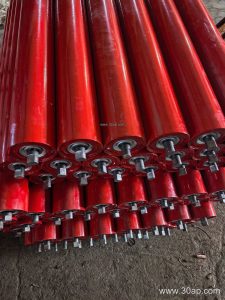
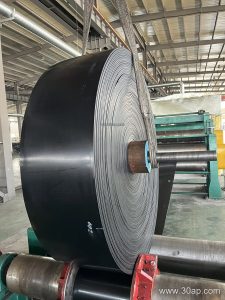
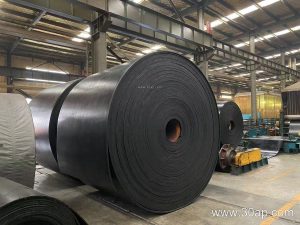
The bracket works together with the conveyor belt, the conveyor pulley and the idler roller. The belt’s stiffness and the material load determine the roller spacing; the bracket simply keeps the rollers where the design put them. On a long overland route, fixed frames dominate the straight sections, while transition and impact zones may need different support hardware.
Buyer Checklist Before Ordering
Confirm the belt width and the intended trough angle first. Then match the roller diameter and shaft end type to the seats on the frame. Check the stringer or crossbeam mounting pattern on the existing structure, because a replacement bracket must line up with the bolt holes already in place. State the environment: a wash-down area needs a different finish from a dry coal gallery. Ask whether the frame must accept a specific roller brand or bearing housing.
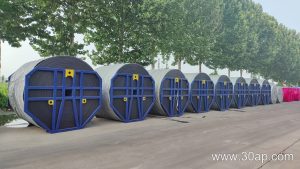
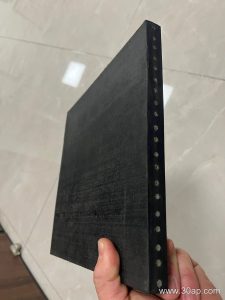
For belt specification alongside the bracket, buyers often pair frames with an EP conveyor belt, a fabric core conveyor belt or a steel cord conveyor belt depending on tension, and with flame retardant or heat resistant grades where the process demands it. Visit www.bulkconveyorparts.com/fixed-conveyor-bracket for frame drawings, and www.bulkconveyorparts.com/idler-roller for matching rollers. Spare roller sets can be planned at www.bulkconveyorparts.com/conveyor-pulley when pulley wear is also on the maintenance list.
Keep a small stock of the most-used bracket sizes on site. A bent or corroded frame is quick to swap, and having the correct fixed frame on hand avoids a stopped belt in a busy quarry or port shift.