What a Rubber Disc Idler Is
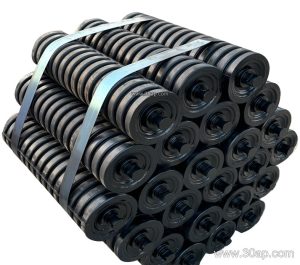
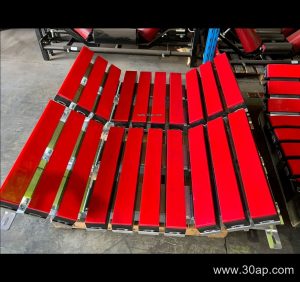
A rubber disc idler is a carrying roller built with a steel tube core and a series of resilient rubber discs pressed onto the shell. It is a form of impact idler, often called a rubber ring buffer roller, and it sits where the conveyor belt receives falling material. Instead of a hard steel surface, the belt lands on the rubber discs, which flex and absorb shock. This protects both the belt cover and the roller itself in harsh duty such as a quarry, a limestone mine, or a crusher discharge point.
How the Roller Is Built
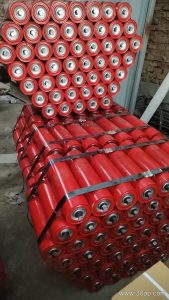
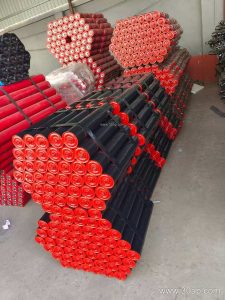
The core is usually a seamless steel tube with welded bearing housings at each end. Rubber discs, typically with a hardness suited to impact duty, are fitted along the shell at close spacing. The gap between discs lets fines fall away rather than pack into the roller face. Bearings are commonly sealed and greased for life, with sizes such as 6205, 6305, or 6308 chosen to match the shaft and load rather than any single belt width. Shaft ends fit standard conveyor brackets, so the roller can replace a plain steel idler at the same station.
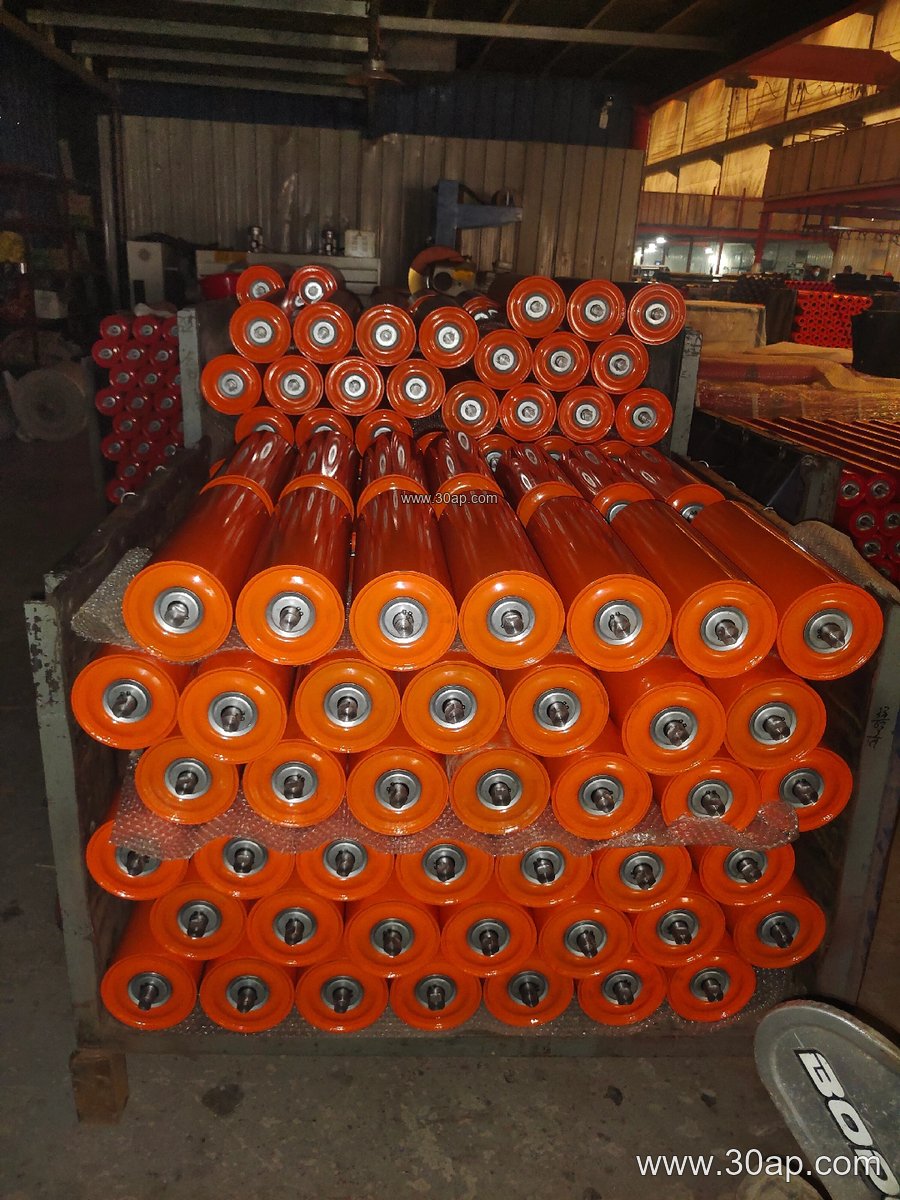
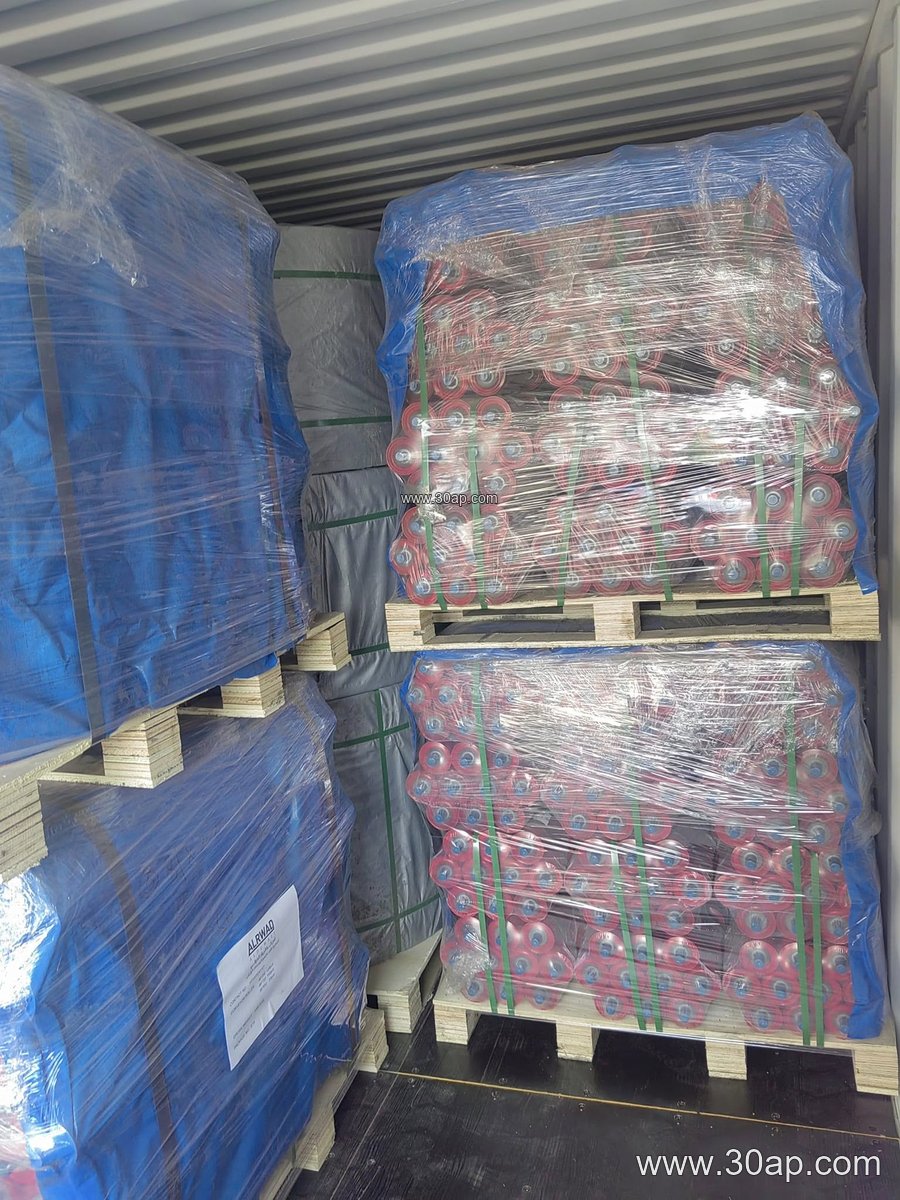
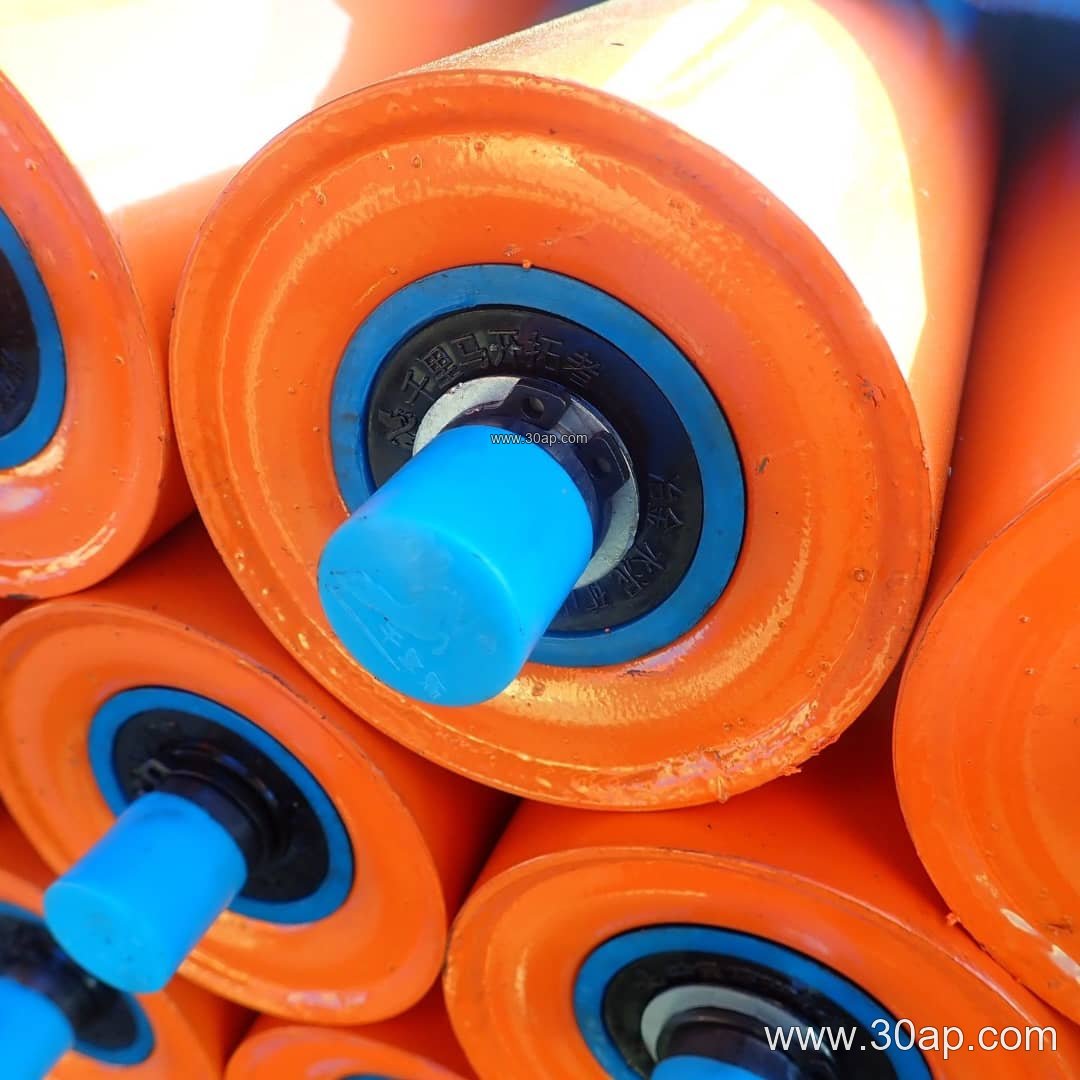
- Steel tube core with machined end housings
- Rubber discs or rings, closely spaced for impact absorption
- Sealed bearings, often 6204 to 6310 depending on duty
- Standard shaft ends for conveyor bracket mounting
Where It Fits on the Conveyor
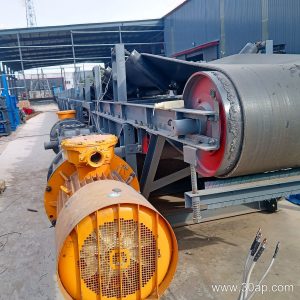
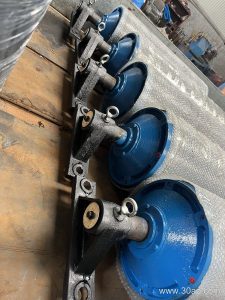
The usual position is the loading zone, directly under the chute or transfer point, where a rubber conveyor belt takes the first hit from lump material. A second common position is the discharge end of a crusher conveyor, where rock fragments arrive with speed. In a sand and gravel line, a rubber disc idler under the feed hopper reduces belt damage from sharp stone. In a coal washing plant, the same roller helps at transfer points where wet, heavy lumps fall. The roller is not a substitute for a bend pulley or a tail pulley; those are separate components with different jobs in the drive and return path.
Common Sizes and Arrangements
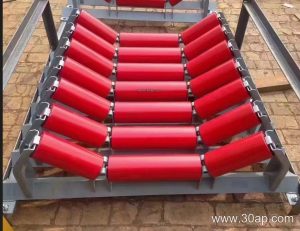
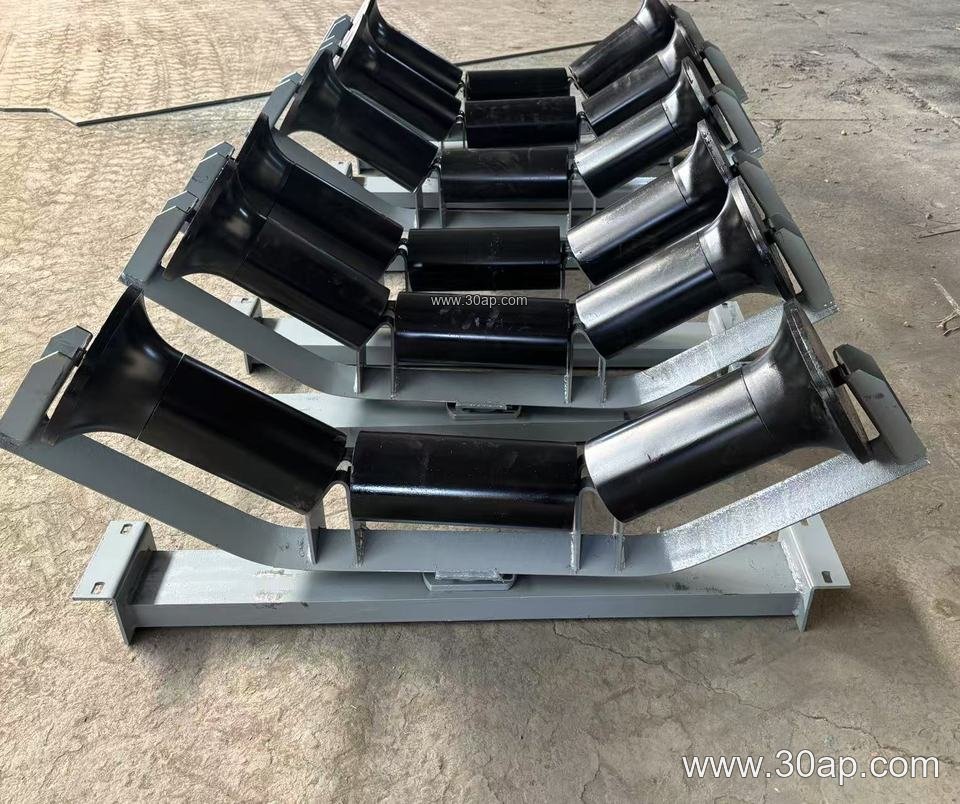
Rubber disc rollers are made in the same diameter families as other carrying idlers, and the choice depends on belt width, load, and the trough arrangement. Three-roll troughing sets are typical for bulk material, while two-roll or single-roll sets appear on narrower belts. The figures below are common reference values, not fixed matches.
| Parameter | Common reference values |
|---|---|
| Roller diameter | Ø89, Ø102, Ø108, Ø127, Ø133, Ø159, Ø178 mm |
| Belt width | B500, B650, B800, B1000, B1200, B1400, B1600, B1800 mm |
| Trough angle | 20°, 30°, 35°, 45° |
| Roller length, three-roll set (example) | About 250 mm at B650, 315 mm at B800, 380 mm at B1000, 465 mm at B1200 |
| Bearing | 6205, 6305, 6306, 6308, 6310 as required |
Side rollers and the centre roller can differ in length within one set, so the values above are only a starting point for design. A wider belt does not dictate one pulley diameter, and roller diameter should be selected from load and speed, not from belt width alone.
Buyer Checklist
Before ordering, confirm the belt width, the trough angle, the mounting bracket spacing, and the shaft end type. Ask for the rubber hardness and disc profile, because a soft disc absorbs more impact while a harder one resists abrasion. Check the sealing arrangement; dust and water ingress is the main cause of early bearing failure in a stone crushing plant or a cement plant. Match the roller to the belt it supports: a heavy-duty mining conveyor belt carrying ore needs a more robust roller than a light aggregate line. Where the belt is a flame retardant conveyor belt in an underground coal mine, the rubber compound of the roller should also suit the same environment. For a heat resistant conveyor belt on a clinker or sinter line, keep rubber disc rollers away from hot spots unless the compound is rated for it.
Installation and Maintenance Notes
Align the roller set squarely to the belt centre line and check that the belt sits evenly across the discs. During routine inspection, look for loose or worn discs, cracked rubber, and play in the bearings. Replace a roller when the rubber surface is worn through or the bearing becomes noisy. Keeping the loading zone free of spillage extends roller life, and a well-supported belt at the transfer point reduces edge damage on the conveyor belt. For more details on matching rollers with conveyor belt and conveyor pulley components, visit beltconveyorequipment.com or check the roller selection pages at conveyoridler.com. A correctly chosen rubber disc idler is a small part of the line, but it protects the belt, the structure, and the production schedule in mines, power plants, and aggregate operations alike.