What a Nylon Idler Is
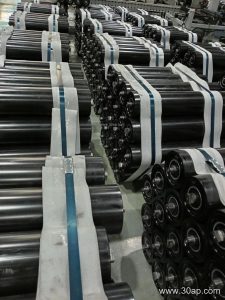
A nylon idler is a carrying or return roller whose outer shell is made of nylon rather than steel tubing. It sits under the conveyor belt on the load side, or beneath the return strand, and turns on its own bearings as the belt passes over it. The nylon shell gives the roller a smooth, low-friction surface, light weight, and good resistance to water and many mild chemicals, which makes it a practical choice in wet or corrosive service where painted steel rollers would rust or wear quickly. Like any conveyor idler roller, it supports the belt and the material on it, keeps the belt tracking reasonably straight, and reduces the drag the drive has to overcome.
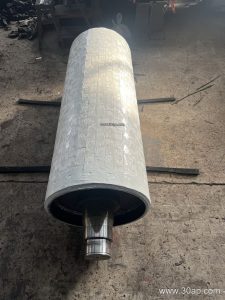
The part is often called a nylon conveyor roller or nylon carrying roller, and the names describe the same product. A nylon idler is not a drive pulley, a tail pulley, or a bend pulley; those are conveyor pulleys that transmit or redirect belt tension, and they are not interchangeable with idlers.
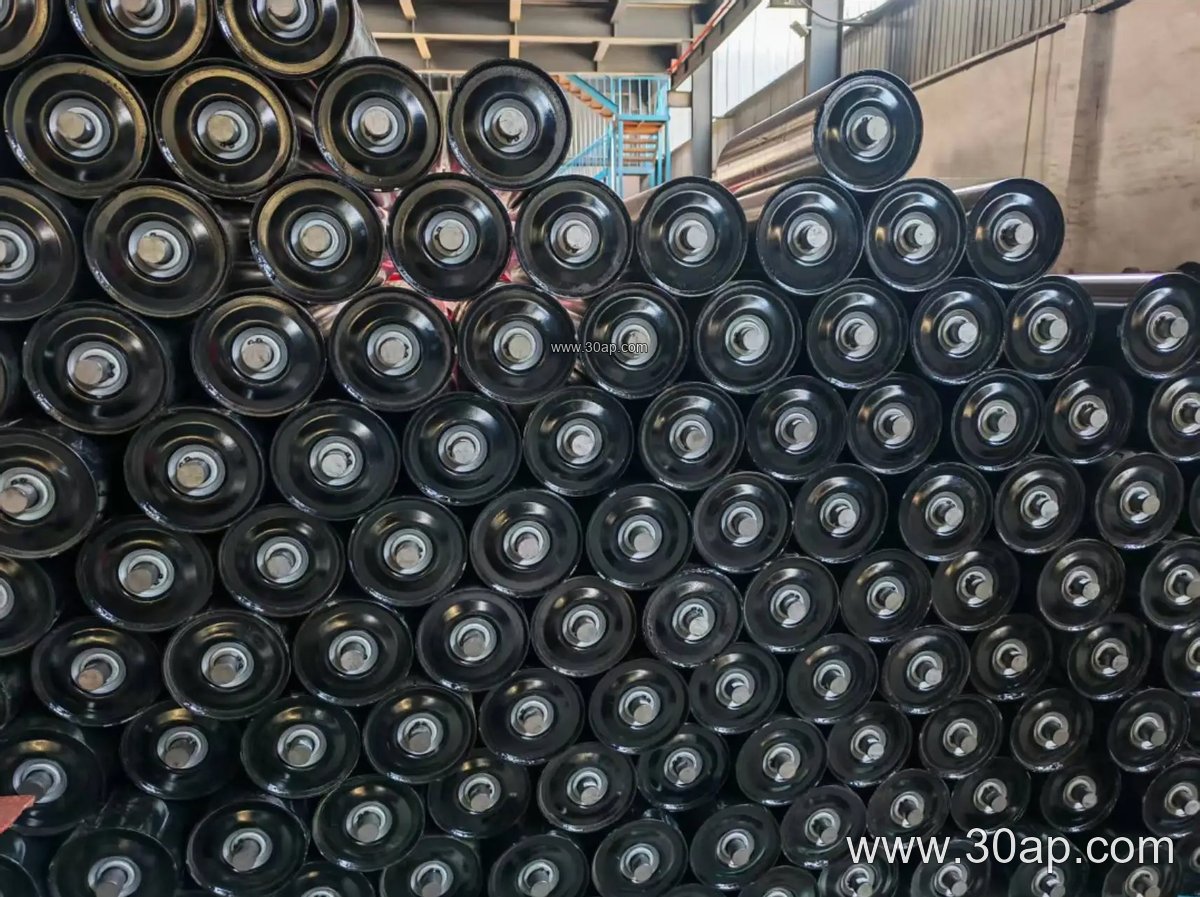
Construction and Bearing Details
A typical nylon idler combines a molded or machined nylon tube, a steel shaft, and sealed ball bearings at each end. Common bearing sizes include 6204, 6205, 6305, 6306, 6308 and 6310, and the bearing is matched to the shaft and load rather than to the belt width alone. Seals matter in dusty plants, so look for effective labyrinth or contact sealing if the conveyor runs in a quarry, a cement plant, or a coal handling system.
Nylon shells are usually lighter than equivalent steel shells, which eases installation and reduces the rotating mass. The trade-off is that nylon softens at high temperatures and can be damaged by sharp impact, so it is not the automatic answer for every position on a conveyor.
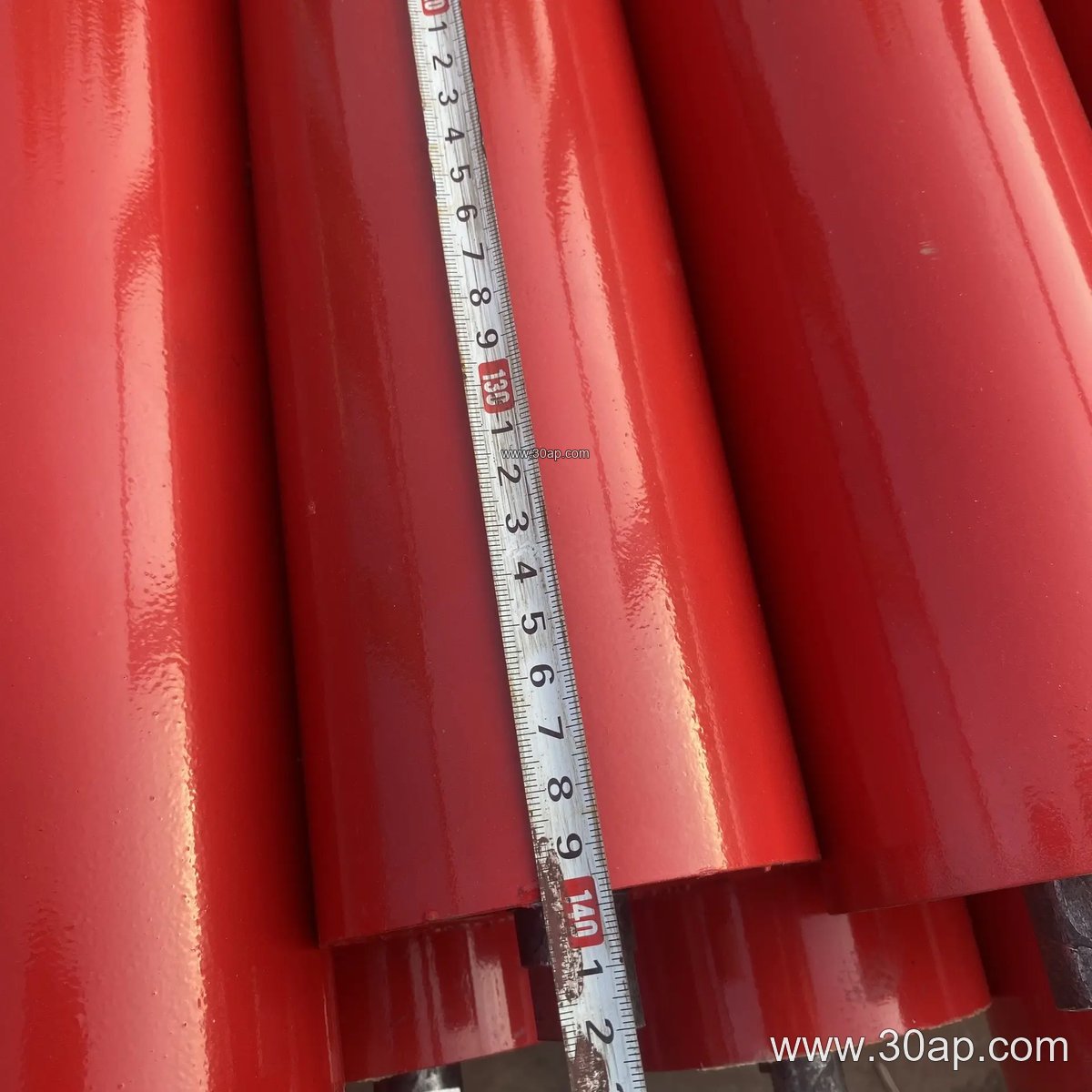
Where Nylon Idlers Fit on a Conveyor
Nylon rollers are common in troughing sets on the carrying side and in parallel or V-return sets on the return side. Trough angles of 20, 30, 35 and 45 degrees are used depending on the material and belt, and three-roll troughing sets are the usual arrangement for bulk materials. Roller diameters such as Ø63, Ø76, Ø89, Ø102, Ø108, Ø127, Ø133, Ø159 and larger are selected by load and belt speed.
On a limestone quarry line or a sand and gravel plant, nylon idlers may be used on the return strand where fines and moisture are present. In a cement plant they can suit auxiliary conveyors, while in a power plant coal handling system the choice should consider dust, fire safety and the belt specification, such as a flame retardant conveyor belt or an anti-static conveyor belt.
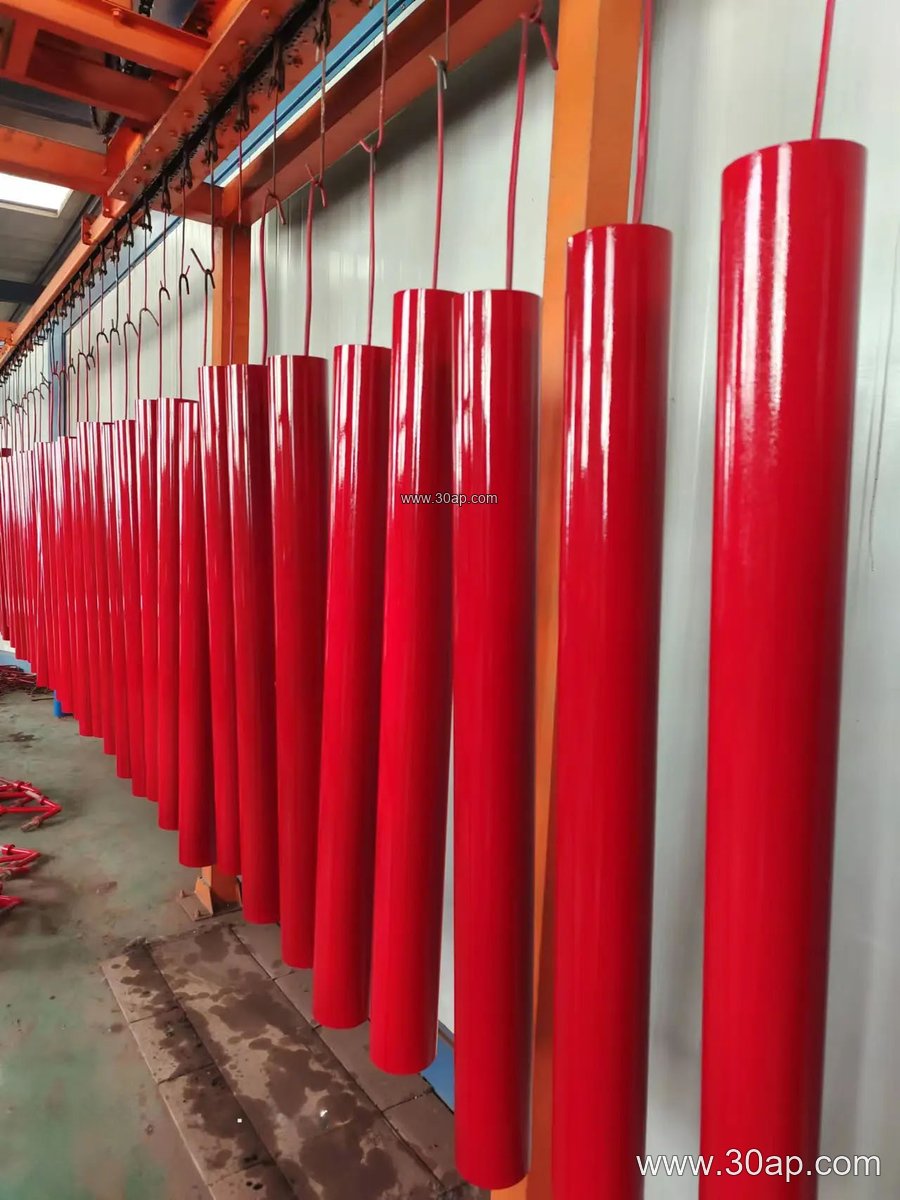
Common Sizes and Reference Data
The table below gives typical reference values; actual roller length depends on belt width, trough angle and the idler set design, and side rollers may differ from the center roller.
| Belt width | Typical roller length, three-roll troughing | Common trough angles |
|---|---|---|
| B500 | about 200 mm | 20–35 degrees |
| B650 | about 250 mm | 20–35 degrees |
| B800 | about 315 mm | 30–35 degrees |
| B1000 | about 380 mm | 30–35 degrees |
| B1200 | about 465 mm | 30–45 degrees |
| B1400 | about 530 mm | 30–45 degrees |
| B1600 | about 600 mm | 35–45 degrees |
| B1800 | about 670 mm | 35–45 degrees |
| B2000 | about 750 mm | 35–45 degrees |
These are examples, not fixed pairings. A wide belt such as a 1200mm conveyor belt or a 1500mm wide conveyor belt does not dictate one shaft diameter, and a given belt width can work with more than one roller diameter.
Buyer Checklist
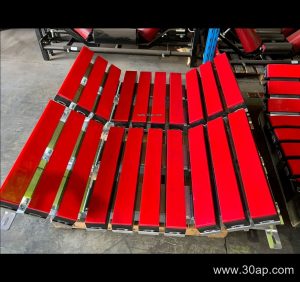
- Confirm the idler position: carrying, return, transition or impact. A nylon roller is usually not the first choice at a heavy impact point, where a rubber-disc impact idler may be better.
- Check the belt and material: an abrasion resistant conveyor belt carrying sharp ore puts different demands on rollers than a food grade conveyor belt in a clean plant.
- Match bearing, shaft and seal to the environment, especially in dusty or wet service.
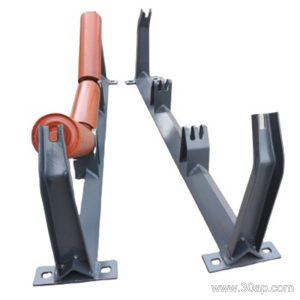
- Confirm roller length and trough angle against the actual conveyor bracket and frame dimensions.
- Review the whole conveyor specification, including whether an EP conveyor belt, NN conveyor belt or steel cord conveyor belt is used, because belt stiffness affects idler spacing and troughing behavior.
Nylon idlers are a useful, lightweight option for many bulk handling conveyors, but they should be selected as part of the complete conveyor design rather than by belt width alone. For related conveyor components, see the conveyor belt, idler roller and conveyor pulley ranges at conveyoridler.com, and confirm dimensions with the conveyor bracket drawing before ordering.