What a Mining Conveyor Belt Is
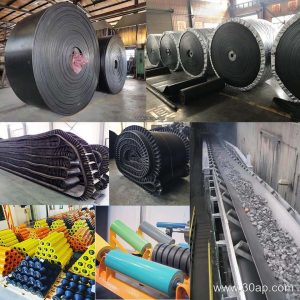
A Mining Conveyor Belt is the load-carrying element of a continuous haulage system in mines, quarries, coal preparation plants, cement works, power stations and sand and stone yards. It runs over a frame fitted with idler rollers, wraps around a head or drive pulley and a tail pulley, and returns through bend pulleys and a take-up arrangement. The belt itself is a composite: a tension-bearing carcass, a top cover that faces the material, a bottom cover that runs on the rollers, and often an edge that must resist fraying. The carcass may be fabric, steel cord or solid-woven PVC, and the cover compound is chosen for the duty.
In practice the term covers several constructions. An EP Conveyor Belt with polyester-nylon plies is common on medium-duty slopes and transfer lines, while a Steel Cord Conveyor Belt handles long, high-tension overland routes. Underground coal work usually calls for a PVG Conveyor Belt, and a Flame Retardant Conveyor Belt or Fire Resistant Conveyor Belt is specified where ignition risk must be controlled. None of these is a universal answer; the duty decides.
Construction and Component Fit
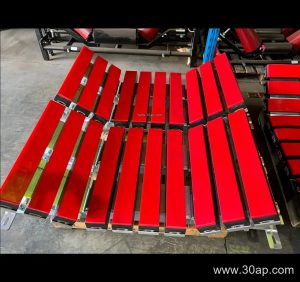
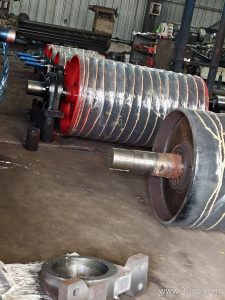
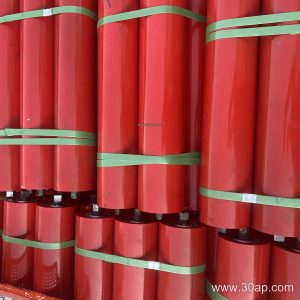
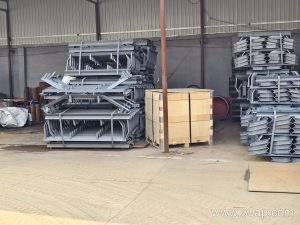
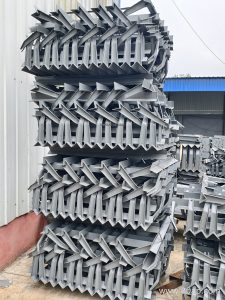
The belt is only one part of the circuit. Alignment depends on idler roller spacing and quality, on conveyor pulley diameters and lagging, and on conveyor bracket rigidity. Drive, tail and bend pulleys are not interchangeable: the drive pulley transmits torque and is sized for wrap and tension, the tail pulley turns at the loading end, and bend pulleys redirect the return strand. A belt that tracks poorly is often a frame or pulley problem rather than a cover problem.
- Carcass: 2 to 6 fabric plies, steel cord, or solid-woven PVC/PVG.
- Cover grades: abrasion resistant, heat resistant, oil resistant, cold resistant, anti-static, flame retardant.
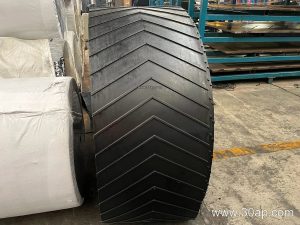
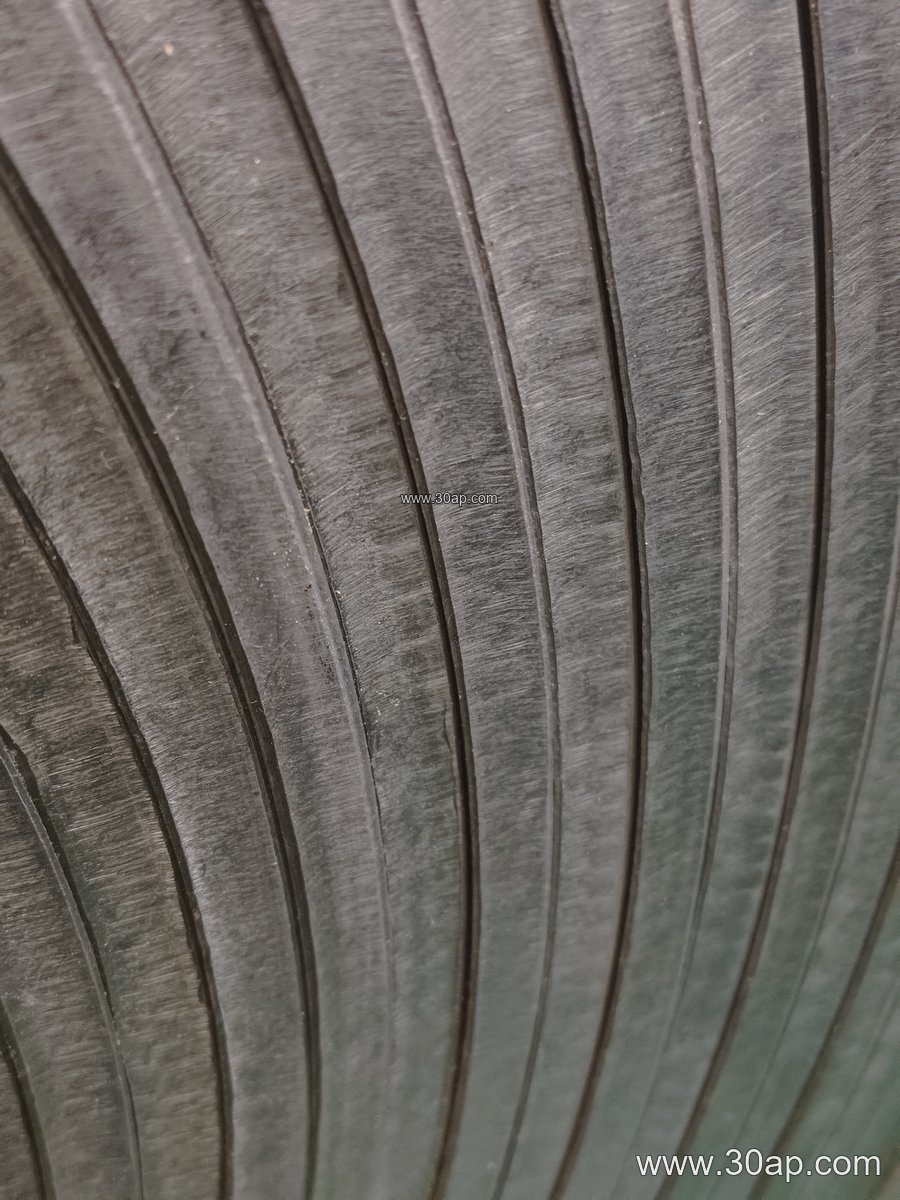
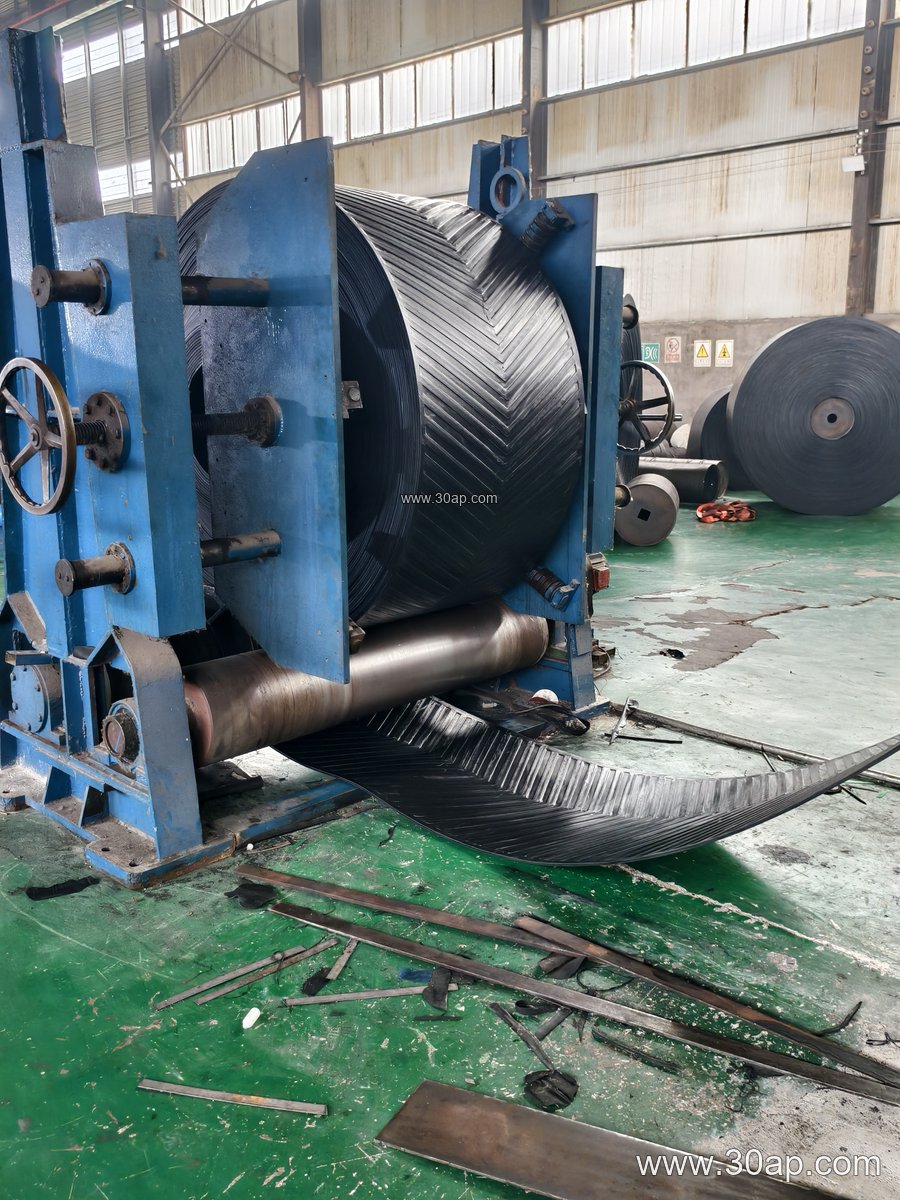
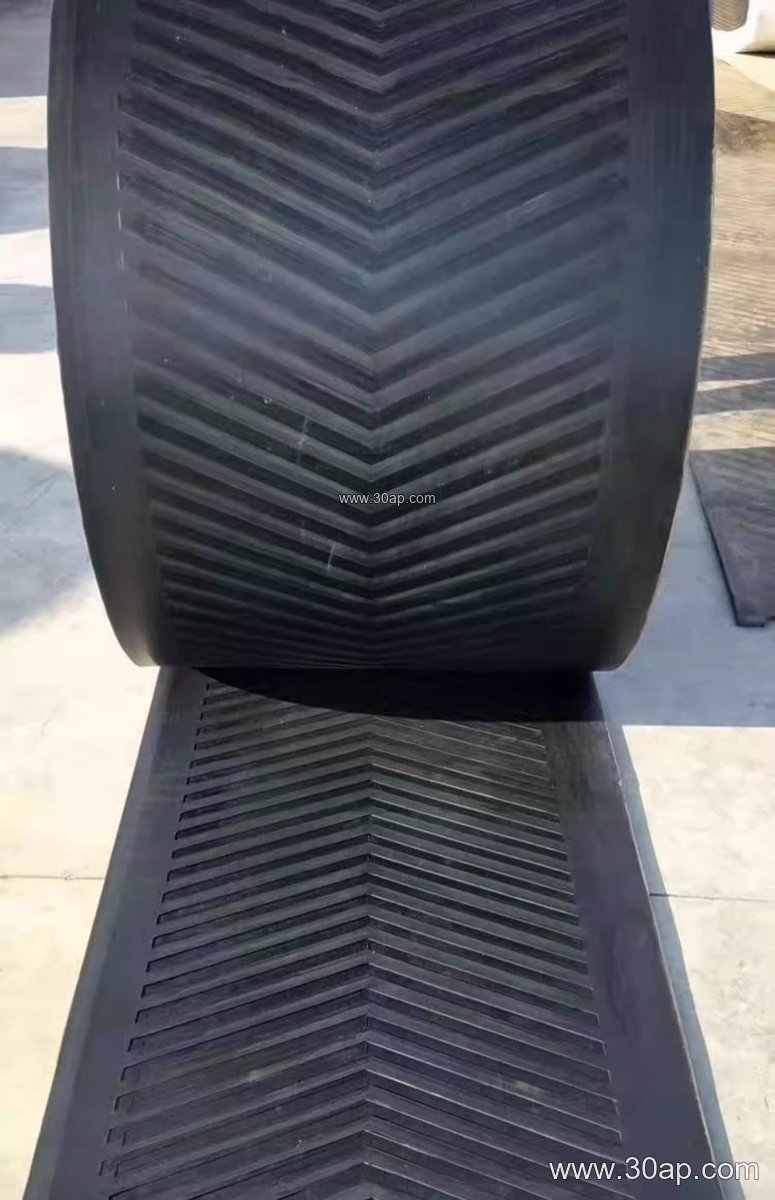
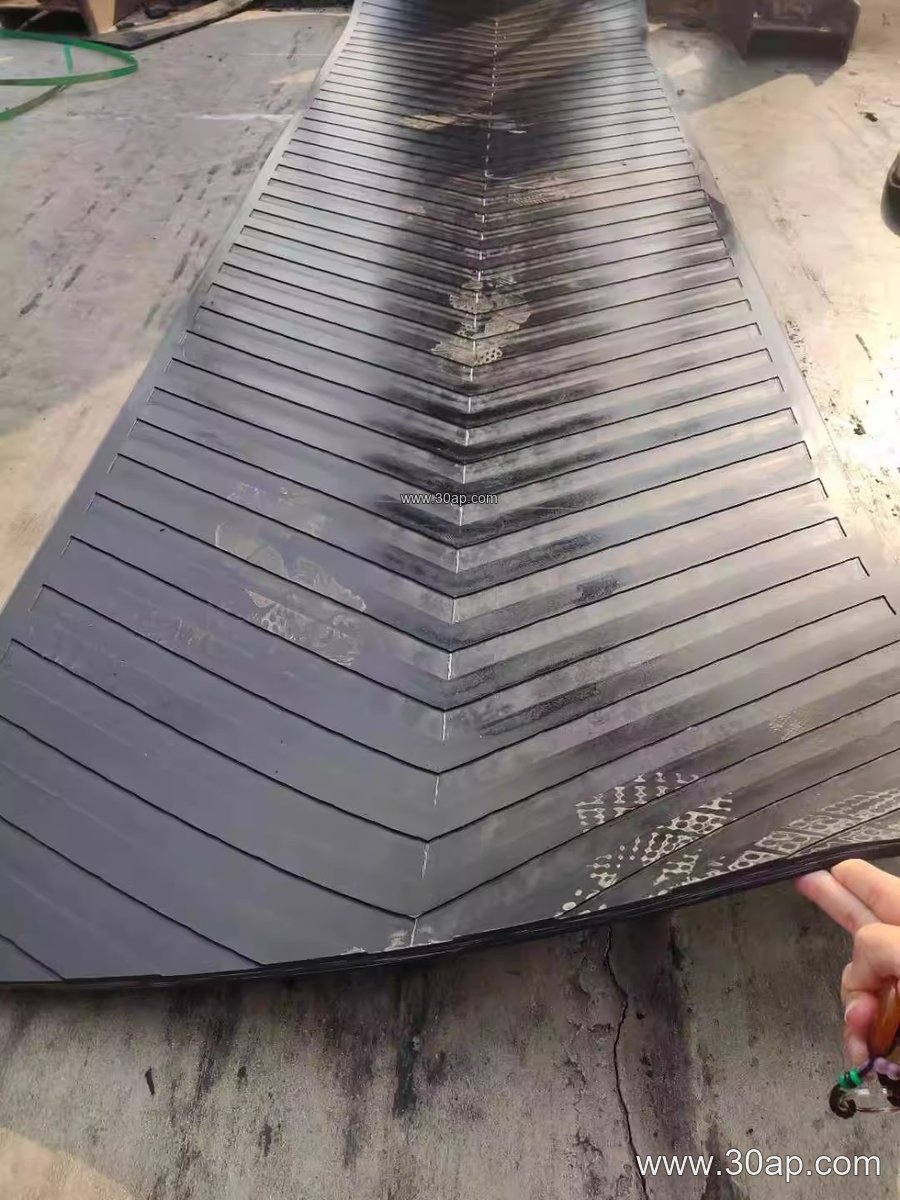
- Surface forms: plain, chevron or herringbone, corrugated sidewall with skirted edges, and pipe-forming designs.
- Cover thickness: commonly 3+1.5, 4+2, 5+2, 6+2 or 8+3 mm, set by design.
Special forms solve specific problems. A Chevron Conveyor Belt grips on inclines, a Corrugated Sidewall Conveyor Belt keeps material on steep lifts, and a Pipe Conveyor Belt encloses the load on curved routes. These are alternatives for particular layouts, not replacements for a standard troughed belt.
Typical Sizes and Strength Grades
Belt width should follow lump size, tonnage and troughing angle rather than habit. Common widths include B500, B650, B800, B1000, B1200, B1400, B1600, B1800 and B2000. Fabric grades such as EP200, EP400, EP630, EP800, EP1000 and EP1250 appear on many plant lines, while steel cord classes such as ST1000, ST1600 and ST2500 serve heavier tension duties. The table below groups reference data; actual values are set by the conveyor design.
Reference Data
| Item | Common Range | Notes |
|---|---|---|
| Belt width | B500 to B2000 | Match to lump size and capacity |
| EP strength | EP200 to EP2000 | Selected by calculated tension |
| Steel cord class | ST1000 to ST3150 | Long overland and high lift |
| Cover thickness | 3+1.5 to 8+3 mm | Top plus bottom cover |
| Ply count | 2 to 6 | Fabric core construction |
Do not assume one belt width fixes one pulley diameter or shaft size; those follow tension, wrap angle and shaft design.
Where It Works
In an iron ore or copper ore terminal, a Heavy-Duty Mining Conveyor Belt moves wet, abrasive feed from stockpile to ship loader. In a cement plant, a Heat Resistant Conveyor Belt carries clinker while a separate line may use an Oil Resistant Conveyor Belt near gearboxes. Coal mining relies on anti-static and flame retardant grades, and a quarry or aggregate operation often runs an Abrasion Resistant Conveyor Belt through primary crushing. Power plants, steel plants, recycling lines and port conveyor systems each add their own demands.
Buyer Checklist
- State the material, lump size, moisture and temperature range.
- Give centre distance, incline, tonnage and available drive power.
- Confirm the fire or anti-static requirement for the site.
- Check pulley and idler roller condition before fitting a new belt.
- Ask for cover grade, ply or cord class, and edge treatment in writing.
- Plan splice type, spare length and inspection intervals.
For anyone sourcing through a bulk handling supplier, matching the Mining Conveyor Belt to the frame, the conveyor pulley set and the idler roller train is what keeps a mine or plant running.