What a High-Capacity Trough Idler Does on a Conveyor
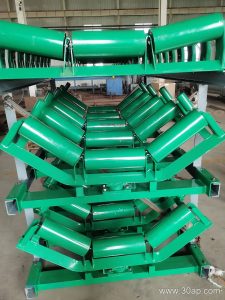
A high-capacity trough idler is the carrying-side roller assembly that supports a loaded conveyor belt and shapes it into a trough so bulk material stays centered. In a quarry, a limestone mine, or a cement plant, the difference between an ordinary idler and a heavy-duty trough idler shows up in bearing life, roller shell wear, and how much spillage the operation has to clean up. The assembly usually combines two or three rollers on a common frame, and the idler roller shells rotate on sealed bearings while the frame holds the trough angle.
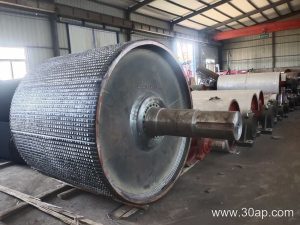
This component works together with the conveyor belt, the conveyor pulley at each end, and the conveyor bracket that fixes the frame to the stringer. Drive, tail, and bend pulleys each do a different job and are not interchangeable with the idler assembly. When a plant upgrades tonnage, the trough idlers are often the first wear item to review.
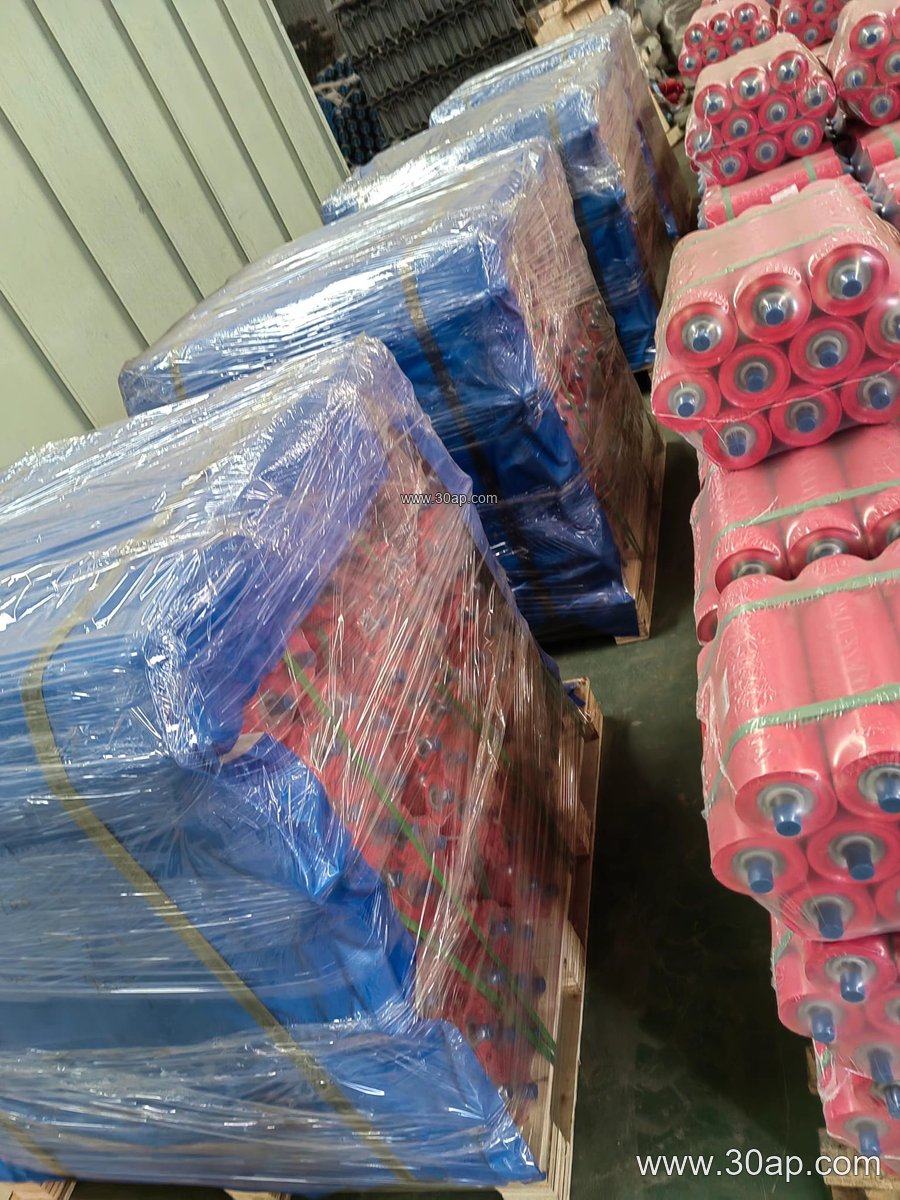
Construction Details That Matter
Most high-capacity trough idlers use steel tube shells with pressed bearing housings, labyrinth or contact seals, and grease-retained ball bearings. Roller surface options include plain steel, nylon, ceramic, and rubber rings; rubber rings are common on impact zones, while ceramic can suit abrasive fines. Bearing sizes are chosen by load and speed rather than by belt width alone, and common bearings include 6205, 6305, 6306, 6308, and 6310.
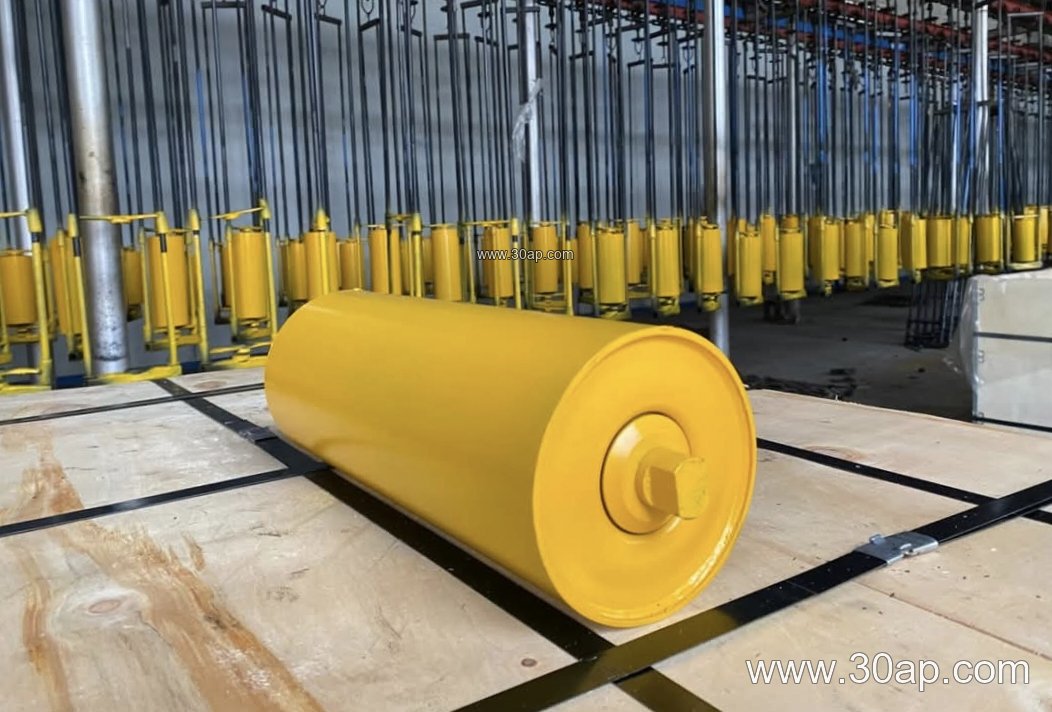
Trough angles are typically 20, 30, 35, or 45 degrees, and a small forward tilt of about 1.5 to 2 degrees is sometimes used on training idlers to help center the belt. Roller length follows belt width, trough angle, and frame type; for a three-roll trough set, common roller lengths are roughly 250 mm at B650, 315 mm at B800, 380 mm at B1000, 465 mm at B1200, and 530 mm at B1400. Side rollers and center rollers may differ, so these are reference examples, not fixed matches.
Where High-Capacity Trough Idlers Are Used
These assemblies appear in primary crushing circuits, overland conveyors, and transfer points where lump size and tonnage are high. A copper ore or iron ore line may run a heavy-duty mining conveyor belt over closely spaced trough idlers to limit sag between frames. In a coal mining conveyor belt system, flame retardant conveyor belt grades are paired with sealed idlers to reduce fire risk and dust ingress. Power plant coal handling and port ship loading conveyors also rely on robust trough idler sets because downtime costs are high.
The belt itself may be an EP conveyor belt, an NN conveyor belt, or a steel cord conveyor belt, and the idler load depends on belt tension, material weight, and spacing. A rubber conveyor belt with a thick cover adds mass, which the idler bearings must carry. Matching trough idler capacity to the actual belt and load is more reliable than copying a specification from another line.
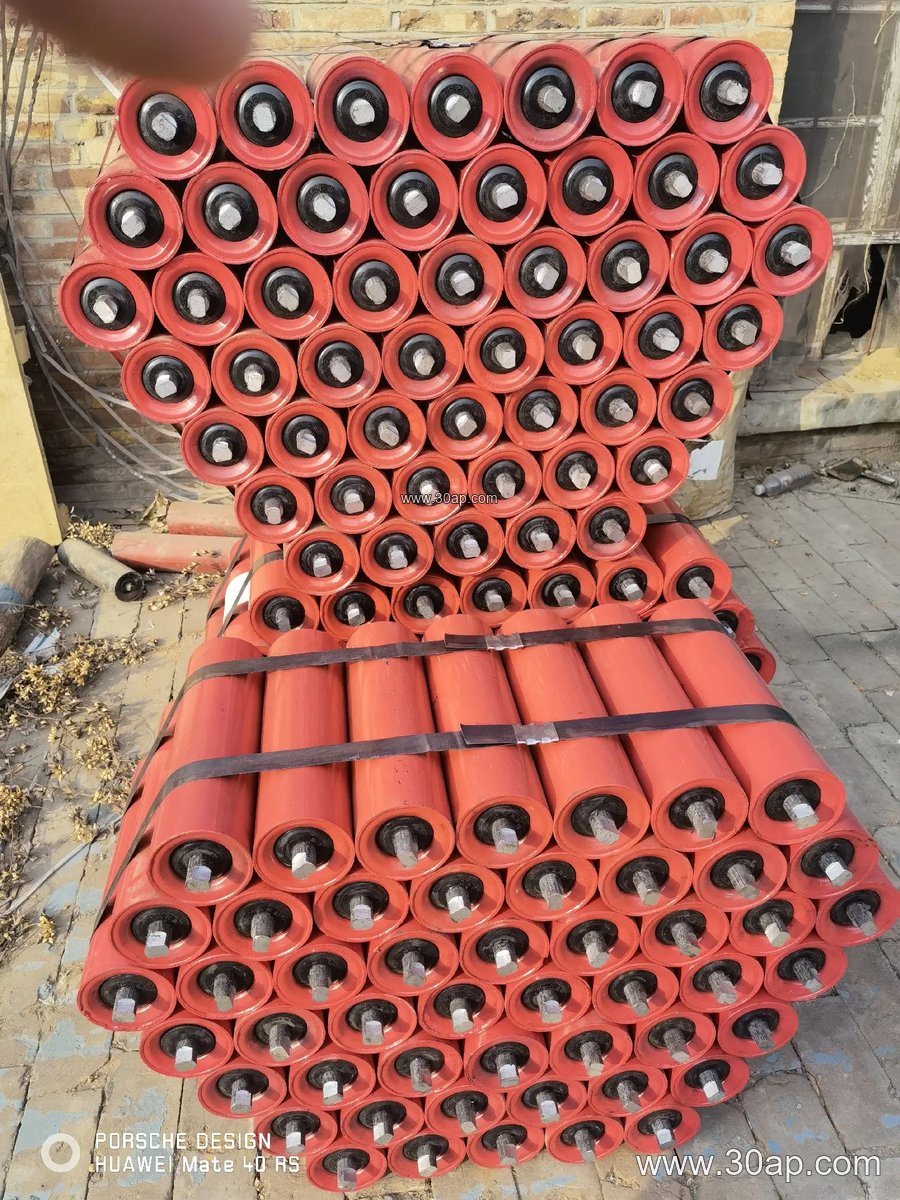
Specification Reference for Buyers
Use the following as orientation data when preparing an inquiry. Values are common ranges and should be confirmed against the conveyor design.
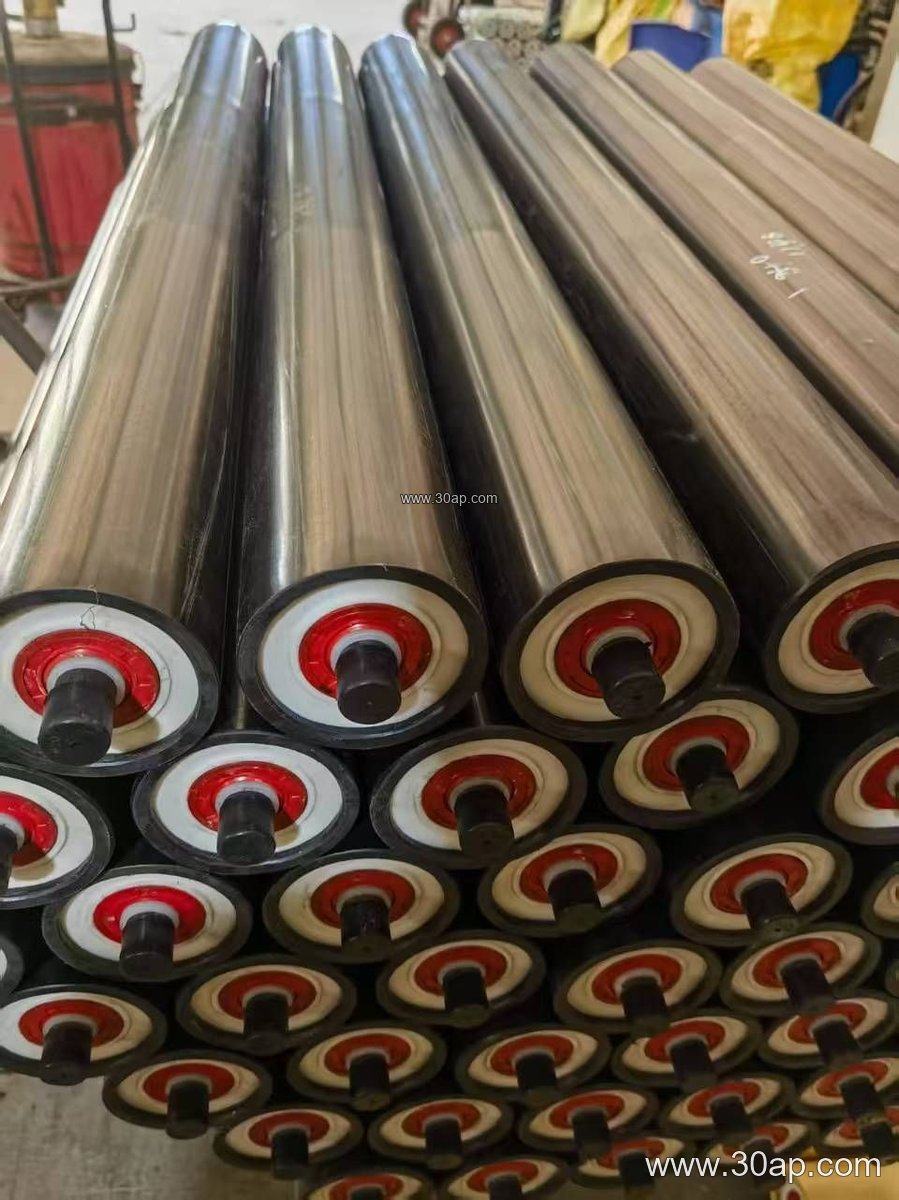
- Roller diameters: Ø63, Ø76, Ø89, Ø102, Ø108, Ø127, Ø133, Ø159, Ø178, Ø194, Ø219 mm
- Belt widths: B400, B500, B650, B800, B1000, B1200, B1400, B1600, B1800, B2000, B2200, B2400
- Trough angles: 20, 30, 35, 45 degrees
- Roller surface: steel, nylon, ceramic, rubber ring
- Bearing examples: 6204, 6205, 6305, 6306, 6308, 6310
A buyer should state belt width, belt type, material bulk density, lump size, trough angle, frame spacing, and ambient conditions. For a hot clinker or sinter line, a heat resistant conveyor belt changes the idler seal and grease choice. For a food or fertilizer plant, a food grade conveyor belt or chemical resistant conveyor belt may call for different roller materials.
Selection and Maintenance Notes
Choose the roller diameter and bearing class from the calculated load per idler, not from belt width alone. Closer spacing reduces belt sag and shell stress but adds cost. Impact zones may need rubber ring or impact trough idlers, while return-side support uses a different idler type, such as a V-return or flat return roller. Alignment idlers are a separate subtype used for training, not a replacement for the carrying trough set.
Inspect for seized rollers, worn shells, and damaged seals during scheduled shutdowns. Keep the conveyor bracket bolts tight so the trough angle stays correct. A well-matched high-capacity trough idler protects the conveyor belt, reduces spillage, and keeps the conveyor pulley and drive components from fighting a misaligned load.