What a Port Conveyor Belt Does at the Terminal
A port conveyor belt is the heavy-duty carrying element inside a bulk handling system that moves coal, iron ore, fertilizer, grain, cement clinker and similar loose cargo between ship loaders, unloaders, stockyard stackers and reclaimers. Unlike a short in-plant conveyor, the belt in a port runs long horizontal and inclined routes, often at high capacity, and may work outdoors in salt-laden air, sun, rain and wide temperature swings. That combination makes belt construction and rubber compound selection more demanding than in a simple transfer line.
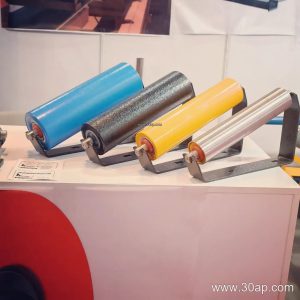
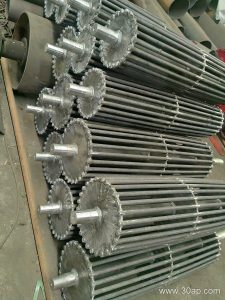
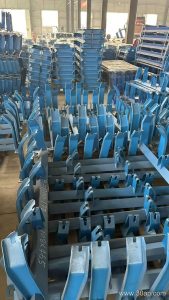
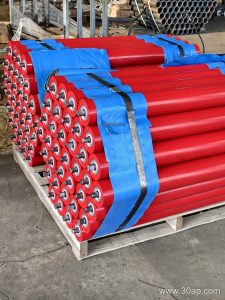
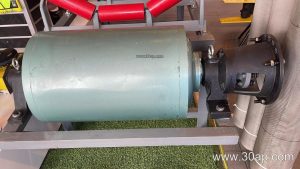
The belt is only one part of the machine. It runs over a conveyor pulley at the head and tail, is supported by idler roller sets, and is held in line by conveyor bracket frames. A weak belt or a mismatched pulley will show up quickly as tracking faults, edge damage or splice failure.
Construction of a Port Duty Belt
Most terminal belts use a fabric core or a steel cord carcass covered with rubber on both faces. The carcass carries tension, the top cover absorbs impact and abrasion from the cargo, and the bottom cover protects against pulley and idler contact. Common carcass options include EP Conveyor Belt (polyester warp, nylon weft), NN Conveyor Belt (all nylon), Multi-Ply Fabric Core Conveyor Belt for general bulk duty, and Steel Cord Conveyor Belt where a single long flight needs very high tensile strength and low stretch.
Cover thickness is usually expressed as top plus bottom, for example 4+2 mm, 5+2 mm, 6+2 mm or 8+3 mm. Heavier covers suit lumpy ore and rock, while thinner covers are adequate for grain or fine sand. Rubber grade matters as much as thickness: an Abrasion Resistant Conveyor Belt resists sharp ore edges, a Heat Resistant Conveyor Belt handles clinker or sinter, an Oil Resistant Conveyor Belt suits certain chemicals and recycled cargo, and a Flame Retardant Conveyor Belt or Anti-Static Conveyor Belt is often requested for coal and dusty enclosed galleries.
| Property | Typical reference range |
|---|---|
| Belt width | B800, B1000, B1200, B1400, B1600, B1800, B2000 mm |
| EP strength grades | EP200, EP400, EP630, EP800, EP1000, EP1250, EP1600 |
| Steel cord grades | ST1000, ST1600, ST2000, ST2500 |
| Cover thickness | 3+1.5, 4+2, 5+2, 6+2, 8+3 mm |
| Fabric plies | 2 to 6 layers, depending on design |
These figures are reference data only. Final width, strength grade and cover thickness are fixed by the conveyor design, the tonnage per hour and the material lump size, not by a single default rule.
Where It Fits in the Terminal
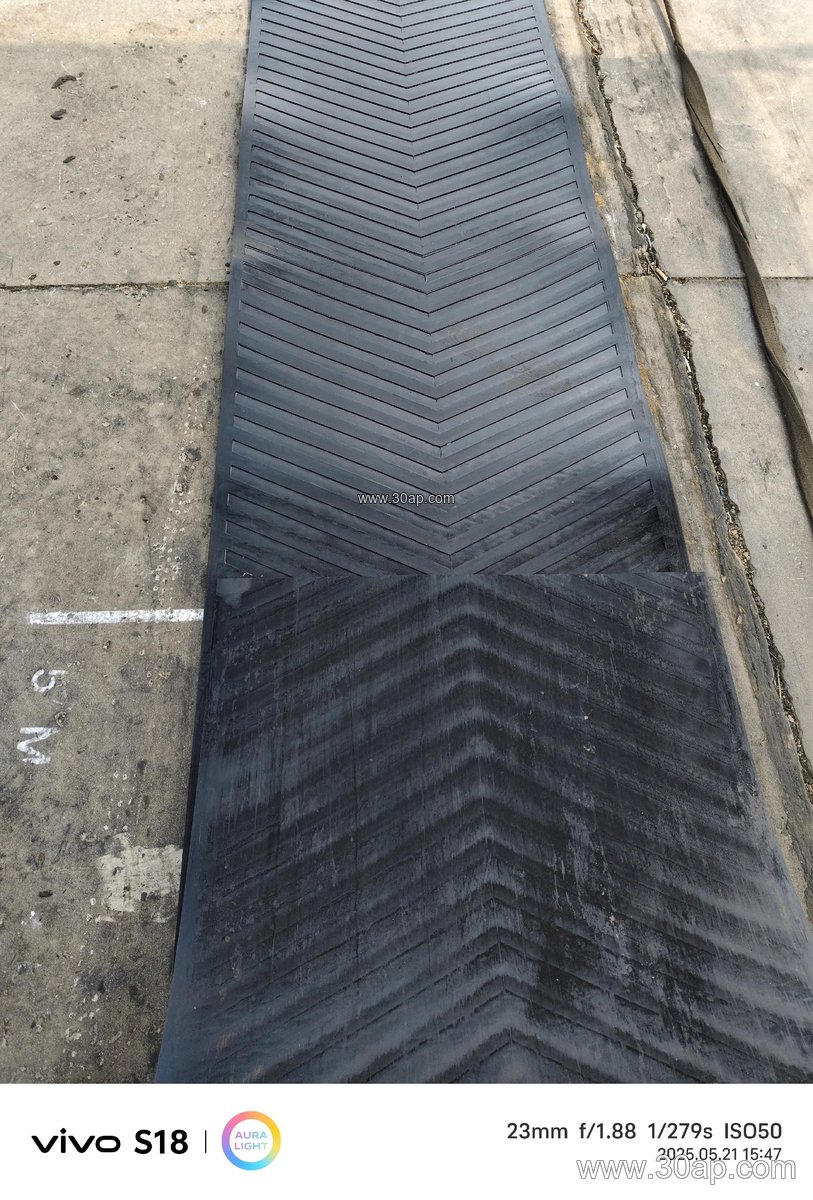
Bulk terminals rarely use one belt type everywhere. A ship loading conveyor belt on the boom may need a Chevron Conveyor Belt or Corrugated Sidewall Conveyor Belt to hold cargo on a steep incline. A stockyard line carrying damp coal might use a PVG Conveyor Belt or PVC Conveyor Belt where fire resistance is a priority. A long overland link to a power plant or cement plant often justifies a steel cord carcass, while a quarry conveyor belt feeding a crusher may use thick abrasion resistant covers and impact-resistant construction at the loading point.
- Mining and coal terminals: flame retardant and anti-static grades, often Underground Mining Conveyor Belt specifications for enclosed galleries.
- Ore and aggregate berths: High Abrasion Resistant Conveyor Belt with 6+2 mm or 8+3 mm covers.
- Fertilizer and chemical cargo: Oil Resistant Conveyor Belt or chemical resistant compounds.
- Cold climate ports: Cold Resistant Conveyor Belt to prevent cover cracking.
Buyer Checklist Before Ordering
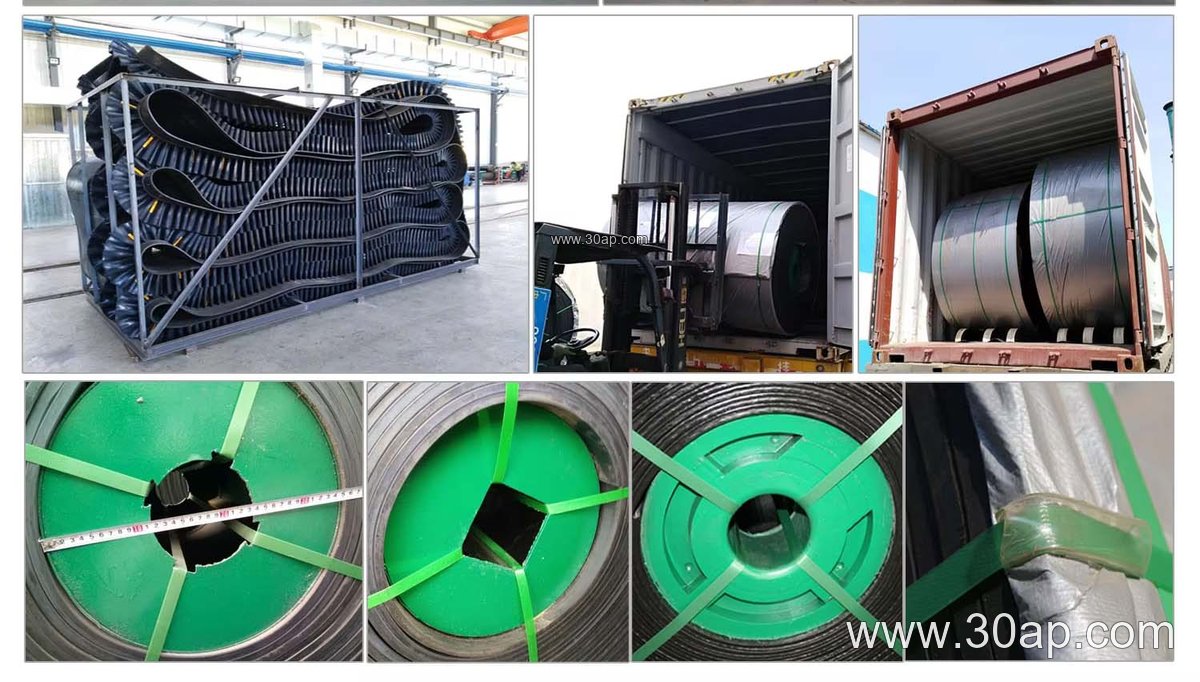
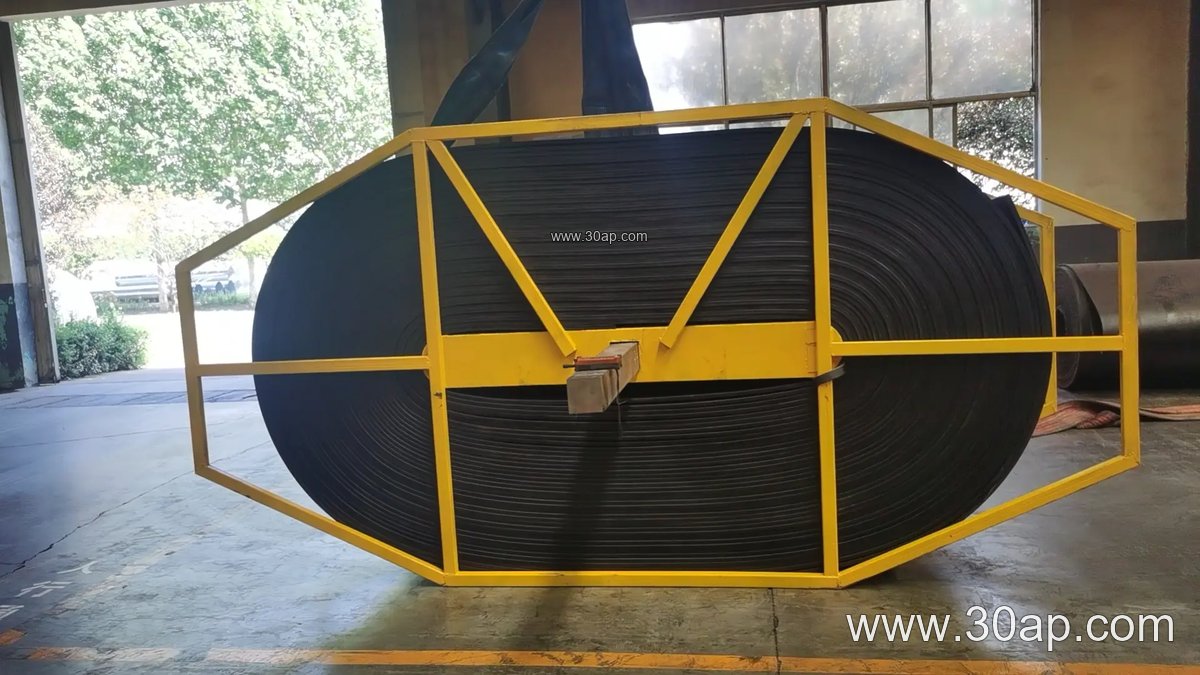
Start with the duty: material type, lump size, moisture, temperature and tonnage per hour. Then confirm the belt width and strength grade against the actual conveyor calculation, including starting tension and take-up travel. Ask how the belt will be joined. An Endless Conveyor Belt avoids a mechanical splice and is preferred on long flights, but it requires the belt to be vulcanized on site or supplied as a closed loop.
Check that the conveyor pulley diameters suit the carcass and cover, and that idler roller spacing supports the belt between them. Confirm cover grade, not just cover thickness, and ask for the rubber compound data rather than a generic description. For coal or dusty cargo, verify flame retardant and anti-static properties in writing. Also plan spare length, storage conditions and splice material at the same time, because a terminal shutdown is far more costly than the belt itself.
Finally, match the belt to the whole system. A well-chosen Port Conveyor Belt with correct covers, carcass and splice will outlast a cheaper belt that was selected on width alone.