What the Sand Making Plant Conveyor Belt Does
In a sand making plant, the conveyor belt is the continuous link between the crusher, the vibrating screen, the sand washer and the stockpile. The Sand Making Plant Conveyor Belt carries abrasive crushed stone, manufactured sand and wet fines, often on inclines and in dusty, open-air conditions. Because the duty is constant and the material is sharp, this belt is usually specified as a heavy-duty, abrasion resistant conveyor belt rather than a light general-purpose model.
The same product is often called an aggregate conveyor belt, a crusher conveyor belt or a stone crushing conveyor belt. These are equivalent names for the belt serving the same duty; they are not different components.
Construction and Common Specifications
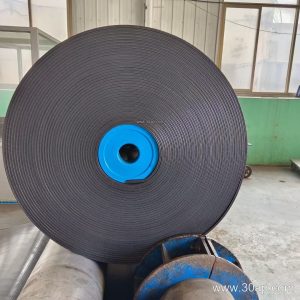
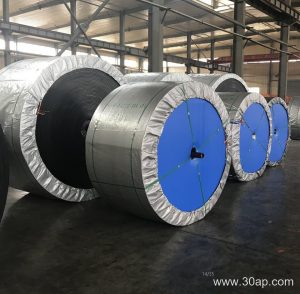
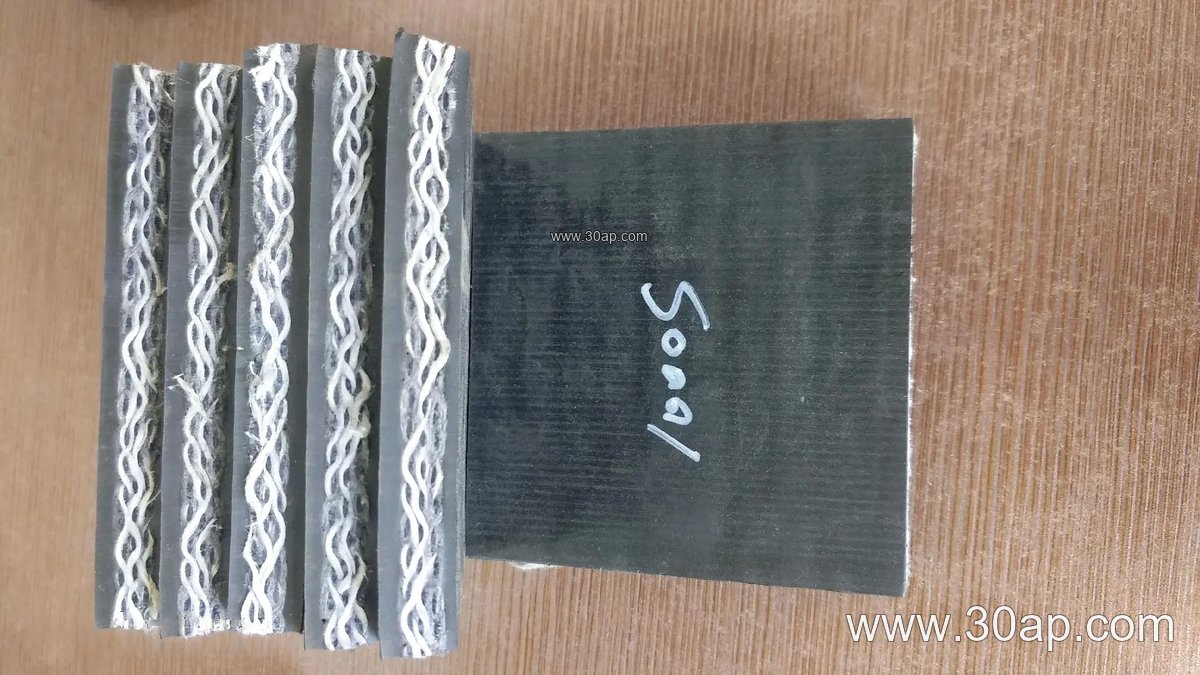
A typical belt for this duty uses a fabric core with rubber covers. EP conveyor belt (polyester warp, nylon weft) is a frequent choice because it stretches little and holds splice length well. NN conveyor belt is also used where higher elasticity is acceptable. For long mainlines or very high tonnage, a steel cord conveyor belt may be selected instead.
Common reference data for fabric-core belts in sand and aggregate service:
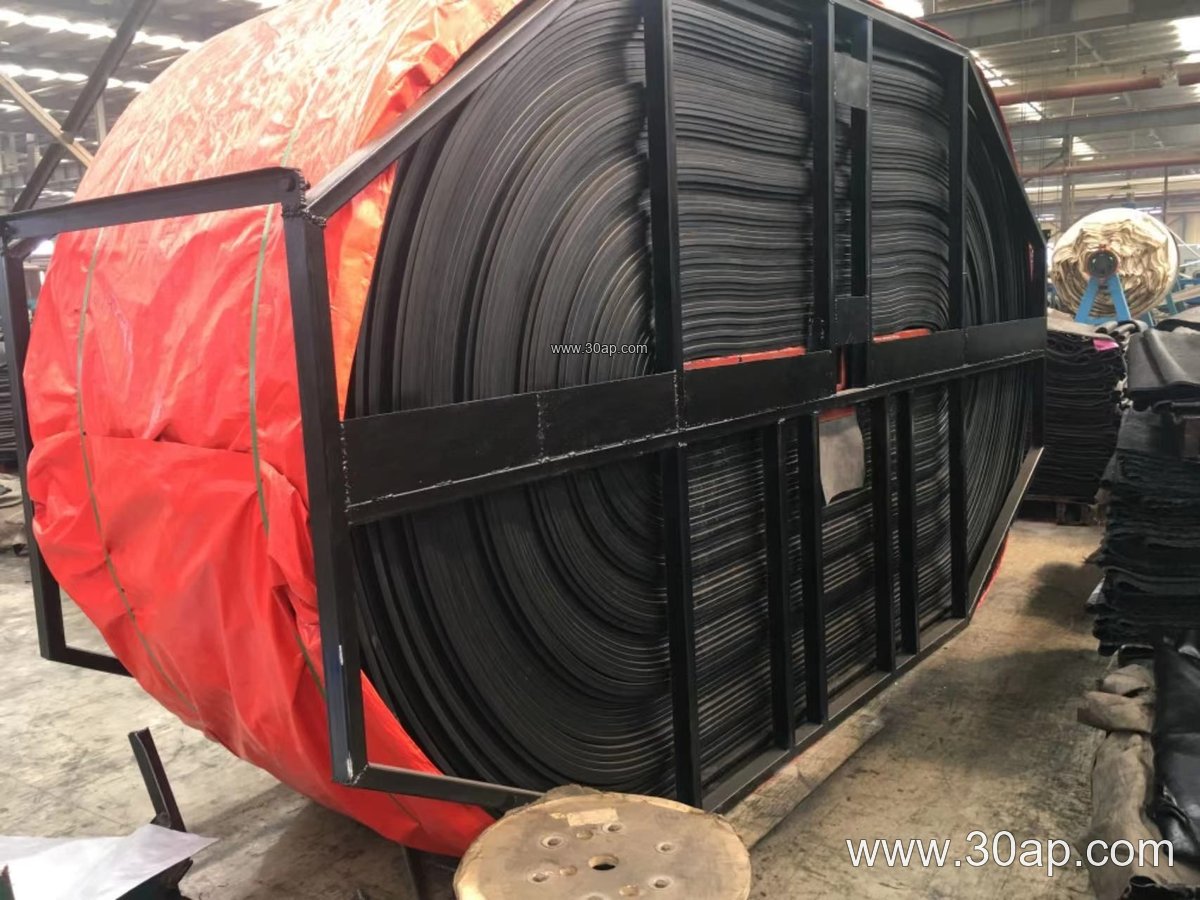
- Belt width: B500, B650, B800, B1000, B1200, B1400 up to B2000
- Strength grades: EP200, EP315, EP400, EP500, EP630, EP800, EP1000 and above
- Cover thickness: 4+2 mm, 5+2 mm, 6+2 mm, 8+3 mm
- Carcass: 2 to 6 plies, depending on tension and impact
These values are common references only. Final width, grade and cover thickness should follow the conveyor design, the lump size and the drop height at each transfer point.
Where It Fits in the Plant
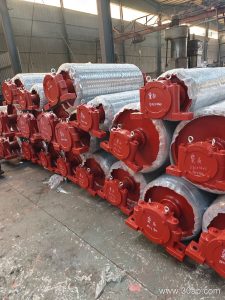
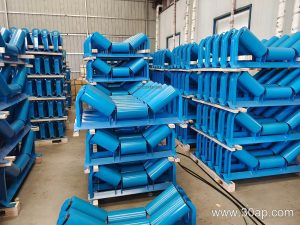
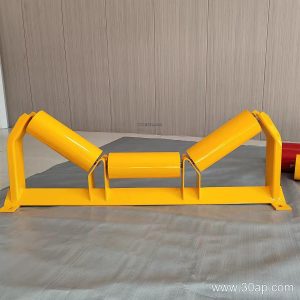
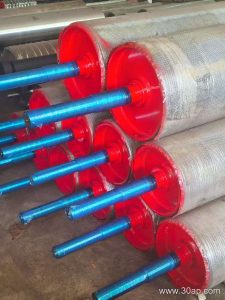
The belt runs over idler rollers supported by conveyor brackets, and around a head drive pulley and a tail pulley. Drive, tail and bend pulleys each have a distinct role and are not interchangeable. A conveyor pulley with adequate lagging improves grip on wet sand, while impact idlers under the crusher discharge protect the carcass from sharp stone.
Applications extend beyond sand pits. The same belt family appears in quarry and aggregate plants, cement plants, power plants, coal preparation, steel plants and port loading. In mining and coal mining operations, a flame retardant conveyor belt or fire resistant conveyor belt is often required, and an anti-static conveyor belt helps where dust and static are a concern.
Surface Forms and Special Duties
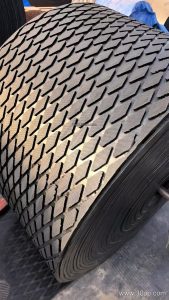
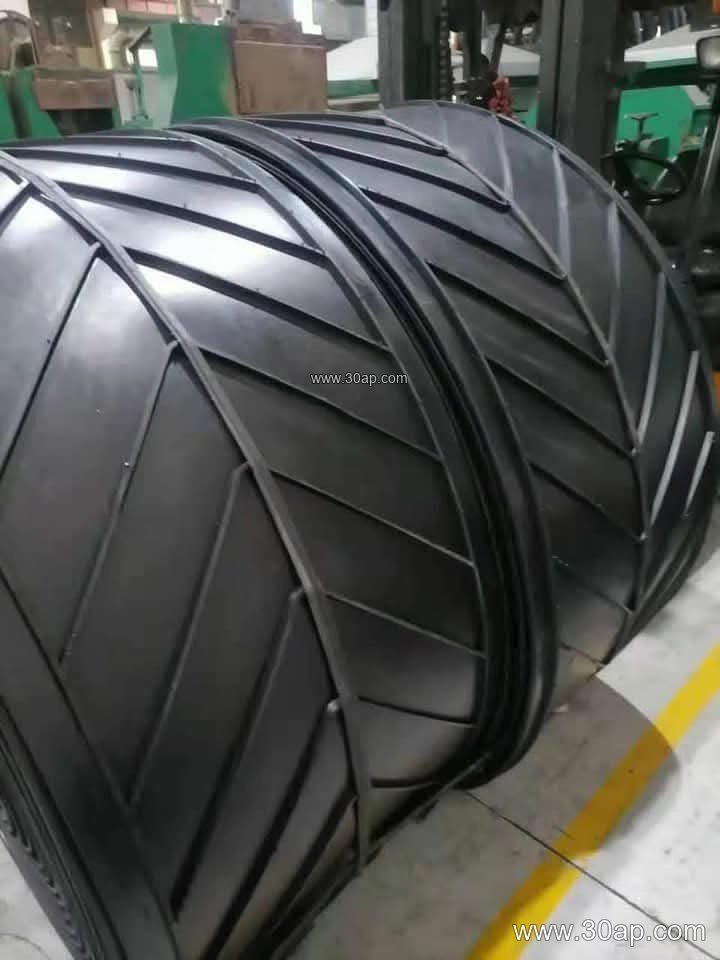
Where the incline is steep, a chevron conveyor belt or a corrugated sidewall belt (also called a skirted conveyor belt) keeps material from rolling back. For wet washed sand, a plain smooth cover usually cleans better, so cleats are chosen only when the angle demands them.
Heat resistant conveyor belt and oil resistant conveyor belt grades matter near dryers or in plants handling recycled material. In cold regions, a cold resistant conveyor belt avoids cracking at start-up. When sand is sold for glass or foundry use, a food grade or clean-cover belt may be preferred to limit contamination.
What a Buyer Should Check
- Confirm the actual tension and select an EP1000 or EP1250 grade only if the calculation supports it; do not assume a wide belt needs a large pulley shaft.
- Match cover thickness to abrasion: 6+2 mm or 8+3 mm is common at crusher discharge, thinner covers are fine on clean final sand.
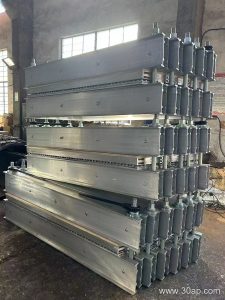
- Ask for the splice method and check that the endless conveyor belt or vulcanized joint suits the pulley diameters.
- Review pulley lagging, idler roller spacing and skirt rubber together with the belt, since these affect wear and tracking.
- State the environment: dust, water, oil, heat or flame risk changes the compound and the grade required.
For a sand making plant, the practical approach is to treat the conveyor belt as part of one system with the rollers, pulleys and brackets, then specify each item against measured duty rather than a catalogue default. For more information on belt, idler and pulley options, see chinabeltconveyor.com and review the Sand Making Plant Conveyor Belt range before ordering.