What an Idler Bracket Does on a Conveyor
An idler bracket is the structural component that holds conveyor idler rollers in the correct position along the belt line. It connects the roller shaft to the conveyor frame, setting the trough angle on the carrying side and keeping the return strand supported underneath. In a quarry, a coal handling plant, or a cement kiln feed line, these brackets are the quiet workhorses that determine whether the belt tracks straight and whether rollers wear evenly. Without a properly aligned idler bracket, even a high-quality conveyor belt will drift, edge-damage, and spill material.
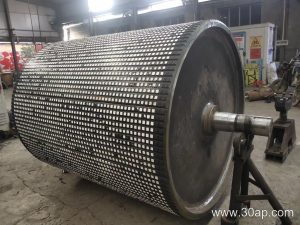
The bracket is not a roller and not a pulley. It is the mounting interface between them. A drive pulley pulls the belt, a tail pulley returns it, and a bend pulley changes its direction, but none of these can substitute for the idler bracket that supports the belt between those pulleys.
Construction and Common Forms
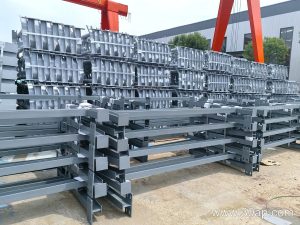
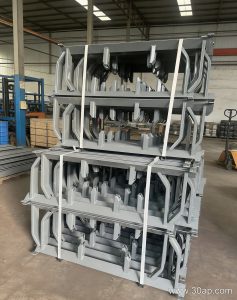
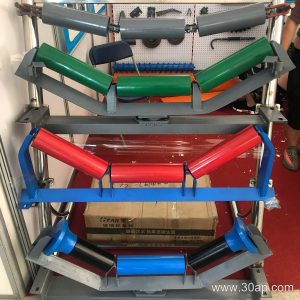
Most brackets are fabricated from angle steel, channel steel, or folded steel plate, then drilled and welded to suit a specific frame. The design usually falls into fixed and adjustable families. Fixed brackets hold a set trough angle, while adjustable types let maintenance crews change the angle during commissioning or after the belt has settled.
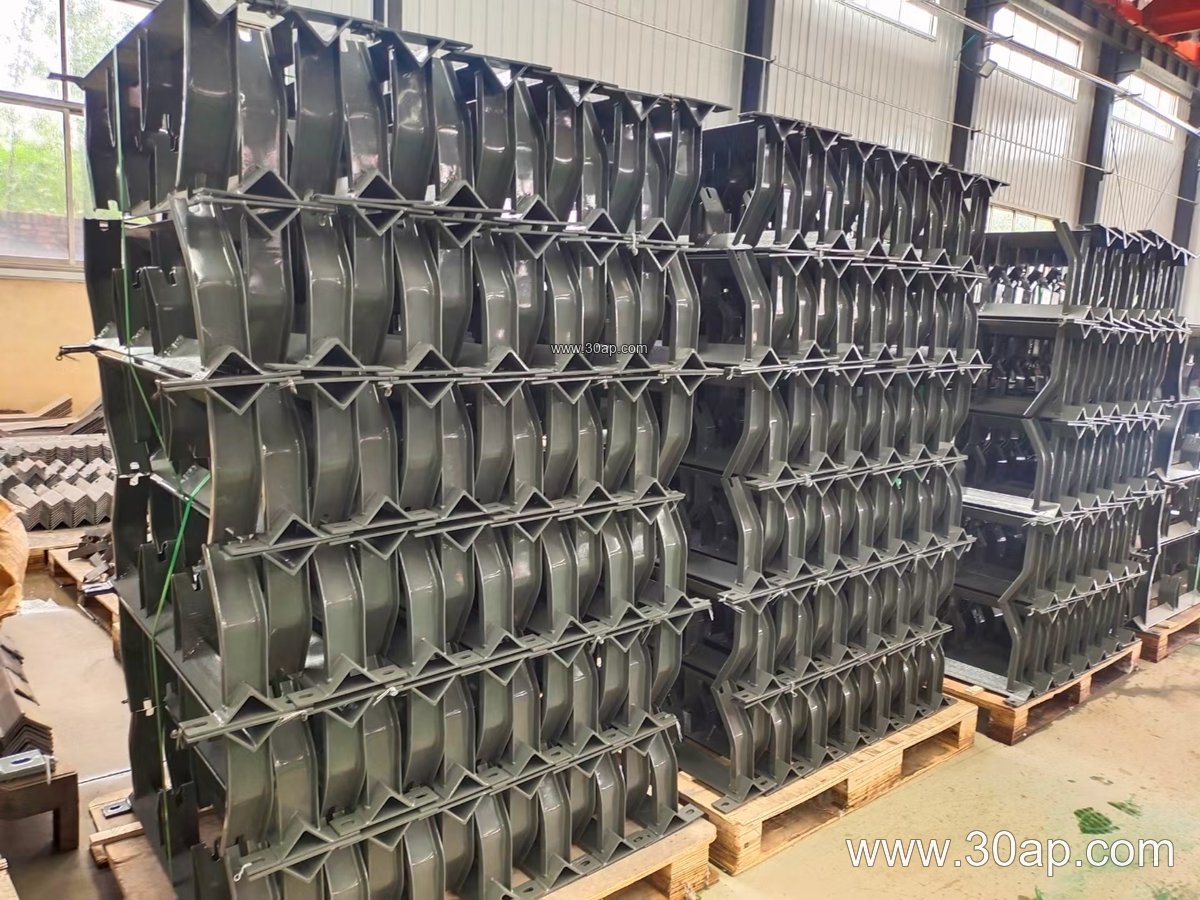
Typical configurations include:
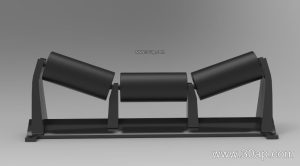
- Troughing brackets for the carrying side, usually with three idlers
- Transition brackets near pulleys, where the belt changes from flat to troughed
- Return brackets, including flat and V-type return designs
- Impact brackets under loading points, paired with impact rollers
- Self-aligning and forward-leaning brackets for tracking control
Material thickness and hole spacing are usually determined by belt width, load, and frame design rather than by a single universal standard.
Matching Belt Width, Trough Angle, and Roller Diameter
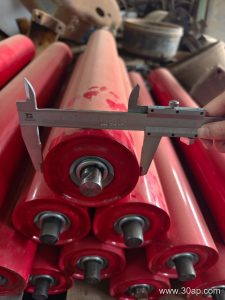
Buyers often ask for a bracket by belt width alone, but the trough angle and roller diameter matter just as much. A B800 frame at 35 degrees behaves differently from the same width at 45 degrees, and the roller diameter affects both the bracket height and the shaft seating. Common roller diameters include Ø89, Ø108, Ø133, Ø159, and Ø194, and common trough angles are 20, 30, 35, and 45 degrees. Forward-leaning brackets are often set around 1.5 to 2 degrees to encourage belt centering.
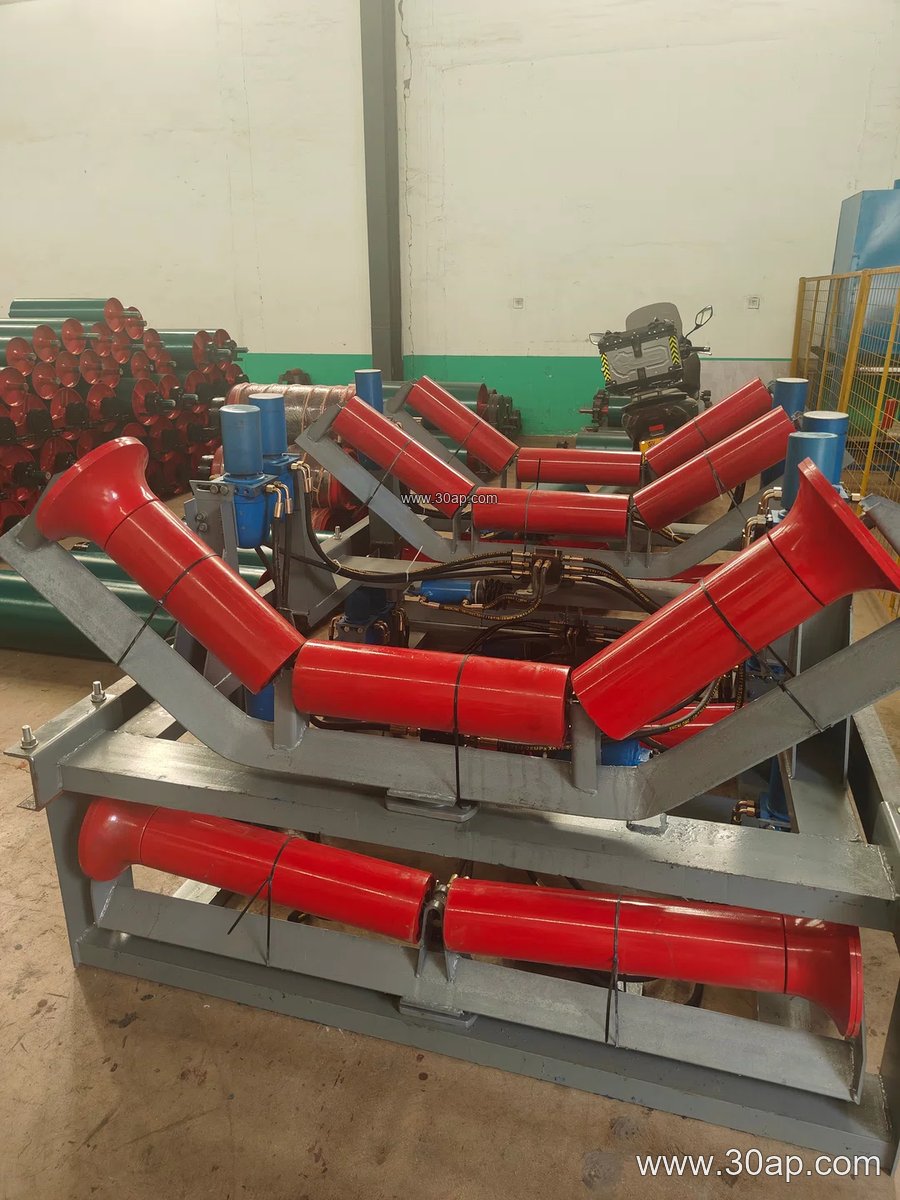
The table below shows reference combinations, not fixed rules. Installation hole spacing and crossbeam length normally change with belt width and trough angle.
| Belt Width | Typical Trough Angle | Common Roller Diameter | Bracket Note |
|---|---|---|---|
| B500 | 20-30 degrees | Ø89 | Light frame, fixed or adjustable |
| B650 | 30 degrees | Ø89-Ø108 | Transition brackets common near pulleys |
| B800 | 35 degrees | Ø108 | Widely used in aggregate and cement lines |
| B1000 | 35-45 degrees | Ø108-Ø133 | Heavier channel or folded plate |
| B1200 | 45 degrees | Ø133 | Common in coal and ore handling |
| B1400 | 35-45 degrees | Ø133-Ø159 | Impact brackets at transfer points |
| B1600 | 35-45 degrees | Ø159 | Reinforced crossbeam |
| B1800 | 35-45 degrees | Ø159-Ø194 | Heavy-duty mining service |
| B2000 and above | By design | Ø194 | Custom frame interfaces |
Do not assume that one belt width can only pair with one trough angle or one roller diameter. A B1200 line may run at 35 degrees in one plant and 45 degrees in another, depending on material surcharge and belt speed.
Where These Brackets Are Used
In a limestone quarry or a sand and gravel line, troughing brackets keep crushed rock centered on an abrasion resistant conveyor belt. In a coal handling system, flame retardant and anti-static belts run over brackets designed for dusty, potentially explosive atmospheres. In a cement plant, heat resistant belts near clinker coolers need brackets that tolerate thermal movement without loosening. Port and ship loading conveyors often use wide belts, where bracket alignment has a large effect on edge wear.
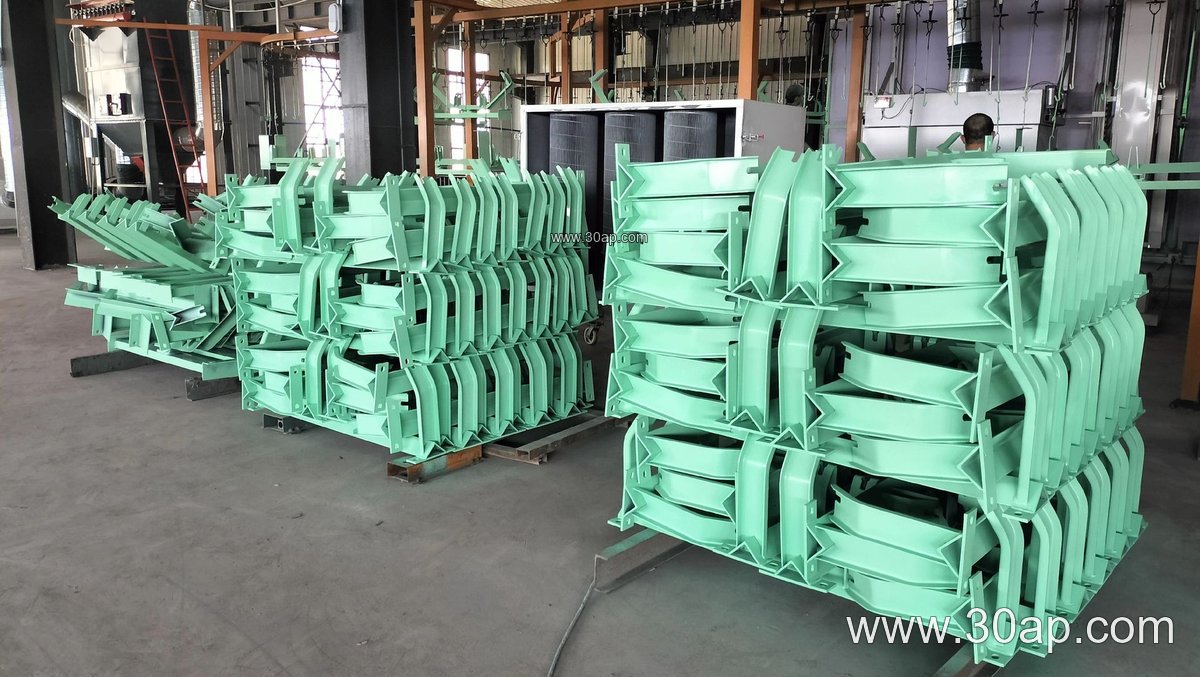
The bracket also interacts with the roller itself. A worn idler roller can be replaced quickly only if the idler bracket holes and shaft seats remain in good condition. That is why inspection of the bracket should include checking for elongation, corrosion, and bent ears.
Selection and Maintenance Advice
When specifying an idler bracket, provide belt width, trough angle, roller diameter, frame type, and mounting hole spacing. State whether the bracket must be adjustable or fixed, and whether it is for carrying, return, impact, or transition duty. For high-abrasion service, use thicker steel and check weld quality. For wet or acidic environments, consider galvanizing or coating.
During operation, check bracket alignment after the belt has run for a few days. Loose bolts and shifted brackets are common causes of belt mistracking. Replace bent brackets rather than straightening them, because distorted geometry affects roller contact and belt life. If you are also sourcing a rubber conveyor belt, EP conveyor belt, or steel cord conveyor belt for the same line, confirm that the bracket supplier and belt supplier agree on trough angle and roller diameter.
For more on conveyor components and belt matching, visit www.example.com/conveyor-idler-bracket and www.example.com/conveyor-bracket. A well-chosen idler bracket is a small part of the total conveyor cost, but it protects the belt, the rollers, and the pulley system from unnecessary wear.