What a Conveyor Carrying Bracket Does
A conveyor carrying bracket is the steel support that holds the troughing idlers on the loaded side of a belt conveyor. In everyday plant language it is also called a troughing idler bracket or carrying idler frame. It sits between the conveyor stringers and the idler roller, setting the trough angle that shapes the conveyor belt into a channel so bulk material stays centered on the run.
The bracket is a small component with a large influence. If it is weak, misaligned, or bolted at the wrong height, the belt tracks poorly, spillage rises, and the idler roller wears faster. That is why buyers in a quarry, a coal washing plant, or a cement clinker line should treat the carrying bracket as an engineered part, not as a generic piece of angle iron.
How the Bracket Is Built
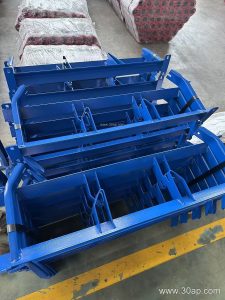
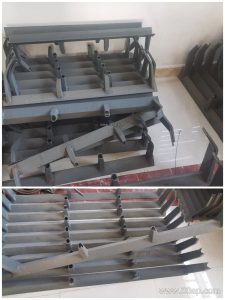
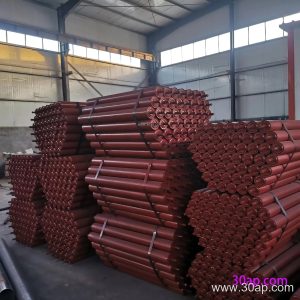
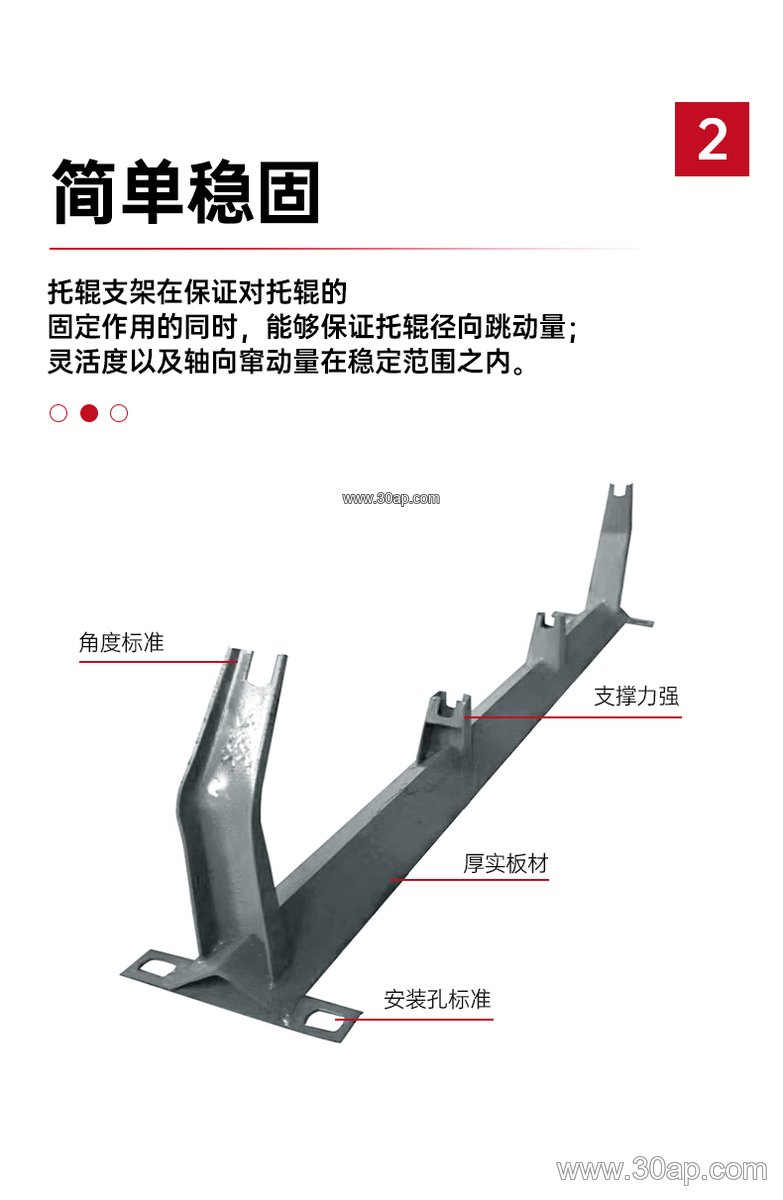
Most carrying brackets are fabricated from angle steel, channel steel, or folded steel plate. A fixed troughing bracket usually has two or three idler seats arranged at a set trough angle, with mounting holes that match the stringer spacing. A three-roll design carries the center idler and two side idlers; a two-roll design is simpler and often used on narrower belts.
Adjustable versions allow the side idler position to be changed, so the same bracket body can work at different trough angles. This helps during commissioning, when the maintenance team fine-tunes belt contact. Some designs also include a slight forward tilt of about 1.5 to 2 degrees to help center the belt, and self-aligning brackets add a pivot so the frame can swing and correct tracking.
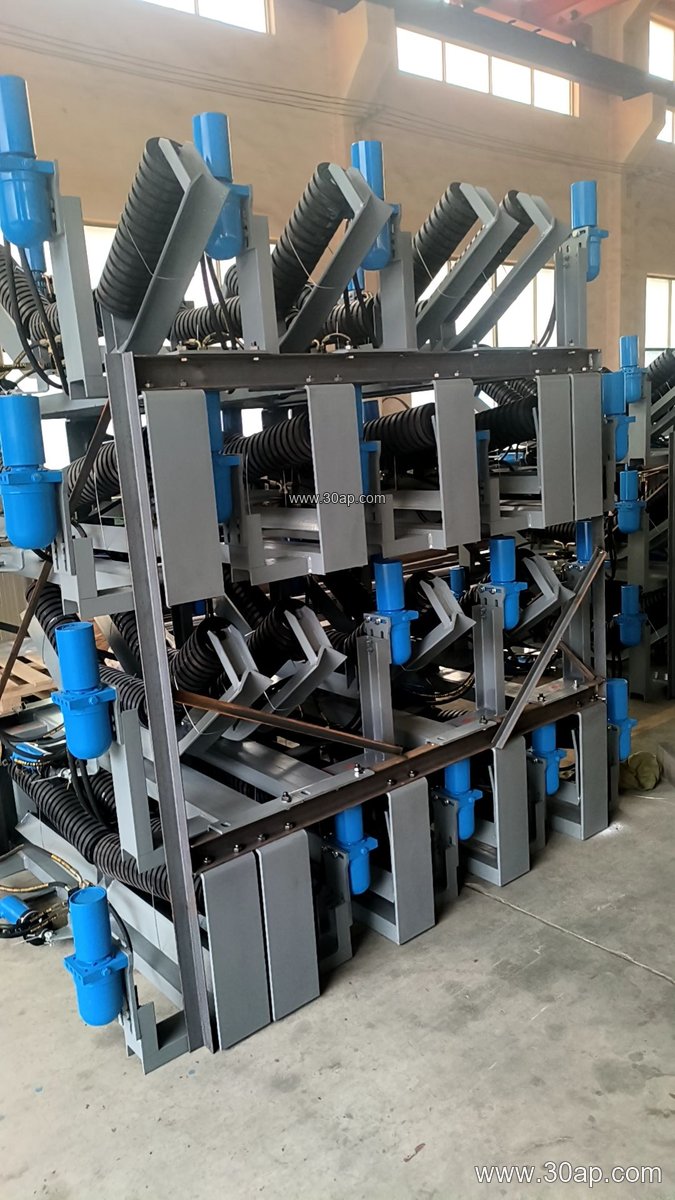
- Material options: angle steel, channel steel, folded plate
- Common forms: fixed troughing bracket, adjustable bracket, transition bracket, impact bracket
- Finish: painted or galvanized, depending on the environment
- Mounting: bolted to the stringer, with hole spacing set by belt width and frame design
Matching the Bracket to Belt Width and Idler Diameter
Belt width and idler diameter are chosen together with the bracket. A B800 conveyor at 35 degrees often uses Ø108 idlers, while a B1200 line at 45 degrees may run Ø133 idlers. A B650 conveyor at 30 degrees may use Ø89 idlers. These are common pairings, not fixed rules; the final choice depends on load, belt stiffness, and the frame design.
| Belt width | Typical trough angle | Common idler diameter |
|---|---|---|
| B500 | 20 to 30 degrees | Ø89 |
| B650 | 30 degrees | Ø89 |
| B800 | 30 to 35 degrees | Ø108 |
| B1000 | 35 degrees | Ø108 to Ø133 |
| B1200 | 35 to 45 degrees | Ø133 |
| B1400 | 35 to 45 degrees | Ø133 to Ø159 |
| B1600 | 35 to 45 degrees | Ø159 |
| B1800 | 35 to 45 degrees | Ø159 to Ø194 |
| B2000 | 35 to 45 degrees | Ø194 |
Frame length and hole spacing change with belt width and trough angle, so a bracket drawing should always be read against the actual conveyor layout. A bracket for a B1000 line will not fit a B1400 frame without modification.
Where Carrying Brackets Are Used
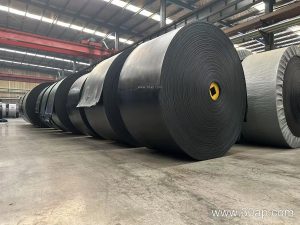
These brackets appear wherever a belt conveyor moves bulk material. In a limestone quarry, they support the idlers under a primary crusher discharge belt. In a coal washing plant, they hold the troughing rolls on a coal mining conveyor belt that feeds the wash box. In a power plant coal yard, a heavy-duty mining conveyor belt running at high tonnage relies on robust carrying brackets to keep the trough stable.
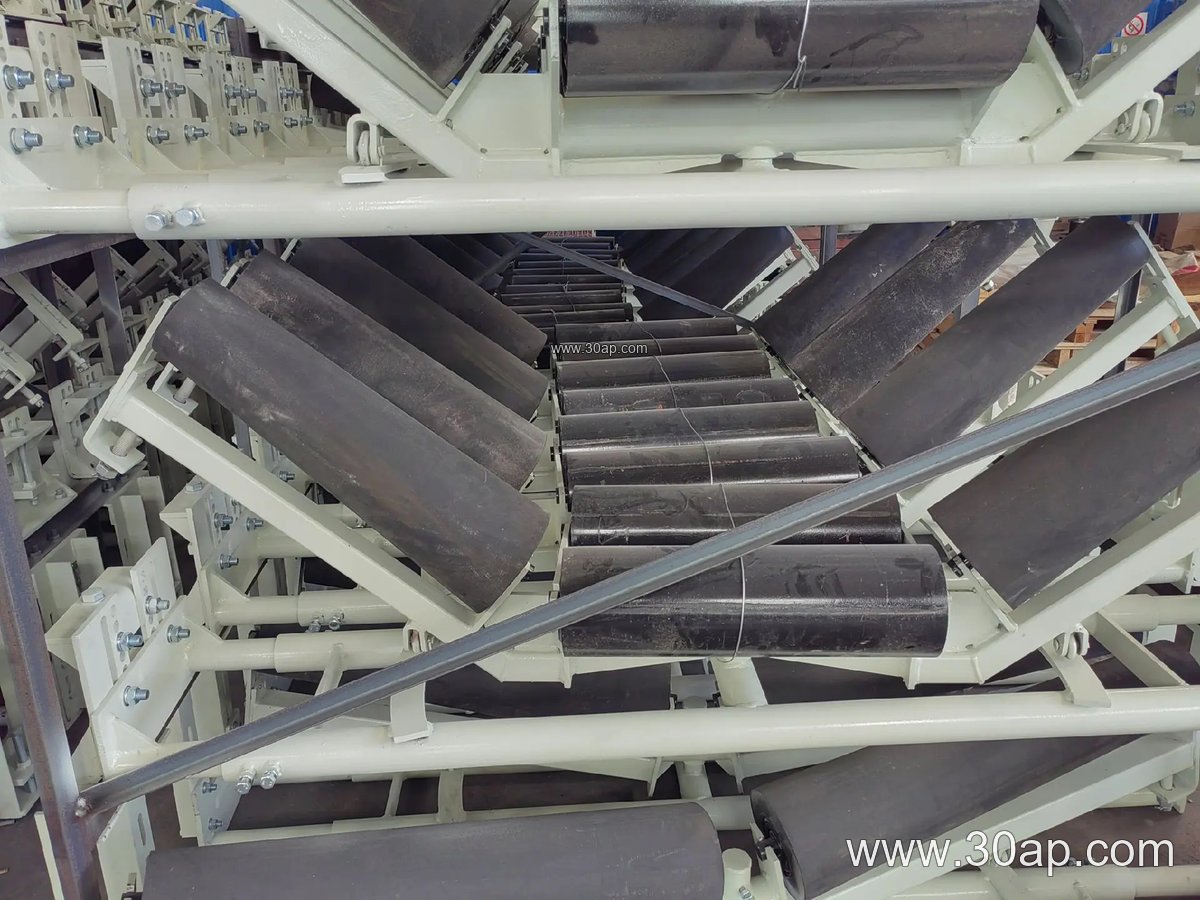
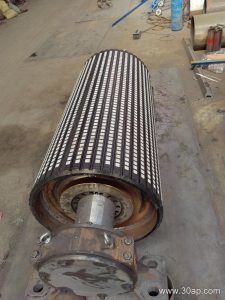
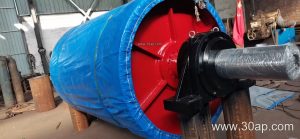
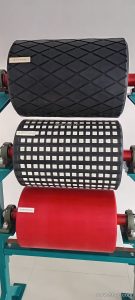
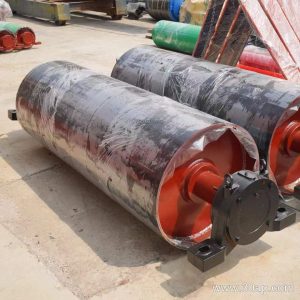
The bracket works together with the conveyor belt, the conveyor pulley at the head and tail, and the return idlers underneath. On a pipe conveyor belt or a corrugated sidewall conveyor belt, the support arrangement is different, but the carrying bracket still sets the line and height of the load-carrying rolls.
What Buyers Should Check
Before ordering, confirm the belt width, the required trough angle, and the idler diameter. Ask for the mounting hole pattern and the overall frame length, since these follow the conveyor design rather than a universal standard. Check the steel thickness and the welding quality, because a thin bracket flexes under load and shortens idler life.
For dusty or wet conditions, a galvanized or well-painted finish helps. For impact zones, a buffer bracket with rubber or spring mounting is a better choice than a standard fixed bracket. Spare parts planning should include the bracket along with the idler roller, so a replacement can be fitted without modifying the stringer.
Finally, match the bracket to the belt type in use. An abrasion resistant conveyor belt on a crusher conveyor and a heat resistant conveyor belt on a clinker line both need stable troughing, but the bracket load and clearance may differ. A correctly selected conveyor carrying bracket keeps the belt centered, protects the idler roller, and lowers maintenance downtime across the whole conveyor line.