What a Conveyor Belt Pulley Does
A conveyor belt pulley is the rotating element that redirects, drives, or tensions the belt on a conveyor system. It is not a passive part: its diameter, shell thickness, lagging, and bearing arrangement all influence belt tracking, tension distribution, and the overall reliability of the line. In a quarry or a limestone crushing circuit, a single pulley failure can stop the whole flow, so matching the component to the duty is more important than buying on price alone.
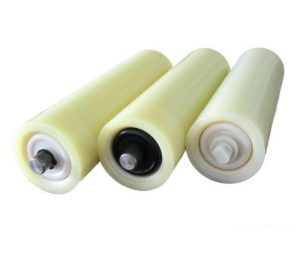
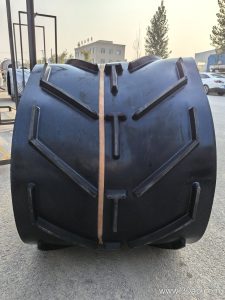
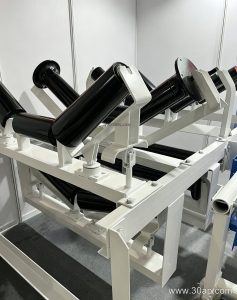
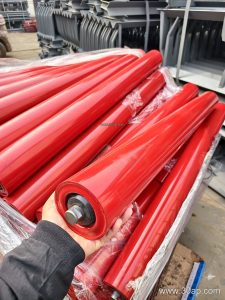
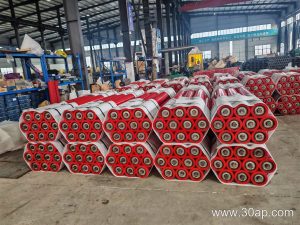
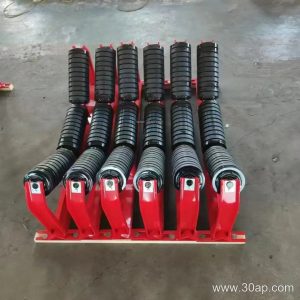
The pulley works together with the conveyor belt, the idler roller, and the conveyor bracket. The bracket fixes the shaft to the frame, the idlers support the belt along the carry and return sides, and the pulley handles the change of direction and the transfer of drive force.
How the Component Is Built
The main body is a cylindrical shell, usually welded from rolled steel plate, with end discs and a shaft passing through the center. The shaft is supported by bearings in housings mounted on the bracket. Shell, shaft, and bearing seats are machined so the pulley runs true; runout is what causes belt wander and edge damage.
- Shell: rolled steel, sometimes with a welded or bolted hub connection
- Shaft: sized by torque and load, not by belt width
- Bearings: spherical roller or tapered types, greased or sealed
- Surface: plain, rubber lagged, ceramic lagged, or grooved
Lagging is often the first thing a buyer specifies. Common lagging thicknesses are 8, 10, 12, 15, and 20 mm, applied as hot vulcanized rubber, cold bonded rubber, cast rubber, diamond pattern, herringbone, or ceramic tiles. In a coal mining conveyor or a power plant coal handling line, diamond or ceramic lagging is often chosen where the belt may slip under load or where oil and dust are present.
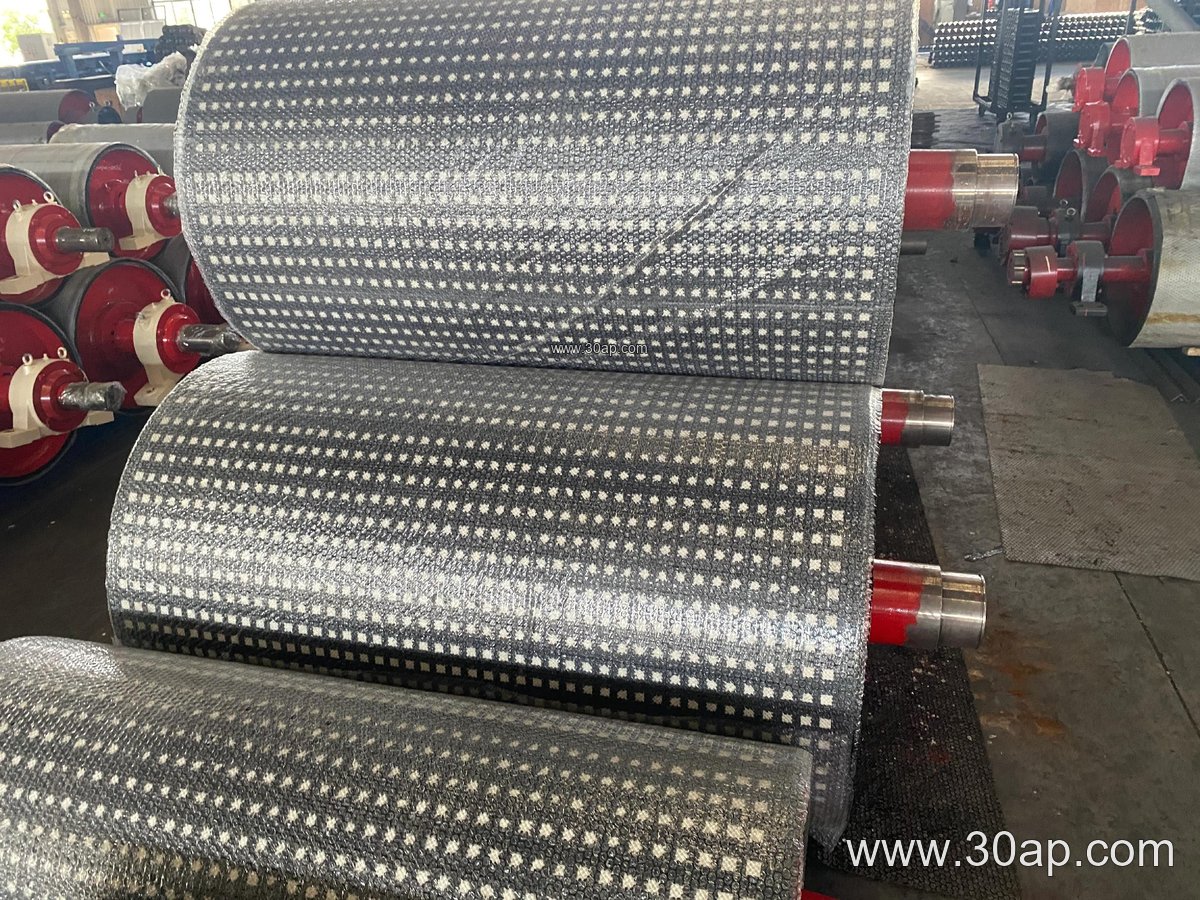
Drive, Tail, and Bend Positions Are Not the Same
The position on the conveyor defines the job. A drive pulley, sometimes called the head pulley, transmits torque to the belt and is usually the largest and most heavily lagged unit. A tail pulley at the loading end turns the belt back and may include a tensioning function. A bend pulley changes belt direction without driving, and a take-up pulley maintains tension as the belt stretches.
These roles are not interchangeable. A bend pulley cannot replace a drive pulley, and a tail pulley is not a substitute for a tensioning pulley. When specifying, state the position clearly, because it affects shaft size, bearing selection, and lagging pattern. A wing pulley, for example, is used for self-cleaning in sticky material, not as a general replacement for a smooth drum.
Sizing a Pulley to the Belt and the Duty
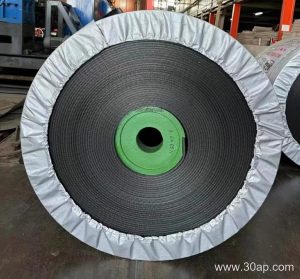
Belt width and pulley diameter are related but not locked together. A wider belt needs a wider shell face, but the diameter is set by the required wrap angle, belt tension, and the minimum bend radius of the belt construction. A steel cord conveyor belt generally needs a larger diameter than a thin fabric core belt of the same width, because the cord layer resists bending.
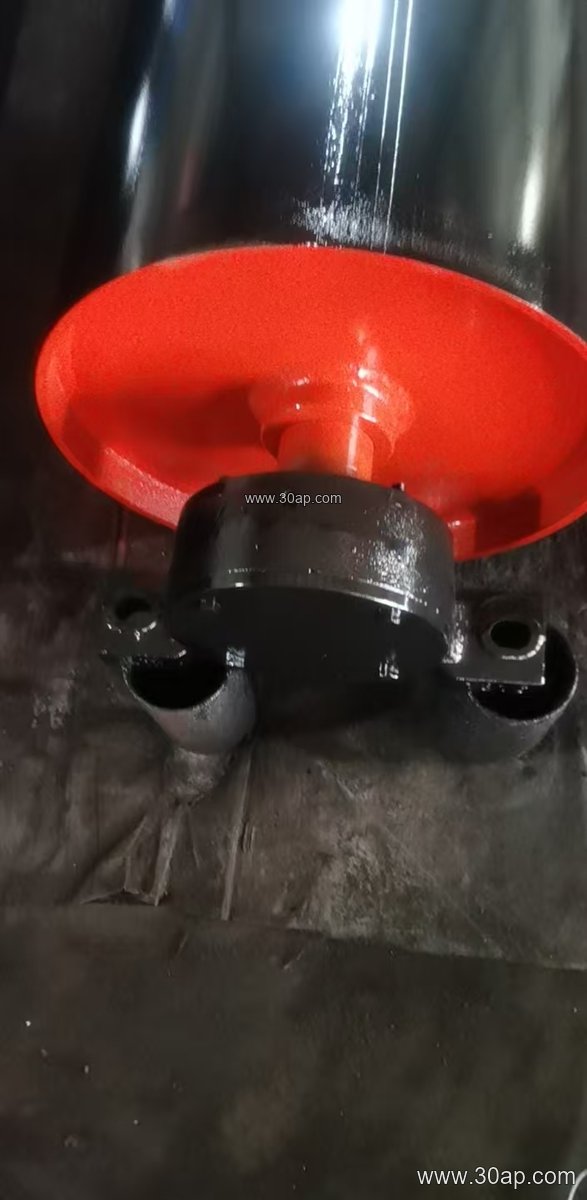
The shell face is usually wider than the belt. Typical relationships include B400 with about 500 mm face, B650 with about 750 mm, B800 with about 950 mm, B1000 with about 1150 mm, and B1200 with about 1400 mm. Diameters commonly range from Ø200 up to Ø1800, and combinations such as B800 × Ø500, B1200 × Ø1000, or B1400 × Ø800 appear in real layouts. None of these is a fixed rule; the design engineer confirms the final match.
| Belt width | Typical shell face | Common diameter range |
|---|---|---|
| B500 | about 600 mm | Ø250 to Ø500 |
| B800 | about 950 mm | Ø315 to Ø800 |
| B1200 | about 1400 mm | Ø500 to Ø1250 |
| B1600 | about 1800 mm | Ø630 to Ø1600 |
Shaft diameters such as Ø80, Ø100, Ø120, Ø140, Ø160, and Ø200 are selected from torque and bearing load calculations. There is no safe shortcut from belt width to shaft size.
Where These Pulleys Are Used
In a sand and aggregate plant, pulleys at the crusher discharge and the screen feed handle abrasive rock and constant shock. In a cement plant, clinker conveyors run hot, so heat resistant lagging and careful bearing clearance matter. Port bulk terminals use large drive pulleys on ship loading conveyors, where uptime is measured in hours of operation. Each site has its own priorities, and the pulley specification should follow the material, the belt type, and the duty cycle rather than a generic catalogue page.
What Buyers Should Confirm Before Ordering
- Position and function: drive, tail, bend, take-up, or snub
- Belt width and belt construction, including whether it is a fabric core or steel cord type
- Required diameter and shell face width
- Lagging type and thickness, plus groove pattern if needed
- Shaft diameter, keyway, and bearing type
- Environmental conditions such as dust, oil, heat, or moisture
- Balancing and runout requirements
Accurate drawings and a clear duty description reduce the risk of a mismatch. A pulley that is correctly sized for the conveyor belt and the load will outlast one chosen only by nominal dimensions.