What a Conveyor Welded Pulley Is
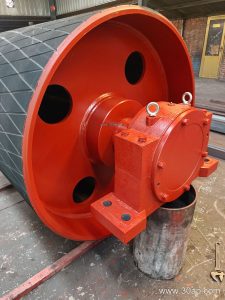
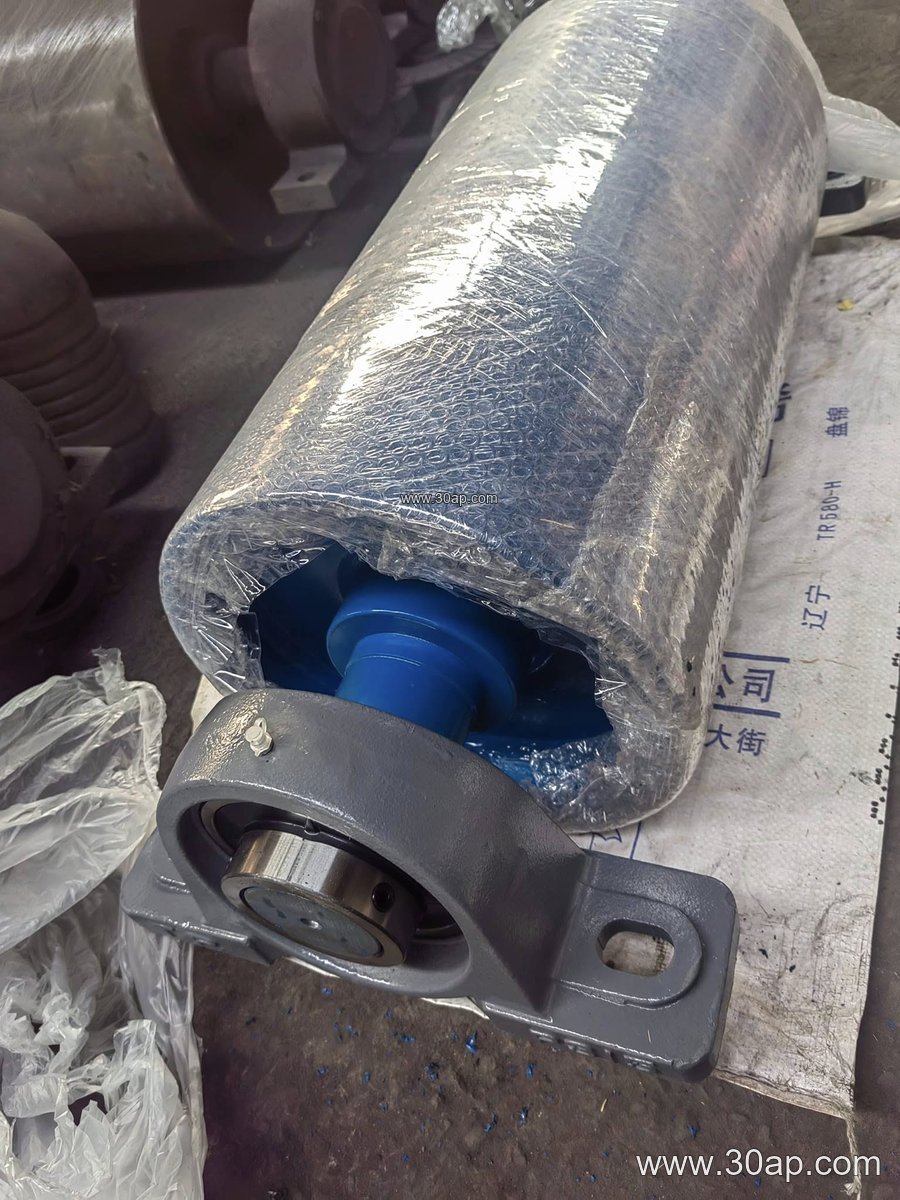
A conveyor welded pulley is a drum-type component built by welding steel end discs and a shaft hub assembly to a rolled cylindrical shell. In many bulk handling operations it is simply called a welded drum pulley, and it serves as the rotating body that carries and guides the conveyor belt at key points along the line. Unlike a cast pulley, the welded version is assembled from plate and tube, which gives designers freedom to match shell width, wall thickness and hub layout to the duty.
The pulley rotates on its shaft through bearing housings mounted in a conveyor bracket at each end. Friction between the shell surface and the belt transmits the drive force on a head pulley, while return-side drums merely redirect the belt. The welded construction is common in quarry, cement and power plant conveyors because it can be produced in a wide range of diameters without dedicated casting patterns.
How the Welded Drum Is Built
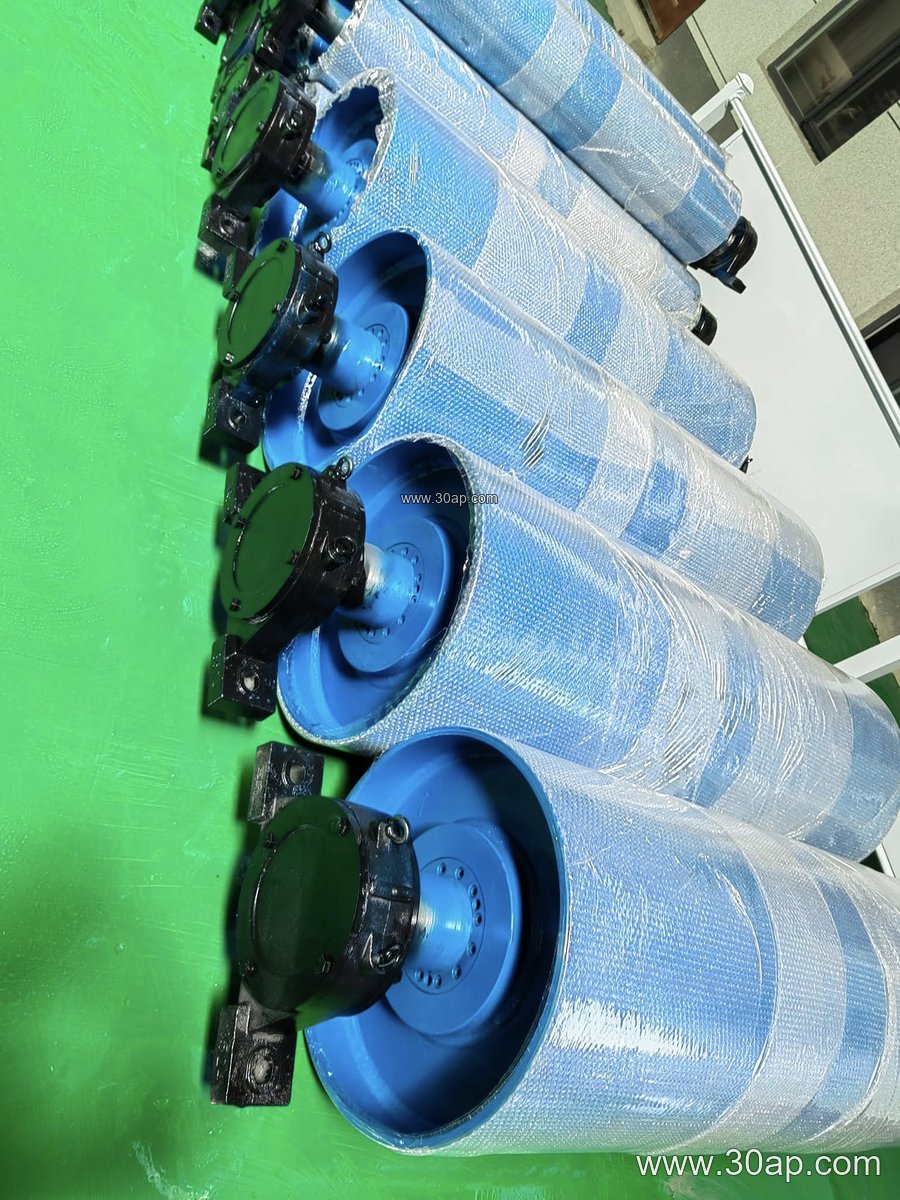
The shell is usually rolled from steel plate and longitudinally welded, then machined at the ends to accept the end discs. Discs are welded to the shell, and the shaft is joined through a hub, often with keyways or shrink-fit arrangements. After welding, the assembly is stress-relieved and machined so that the shell runs true and the shaft seats properly in the bearings.
Surface finish is a separate decision. A plain machined shell may be enough for light duty. For higher grip, the drum can receive rubber lagging applied by hot vulcanizing, cold bonding or casting, with plain, diamond or herringbone patterns. Ceramic lagging is chosen where slip and wear are both severe. Lagging thickness commonly falls in the 8 to 20 mm range, depending on the belt tension and the abrasiveness of the material.
Where Welded Pulleys Fit in a Conveyor
The same welded body can be configured for different positions, and these positions are not interchangeable. A drive pulley, sometimes called the head pulley, transmits torque and is usually the largest drum in the system. A tail pulley at the loading end supports the belt and helps control tracking. Bend pulleys and take-up pulleys redirect the belt and maintain tension, while a snub pulley increases wrap angle around the drive drum. Each position has its own load profile, so a tail drum cannot simply be swapped for a drive drum of the same diameter.
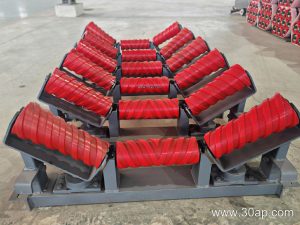
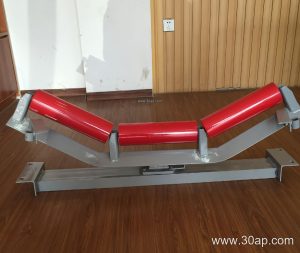
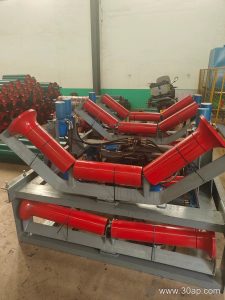
Typical duty sites include a limestone quarry feeding a crusher, a coal handling section of a power plant, and a cement plant clinker line. In these plants the welded drum works alongside the conveyor belt, idler roller sets and conveyor brackets that together keep the material moving.
Sizing the Shell, Shaft and Lagging
Belt width guides the face width of the drum, but it does not fix the diameter. Face width is normally a little wider than the belt, for example a B800 belt on a roughly 950 mm face and a B1200 belt on about a 1400 mm face. Diameter is selected from belt tension, wrap angle and the allowable bearing load, with common values such as Ø500, Ø630, Ø800, Ø1000 and Ø1250 appearing across heavy-duty installations. A combination like B800 × Ø500 or B1200 × Ø1000 is a design choice, not a rule; a wider belt may run on a smaller drum if the tension allows.
Shaft diameter follows torque and radial load, not belt width alone. Common shaft sizes include Ø80, Ø100, Ø120, Ø140 and Ø160, but the final value must come from the pulley manufacturer’s calculation. The table below lists reference ranges only.
| Parameter | Common reference values |
|---|---|
| Belt width | B500, B650, B800, B1000, B1200, B1400, B1600 |
| Pulley diameter | Ø250, Ø315, Ø400, Ø500, Ø630, Ø800, Ø1000, Ø1250 |
| Face width | About 100 to 200 mm wider than the belt |
| Shaft diameter | Ø60 to Ø200, by torque calculation |
| Lagging thickness | 8, 10, 12, 15, 20 mm |
| Surface form | Plain, diamond, herringbone, ceramic |
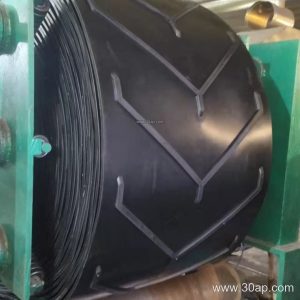
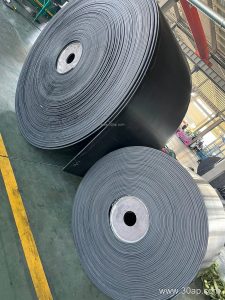
When specifying, state the belt type as well, since an abrasion resistant conveyor belt or a heat resistant conveyor belt may call for different lagging. A steel cord conveyor belt usually needs a larger drum diameter than a thin fabric core belt under the same tension, because bending stress in the cord limits how sharply the belt can wrap.
Buyer Checklist Before Ordering
- Confirm the pulley position: drive, tail, bend, take-up or snub, and the expected belt tension.
- Provide belt width, belt construction and splice type so the drum diameter can be checked against bending limits.
- Decide the lagging form and thickness for the material handled, whether abrasive ore, wet coal or hot clinker.
- Check bearing type, housing fit and the conveyor bracket interface, including bolt spacing.
- Ask for the balancing grade, runout tolerance and shaft material specification.
- Review the welding procedure and any stress relief requirement for the shell and hub joints.
Regular inspection of lagging wear, shell cracks near the disc weld and bearing temperature pays off. A worn drive pulley with polished lagging will slip, and slip raises belt tension and heat. Re-lagging a welded drum is often practical, which is one reason the welded design stays popular in aggregate, mining and bulk port conveyors. Matching the drum to the belt, the load and the position remains the core of a sound specification.