What the Tail Pulley Does
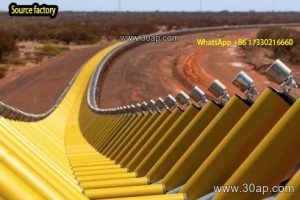
A belt conveyor tail pulley sits at the return end of the conveyor structure, where the belt completes its loop and starts back toward the head. Its main jobs are to support the belt, guide it onto the carrying run, and—on many conveyors—act as the tensioning point. Because it is often mounted on sliding or screw-adjusted take-up frames, small changes in its position directly affect belt sag, tracking, and the load on the drive. In a quarry, a cement plant, or a power plant coal yard, a poorly set tail pulley shows up quickly as belt wander, edge wear, or spillage at the loading point.
Do not confuse this component with a drive pulley at the head or a bend pulley used purely to change belt direction. The tail pulley is its own subtype, and its design choices follow from its position and duty.
Construction and Surface Options
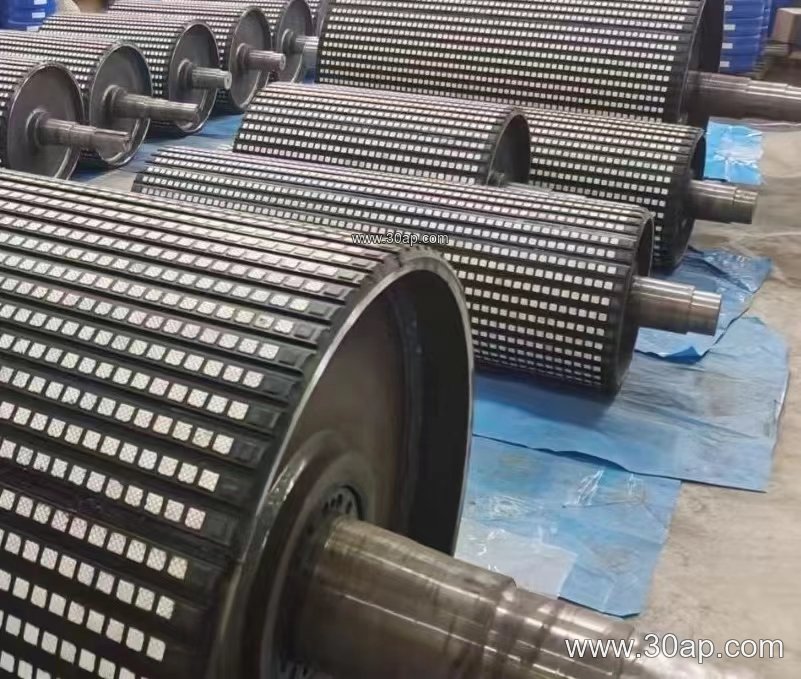
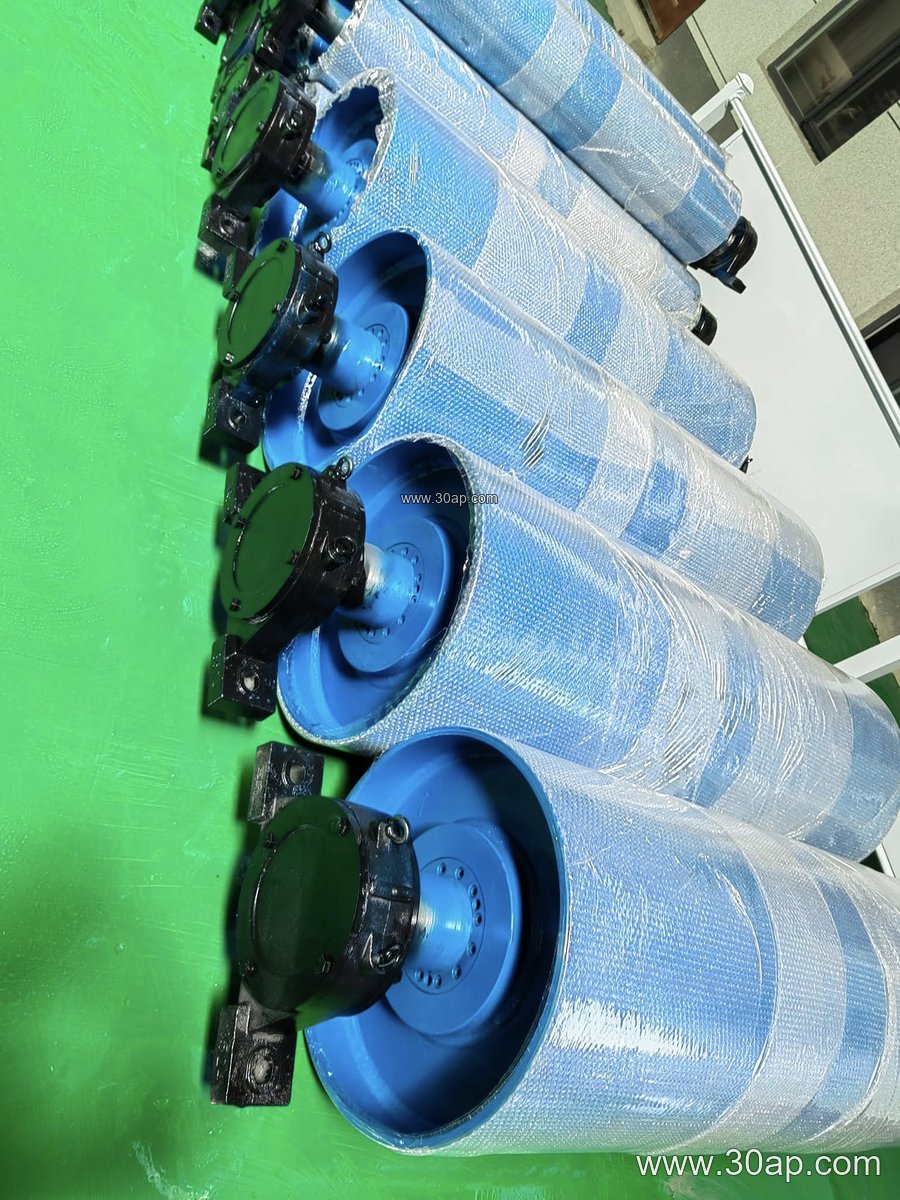
A typical belt conveyor tail pulley is built around a steel drum with welded or shrink-fitted end discs, a through shaft, and bearing housings that bolt to the conveyor bracket. Common diameters run from about Ø200 mm on small units up to Ø1000 mm and beyond on heavy-duty bulk handling conveyors. Shaft diameter is set by torque and bearing load, not by belt width alone—Ø80, Ø100, Ø120, and Ø140 mm shafts are all normal at different duty levels.
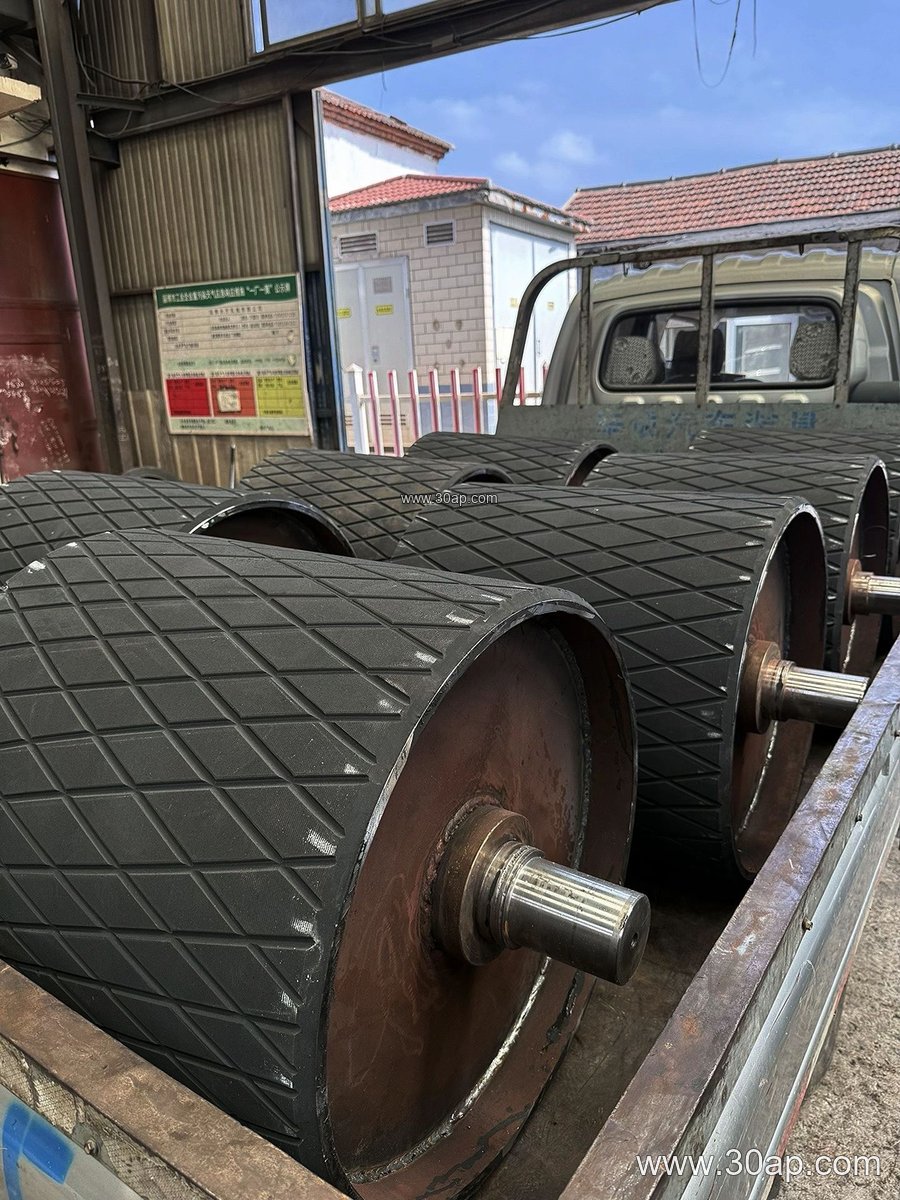
Surface finish matters. A plain (smooth) face is common where the pulley only supports and tensions the belt. Rubber lagging—applied as cold-bonded sheet, hot-vulcanized rubber, or diamond-grooved lagging—improves grip and helps shed fines. Ceramic lagging is used where slip and abrasion are severe. Lagging thickness is usually 8, 10, 12, 15, or 20 mm depending on the application.
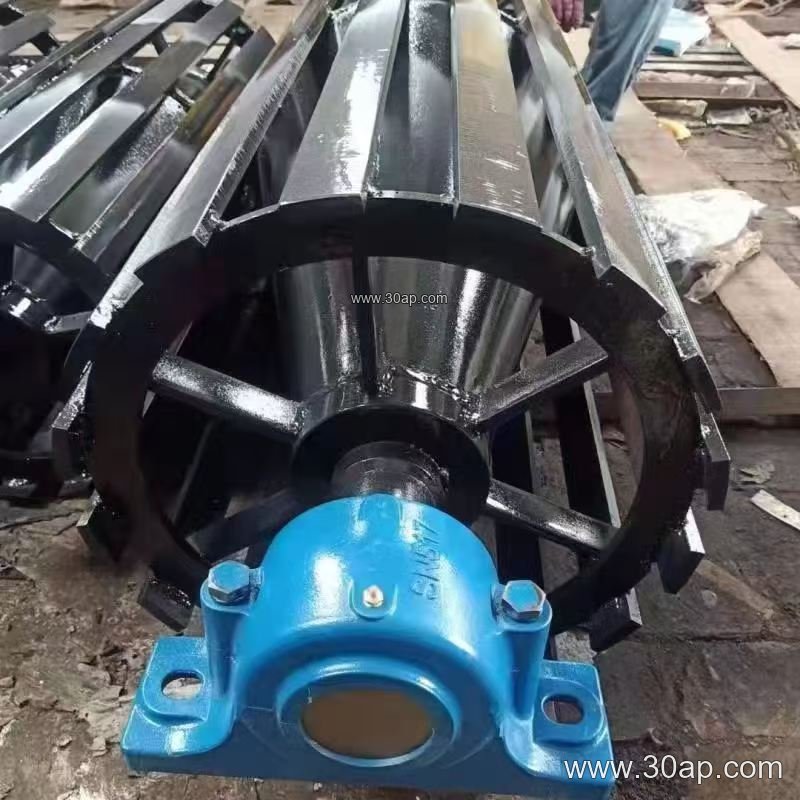
Face width normally exceeds belt width so the belt is fully supported. Reference combinations include B800 with a roughly 950 mm face, B1000 with about 1150 mm, and B1200 with around 1400 mm. A B1200 × Ø1000 tail pulley and a B800 × Ø500 unit are both realistic, but there is no fixed rule pairing one belt width with one diameter.
Where It Fits in the Plant
Tail pulleys appear wherever bulk material moves on a belt: aggregate lines feeding a crusher, limestone handling in a cement works, coal conveying in a power station, and ore transport in an iron or copper mine. They also show up in less obvious places, such as tunnel spoil removal and fertilizer handling.
The belt itself determines much of the pulley’s working environment. An abrasion resistant conveyor belt carrying sharp rock loads the pulley face differently than a smooth EP conveyor belt moving grain. A flame retardant conveyor belt in an underground coal mine brings safety requirements that affect lagging and bearing selection. A steel cord conveyor belt on a long overland run may need a larger tail pulley diameter to limit bending stress in the cords.
Sizing and Selection Notes
Buyers should treat the following as reference ranges rather than fixed rules:
- Belt width commonly from B400 to B2400, with face width slightly larger
- Pulley diameter commonly Ø200 to Ø1800 depending on belt thickness and tension
- Shaft diameter commonly Ø50 to Ø200, confirmed by torque calculation
- Lagging thickness commonly 8 to 20 mm, plain face where grip is not needed
Ask for the belt tension, belt type, and loading conditions before finalizing the drum. A tail pulley on a short transfer in a sand and gravel plant is a very different product from one on a heavy-duty mining conveyor.
Maintenance and Buying Checklist
Inspect lagging wear, check bearing temperature, and confirm that the take-up travel is not exhausted. Misalignment at the tail end is a frequent cause of belt tracking problems, so verify squareness to the conveyor frame and condition of the conveyor bracket. Keep spare bearings and lagging sheet on hand for critical lines.
When ordering, specify belt width, pulley diameter, face width, shaft size, lagging type and thickness, bearing type, and mounting arrangement. For related components such as the conveyor belt, idler roller, and conveyor pulley assemblies, match specifications to the same duty class so the whole conveyor works as one system. A well-chosen tail pulley is a low-cost part that protects the belt and keeps tonnage moving.